
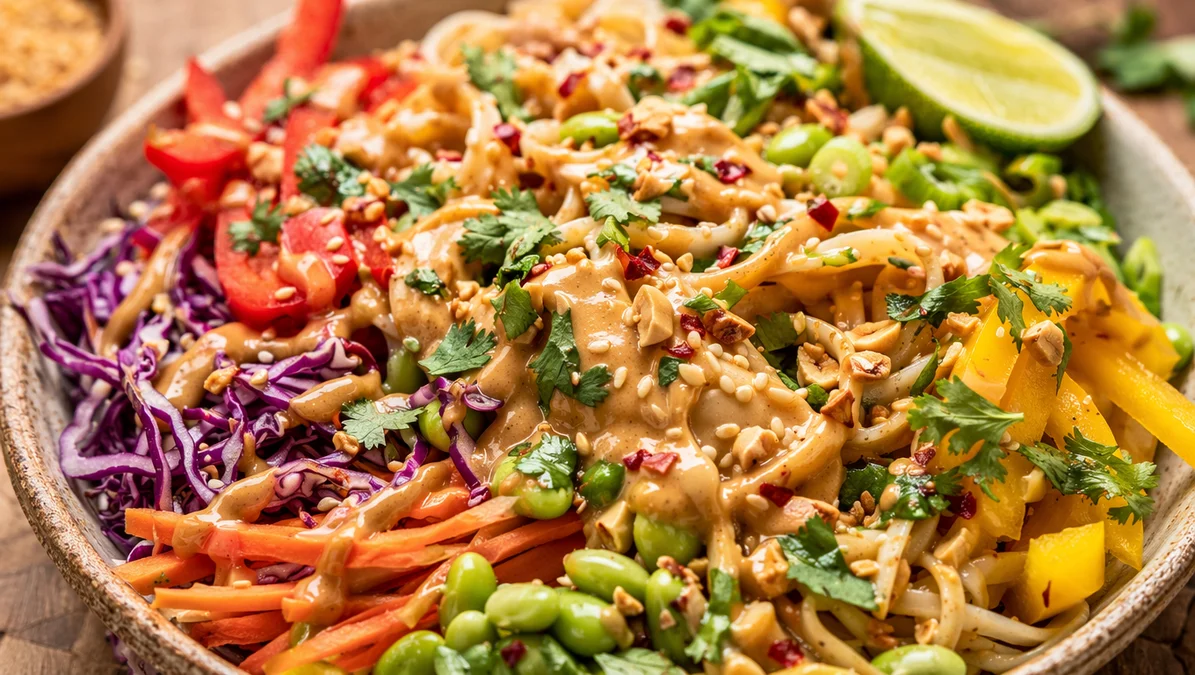
This Vegan Thai Noodle Bowl is an easy, gluten-free recipe perfect for summer parties or healthy weeknight meals. Fresh vegetables with creamy peanut sauce.
Ingredients
Instructions
Start by preparing the rice noodles according to the package instructions. Typically, you’ll bring a large pot of water to a rolling boil, then add the noodles and cook for 4-6 minutes until they are tender but still have a slight bite (al dente). Be careful not to overcook them, as they can become mushy and clump together. Once done, drain the noodles in a colander and rinse them under cold running water to stop the cooking process and remove excess starch. This step also helps cool them down for a refreshing cold salad. Shake off as much water as possible, then set aside to drain completely. For best results, toss the noodles with a teaspoon of sesame oil to prevent sticking.
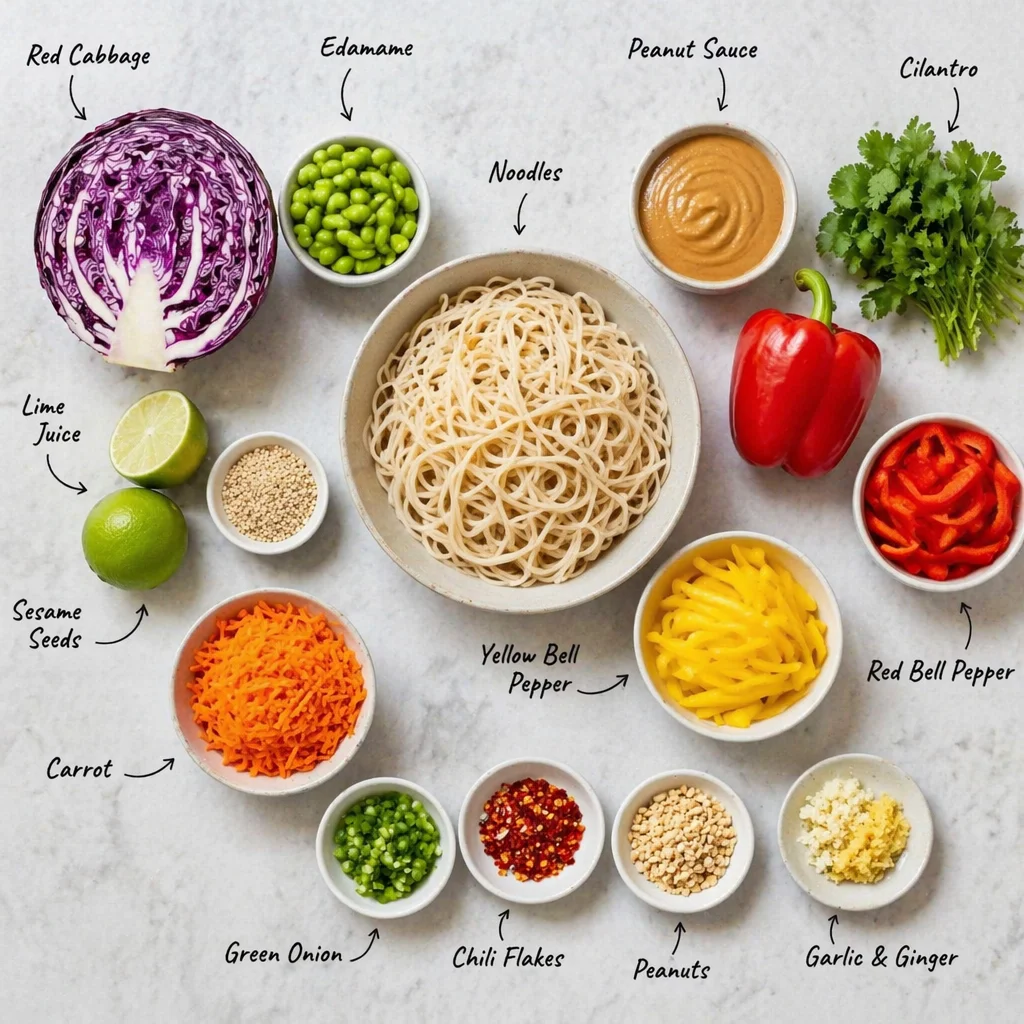
While the noodles cook, make the luscious Thai peanut sauce. In a medium bowl, combine 1/3 cup of natural peanut butter (creamy or crunchy works fine), 3 tablespoons of low-sodium soy sauce (or tamari for a gluten-free version), 2 tablespoons of freshly squeezed lime juice, 1 tablespoon of maple syrup or agave for sweetness, and 1 teaspoon of sesame oil if you want that extra nutty aroma. Add 1-2 minced garlic cloves and 1 teaspoon of freshly grated ginger. Whisk everything together until smooth. The mixture will be thick at first; gradually add warm water, one tablespoon at a time, whisking continuously, until you reach a pourable, creamy consistency. Taste and adjust the balance of salty, sweet, sour, and spicy—add a pinch of red pepper flakes or a dash of Sriracha if you like heat. Set the sauce aside.
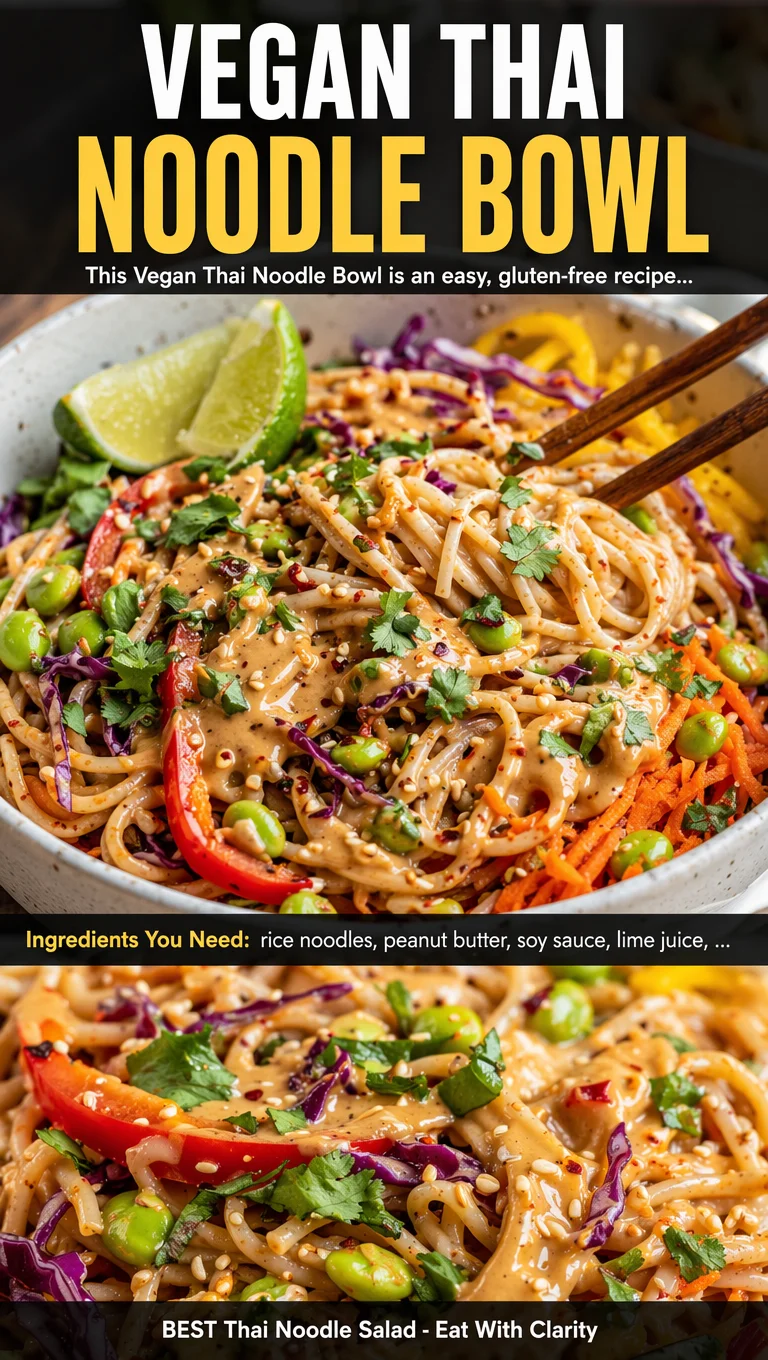
Now it’s time to prep the fresh vegetables. Peel the carrots and use a julienne peeler or a box grater to create thin, uniform strips. If you don’t have a julienne peeler, you can simply shred the carrots using the large holes of a grater. Thinly slice the red bell pepper into long, thin strips (about 1/4 inch wide). Shred the purple cabbage finely with a knife or mandoline. The goal is to have all veggies roughly the same size as the noodles for a harmonious bite. Place the prepared carrots, bell pepper, and cabbage in a large mixing bowl. If you’re adding edamame for extra protein, now is the time to toss them in as well.
Add the drained and cooled rice noodles to the bowl with the vegetables. Pour the peanut sauce over the top. Using tongs or two large forks, gently toss everything together until the noodles and vegetables are evenly coated with the creamy sauce. Take your time to ensure every strand is glistening. If the sauce seems too thick after tossing, you can add another splash of warm water or lime juice to loosen it up. The finished salad should be glossy and well combined, with the sauce clinging to each component.
Serve the noodle salad immediately, or for best flavor, let it marinate in the refrigerator for 15-30 minutes to allow the flavors to meld. To serve, divide among four bowls. Garnish each with a generous sprinkle of fresh cilantro and chopped peanuts for crunch. If desired, add extra lime wedges on the side for squeezing. This dish is delicious at room temperature or chilled, making it ideal for picnics, potlucks, or make-ahead lunches. Store leftovers in an airtight container in the fridge for up to 3 days.
For best results
- For the best texture, use fresh rice noodles if you can find them at an Asian grocery store. They are softer and more pliable than dried ones, and they require only a quick rinse in hot water. If using dried, be sure not to overcook; al dente is key because the noodles will continue to absorb sauce and soften slightly as they sit. Rinsing with cold water after cooking stops the cooking process instantly and removes surface starch, preventing a gummy mess.
- Natural peanut butter (with just peanuts and salt) works best because it has a clean, nutty flavor without added sugars or hydrogenated oils. If your peanut butter is very thick, you may need a bit more warm water to achieve a smooth sauce. For a nut-free version, substitute sunflower seed butter or tahini—both create a creamy, delicious sauce with a slightly different flavor profile.
- Julienning the vegetables ensures they mix evenly with the noodles and look beautiful. A mandoline with a julienne blade makes quick work of carrots and cabbage. If you don't have one, a regular vegetable peeler can create wide ribbons, which you can then stack and slice into thin strips. Uniformity in size also ensures even coating with the sauce.
- This salad is incredibly forgiving and actually tastes better after a few hours in the fridge as the flavors meld. If you're meal-prepping, store the sauce separately and toss just before serving to keep the veggies crunchy. Alternatively, you can store the fully assembled salad; the noodles will soften slightly but will still be delicious.
- To boost the protein content further, add edamame, baked tofu, or shredded cooked chicken (if not vegan). Edamame is especially great because it adds a pop of green and a buttery texture. Simply thaw frozen edamame and toss it in with the other vegetables. For a complete meal, serve with a side of spring rolls or a light miso soup.
- If you're sensitive to gluten, always check your soy sauce label—many brands contain wheat. Tamari is a naturally gluten-free alternative that tastes very similar. Also ensure your rice noodles are labeled gluten-free, as some brands may use wheat starch in processing. This recipe is naturally gluten-free when using certified ingredients.
Variations
- Spicy Mango Thai Noodle Bowl: Add 1/2 cup of diced ripe mango and 1 thinly sliced jalapeño (seeds removed for less heat) along with the vegetables. The sweetness of mango complements the spicy peanut sauce beautifully. Garnish with extra cilantro and a sprinkle of toasted sesame seeds. This variation is perfect for summer when mangoes are in season.
- Protein-Packed Edamame & Tofu Bowl: Increase the protein by adding 1 cup of shelled edamame and 1 cup of cubed extra-firm tofu. Press the tofu for 15 minutes to remove excess moisture, then pan-fry in a little sesame oil until golden brown. Toss with the noodles and sauce. This version is great for a post-workout meal, providing around 25g of protein per serving.
- Crunchy Thai Peanut Salad with Mung Bean Sprouts: Swap half the noodles for a bed of fresh mung bean sprouts and shredded lettuce to reduce carbs and add crunch. Use the same peanut sauce and veggies. This is a lighter, low-carb option that still satisfies the Thai salad craving. Top with crushed peanuts and fried shallots for extra texture.
- Coconut Curry Thai Noodle Bowl: Stir 2 tablespoons of red curry paste into the peanut sauce along with 1/2 cup of canned coconut milk (instead of water). This creates a rich, creamy, and slightly spicy sauce with a deeper flavor profile. Pair with bell peppers, snap peas, and carrots. Garnish with fresh basil and lime.
- Peanut-Free Sunflower Seed Bowl: For those with nut allergies, replace peanut butter with sunflower seed butter. The sauce will be slightly darker and have a distinct earthy flavor. Add 1 tablespoon of apple cider vinegar to brighten the taste. This version is completely nut-free and safe for school lunches or nut-free environments.
Nutrition
- Calories385 kcal
- Total Fat16g
- Saturated Fat2.5g
- Cholesterol0mg
- Sodium620mg
- Total Carbohydrates52g
- Dietary Fiber6g
- Sugars14g
- Protein12g