
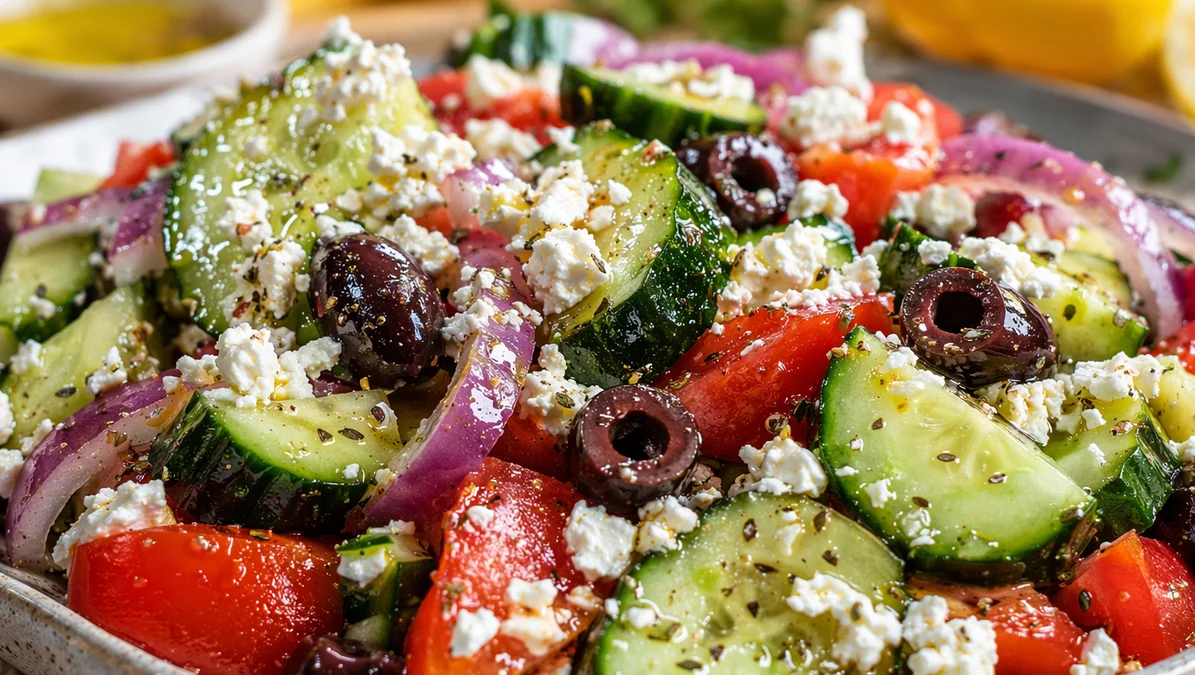
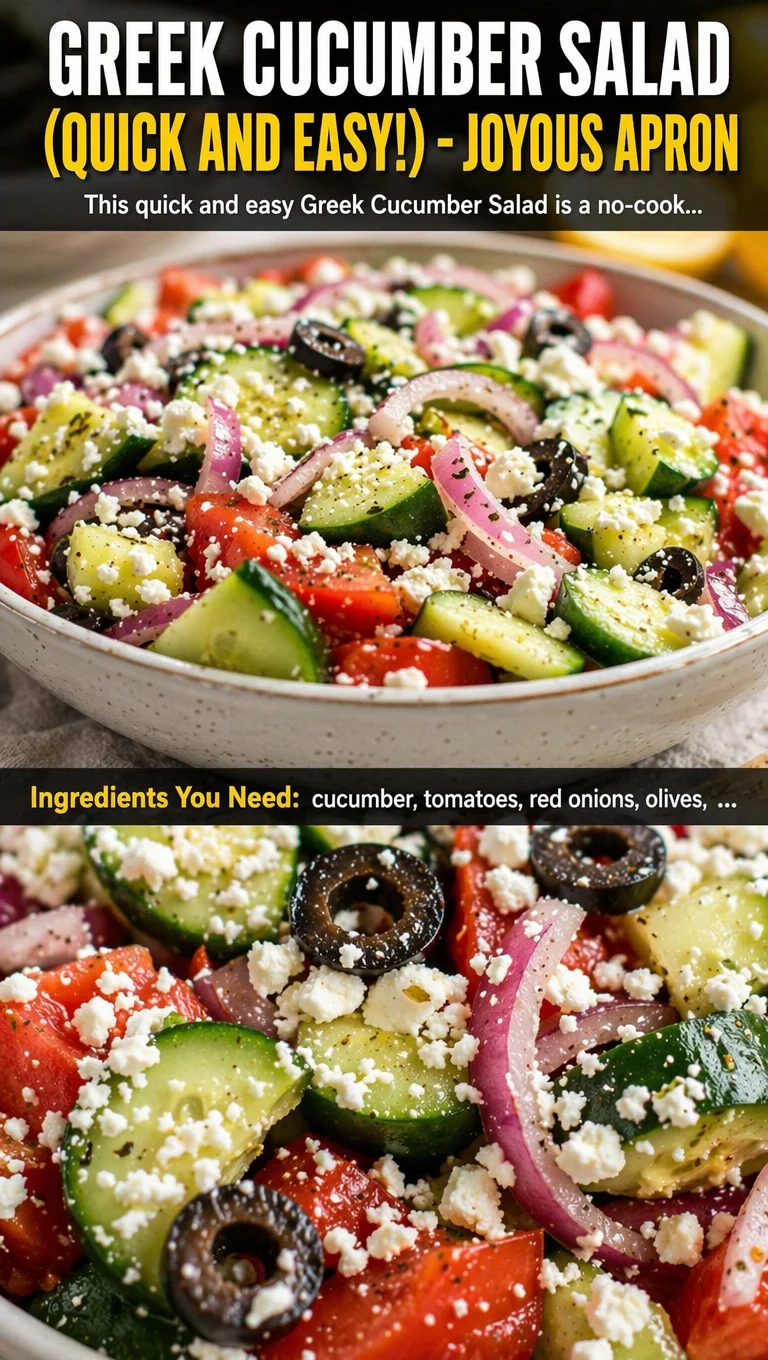
This quick and easy Greek Cucumber Salad is a no-cook vegetable side dish made with fresh cucumbers, tomatoes, and red onions tossed in a tangy lemon vinaigrette. Perfect for high-protein…
Ingredients
Instructions
Prepare the vegetables: Start by washing the cucumbers and cherry tomatoes thoroughly under cool running water. For the cucumbers, I recommend using English cucumbers (also known as hothouse or seedless cucumbers) because they have a thinner skin, fewer seeds, and a crisp texture that holds up beautifully in salads. If you use regular garden cucumbers, you may want to peel them partially and scoop out the seeds to avoid a watery salad. Slice the cucumbers into thin rounds, about 1/8-inch thick. A mandoline slicer works wonders here for uniform slices, but a sharp knife will do just fine. Halve the cherry tomatoes; if they are larger, quarter them. Thinly slice the red onion—use a sharp knife or a mandoline to get paper-thin slices, which will soften the onion’s bite as it marinates in the dressing. Place all prepared vegetables in a large mixing bowl. Add the halved Kalamata olives; their briny flavor is essential to the Greek profile. If you prefer milder olives, you can substitute with green olives or omit them altogether.
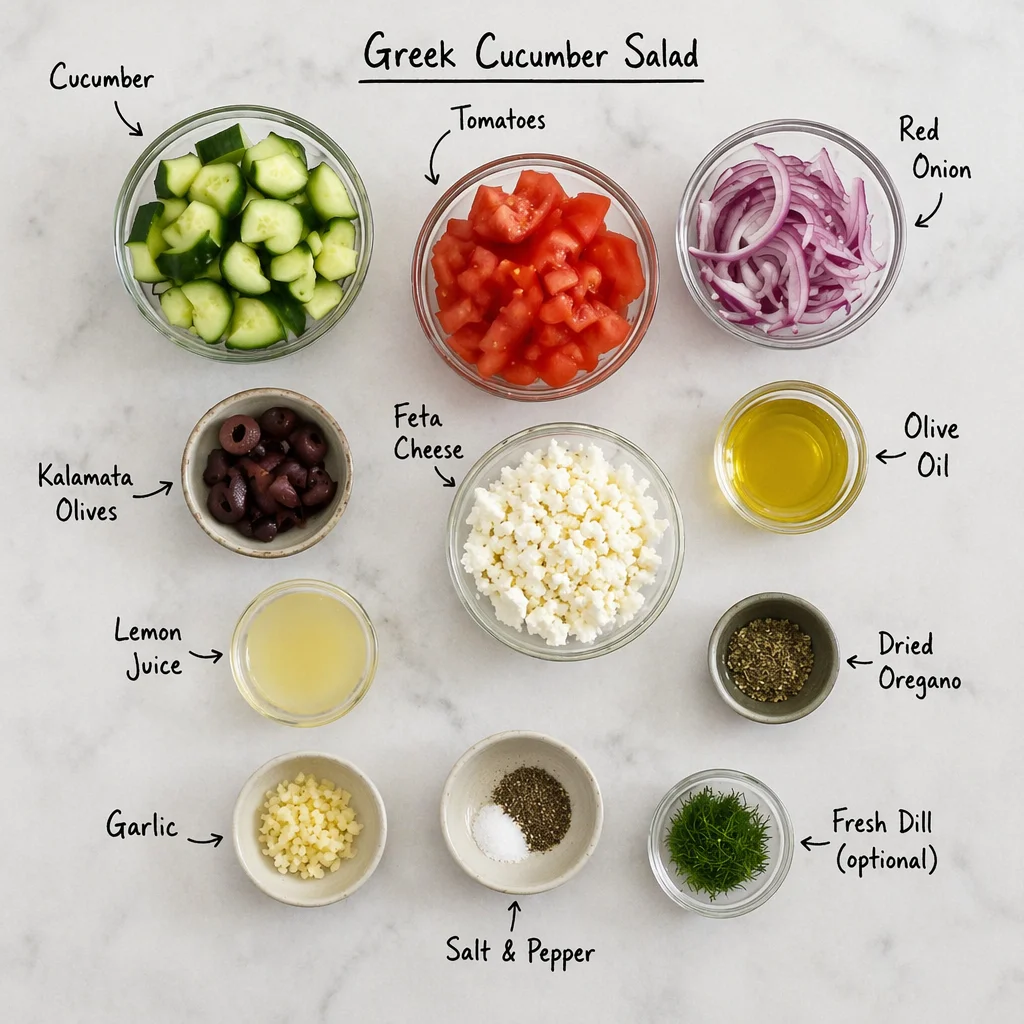
Make the lemon vinaigrette: In a small bowl or a mason jar, combine the extra-virgin olive oil, fresh lemon juice, dried oregano, salt, and black pepper. If you like a tangier dressing, add the optional red wine vinegar. Whisk vigorously with a fork until the dressing is emulsified and slightly thickened. Alternatively, you can shake it in a sealed jar. The key to a great vinaigrette is using good-quality olive oil and freshly squeezed lemon juice—bottled juice lacks the bright, zesty flavor. Taste the dressing and adjust salt or acidity to your liking. Remember that the feta will add saltiness, so don’t over-salt at this stage.
Combine and marinate: Pour the vinaigrette over the vegetables in the bowl. Use a large spoon or spatula to gently toss everything together, ensuring every piece is coated. Let the salad sit at room temperature for about 10 minutes to allow the flavors to meld. During this time, the onions will mellow, the tomatoes will release a bit of juice, and the cucumbers will absorb the dressing. For the best texture, avoid letting it sit too long (over an hour) as the cucumbers can become soggy. If you’re making this ahead, keep the dressing separate and toss just before serving.
Add the feta and serve: Just before serving, crumble or cube the feta cheese and gently fold it into the salad. Feta is delicate, so be careful not to overmix and break it into tiny bits. Transfer the salad to a serving platter or bowl. Garnish with a sprinkle of extra oregano or a few fresh mint leaves if desired. Serve immediately as a refreshing side dish alongside grilled meats, fish, or as part of a mezze platter. This salad is also wonderful on its own as a light lunch. Enjoy the crisp, tangy, and creamy textures in every bite!
For best results
- Choosing the best cucumbers: For the crispiest salad, always opt for English cucumbers. They are longer, wrapped in plastic, and have a mild flavor with thin skin. If you can only find regular cucumbers, peel them and cut them in half lengthwise, then scoop out the seeds with a spoon before slicing. This prevents the salad from becoming watery and diluting the dressing. Another tip is to salt the sliced cucumbers lightly and let them sit for 10 minutes, then pat dry with paper towels to remove excess moisture—this is especially helpful if you plan to store leftovers.
- Maximizing flavor from the vinaigrette: Let the vinaigrette sit for at least 5 minutes after mixing so the dried oregano can rehydrate and release its aromatic oils. If you have fresh oregano, use 1 tablespoon chopped instead of dried for an even brighter flavor. Also, consider adding a small minced garlic clove or a pinch of red pepper flakes for a subtle kick. The quality of olive oil matters—use a robust extra-virgin olive oil that you enjoy the taste of, as it will be a prominent flavor in the salad.
- Preventing a soggy salad: This salad is best enjoyed fresh, but if you need to prep ahead, store the vegetables, dressing, and feta separately in the refrigerator. Combine them no more than 30 minutes before serving. If you have leftovers, they will keep for about a day, but the cucumbers will soften. To revive leftover salad, drain any excess liquid and add a splash of fresh lemon juice and olive oil. You can also repurpose leftovers by chopping them up and adding to a grain bowl or pita sandwich.
- Serving suggestions for high-protein dinners: While this salad is low in protein on its own, it pairs beautifully with grilled chicken, lamb chops, shrimp skewers, or a side of chickpeas. For a complete macro-friendly meal, serve alongside a portion of grilled salmon or lean steak. The salad's acidity cuts through rich meats, making it an ideal companion for barbecues and picnics. You can also add a can of drained chickpeas or white beans directly into the salad to boost protein and fiber.
- Feta cheese options: Traditional Greek feta is made from sheep's milk or a mix of sheep and goat milk, and it has a tangy, creamy, and slightly crumbly texture. For best results, buy feta in a block stored in brine rather than pre-crumbled, which tends to be drier and less flavorful. If you're dairy-free, you can use a high-quality vegan feta or omit the cheese entirely—the salad will still be delicious. Another option is to use fresh mozzarella pearls or cubed halloumi (grilled separately) for a different texture.
Variations
- Add protein for a main dish: Turn this side salad into a satisfying main course by adding 1 cup of cooked chickpeas, 8 ounces of grilled chicken breast (sliced), or 6 ounces of grilled shrimp. For a vegetarian option, toss in some marinated tofu or tempeh crumbles. The lemon vinaigrette pairs wonderfully with all these proteins, and you can adjust the seasoning accordingly. If adding protein, you may want to double the dressing to ensure everything is well coated.
- Herb and spice variations: While oregano is classic, you can experiment with other herbs. Substitute dried oregano with 1 tablespoon of fresh dill or mint for a different Greek twist. Add a teaspoon of dried thyme or rosemary for an earthy note. For a spicy kick, include a pinch of cayenne pepper or sumac. Sumac, a tangy red spice, is a fantastic addition that brightens the salad and adds a beautiful color. Simply sprinkle 1/2 teaspoon over the vegetables before tossing.
- Vegetable swaps and additions: Feel free to customize the vegetables based on what you have. Thinly sliced bell peppers (red, yellow, or orange) add crunch and sweetness. Chopped cucumber can be replaced with zucchini (raw or lightly grilled). Add a handful of arugula or baby spinach for extra greens. For a more substantial salad, include diced avocado just before serving—it adds creaminess and healthy fats. Remember to adjust the dressing amount if you add more volume.
- Make it a Mediterranean bowl: Use this salad as a base for a Mediterranean grain bowl. Add cooked quinoa, farro, or couscous, then top with the cucumber salad, a scoop of hummus, and some grilled pita bread. Drizzle with extra tzatziki sauce or tahini dressing. This turns a simple side into a hearty, balanced meal that's perfect for meal prep. Store the components separately and assemble just before eating to maintain freshness.
- Dairy-free and vegan adaptation: Omit the feta cheese or replace it with a vegan feta alternative made from tofu or cashews. You can also add 2 tablespoons of nutritional yeast for a cheesy flavor without dairy. To keep the salad satisfying, add a can of drained and rinsed chickpeas or some toasted pine nuts for crunch. The dressing is already vegan-friendly. This version is perfect for those following a plant-based diet while still enjoying the classic Greek flavors.
Nutrition
- Calories215 kcal
- Total Fat12g
- Saturated Fat7g
- Cholesterol45mg
- Sodium180mg
- Total Carbohydrates26g
- Dietary Fiber1g
- Sugars17g
- Protein3g