
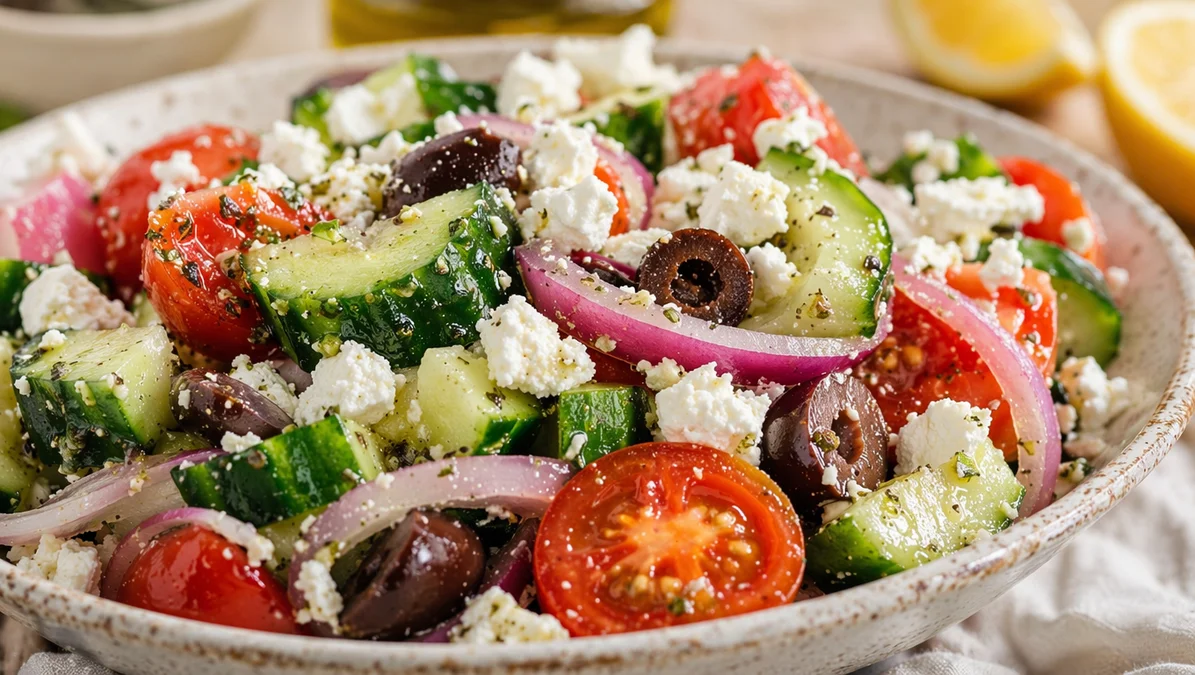
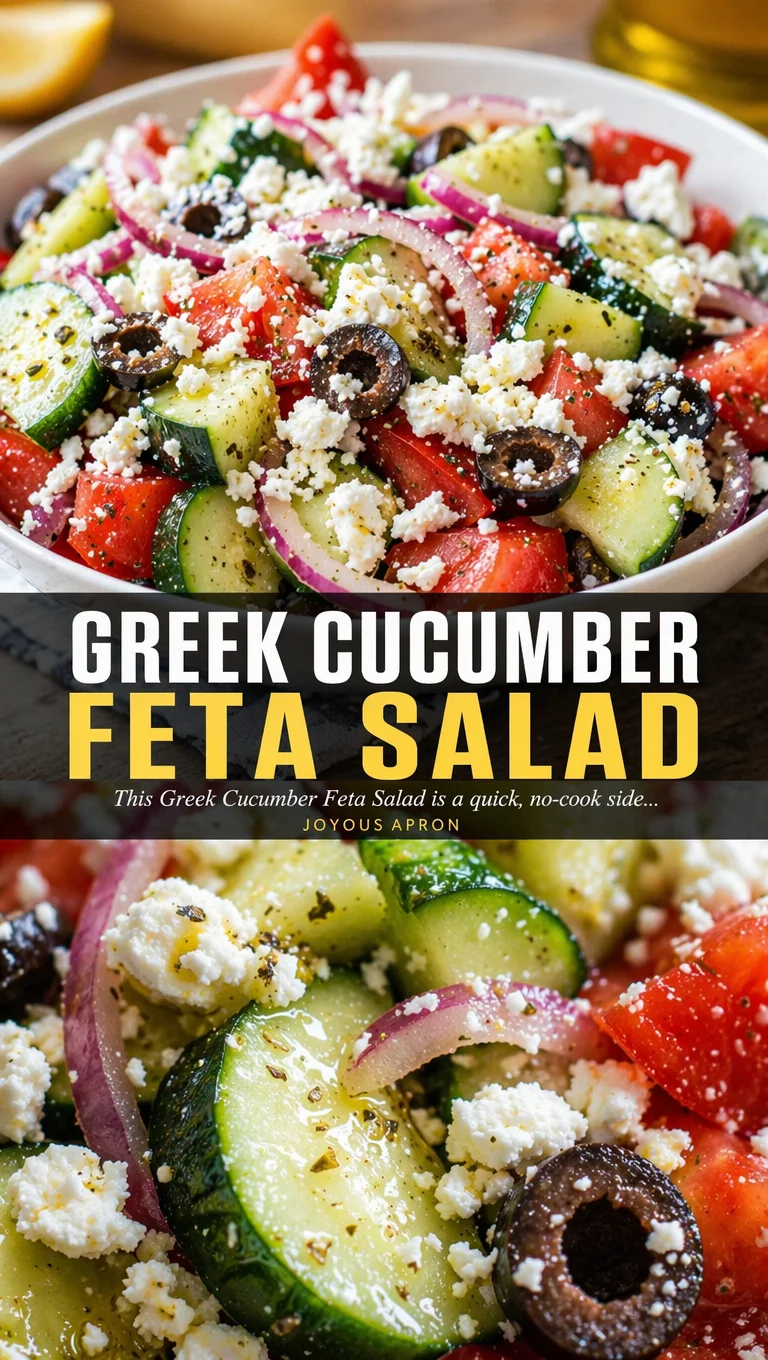
This Greek Cucumber Feta Salad is a quick, no-cook side dish with crisp cucumbers, ripe tomatoes, and creamy feta. Perfect for high-protein, low-carb meals and summer picnics.
Ingredients
Instructions
Start by preparing your vegetables. Wash and thoroughly dry the cucumbers and cherry tomatoes. For the cucumbers, I recommend using English (seedless) cucumbers because they have a thinner skin and fewer seeds, which means less water and a crunchier salad. If using regular cucumbers, peel them and scoop out the seeds with a spoon to prevent the salad from becoming watery. Dice the cucumbers into bite-sized cubes, about 1/2-inch pieces. Halve the cherry tomatoes; if they are larger, quarter them. Thinly slice the red onion into half-rings. To mellow the sharp bite of raw onion, you can soak the slices in ice water for 10 minutes, then drain and pat dry. This step is optional but highly recommended if you’re sensitive to strong onion flavor. Place all prepared vegetables in a large mixing bowl.
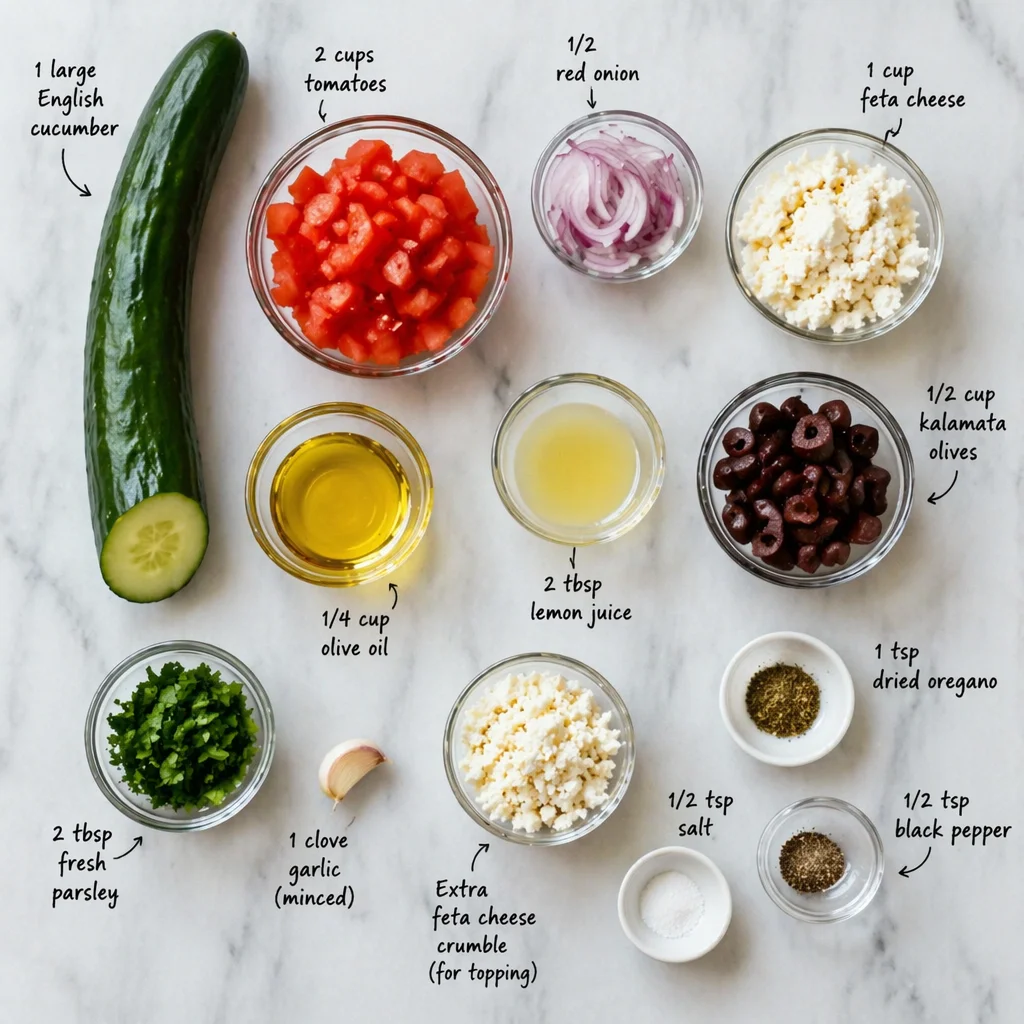
Add the olives and feta cheese. For the olives, Kalamata olives are traditional, but you can substitute with any brined black or green olive. Make sure they are pitted; if not, pit them by pressing gently with the flat side of a knife. Halve or slice them so their flavor distributes evenly. For the feta, use a block of feta and crumble it with your fingers or a fork. Pre-crumbled feta often contains anti-caking agents that prevent it from melting into the salad, but for a no-cook salad, it works fine. However, block feta has a creamier texture and more pronounced tang. Crumble the feta into large, uneven chunks—this gives a more rustic feel and better texture contrast.
Make the lemon vinaigrette. In a small bowl or jar, combine the extra virgin olive oil, fresh lemon juice, dried oregano, salt, and pepper. Whisk vigorously until emulsified, or shake in a sealed jar. Taste and adjust seasoning—you want a bright, tangy dressing that balances the saltiness of the feta and olives. The oregano is classic, but you can use dried mint or a combination. For the best flavor, use fresh lemon juice, not bottled. The dressing is simple, so quality ingredients matter: a good fruity olive oil and fresh lemons make a huge difference.
Pour the dressing over the salad and toss gently. Use a large spoon or spatula to fold everything together, being careful not to break up the feta too much. The goal is to coat every piece of vegetable lightly with the dressing. Let the salad sit for 5-10 minutes at room temperature before serving. This resting time allows the flavors to meld and the cucumbers to slightly pickle in the lemon juice, enhancing the overall taste. Do not refrigerate before serving, as cold temperatures dull the flavors.
Serve immediately as a side dish or light main. Garnish with fresh dill or mint if desired. This salad is best enjoyed fresh, but leftovers can be stored in an airtight container in the refrigerator for up to 1 day. Note that the cucumbers will release water over time, so if making ahead, keep the dressing separate and toss just before serving.
For best results
- Choose the right cucumber: English cucumbers are ideal because they have a thin, edible skin, minimal seeds, and a crisp texture. If you substitute with regular garden cucumbers, peel them and remove the seeds to avoid a watery salad. After dicing, you can also sprinkle the cubes with a little salt and let them sit in a colander for 10 minutes to draw out excess moisture, then pat dry. This extra step ensures your salad stays crunchy even after dressing.
- Make it a meal: To boost protein for a complete high-protein meal, add 1 cup of cooked chickpeas, 8 oz of grilled chicken breast (cubed), or 6 oz of canned tuna (drained). You can also toss in some cooked quinoa for extra fiber and protein. The salad is very versatile and pairs well with any grilled protein.
- Storage and meal prep: This salad is best eaten fresh, but you can prep the components ahead. Dice cucumbers and tomatoes, slice onions, and store them separately in airtight containers in the fridge for up to 2 days. Make the dressing and store it in a jar at room temperature (if using within a day) or refrigerate. Combine and dress just before serving. Leftover dressed salad will keep for about 1 day, but the texture will soften.
- Customize the herbs: While oregano is traditional, feel free to experiment with fresh herbs. Dill adds a fresh, grassy note that complements the cucumber beautifully. Mint adds a cool, sweet contrast. Basil gives an Italian twist. Use a combination of herbs for a more complex flavor profile. Add them just before serving to preserve their brightness.
- Feta cheese alternatives: If you're dairy-free or want to reduce calories, you can substitute feta with crumbled firm tofu (marinated in lemon juice and salt) or a vegan feta made from cashews. For a lower-sodium option, use a reduced-sodium feta or a mild goat cheese. The salad will still be delicious, though the flavor profile will shift.
- Dressing variations: For a creamier dressing, whisk in 2 tablespoons of Greek yogurt or a splash of red wine vinegar. If you prefer a more tangy dressing, increase the lemon juice to 3 tablespoons and add a teaspoon of Dijon mustard. For a touch of sweetness, add 1/2 teaspoon of honey or maple syrup. Adjust to your taste.
Variations
- Greek Chickpea Salad: Add 1 can (15 oz) of chickpeas, drained and rinsed, to the salad for extra protein and fiber. This turns the side dish into a hearty main course. You can also add a handful of fresh parsley and a pinch of cumin to complement the chickpeas.
- Mediterranean Pasta Salad: Cook 8 oz of short pasta (like rotini or penne) according to package directions, rinse under cold water, and toss with the salad ingredients. Increase the dressing by half to coat the pasta. This makes a great potluck dish that holds up well.
- Low-Carb Greek Avocado Salad: Add 1 diced avocado just before serving for healthy fats and creaminess. Omit the olives if you want to reduce sodium. This variation is rich in heart-healthy monounsaturated fats and perfect for keto diets.
- Protein-Packed Greek Salad with Chicken: Top the salad with 8 oz of grilled or rotisserie chicken breast, sliced. This boosts the protein to about 30g per serving, making it a complete meal. You can also add some crumbled bacon for extra crunch.
- Vegan Greek Salad: Replace feta with a vegan feta alternative (store-bought or homemade from tofu) or simply omit it. Add more olives and artichoke hearts for flavor. Use a dressing made with tahini and lemon for a creamy, dairy-free option.
Nutrition
- Calories185 kcal
- Total Fat14g
- Saturated Fat5g
- Cholesterol22mg
- Sodium520mg
- Total Carbohydrates10g
- Dietary Fiber2g
- Sugars5g
- Protein6g