
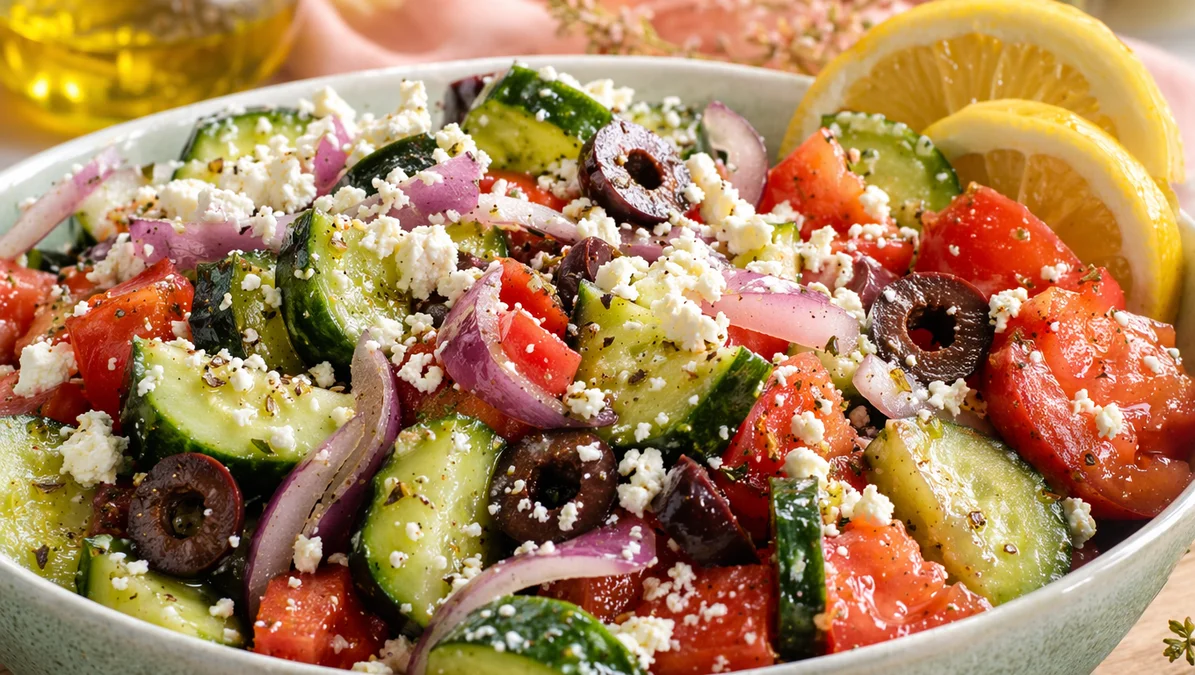
This no-cook Greek cucumber salad is a quick high-protein dinner side with fresh veggies, feta, and lemon vinaigrette. Ready in 10 minutes!
Ingredients
Instructions
Begin by preparing the vegetables. Wash the cucumbers and tomatoes thoroughly under cool running water to remove any dirt or residues. For the English cucumbers, there’s no need to peel them as the skin is tender and adds color and nutrients. Slice each cucumber in half lengthwise, then cut crosswise into half-moons about 1/2-inch (1.3 cm) thick. Thick slices retain a satisfying crunch and won’t become soggy when dressed. For the tomatoes, core them and cut into 1-inch (2.5 cm) chunks. If using Roma tomatoes, you may want to remove the seeds and excess juice to prevent the salad from becoming watery; simply halve each tomato, scoop out the seeds with a spoon, then chop. Place the sliced cucumbers and chopped tomatoes in a large mixing bowl.
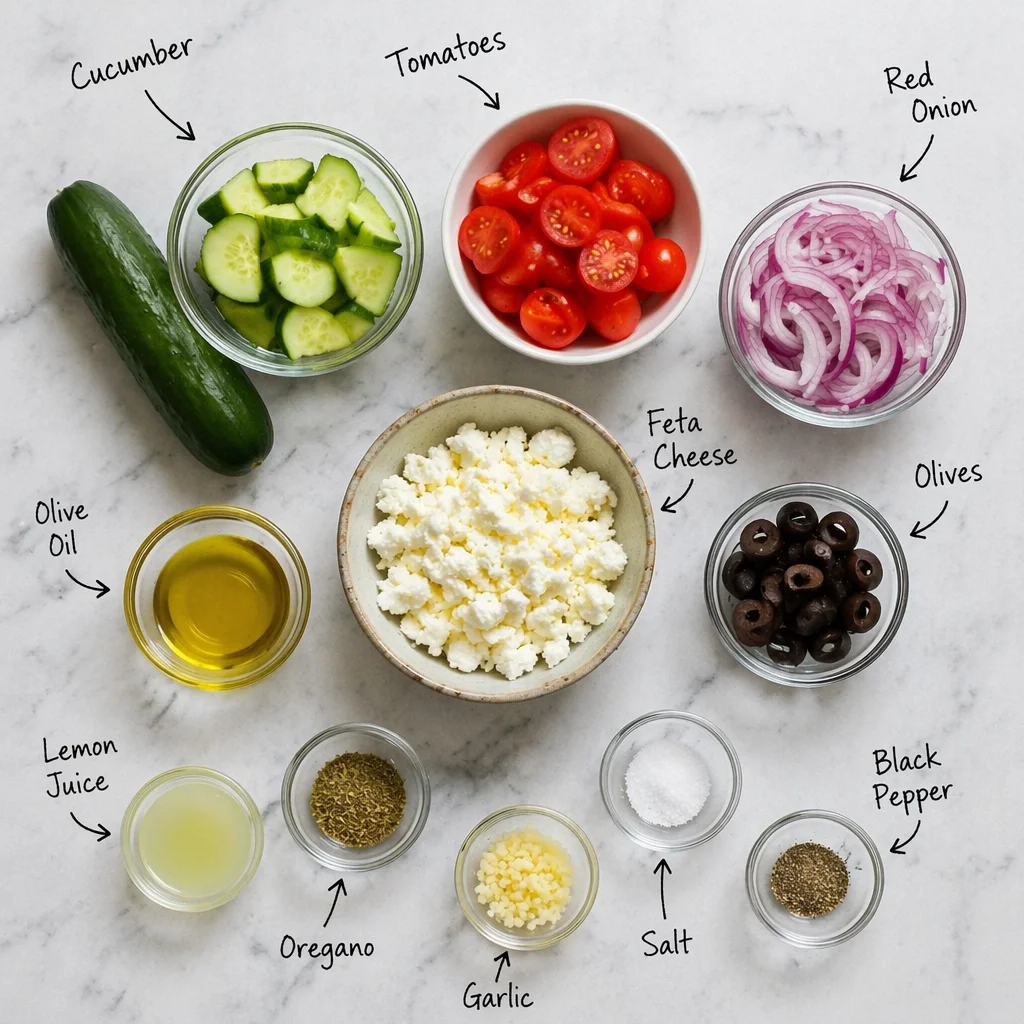
Add the thinly sliced red onion and halved Kalamata olives to the bowl. For the red onion, slice it as thinly as possible—a mandoline or sharp knife works best. Thin slices provide a mild, sweet bite without overwhelming the salad. If you prefer a less pungent onion flavor, soak the sliced onion in cold water for 5 minutes, then drain and pat dry before adding. The Kalamata olives bring a briny, rich flavor that complements the fresh vegetables. Use pitted olives to avoid any surprises while eating. Toss everything gently with a large spoon or your hands to combine.
Now prepare the lemon vinaigrette. In a small bowl or jar, whisk together the extra virgin olive oil, fresh lemon juice, dried oregano, sea salt, and black pepper. Taste the dressing and adjust seasoning if needed—you want a bright, tangy flavor that will lightly coat the vegetables. For the best results, use fresh lemon juice rather than bottled; the zestiness makes a noticeable difference. If you have time, let the dressing sit for 5 minutes to allow the oregano to rehydrate and infuse the oil. Drizzle the vinaigrette over the salad.
Add the crumbled feta cheese to the bowl. Use a high-quality feta—preferably one packed in brine—for the creamiest, most flavorful result. Crumble it with your fingers or a fork into uneven pieces so it disperses throughout the salad. Gently fold everything together with a large spoon until the vegetables are evenly coated with dressing and the feta is distributed. Be careful not to overmix, as the feta can break down into a paste if stirred too vigorously. The salad should look vibrant and glossy.
If desired, garnish with chopped fresh parsley or mint for a pop of color and freshness. Mint is especially nice with cucumber, while parsley adds a clean, grassy note. Serve immediately for the crispiest texture, or refrigerate for up to 30 minutes to let the flavors meld. This salad is best enjoyed within a few hours of making, as the cucumbers will release water over time. For meal prep, store the dressing separately and toss just before serving.
For best results
- For the crispiest cucumbers, choose English (hothouse) cucumbers over regular ones. English cucumbers have thinner skin, fewer seeds, and a milder flavor, and they don't require peeling. If using garden cucumbers, peel them partially (striped) for a prettier presentation and to reduce bitterness. Also, after slicing, you can place the cucumber slices on a paper towel for 5 minutes to absorb excess moisture, which helps prevent a watery salad.
- The quality of feta cheese can make or break this dish. Opt for feta stored in brine, often labeled as 'block feta' or 'traditional feta,' rather than pre-crumbled dry feta. Brine-packed feta is creamier, saltier, and more flavorful. Before crumbling, pat it dry with a paper towel to remove excess brine, but don't rinse it or you'll lose flavor. Sheep's milk feta is tangiest, while cow's milk feta is milder—choose based on your preference.
- Let the salad rest for 10-15 minutes at room temperature after dressing to allow the flavors to meld. The salt in the dressing will gently draw out some moisture from the vegetables, creating a light, flavorful 'marinade.' However, don't let it sit too long (over an hour) or the cucumbers will become limp. If serving later, dress only half the salad and keep the rest undressed in the fridge.
- To make this salad even more protein-packed, add a can of drained chickpeas (about 1.5 cups) or 8 ounces of grilled chicken breast, chopped. Chickpeas blend beautifully with the Greek flavors and add fiber. For a vegetarian option, you can also toss in some toasted pine nuts or walnuts for healthy fats and crunch.
- When slicing the red onion, use a very sharp knife or a mandoline set to 1/8 inch. Soak the slices in ice water for 10 minutes to mellow their sharpness, then drain and pat dry. This step is especially helpful if you are sensitive to raw onion flavor or plan to serve the salad immediately. The onions will still provide a pleasant bite without overwhelming the other ingredients.
- Storage tip: This salad does not freeze well due to the high water content of cucumbers and tomatoes. However, you can prep the vegetables (except the tomatoes) and store them in separate airtight containers in the fridge for up to 2 days. Slice the tomatoes and assemble the salad the day you plan to serve. The dressing can be made up to a week ahead and refrigerated; bring it to room temperature and shake well before using.
Variations
- Make it a Greek cucumber and chickpea bowl: Add one 15-ounce can of chickpeas (rinsed and drained) along with the vegetables. This turns the side dish into a hearty, plant-based main course packed with protein and fiber. You can also add a handful of fresh spinach or arugula for extra greens. Serve with warm pita bread for a complete meal.
- For a dairy-free/vegan version, omit the feta cheese and replace it with 1/2 cup of cubed avocado or a sprinkle of nutritional yeast for a cheesy flavor. Alternatively, use a vegan feta made from almonds or tofu. The lemon vinaigrette remains the same, but you can add a tablespoon of tahini for creaminess. This variation is still rich in healthy fats and very satisfying.
- Swap the protein: While this salad is traditionally vegetarian, you can easily add protein to make it a main dish. Grilled shrimp, sliced steak, or even canned tuna work wonderfully. For a Mediterranean twist, add 1/2 cup of cooked quinoa or farro for extra texture and protein. The lemon vinaigrette pairs perfectly with any of these additions.
- Try a different herb profile: Instead of oregano, use fresh dill (2 tablespoons chopped) for a more authentic Greek flavor, or swap in fresh basil for an Italian twist. You can also add a pinch of sumac for a tangy, lemony note that complements the dressing. Fresh mint is another excellent choice that brightens the salad.
Nutrition
- Calories215 kcal
- Total Fat17g
- Saturated Fat6g
- Cholesterol25mg
- Sodium560mg
- Total Carbohydrates10g
- Dietary Fiber2g
- Sugars5g
- Protein6g