
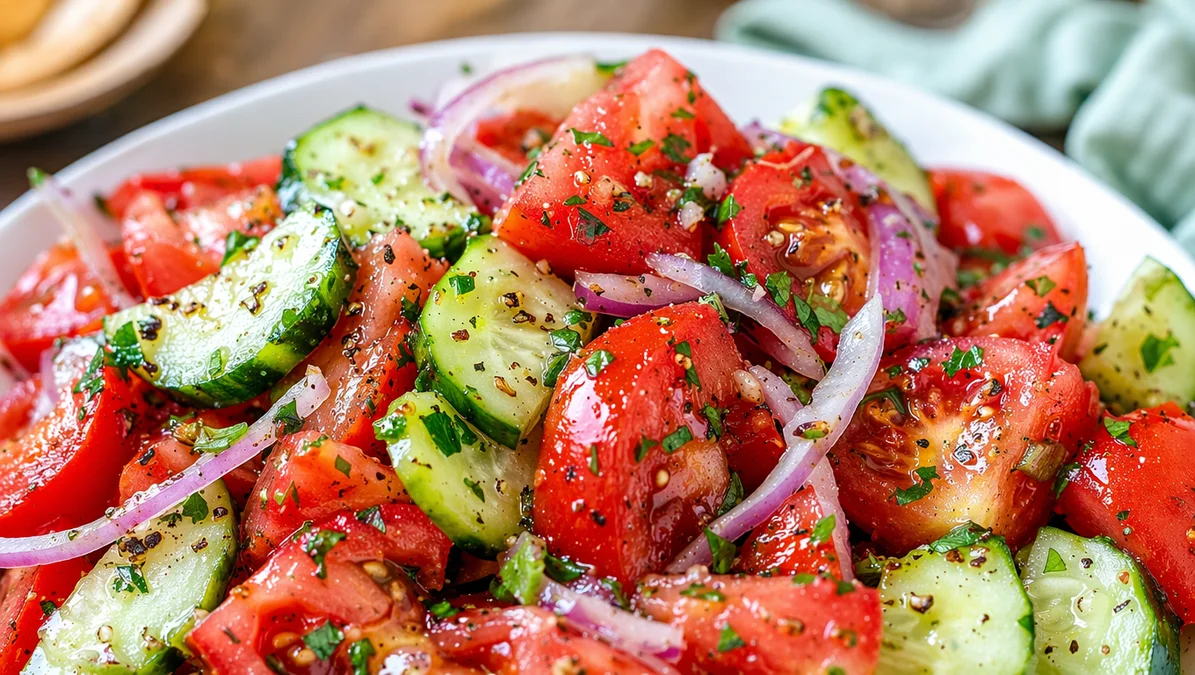
This quick and easy Tomato Cucumber Salad is a light, refreshing side dish perfect for summer parties and potlucks. Made with fresh tomatoes, crisp cucumbers, and a simple vinaigrette, it's…
Ingredients
Instructions
Begin by preparing your vegetables. Wash the cherry tomatoes and cucumber thoroughly under cold running water to remove any dirt or residues. Pat them dry with a clean kitchen towel or paper towels — excess moisture can dilute the dressing and make the salad soggy. For cherry tomatoes, slice each in half using a sharp chef’s knife. If using larger tomatoes, core them first, then dice into bite-sized chunks (about 1-inch pieces). The goal is uniform pieces for even coating with dressing. For the cucumber, if using English cucumber (which has thin skin and few seeds), you can leave the skin on for color and fiber. Slice it in half lengthwise, then cut crosswise into half-moons about 1/4-inch thick. If using a standard garden cucumber with thicker skin and larger seeds, consider peeling it and removing the seeds with a spoon before slicing. For the red onion, slice off the root and stem ends, peel the outer papery layer, and cut thin rings or half-rings. Soaking the onion slices in ice water for 5 minutes can mellow their sharp bite — drain well before adding.
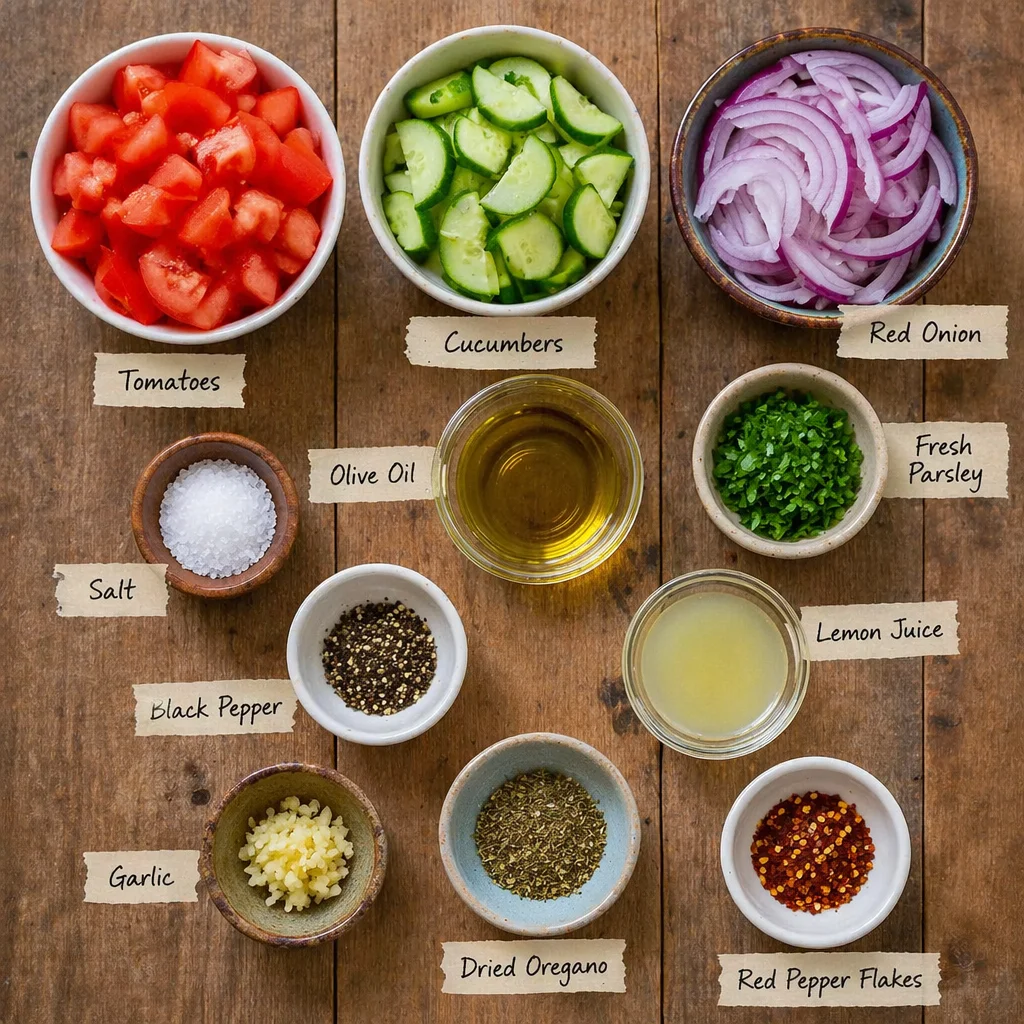
In a large mixing bowl, combine the halved tomatoes, cucumber slices, and red onion. Toss gently with your hands or a large spoon to distribute the ingredients evenly. The bowl should be large enough to allow easy mixing without spilling. At this point, you can add fresh herbs if using — parsley adds a bright, grassy note while basil contributes a sweet, peppery aroma. Chop the herbs coarsely and sprinkle over the vegetables.
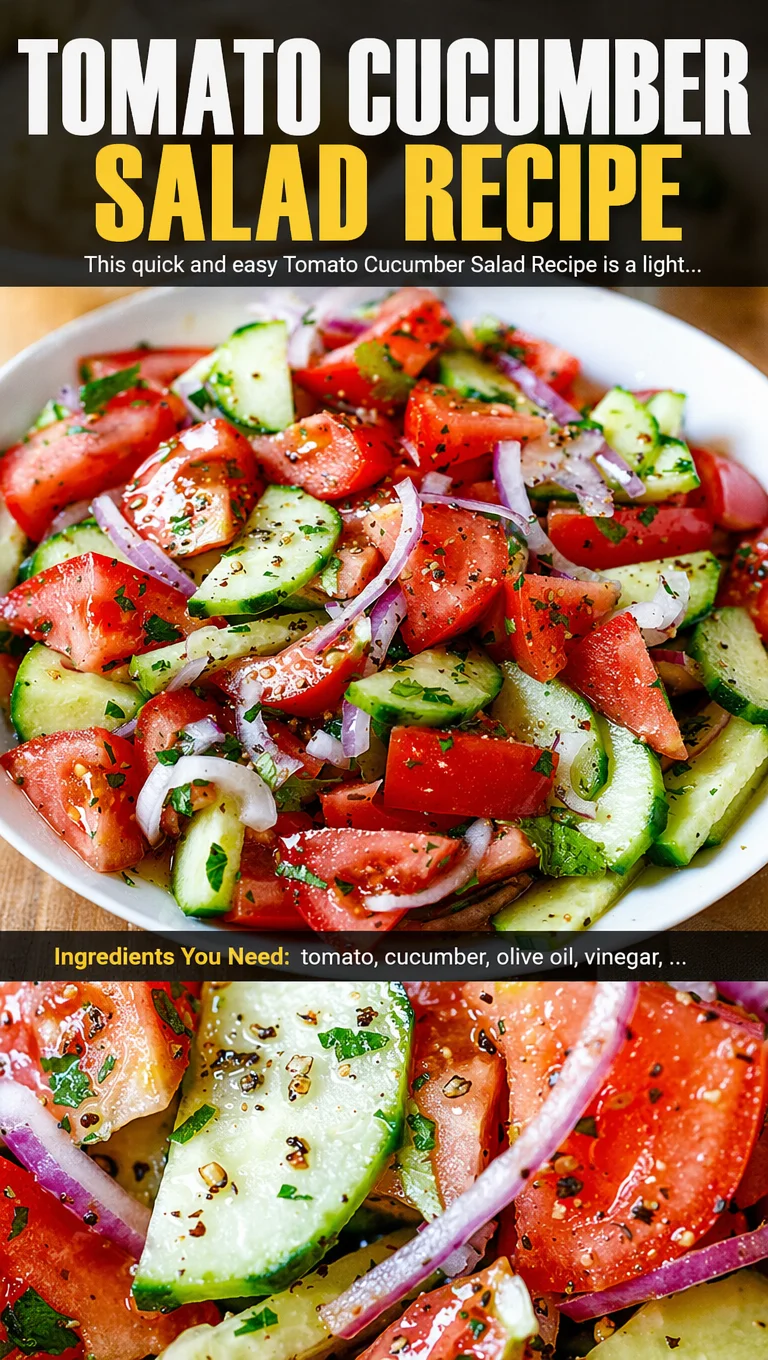
Prepare the simple vinaigrette. In a small bowl or jar, whisk together the olive oil, red wine vinegar, salt, and pepper. The classic ratio for a vinaigrette is roughly 3 parts oil to 1 part acid, but this recipe uses a slightly higher vinegar ratio for a brighter, more refreshing taste that complements the tomatoes and cucumbers. Whisk vigorously until the mixture is emulsified and slightly thickened, about 20 seconds. If using a jar, seal the lid and shake well. Taste the dressing — it should be tangy and well-seasoned; adjust salt or vinegar to your preference. For a twist, you can add a pinch of dried oregano or a small clove of minced garlic to the dressing.
Pour the dressing over the vegetables in the large bowl. Use a spatula or wooden spoon to gently fold the salad, ensuring every piece is lightly coated. Be careful not to crush the tomatoes or break the cucumber slices. The salad should glisten with dressing, but there should not be excess liquid pooling at the bottom. If you prefer a more dressed salad, you can add an extra teaspoon of oil or vinegar. Let the salad sit at room temperature for 5-10 minutes before serving — this allows the flavors to meld and the salt to draw out just a bit of natural juice from the tomatoes and cucumbers, creating a light, flavorful broth.
Transfer the salad to a serving platter or individual bowls. Garnish with additional fresh herbs if desired. This salad is best served immediately while the vegetables are still crisp. However, it also keeps well in the refrigerator for up to 2 days — just note that the cucumbers will soften slightly as they release moisture. If making ahead, consider storing the dressing separately and tossing just before serving. Enjoy as a side dish with grilled chicken, fish, or tofu, or as a light lunch on its own.
For best results
- Choosing the best tomatoes is crucial for flavor. In summer, use ripe, in-season tomatoes from farmers' markets or your garden — they will be sweeter and more aromatic. Cherry or grape tomatoes are ideal because they hold their shape well and have a higher sugar-to-acid balance. If using larger slicing tomatoes (like beefsteak or heirloom), make sure they are fully ripe but still firm. Avoid mealy or overly soft tomatoes. For cucumbers, English cucumbers (also called hothouse or seedless) are preferred because they have a thin skin that doesn't require peeling and contain fewer seeds, resulting in a crisp texture. If using standard cucumbers, peel them and scoop out the seeds with a spoon to prevent the salad from becoming watery.
- To mellow the sharp bite of raw red onion, soak the sliced onion in a bowl of ice water for 5 to 10 minutes before adding to the salad. Drain and pat dry with a paper towel. This step also helps the onion stay crisp. Alternatively, you can substitute red onion with shallots or green onions for a milder flavor. If you love onion flavor, you can skip the soaking.
- The dressing is intentionally simple to let the fresh vegetables shine. However, you can elevate it by adding a teaspoon of Dijon mustard, which acts as an emulsifier and adds a subtle tang. For a creamier version, whisk in a tablespoon of Greek yogurt or a dairy-free alternative. To infuse the oil with garlic, gently warm the olive oil with a crushed garlic clove for a few minutes, then let it cool before using. Strain out the garlic if you prefer a milder infusion.
- Let the salad sit for at least 10 minutes after dressing to allow the flavors to marry. During this time, the salt draws out some liquid from the tomatoes and cucumbers, creating a natural, flavorful juice that coats the vegetables. This is not a bad thing — it enhances the overall taste. However, if you plan to serve the salad later, you can dress it just before serving to maintain maximum crunch. For meal prep, store the undressed salad components in an airtight container in the fridge for up to 3 days, and toss with dressing when ready to eat.
- This salad is incredibly versatile and can be customized with additional ingredients. Add crumbled feta cheese or fresh mozzarella pearls for a creamy, salty contrast. Toss in Kalamata olives, capers, or artichoke hearts for a Mediterranean twist. For extra protein, mix in canned chickpeas (rinsed and drained), grilled chicken strips, or cubed tofu. To add crunch, include toasted pine nuts, walnuts, or croutons. Fresh herbs like mint, dill, or chives can replace or complement parsley and basil.
- If you are preparing this salad for a picnic or potluck, keep it chilled in a cooler until serving. The salad can sit at room temperature for up to 2 hours safely. To prevent sogginess, transport the dressing separately and toss just before serving. Alternatively, you can layer the ingredients in a jar — dressing at the bottom, then cucumbers, tomatoes, and onions on top — and shake when ready. This method keeps everything fresh and crisp.
- For a low-sodium version, reduce the salt to 1/4 teaspoon or use a salt substitute like potassium chloride. The salad still tastes great with less salt because the natural flavors of the vegetables are prominent. You can also boost flavor with a squeeze of lemon juice or a splash of balsamic vinegar instead of extra salt.
Variations
- Mediterranean Tomato Cucumber Salad: Add 1/2 cup crumbled feta cheese, 1/4 cup pitted Kalamata olives, and 1/4 cup diced red bell pepper. Replace the red wine vinegar with lemon juice and add a teaspoon of dried oregano to the dressing. This variation is more substantial and pairs beautifully with grilled lamb or pita bread.
- Creamy Dill Cucumber Tomato Salad: Substitute the vinaigrette with a creamy dressing made from 1/4 cup Greek yogurt, 1 tablespoon lemon juice, 1 tablespoon chopped fresh dill, 1 clove minced garlic, salt, and pepper. This version is tangy and rich, perfect as a side for fish or as a dip with crackers. For a dairy-free option, use a plant-based yogurt.
- Spicy Thai-Inspired Salad: Replace the olive oil with sesame oil and the vinegar with lime juice. Add 1 tablespoon fish sauce (or soy sauce for vegetarian), 1 teaspoon sriracha or chili flakes, and a handful of chopped fresh cilantro and mint. Toss in some shredded carrots and sliced bell peppers for extra color and crunch. This version is bold, refreshing, and pairs well with grilled chicken or shrimp.
- High-Protein Chickpea & Avocado Salad: Add 1 can (15 oz) of chickpeas, rinsed and drained, and 1 diced avocado. Increase the dressing to 3 tablespoons olive oil and 1.5 tablespoons vinegar to coat the extra ingredients. The chickpeas add fiber and plant-based protein, making this a complete light lunch. Sprinkle with cumin or smoked paprika for warmth.
- Caprese-Style Salad: Use fresh mozzarella pearls or diced mozzarella, fresh basil leaves, and a balsamic glaze drizzle instead of the vinaigrette. Omit the onion, or use very thinly sliced shallots. This classic Italian variation is elegant and perfect for summer entertaining. Serve with crusty bread to soak up the juices.
- Roasted Tomato and Cucumber Salad (for cooler months): Roast halved cherry tomatoes at 400°F for 15-20 minutes until blistered and slightly caramelized. Let cool, then combine with fresh cucumber slices and the usual dressing. The roasting concentrates the tomato flavor and adds a smoky sweetness. This variation works well in fall when tomatoes are less flavorful.
Nutrition
- Calories95 kcal
- Total Fat7g
- Saturated Fat1g
- Cholesterol0mg
- Sodium300mg
- Total Carbohydrates8g
- Dietary Fiber2g
- Sugars4g
- Protein2g