
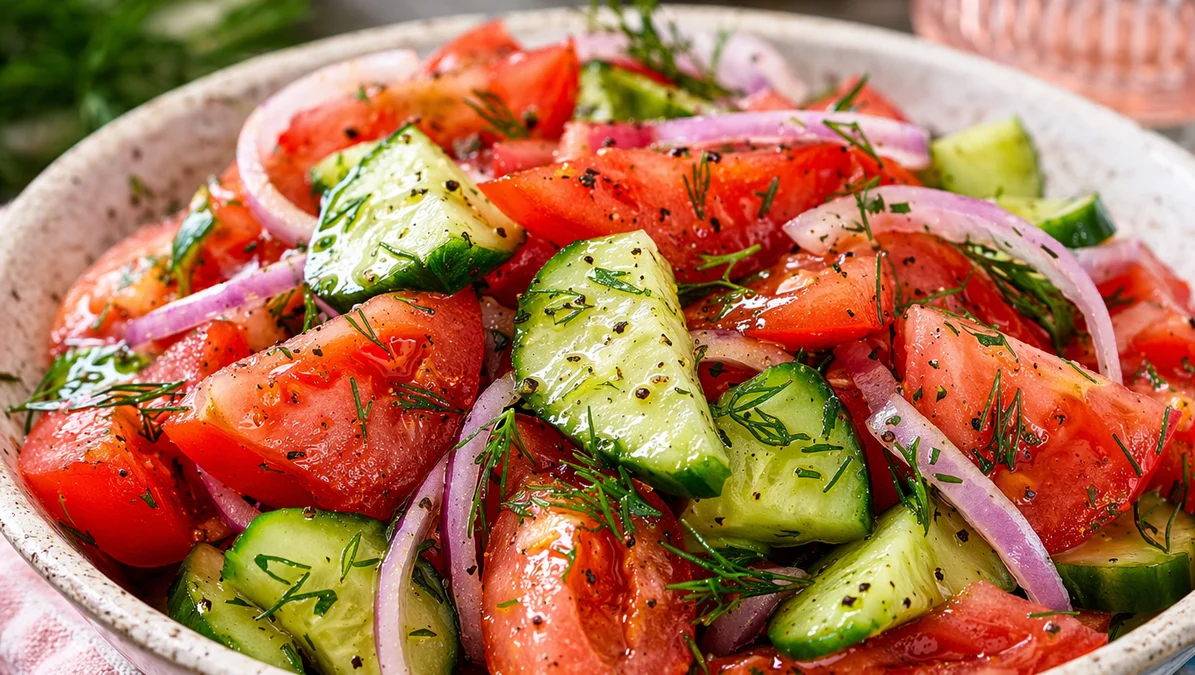
Enjoy Fresh Tomato Cucumber Salad: a quick, healthy side dish with ripe tomatoes, crunchy cucumbers, and a simple vinaigrette. Perfect for high-protein meal prep, low-carb diets, and summer gatherings.
Ingredients
Instructions
Begin by selecting the best produce. For the tomatoes, choose ones that are fully ripe but still firm—they should yield slightly to gentle pressure and have a deep, vibrant color. Heirloom or vine-ripened tomatoes offer superior flavor. For the cucumber, an English (hothouse) cucumber is ideal because it has thin skin and few seeds, reducing bitterness and eliminating the need to peel. If using a garden cucumber, peel it and scoop out the seeds with a spoon to prevent the salad from becoming watery. Rinse all produce under cool running water and pat dry thoroughly with a clean kitchen towel. Excess moisture will dilute the dressing and make the salad soggy.
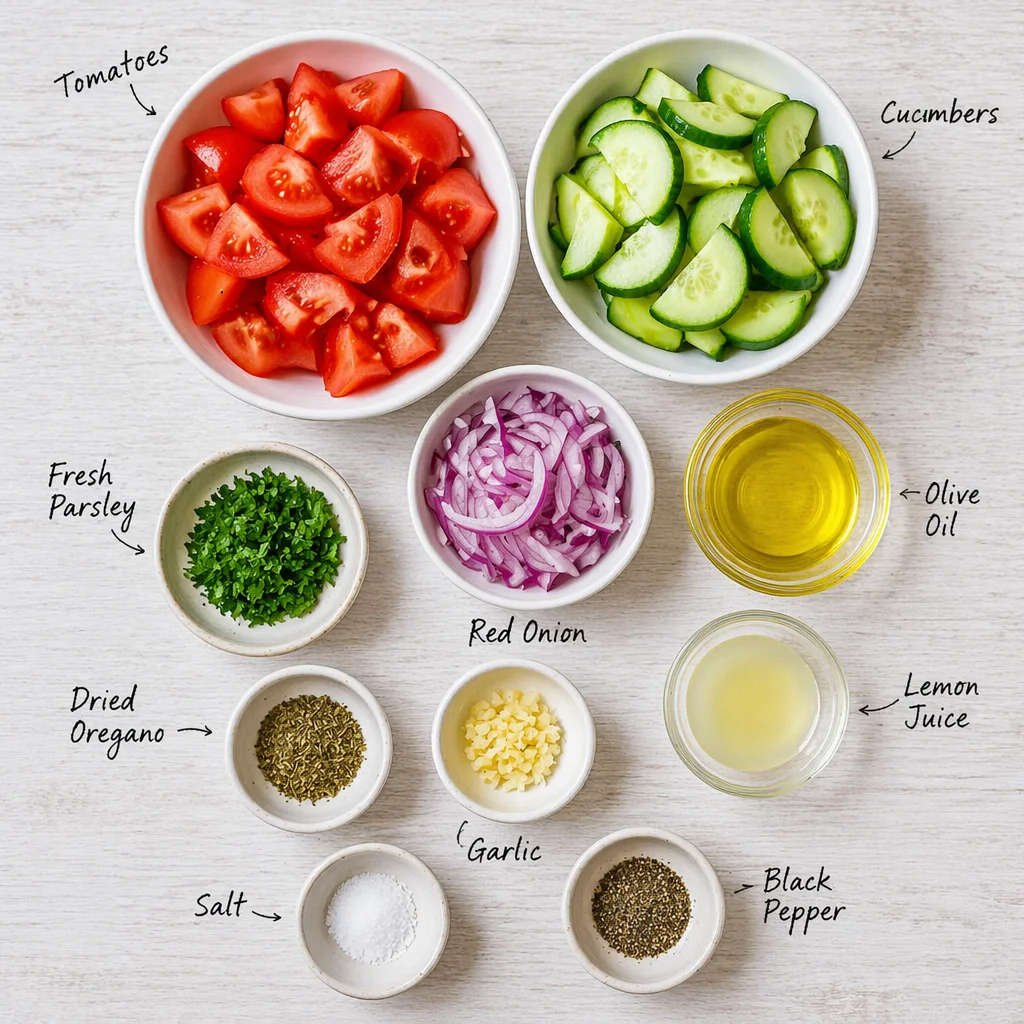
Cut the tomatoes into bite-sized wedges or chunks. For cherry or grape tomatoes, halve them. For larger tomatoes, remove the core with a paring knife, then slice into 1-inch pieces. Place them in a large mixing bowl. The goal is uniform pieces so every bite has a balanced ratio of tomato to cucumber. Next, slice the cucumber. If using an English cucumber, halve it lengthwise, then slice crosswise into half-moons about 1/4-inch thick. If you prefer, you can also dice the cucumber into cubes. Add the cucumber to the bowl with the tomatoes.
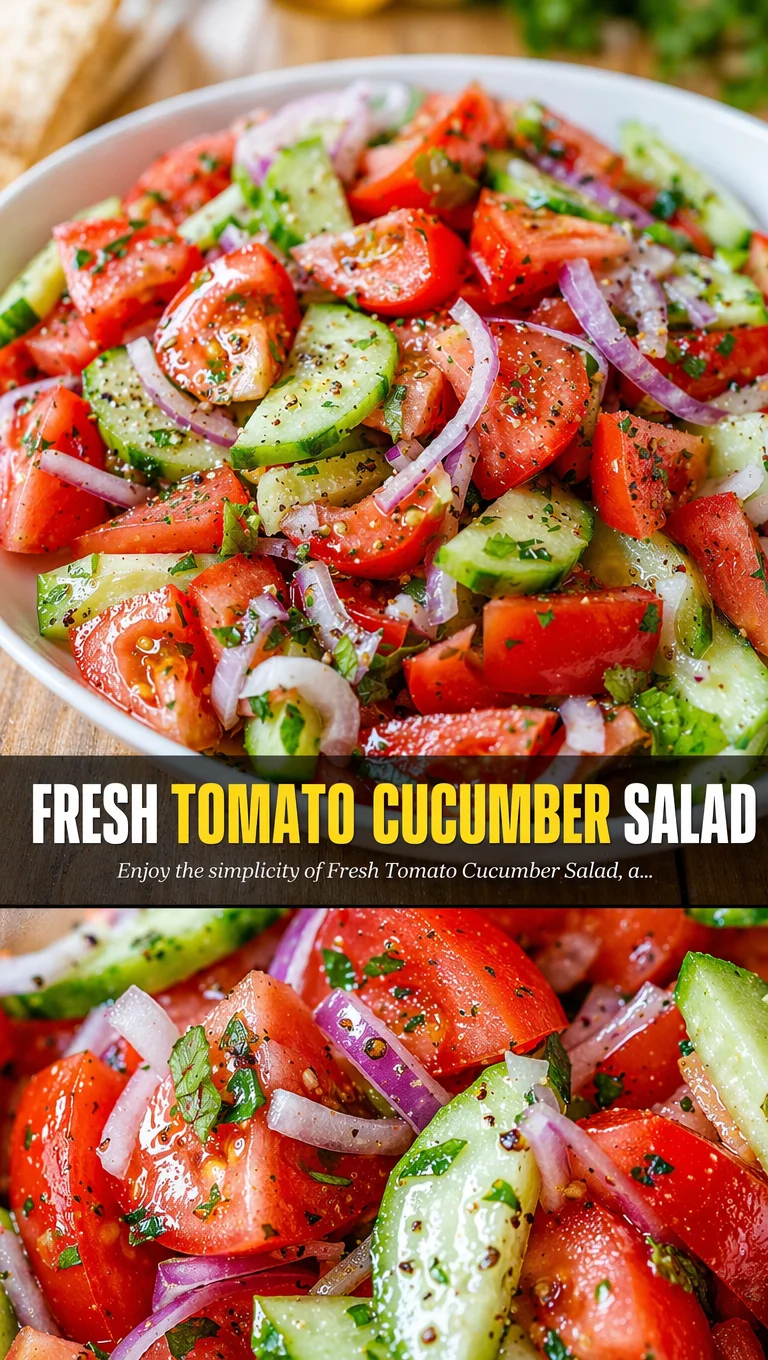
Thinly slice the red onion. A mandoline slicer yields the thinnest, most delicate slices that will soften slightly in the dressing without overpowering the salad. If you find raw onion too sharp, soak the slices in ice water for 10 minutes, then drain and pat dry. This mellows the pungency while retaining crunch. Add the onion to the bowl. If using fresh herbs, roughly chop the dill or parsley and add them now.
In a small jar or bowl, combine the olive oil, red wine vinegar, salt, and pepper. Seal the jar and shake vigorously until the dressing emulsifies, or whisk in a bowl until well combined. Taste and adjust seasoning—the dressing should be tangy and well-salted. Pour the dressing over the vegetables. Using a large spoon or spatula, gently toss everything together until every piece is coated. Be careful not to crush the tomatoes. Let the salad sit at room temperature for 5-10 minutes before serving. This resting time allows the flavors to meld and the vegetables to release their juices, creating a light, natural vinaigrette.
Transfer the salad to a serving platter or bowl. Garnish with additional fresh herbs if desired. Serve immediately as a side dish with grilled chicken, fish, or tofu for a complete high-protein meal. The salad is also delicious on its own as a light lunch. Leftovers can be stored in an airtight container in the refrigerator for up to 2 days, but note that the cucumbers will soften over time. For best texture, enjoy within a few hours of making.
For best results
- For the best flavor, use tomatoes that are in season and at room temperature. Cold tomatoes from the refrigerator are less aromatic and have a muted taste. If you must refrigerate them, let them sit on the counter for 30 minutes before using. Also, never store tomatoes in the fridge for more than a day or two, as cold temperatures damage their texture and reduce flavor compounds.
- To prevent a watery salad, salt the tomatoes and cucumber separately before assembling. Place the cut vegetables in a colander, sprinkle with a little salt, and let them sit for 15 minutes. The salt draws out excess moisture. Pat dry with paper towels before adding the dressing. This step is especially important if you plan to meal prep the salad for multiple days.
- Feel free to customize the dressing. Red wine vinegar is classic, but you can substitute white balsamic, champagne vinegar, or lemon juice for a different acidity. Add a minced garlic clove or a teaspoon of Dijon mustard to the dressing for extra depth. For a creamier version, whisk in a tablespoon of Greek yogurt or tahini.
- To add more protein to this salad, toss in 1 cup of cooked chickpeas, 8 ounces of grilled chicken breast cubes, or 4 ounces of crumbled feta cheese. Feta pairs beautifully with tomatoes and cucumbers and adds a salty, creamy element. For a vegan option, use marinated tofu or tempeh.
- Storage tip: If making ahead, keep the dressing separate and toss just before serving. Store the vegetables and dressing in separate containers in the fridge. The vegetables will stay crisp for up to 2 days, and the dressing will keep for a week. For lunch meal prep, portion the vegetables into containers and pack the dressing in a small leak-proof container to add at lunchtime.
Variations
- Greek-Style: Add 1/2 cup crumbled feta cheese, 1/4 cup sliced Kalamata olives, and a sprinkle of dried oregano. Swap red wine vinegar for lemon juice and add a pinch of dried mint. This version is reminiscent of traditional Greek horiatiki salad and pairs wonderfully with grilled lamb or chicken.
- Avocado & Corn: Add 1 diced ripe avocado and 1 cup of fresh or grilled corn kernels. The avocado adds healthy fats and creaminess, while corn brings sweetness and crunch. Use lime juice instead of vinegar and add a pinch of chili powder for a Southwestern twist. This variation is satisfying enough to be a main dish.
- Herb & Lemon: Replace the red wine vinegar with fresh lemon juice and double the amount of fresh herbs. Use a combination of dill, parsley, mint, and basil. The bright, citrusy flavor is perfect for summer and complements seafood like grilled shrimp or salmon.
- Protein-Packed: Stir in 1 cup of cooked quinoa, 1/2 cup of canned chickpeas (rinsed), and 1/4 cup of pumpkin seeds. Drizzle with a lemon-tahini dressing (2 tablespoons tahini, 1 tablespoon lemon juice, water to thin). This turns the salad into a complete meal with all nine essential amino acids, fiber, and healthy fats.
Nutrition
- Calories145 kcal
- Total Fat11g
- Saturated Fat1.5g
- Cholesterol0mg
- Sodium590mg
- Total Carbohydrates11g
- Dietary Fiber3g
- Sugars6g
- Protein2g