
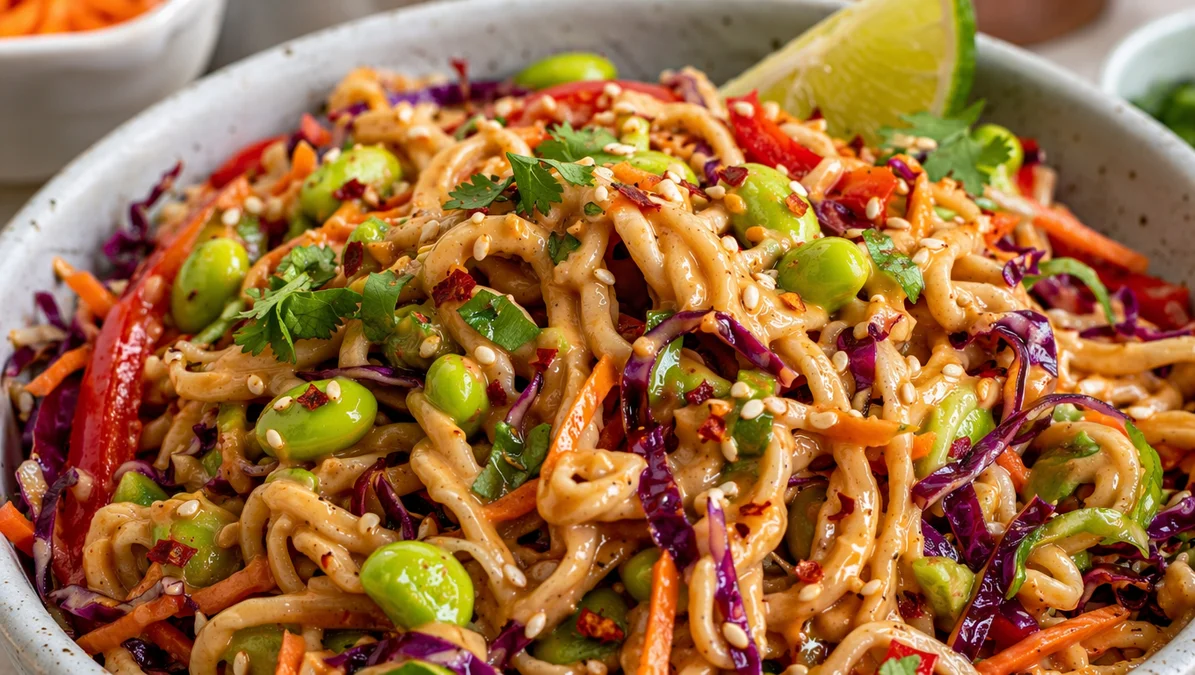
This Thai Peanut Noodle Salad is an easy vegan recipe that's gluten-free and perfect for summer parties. Fresh veggies and rice noodles in a creamy peanut sauce make a macro-friendly…
Ingredients
Instructions
Cook the rice noodles according to package directions. Typically, you’ll bring a large pot of water to a boil, add the noodles, and cook for 4-6 minutes until tender but still slightly chewy (al dente). Be careful not to overcook, as they can become mushy. Drain in a colander and rinse under cold running water to stop the cooking process and remove excess starch. This also helps the noodles stay separate and not clump together. Shake off excess water and set aside. For best texture, toss the noodles with a teaspoon of sesame oil to prevent sticking.
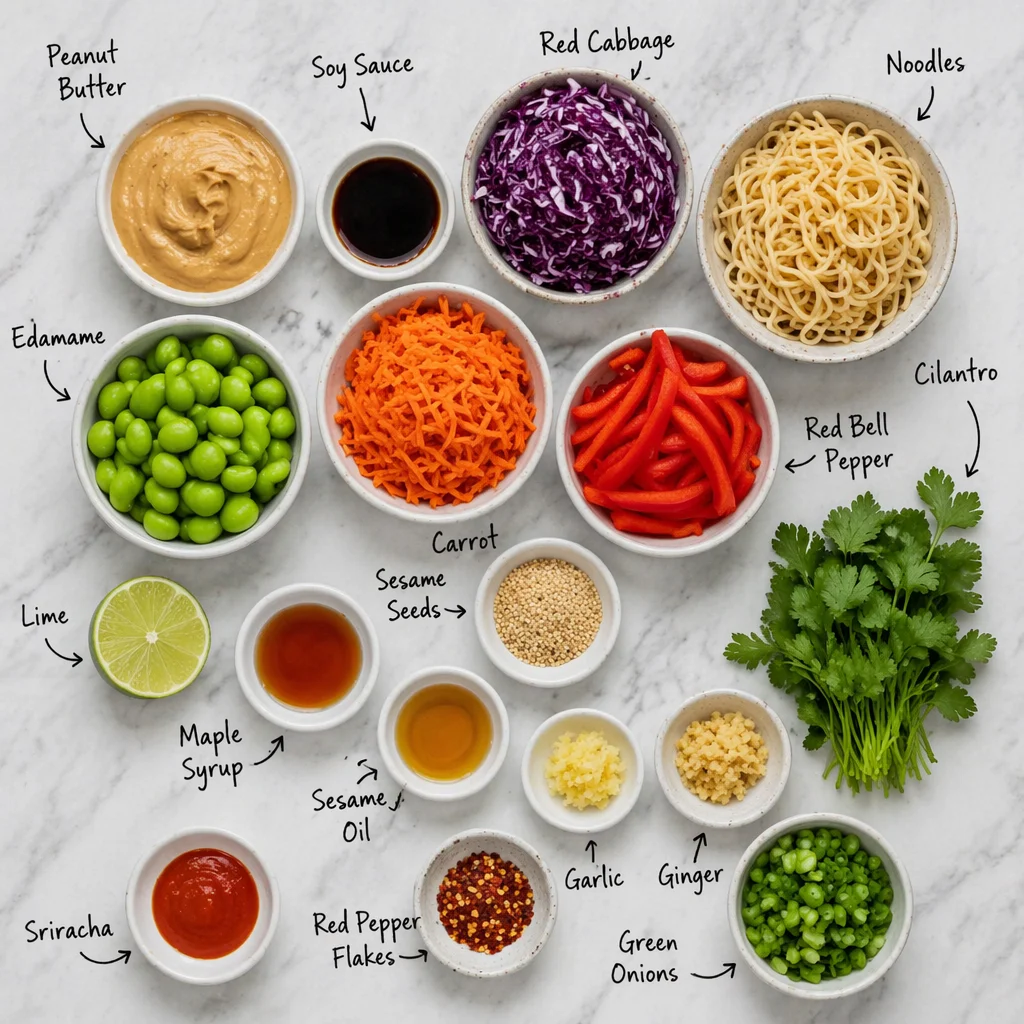
While the noodles cook, prepare the Thai peanut sauce. In a medium bowl, whisk together the peanut butter, soy sauce, lime juice, maple syrup, sesame oil, minced garlic, and grated ginger. The mixture will be thick at first. Gradually add the warm water, 1 tablespoon at a time, whisking continuously until the sauce reaches a smooth, pourable consistency. Taste and adjust seasoning: add more lime for acidity, more maple for sweetness, or a pinch of red pepper flakes for heat. The sauce should be creamy, tangy, and slightly sweet with a savory umami kick.
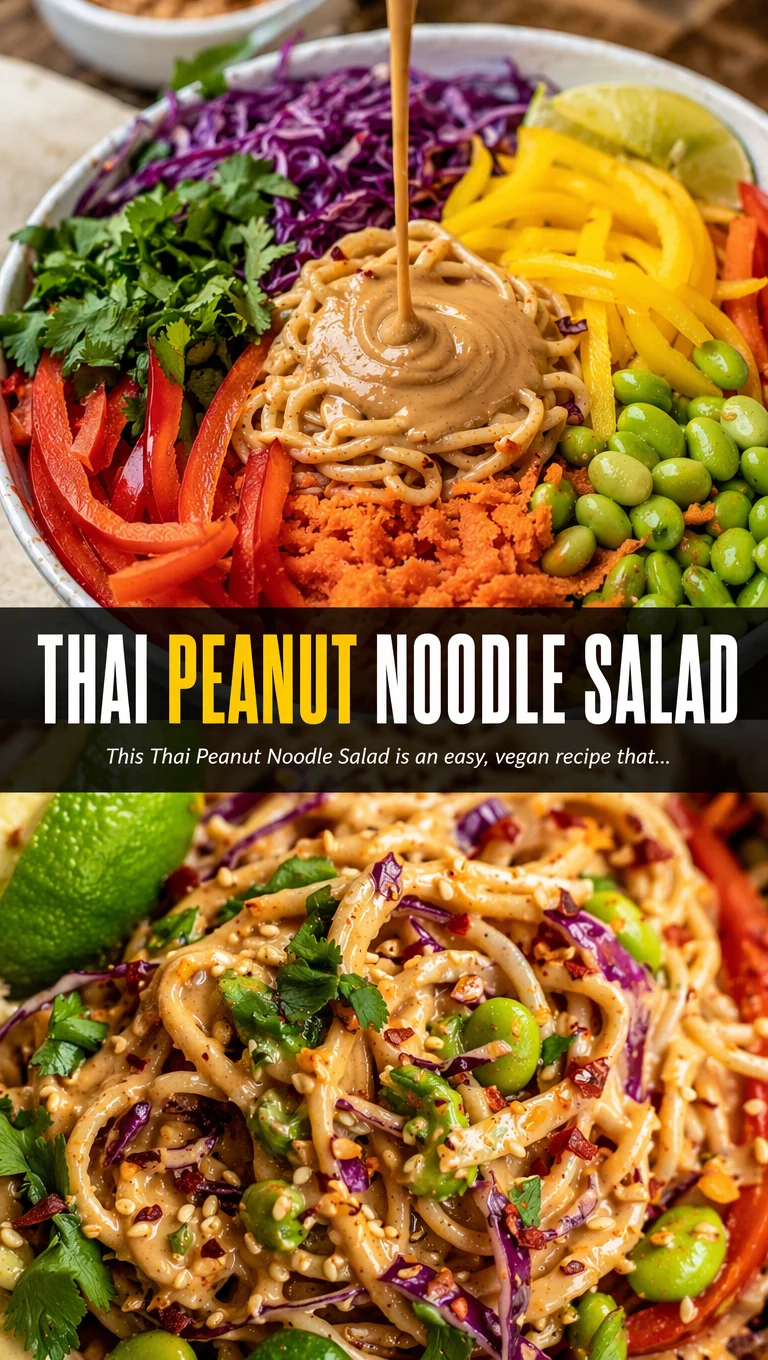
Prepare the vegetables. Julienne the carrots into thin matchsticks using a julienne peeler or a sharp knife. Alternatively, you can use a box grater for thicker shreds. Thinly slice the red bell pepper into strips about 2 inches long. If you have a mandoline, it makes quick work of this. For extra crunch, you can also add thinly sliced cucumber or bean sprouts. Chop the cilantro roughly, including the tender stems for more flavor.
In a large mixing bowl, combine the cooled rice noodles, julienned carrots, sliced bell pepper, and half of the chopped cilantro. Pour the peanut sauce over the top and toss gently using tongs or two forks until everything is evenly coated. The sauce should cling to every noodle and vegetable. If the salad seems dry, add a splash of warm water or extra lime juice to loosen it up.
Divide the salad among serving bowls. Garnish with the remaining cilantro and crushed roasted peanuts. For an extra protein boost, top with edamame or shredded cooked chicken. Serve immediately at room temperature or chilled. This salad also stores well in the refrigerator for up to 4 days, making it perfect for meal prep. The flavors continue to meld and develop as it sits, so leftovers often taste even better the next day.
For best results
- For the best texture, cook the rice noodles just until al dente. They will continue to soften slightly as they cool and absorb the sauce. Overcooking leads to a mushy salad. Rinsing with cold water after draining is essential to remove excess starch and stop the cooking process. Tossing with a little oil prevents sticking.
- Use natural peanut butter without added sugar or hydrogenated oils for the healthiest and most authentic flavor. The oil separation is normal; stir it well before measuring. If your peanut butter is very thick, you may need to add an extra tablespoon of warm water to achieve a pourable sauce.
- Sensory cues for the sauce: It should be smooth, creamy, and able to coat the back of a spoon. The aroma should be nutty with bright citrus notes from the lime and a hint of garlic and ginger. Taste for balance: it should be savory (soy sauce), tangy (lime), sweet (maple), and nutty (peanut butter). Adjust to your preference.
- To julienne carrots like a pro, first cut the carrot into 2-inch segments, then slice each segment lengthwise into thin planks. Stack the planks and cut into thin matchsticks. Alternatively, use a julienne peeler or the shredding disc of a food processor for speed.
- This salad is incredibly versatile for meal prep. Store the sauce separately if you prefer the noodles to stay firmer, but tossing everything together allows the flavors to meld beautifully. The salad keeps well in an airtight container in the fridge for up to 4 days. Let it come to room temperature for 10 minutes before serving, or enjoy it cold.
- For a spicy kick, add 1/2 teaspoon of sriracha or sambal oelek to the sauce. You can also garnish with thinly sliced red chili or a drizzle of chili oil. If you're avoiding peanuts, substitute with sunflower seed butter or tahini for a nut-free version.
Variations
- Protein-Packed Version: Add 1 cup of cooked edamame, shredded rotisserie chicken, or pan-seared tofu for a complete meal. Edamame adds a beautiful pop of green and extra fiber. For a vegan option, marinate and bake extra-firm tofu cubes at 400°F for 20 minutes until golden, then toss them in the salad.
- Crunchy Veggie Boost: Incorporate additional raw vegetables like julienned cucumber, thinly sliced snap peas, shredded purple cabbage, or bean sprouts. These add different textures and colors, making the salad even more nutritious and visually appealing. Purple cabbage also adds antioxidants and a beautiful hue.
- Spicy Mango Twist: Add 1/2 cup of diced ripe mango for a sweet and tropical contrast. The mango's sweetness balances the savory peanut sauce beautifully. Toss gently to avoid mashing the mango. This variation is especially refreshing on hot summer days.
- Low-Carb / Zoodle Version: Replace rice noodles with spiralized zucchini or a mix of zucchini and carrot noodles. Do not cook the zoodles; just pat them dry with paper towels to remove excess moisture. The peanut sauce clings wonderfully to the zoodles, and this version is keto-friendly and even lighter.
- Cold Soba Noodle Salad: Swap rice noodles for buckwheat soba noodles for a nuttier flavor and higher protein content. Cook soba according to package directions, rinse well under cold water, and toss with the same peanut sauce. Soba noodles hold up well and add a lovely earthy taste.
Nutrition
- Calories385 kcal
- Total Fat18g
- Saturated Fat3g
- Cholesterol0mg
- Sodium520mg
- Total Carbohydrates48g
- Dietary Fiber5g
- Sugars10g
- Protein12g