
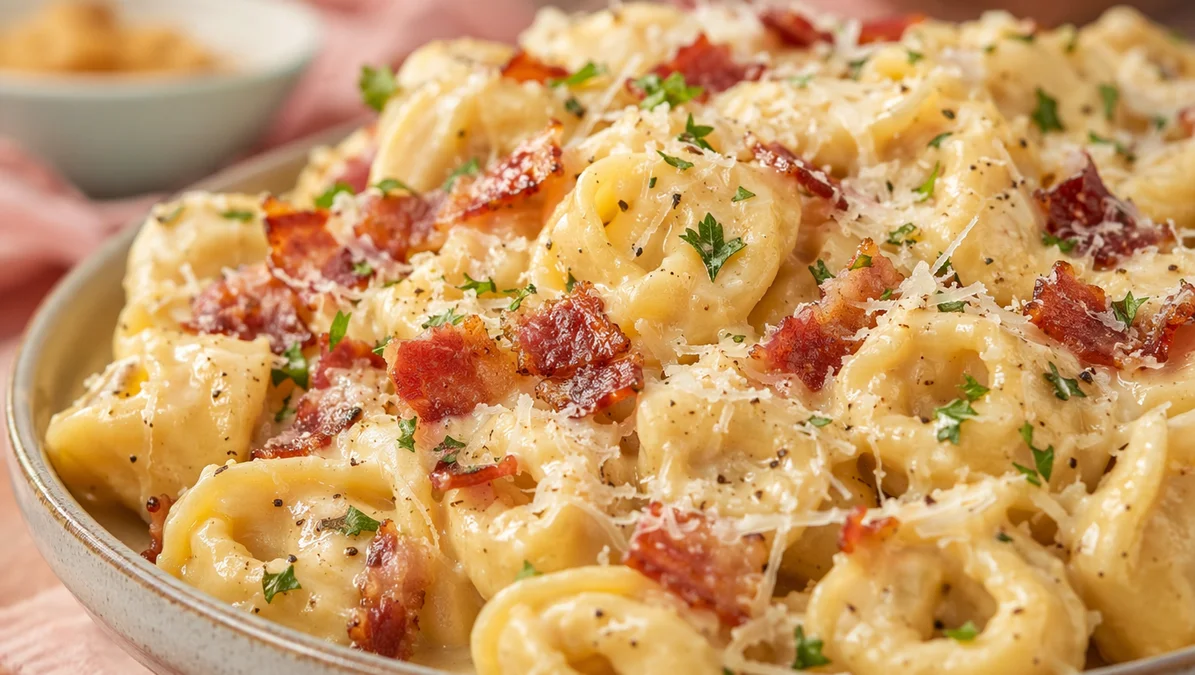
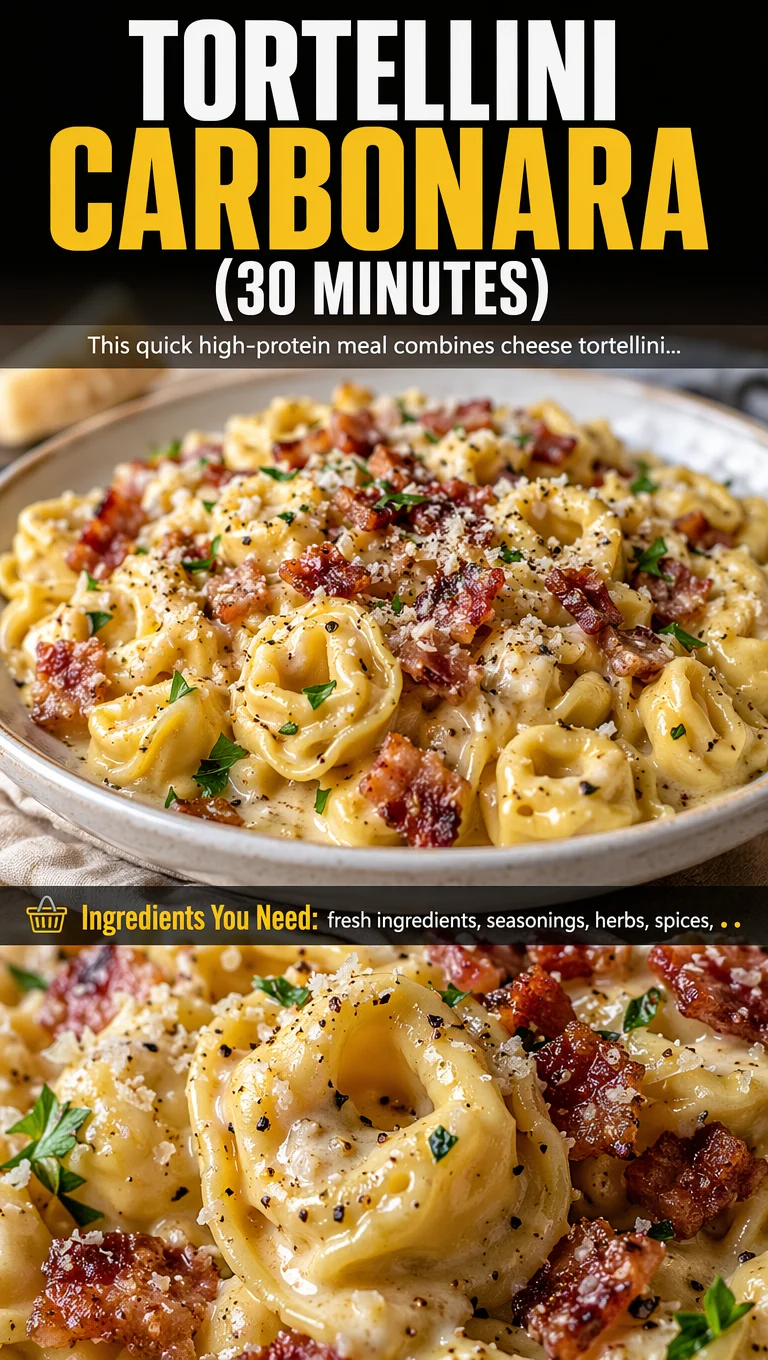
This quick high-protein meal combines cheese tortellini with a creamy, egg-free carbonara sauce for a macro-friendly dinner ready in just 30 minutes.
Ingredients
Instructions
Bring a large pot of salted water to a rolling boil. The water should be as salty as the sea — about 1 tablespoon of salt per 4 quarts of water — because this is your only chance to season the pasta from within. Add the tortellini and cook according to package directions until al dente, typically 2-4 minutes for fresh tortellini (if using frozen, add 1-2 minutes). Fresh tortellini cooks very quickly, so watch carefully. Once cooked, drain the tortellini in a colander, but do not rinse. Rinsing would wash away the starch that helps the sauce cling to the pasta. Set aside. While the pasta cooks, you can prepare the sauce.
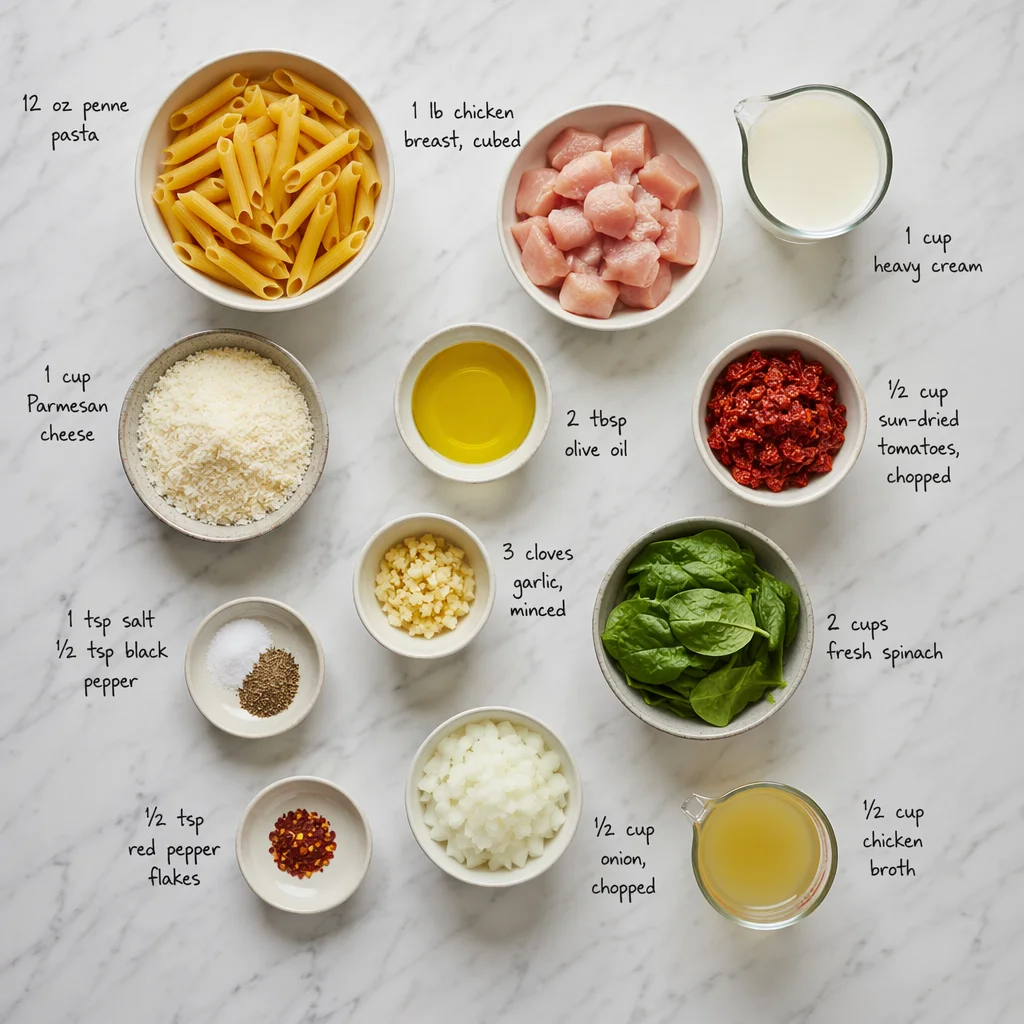
While the tortellini is cooking, place a large skillet or sauté pan over medium heat. Add the diced turkey bacon in a single layer — do not overcrowd or it will steam instead of crisp. Cook for 5-7 minutes, stirring occasionally, until the bacon is browned and crispy. Turkey bacon has less fat than pork bacon, so it may stick; if needed, add 1 teaspoon of olive oil to the pan. Once crispy, use a slotted spoon to transfer the bacon to a paper towel-lined plate, leaving the rendered fat in the pan (about 1-2 tablespoons). This fat will flavor the sauce beautifully.
Reduce the heat to medium-low and add the minced garlic to the skillet with the bacon fat. Sauté for 30-45 seconds until fragrant, stirring constantly to prevent burning. Garlic burns quickly and turns bitter, so keep a close eye. Immediately pour in the chicken broth, scraping the bottom of the pan with a wooden spoon to deglaze and lift any browned bits (fond). This step adds tremendous depth of flavor. Increase the heat to medium-high and let the broth simmer for 2-3 minutes, allowing it to reduce slightly and concentrate the flavor.
Turn the heat to low and slowly pour in the heavy cream while whisking continuously. Whisking prevents the cream from curdling when it hits the hot liquid. Once the cream is incorporated, add the freshly grated Parmesan cheese a handful at a time, whisking after each addition until melted. Do not use pre-shredded Parmesan, as it contains anti-caking agents that prevent smooth melting. The sauce should become thick and velvety, coating the back of a spoon. Season with black pepper and salt if needed. Remember that Parmesan is salty, so taste before adding more salt.
Add the drained tortellini and cooked turkey bacon to the skillet with the sauce. If using peas, stir them in now (frozen peas can go straight in; they will thaw and warm in the sauce). Gently toss everything together with tongs or a silicone spatula until the tortellini is evenly coated in the creamy sauce. Let it cook for 1-2 minutes on low heat, stirring occasionally, so the pasta absorbs some of the sauce. If the sauce becomes too thick, add a splash of reserved pasta water or chicken broth to loosen it. The sauce will continue to thicken as it sits, so err on the slightly looser side.
Remove the skillet from the heat. Serve immediately in warm bowls, garnishing each portion with a generous sprinkle of fresh parsley and an extra dusting of Parmesan cheese if desired. For the best texture and flavor, enjoy right away while the sauce is creamy and the tortellini is tender. If you need to hold it for a few minutes, cover the pan loosely with foil, but note that the sauce will thicken as it cools. See the tips section for reheating instructions.
For best results
- Turkey Bacon Sourcing & Prep: Look for turkey bacon that is minimally processed with no added sugars or artificial preservatives. Thick-cut turkey bacon works best because it holds its shape and crisps up nicely. For extra crispiness, you can bake the diced turkey bacon on a sheet pan at 400°F (200°C) for 10-12 minutes instead of pan-frying. This also frees up stovetop space and reduces splatter. If you prefer a smoky flavor, choose applewood-smoked turkey bacon. Remember that turkey bacon is leaner than pork, so it may not render as much fat; using a touch of olive oil when sautéing ensures browning.
- Parmesan Cheese: The Key to Creaminess: Always buy a block of authentic Parmigiano-Reggiano (look for the rind stamp) and grate it yourself on a microplane or the fine side of a box grater. Pre-shredded cheese is coated with cellulose (wood pulp) to prevent clumping, which prevents it from melting smoothly into a sauce — you'll end up with a grainy, clumpy mess. For the best flavor, grate the cheese just before using. If you want a more budget-friendly option, use Grana Padano, which has a slightly milder flavor but melts just as well. Avoid imitation Parmesan in a can; it has little flavor and does not melt.
- Sauce Consistency Troubleshooting: If your sauce turns out too thick, whisk in a splash of the reserved pasta cooking water (starchy water helps bind the sauce) or additional chicken broth. If it's too thin, let it simmer for an extra minute or two to reduce, or add another tablespoon of grated Parmesan. The sauce will also thicken as it sits off the heat, so serve immediately. For an even richer sauce without eggs (as in traditional carbonara), you can add an extra 2 tablespoons of cream cheese or 1/4 cup of mascarpone at the end, whisking until smooth.
- Make-Ahead and Storage: This dish is best enjoyed fresh, but leftovers can be stored in an airtight container in the refrigerator for up to 3 days. To reheat, place the tortellini in a skillet over low heat with a splash of milk or broth, stirring gently until warmed through. Avoid the microwave, which can make the sauce separate and become greasy. If you're meal-prepping, consider cooking the tortellini and bacon separately, then combining with the sauce just before serving. The sauce can be made up to 2 days ahead and stored in the fridge; reheat gently before adding pasta.
- Vegetable Add-Ins: Boost the nutrition and color by adding vegetables. Frozen peas are a classic choice — stir them in at the end so they retain their bright green color and slight crunch. For a more substantial veggie presence, sauté 2 cups of spinach or kale in the pan after cooking the bacon (add a splash of broth to wilt). You can also add roasted cherry tomatoes, sautéed mushrooms, or steamed broccoli florets. Just be mindful of added moisture; if using watery vegetables like zucchini, sauté them first to remove excess liquid.
- Serving Suggestions: For a complete meal, serve this tortellini carbonara alongside a crisp green salad dressed with lemon vinaigrette to cut through the richness. A side of roasted asparagus or steamed green beans also pairs beautifully. If you want extra protein, top each serving with a poached or fried egg — the runny yolk creates an even more luxurious sauce. For a lower-carb option, use zucchini noodles or spaghetti squash instead of tortellini, but adjust cooking times accordingly.
- Ingredient Substitutions: If you don't have turkey bacon, use center-cut bacon, Canadian bacon, or diced ham. For a vegetarian version, omit the bacon and add 1 tablespoon of olive oil and 1/2 teaspoon smoked paprika to the pan; then stir in 1 cup of sautéed mushrooms or plant-based bacon bits. To make the dish gluten-free, use gluten-free tortellini (available in the frozen section) and ensure your broth and Parmesan are gluten-free. For a dairy-free version, use full-fat coconut cream instead of heavy cream and a vegan Parmesan alternative (look for one with cashew base for best melt).
Variations
- Classic Pork Carbonara Twist: For a more traditional carbonara experience, substitute the turkey bacon with 6 ounces of guanciale or pancetta, diced. These cured pork products have a higher fat content, which yields a richer, silkier sauce. Render the guanciale over medium-low heat until crispy and the fat is fully rendered (about 8-10 minutes). Then proceed with the recipe, but omit the added oil. For an even more authentic version, whisk 2 large egg yolks into the finished sauce off the heat, stirring vigorously to create a velvety emulsion without scrambling the eggs. This adds extra richness and a beautiful golden hue.
- Spicy Arrabbiata Carbonara: Add a kick of heat by including 1/2 teaspoon of red pepper flakes with the garlic. For a more pronounced spicy-tomato flavor, stir in 1/4 cup of sun-dried tomato pesto along with the cream. The sweetness of the sun-dried tomatoes balances the heat and complements the salty turkey bacon. Garnish with fresh basil instead of parsley for an Italian-inspired twist. This variation works especially well if you use spinach and ricotta tortellini instead of cheese tortellini.
- Mushroom & Herb Carbonara: Sauté 8 ounces of sliced cremini or shiitake mushrooms in the pan after cooking the bacon (add a bit of olive oil if needed). Cook until golden brown and all moisture has evaporated, about 5-7 minutes. Then add the garlic and proceed as directed. Stir in 1 tablespoon of fresh thyme leaves along with the parsley at the end. The earthy mushrooms add umami and make the dish more satisfying for vegetarians (if you omit the bacon and use vegetable broth). For extra decadence, drizzle with truffle oil just before serving.
- Lighter Cream Sauce Version: If you want to reduce calories and fat, replace the heavy cream with 1 cup of low-fat evaporated milk or a mixture of 1/2 cup low-sodium chicken broth and 1/2 cup plain Greek yogurt (full-fat Greek yogurt works best to prevent curdling). To avoid curdling when using yogurt, temper it first: whisk a few tablespoons of the hot broth into the yogurt, then slowly add the yogurt mixture back into the pan over very low heat. Do not boil after adding yogurt. This version yields a tangy, protein-packed sauce with about half the fat of the original.
- Seafood Carbonara: Swap the turkey bacon for 8 ounces of peeled and deveined shrimp or flaked cooked crabmeat. Sauté shrimp in the pan with a little olive oil until pink and opaque, about 2-3 minutes per side. Remove and set aside, then proceed with the sauce. Stir the shrimp back in at the end along with the tortellini. Add a pinch of lemon zest to the sauce for brightness. This variation is perfect for a special occasion dinner that still comes together in 30 minutes.
- Vegan Carbonara: For a plant-based version, use vegan cheese tortellini (check the frozen section), and replace the turkey bacon with 4 ounces of smoked tempeh bacon or coconut bacon. Use full-fat coconut cream instead of heavy cream, and a high-quality vegan Parmesan (like Violife or Follow Your Heart). Sauté the tempeh bacon in 1 tablespoon of olive oil until crispy, then add 1/4 cup of nutritional yeast along with the garlic for a cheesy, umami flavor. The coconut cream provides a rich, creamy texture that mimics dairy well. Finish with a squeeze of lemon to brighten the flavors.
Nutrition
- Calories485 kcal
- Total Fat24g
- Saturated Fat12g
- Cholesterol85mg
- Sodium920mg
- Total Carbohydrates42g
- Dietary Fiber2g
- Sugars5g
- Protein28g