
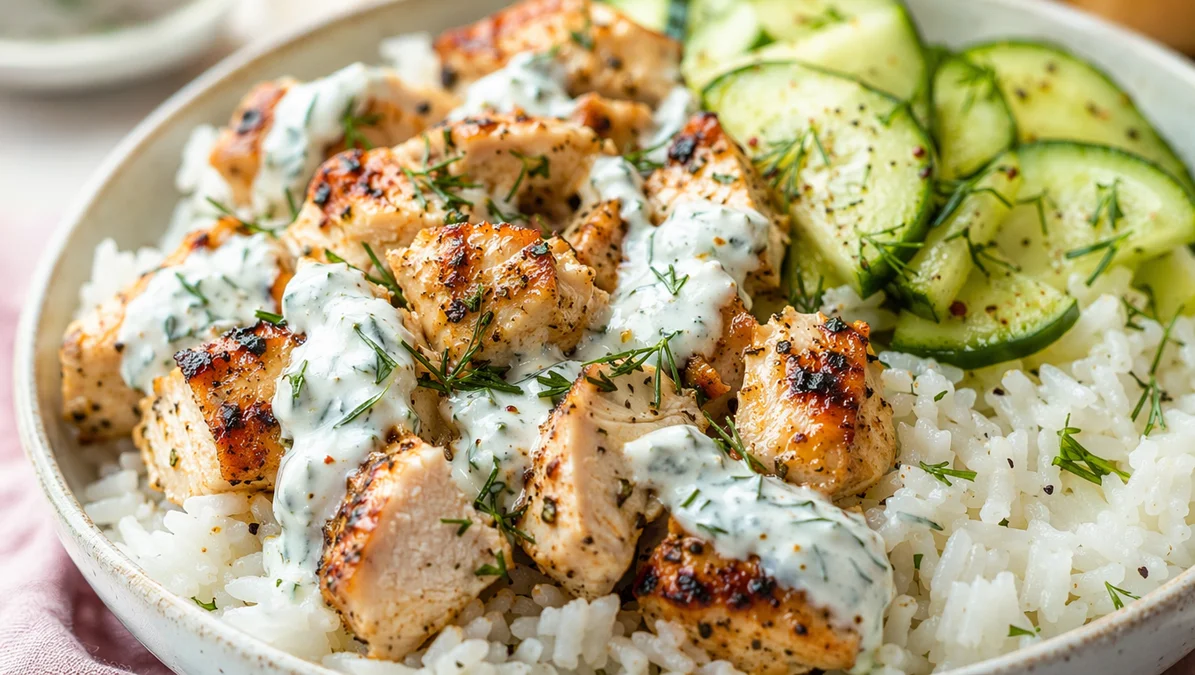
This quick high-protein chicken tzatziki rice bowl layers tender seasoned chicken, cool cucumber tzatziki, and fluffy basmati rice for a balanced macro-friendly meal. Ready in 20 minutes!
Ingredients
Instructions
Begin by preparing the tzatziki sauce, as it benefits from a little time to meld flavors. Grate the cucumber using the large holes of a box grater. Place the grated cucumber in a clean kitchen towel or cheesecloth and squeeze firmly to remove as much excess water as possible. This step is crucial; removing the moisture prevents the tzatziki from becoming watery and ensures a thick, creamy texture. In a medium bowl, combine the squeezed cucumber, Greek yogurt, minced garlic, lemon juice, chopped dill, and a pinch of salt and pepper. Stir until well incorporated. Taste and adjust seasoning if needed. Cover and refrigerate while you prepare the rest of the meal. The flavors will deepen as it chills.
Next, cook the rice. Rinse the basmati rice under cold water until the water runs clear to remove excess starch, which helps the rice cook up fluffy and separate. In a small saucepan, combine the rinsed rice and water (or chicken broth for extra flavor). Bring to a boil over high heat. Once boiling, reduce the heat to low, cover tightly with a lid, and simmer for 15 minutes. Do not lift the lid during cooking, as steam is essential for proper absorption. After 15 minutes, remove from heat and let it sit, covered, for 5 minutes. Then fluff with a fork. The rice should be tender and each grain distinct.
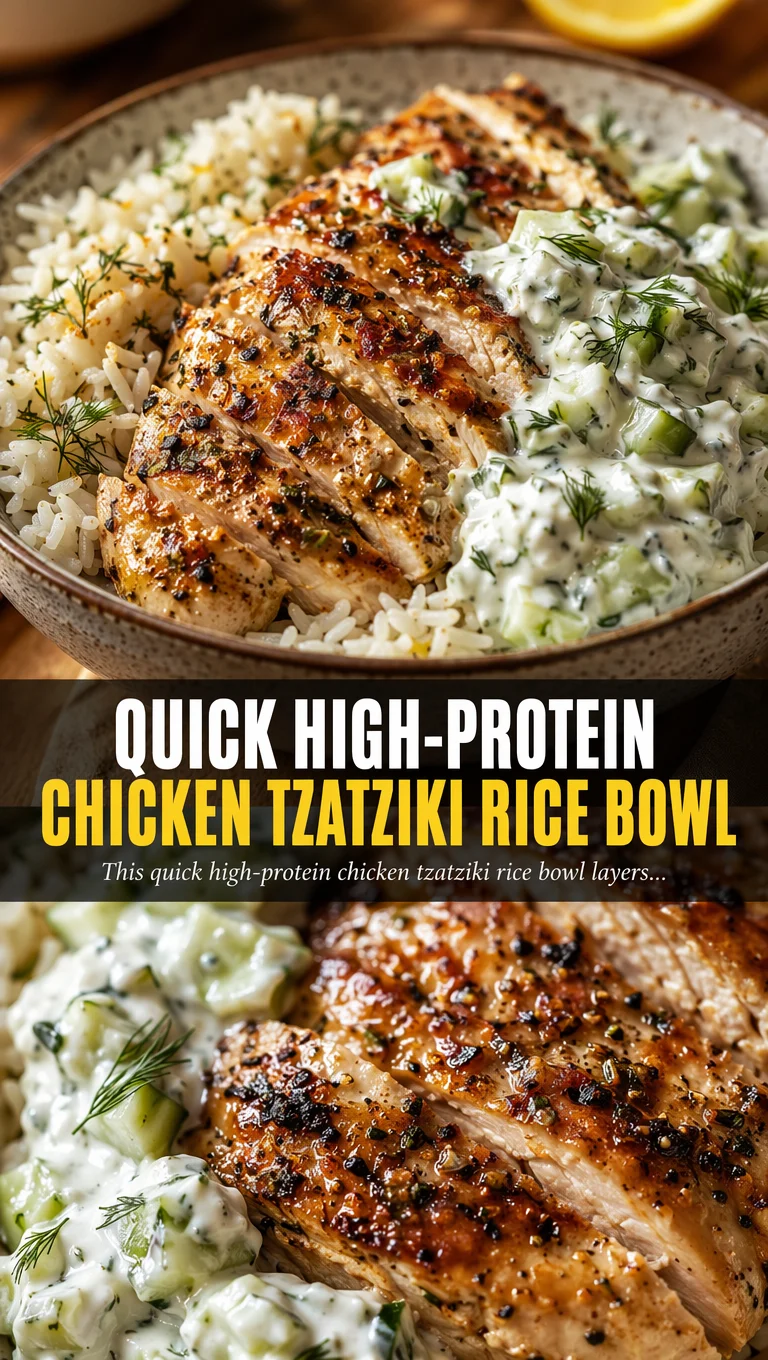
While the rice cooks, prepare the chicken. Pat the chicken breasts dry with paper towels to ensure a good sear. Season both sides evenly with dried oregano, garlic powder, salt, and pepper. The oregano adds a classic Mediterranean note that pairs beautifully with tzatziki. Heat olive oil in a large non-stick skillet over medium-high heat. Once the oil shimmers, add the chicken breasts. Cook for 5-7 minutes per side, depending on thickness, until golden brown and cooked through. The internal temperature should reach 165°F (74°C) on an instant-read thermometer. For even cooking, you can pound the chicken to an even thickness before seasoning. Let the chicken rest on a cutting board for 5 minutes before slicing. Resting allows the juices to redistribute, keeping the meat moist.
Slice the rested chicken against the grain into bite-sized pieces. To assemble the bowls, divide the fluffy basmati rice among four bowls. Top each with a generous portion of sliced chicken. Spoon the chilled tzatziki sauce over the chicken, allowing it to cascade down. Garnish with fresh dill sprigs and optional toppings like cucumber slices, cherry tomatoes, or olives. Serve immediately. The combination of warm seasoned chicken, cool creamy tzatziki, and fluffy rice creates a satisfying contrast of temperatures and textures.
For best results
- For the best tzatziki texture, always squeeze the grated cucumber thoroughly. If you skip this step, the sauce will release water and become runny, especially after sitting. You can also let the grated cucumber sit in a colander sprinkled with salt for 10 minutes to draw out extra moisture before squeezing. This is a common technique in Greek kitchens and ensures a thick, dip-worthy tzatziki.
- To save time, you can cook the rice in advance and reheat it. Cooked basmati rice keeps well in the refrigerator for up to 4 days. Simply reheat in the microwave with a damp paper towel to restore moisture, or in a skillet with a splash of water. This makes assembling the bowl even faster on busy nights.
- For extra flavor, marinate the chicken for 30 minutes to 2 hours in a mixture of olive oil, lemon juice, oregano, and garlic. This not only infuses the meat with deeper Mediterranean notes but also helps tenderize it. If you're short on time, the dry rub works perfectly too.
- If you prefer a dairy-free option, use a plant-based Greek-style yogurt (coconut or almond-based) for the tzatziki. The flavor will be slightly different, but still delicious. Be sure to choose an unsweetened, plain variety to keep the savory profile intact.
- To make this recipe even higher in protein, serve with a side of grilled chicken or add a scoop of cottage cheese. You can also double the chicken portion and use leftovers for salads or wraps throughout the week.
- For a lower-carb version, swap the rice for cauliflower rice or a bed of mixed greens. The tzatziki and chicken are naturally low-carb, making this an easy adaptation for keto or low-carb diets.
Variations
- Spicy Chicken Tzatziki Bowl: Add 1/2 teaspoon of smoked paprika and a pinch of cayenne pepper to the chicken seasoning. For an extra kick, mix a teaspoon of sriracha or harissa paste into the tzatziki sauce. This variation adds warmth without overpowering the fresh cucumber and dill.
- Mediterranean Bowl with Lamb: Substitute the chicken with ground lamb or lamb strips. Season with cumin, coriander, and a pinch of cinnamon for a more traditional Greek flavor. Cook the lamb until browned and crispy. This variation pairs beautifully with the tzatziki and adds a rich, savory depth.
- Vegetarian Tzatziki Bowl: Replace the chicken with grilled halloumi cheese or crispy chickpeas. For chickpeas, toss one can (drained and rinsed) with olive oil, oregano, and garlic powder, then roast at 400°F (200°C) for 20 minutes until golden. Halloumi can be pan-seared until golden on both sides. This version is still high in protein and incredibly satisfying.
- Meal Prep Bowls: Assemble the bowls in airtight containers, keeping the tzatziki separate to prevent sogginess. Store rice, chicken, and toppings in one compartment and tzatziki in a small container. When ready to eat, reheat the rice and chicken (if desired) and add the tzatziki fresh. These bowls keep well for up to 4 days in the refrigerator.
Nutrition
- Calories485 kcal
- Total Fat12g
- Saturated Fat3g
- Cholesterol95mg
- Sodium520mg
- Total Carbohydrates48g
- Dietary Fiber2g
- Sugars4g
- Protein42g