
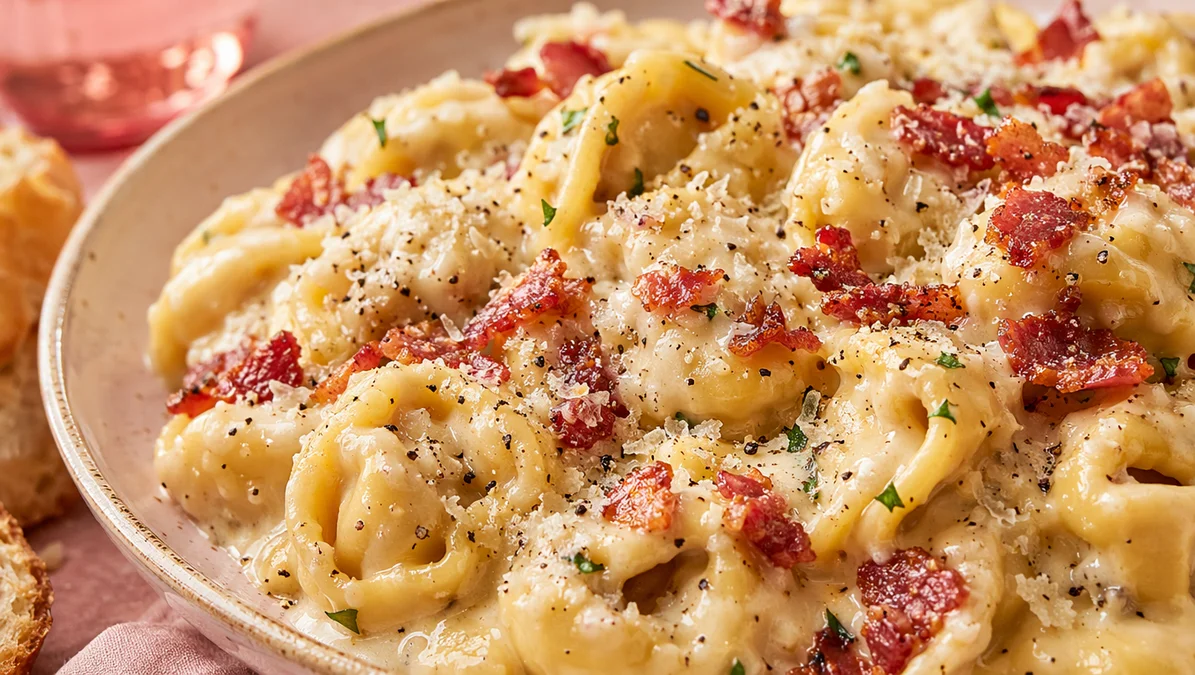
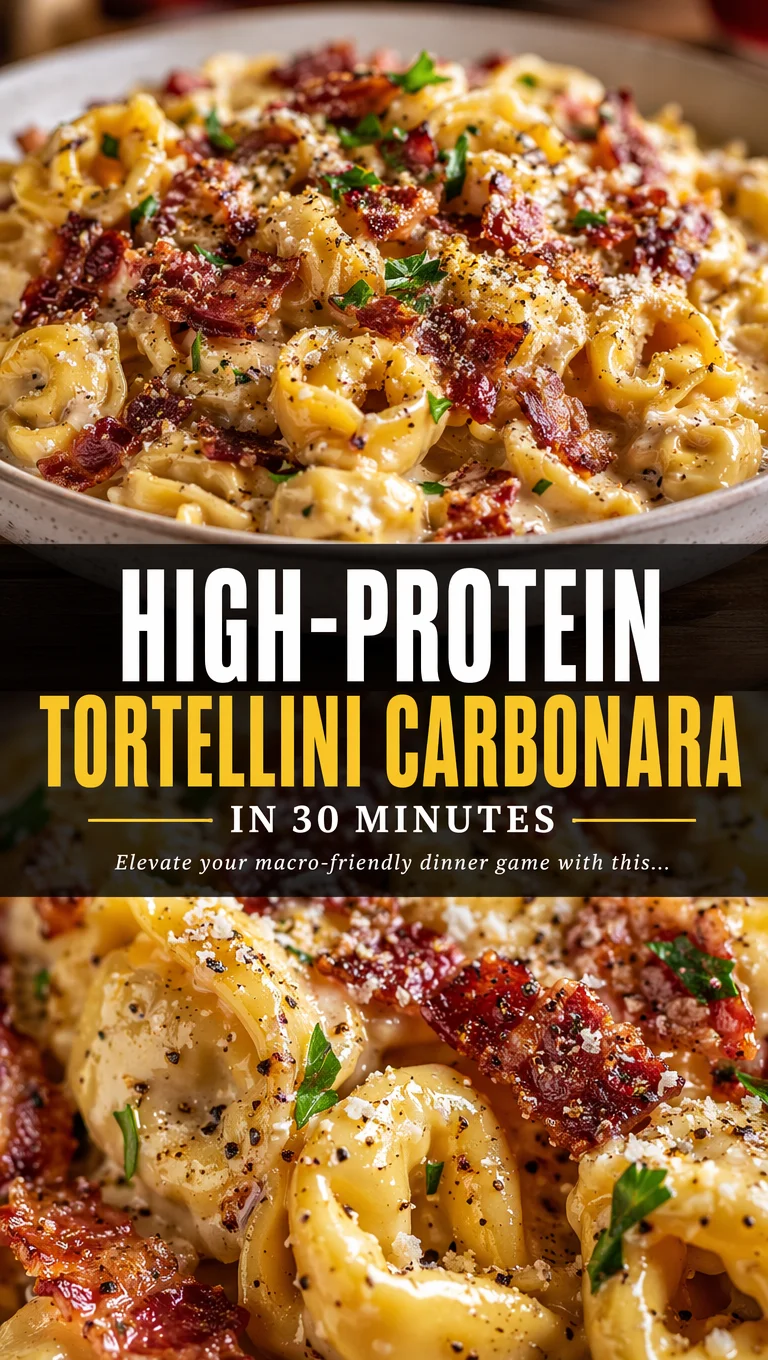
Elevate your macro-friendly dinner game with this high-protein tortellini carbonara. Made with cheese tortellini, lean turkey bacon, and a rich Parmesan cream sauce, it delivers 30+ grams of protein per…
Ingredients
Instructions
Bring a large pot of salted water to a rolling boil. While the water heats, gather all your ingredients. The salt in the water is crucial—it seasons the tortellini from the inside out. Use about 1 tablespoon of salt per 4 quarts of water. Once boiling, add the tortellini and cook according to package directions until al dente, typically 2-4 minutes for fresh tortellini or 4-6 minutes for frozen. Fresh tortellini cooks quickly, so watch carefully to avoid overcooking. You want the pasta to be tender but still have a slight bite to it. When done, reserve about 1 cup of the starchy pasta water before draining. This starchy water is liquid gold—it will help emulsify the sauce and give it a silky, restaurant-quality texture. Drain the tortellini and set aside.
While the pasta cooks, heat 1 tablespoon of olive oil in a large skillet over medium heat. Add the chopped turkey bacon and cook, stirring occasionally, until crispy and deeply browned, about 5-7 minutes. Turkey bacon is leaner than traditional pork bacon, so it can dry out if overcooked. The key is to render the fat slowly at medium heat, allowing the pieces to crisp up without burning. You’ll know it’s done when the pieces are firm to the touch and have a deep mahogany color. Use a slotted spoon to transfer the bacon to a paper towel-lined plate, leaving the rendered fat in the skillet. This fat will infuse the sauce with smoky, savory flavor.
Reduce the heat to low. Add the minced garlic to the skillet with the residual bacon fat and sauté for about 30 seconds, just until fragrant. Garlic burns quickly, so keep it moving. If the skillet looks dry, add a tiny splash of olive oil. Next, pour in the heavy cream, stirring to scrape up any browned bits from the bottom of the pan—this is called deglazing and it adds immense depth of flavor. Let the cream warm gently for about 1 minute. Do not let it boil, as high heat can cause the cream to separate. Remove the skillet from the heat.
In a small bowl, whisk together the 3 eggs and the freshly grated Parmesan cheese until well combined. It’s important to use freshly grated Parmesan from a block, not pre-shredded, because pre-shredded cheese often contains anti-caking agents that prevent smooth melting. The mixture should be thick and pasty. Now, slowly drizzle about 1/4 cup of the reserved hot pasta water into the egg mixture while whisking constantly. This tempers the eggs, gradually raising their temperature so they don’t scramble when added to the hot pasta. The sauce should become smooth and slightly runny.
Add the drained tortellini to the skillet with the cream sauce. Toss gently to coat the pasta. Pour the egg and cheese mixture over the tortellini, tossing vigorously and continuously. The residual heat from the pasta and skillet will cook the eggs, creating a luscious, creamy sauce that clings to every fold of the tortellini. If the sauce seems too thick, add more reserved pasta water a tablespoon at a time until it reaches a silky consistency. Season with black pepper and salt. Taste and adjust seasoning—the bacon and Parmesan are already salty, so go easy on the salt.
Divide the tortellini carbonara among four warm bowls. Top each serving with the crispy turkey bacon, an extra sprinkle of Parmesan, and a generous crack of black pepper. Garnish with fresh parsley if desired. Serve immediately—carbonara waits for no one. The sauce will continue to thicken as it cools, so enjoy it right away for the best texture. Pair with a simple green salad or steamed broccoli for a complete, macro-balanced meal.
For best results
- For the silkiest carbonara sauce, always use freshly grated Parmesan from a block. Pre-shredded cheese contains cellulose and other anti-caking agents that prevent it from melting smoothly, resulting in a grainy sauce. Grate the cheese on the fine side of a box grater for the best texture. If you can find Parmigiano-Reggiano, its nutty, crystalline flavor elevates the dish significantly. For a more budget-friendly option, Grana Padano works beautifully.
- Tempering the eggs is the most critical step to avoid scrambled eggs in your carbonara. When you add the hot pasta water to the egg mixture, do it slowly while whisking constantly. This raises the temperature of the eggs gradually, so when they hit the hot pasta, they thicken into a creamy sauce rather than turning into clumps. If you're nervous, you can also use a double boiler: place the egg mixture in a heatproof bowl over simmering water and whisk until it reaches 160°F (71°C), then combine with the pasta.
- Turkey bacon is leaner than pork bacon, so it can become tough if overcooked. To get it perfectly crispy, cook it over medium heat and watch closely. The pieces should be browned and firm but not brittle. For extra flavor, you can swap turkey bacon with center-cut bacon or even prosciutto, which crisps up beautifully and adds a delicate saltiness. If using prosciutto, reduce the added salt.
- Reserve at least 1 cup of pasta water before draining—you may not use it all, but it's better to have extra. The starch in the water is a natural emulsifier that helps bind the sauce to the pasta. If your sauce looks separated or too thick, add a splash of pasta water and toss vigorously. The sauce should be glossy and coat the back of a spoon. If it's too thin, let it sit off the heat for a minute; the residual heat will continue to thicken it.
- For a richer, more decadent sauce, replace half of the heavy cream with an extra egg yolk. The yolk adds richness and a beautiful golden color. Just be sure to temper it properly. You can also add a tablespoon of butter at the end for extra gloss and flavor. This is a classic French technique called 'monter au beurre.'
- To make this dish meal-prep friendly, cook the tortellini and bacon separately, and prepare the sauce base (cream and garlic) without the eggs. Store components in the fridge for up to 3 days. When ready to serve, reheat the pasta and sauce in a skillet, then temper and add the egg mixture off the heat. This prevents the eggs from overcooking during reheating.
Variations
- Vegetarian Variation: Omit the turkey bacon and replace it with 1 cup of sautéed mushrooms and 1/2 cup of frozen peas. The mushrooms add an umami depth that mimics the savory flavor of bacon, while peas bring a pop of sweetness and color. You can also add a pinch of smoked paprika to replicate the smokiness. For extra protein, stir in 1/2 cup of ricotta cheese at the end—it will melt into the sauce and add creaminess.
- Spicy Arrabbiata Twist: Add 1/2 teaspoon of red pepper flakes along with the garlic for a spicy kick. The heat cuts through the richness of the cream and Parmesan beautifully. You can also stir in 1/4 cup of sun-dried tomatoes (chopped) for a tangy, concentrated tomato flavor that pairs well with the turkey bacon. This variation is perfect for those who love a little heat in their pasta.
- Lower-Carb Option: Replace the tortellini with 4 cups of roasted cauliflower florets or zucchini noodles (zoodles). If using zoodles, sauté them briefly in the skillet before adding the sauce to remove excess moisture. The carbonara sauce clings wonderfully to both alternatives. For a protein boost, add grilled chicken breast or shrimp. This version is keto-friendly and still delivers over 25 grams of protein per serving.
- Dairy-Free Adaptation: Use full-fat coconut cream or a high-quality oat cream instead of heavy cream. Omit the Parmesan or use a dairy-free nutritional yeast-based 'Parmesan' (1/4 cup nutritional yeast + 1/4 cup raw cashews, blended into a powder). The sauce will have a slightly different flavor but will still be creamy and delicious. Be sure to use a dairy-free tortellini or substitute with gluten-free pasta.
- Protein-Packed Seafood Version: Swap the turkey bacon for 8 ounces of cooked shrimp or flaked smoked salmon. Add the seafood just before serving to avoid overcooking. The briny flavor of seafood complements the creamy sauce beautifully. For an extra touch, garnish with fresh dill or chives. This version is perfect for pescatarians and boosts the protein content to over 35 grams per serving.
Nutrition
- Calories485 kcal
- Total Fat22g
- Saturated Fat11g
- Cholesterol195mg
- Sodium890mg
- Total Carbohydrates42g
- Dietary Fiber3g
- Sugars4g
- Protein31g