
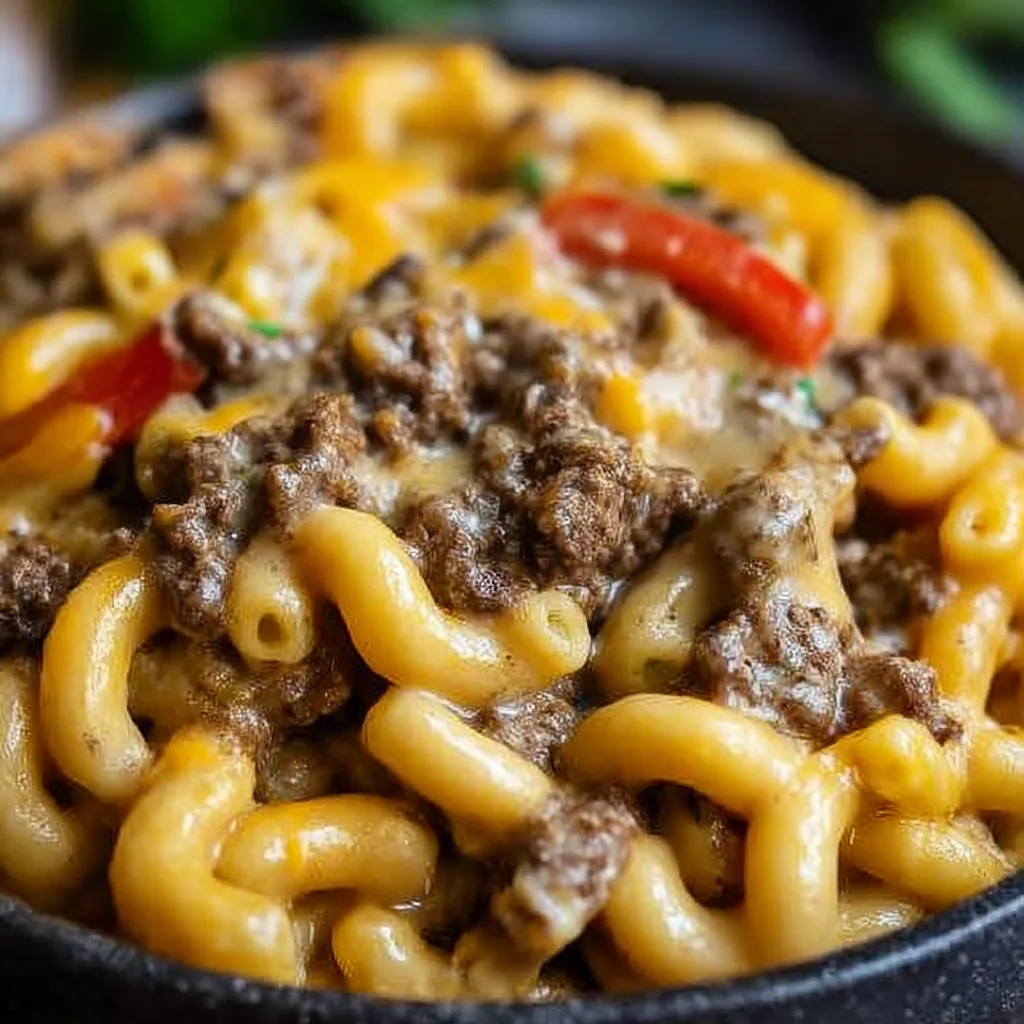
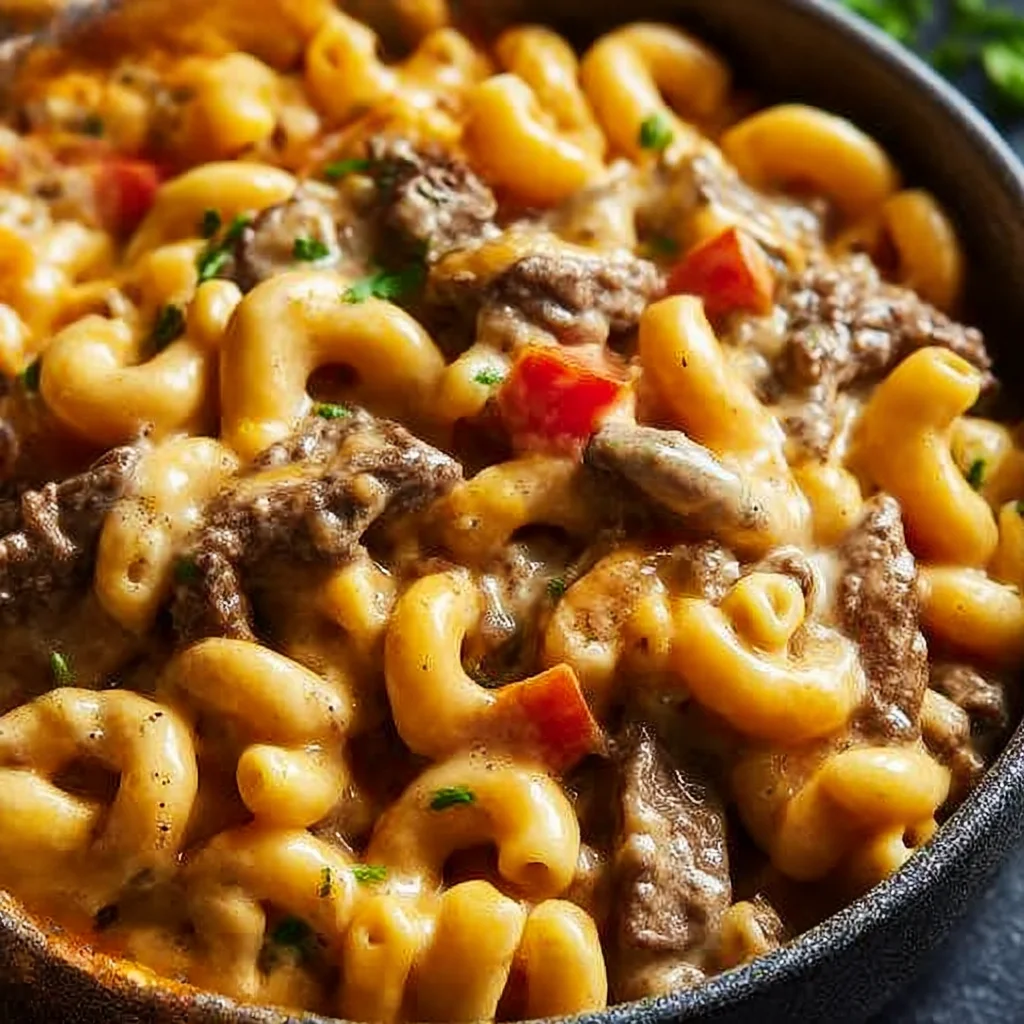
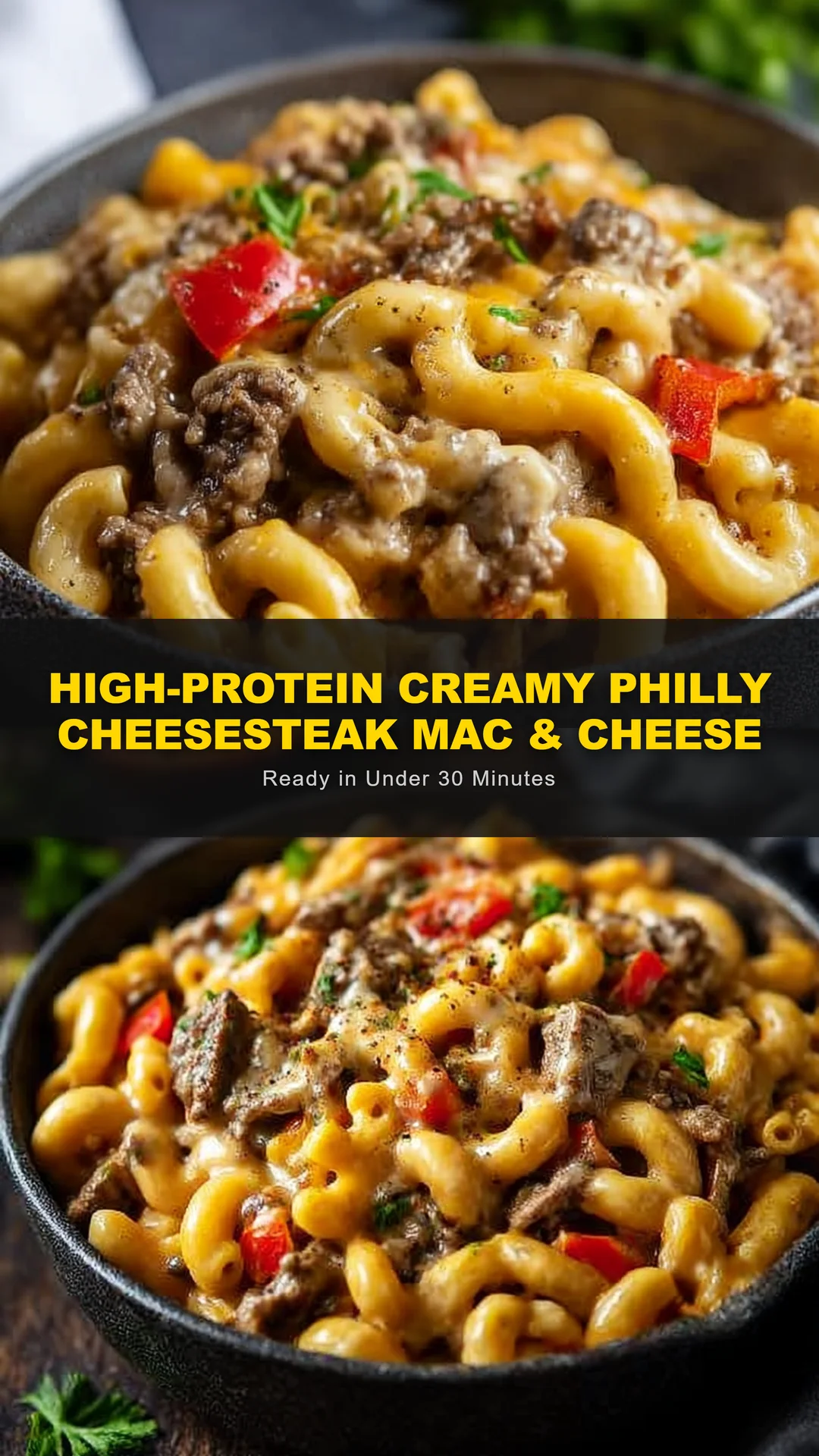
This high-protein creamy Philly cheesesteak mac & cheese delivers rich, cheesy comfort with lean steak and protein-packed pasta. Ready in under 30 minutes for an easy weeknight dinner.
Ingredients
Instructions
Begin by bringing a large pot of salted water to a rolling boil. Add the high-protein pasta and cook according to package directions until al dente, typically 7-9 minutes. High-protein pastas like chickpea or lentil varieties have a firmer texture and cook slightly faster than traditional semolina pasta, so keep a close eye to avoid overcooking. When the pasta is tender but still has a slight bite, drain it in a colander and rinse briefly with cool water to stop the cooking process. Drizzle with a teaspoon of olive oil and toss gently to prevent sticking. Set aside while you prepare the steak and sauce.
While the pasta cooks, heat 1½ teaspoons of olive oil in a large, heavy-bottomed skillet or Dutch oven over medium-high heat until shimmering. Add the thinly sliced sirloin steak in a single layer—work in batches if necessary to avoid crowding, which would steam the meat instead of searing. Let the steak cook undisturbed for 1-2 minutes until a deep brown crust forms on the underside. Flip the slices and cook for another 1-2 minutes until the steak is just cooked through but still tender. Using a slotted spoon, transfer the steak to a plate and set aside. The quick, high-heat searing locks in the juices and creates the rich, beefy flavor that defines a classic Philly cheesesteak.
Reduce the heat to medium and add the remaining 1½ teaspoons of olive oil to the same skillet. Add the sliced onion, bell pepper, and mushrooms. Sauté for 5-7 minutes, stirring occasionally, until the vegetables are softened and the mushrooms have released their moisture and begun to brown. The onions should turn translucent and slightly caramelized around the edges. Add the minced garlic and cook for 30 seconds until fragrant, stirring constantly to prevent burning. This aromatic base builds the savory depth that will infuse the cheese sauce.
Sprinkle the flour evenly over the cooked vegetables and stir continuously for 1 minute. This step, known as making a roux, cooks out the raw flour taste and helps thicken the sauce. Slowly pour in the milk while whisking vigorously to prevent lumps. Then add the beef broth in a steady stream, continuing to whisk. Bring the mixture to a gentle simmer, then reduce the heat to low. Let it cook for 2-3 minutes, stirring occasionally, until the sauce thickens enough to coat the back of a spoon. The consistency should be velvety but not overly thick, as it will continue to thicken with the cheese.
Remove the skillet from the heat and stir in the shredded provolone, mozzarella, and grated Parmesan cheese. Stir in one direction until all the cheese is fully melted and the sauce is smooth and creamy. Season with smoked paprika, garlic powder, salt, and pepper. Taste and adjust seasoning—the cheeses add salt, so add cautiously. If the sauce seems too thick, thin it with a splash of milk or broth. The smoked paprika adds a subtle warmth that complements the steak and vegetables beautifully.
Return the cooked pasta and reserved steak to the skillet with the cheese sauce. Gently fold everything together using a rubber spatula or wooden spoon until the pasta and steak are evenly coated in the creamy sauce. Be careful not to overmix, as the steak slices can break apart. Let the mixture heat through over low heat for 1-2 minutes, stirring gently. If the sauce thickens too much, add a splash of reserved pasta water or milk to loosen it.
To serve, divide the Philly cheesesteak mac among four warm bowls. Garnish with freshly chopped parsley for a pop of color and freshness. Serve immediately while the cheese sauce is hot and luscious. The combination of tender steak, savory vegetables, and creamy cheese sauce over high-protein pasta creates a satisfying, protein-packed meal that tastes indulgent but fits your macros.
For best results
- For the most tender steak, choose a lean cut like sirloin, top round, or flank steak. Slice the steak against the grain into thin strips—this shortens the muscle fibers and ensures every bite is tender, not chewy. For easier slicing, place the steak in the freezer for 15-20 minutes until firm but not frozen. A sharp knife is essential; dull blades will tear the meat. If you prefer even more protein, you can use thinly sliced chicken breast or turkey cutlets as a substitute.
- High-protein pastas, such as those made from chickpeas, lentils, or edamame, have a firmer texture and nuttier flavor than traditional pasta. They also cook faster and can become mushy if overcooked. Set a timer for the minimum recommended cooking time and taste a piece a minute early. Rinse the pasta with cool water after draining to stop the cooking process and remove excess starch, which can make the sauce gummy. Toss with a little oil to keep the strands separate.
- Building the cheese sauce properly is key to a creamy, non-gritty result. Always shred your own cheese from a block—pre-shredded cheese contains anti-caking agents like cellulose that prevent smooth melting. Use a mix of cheeses for complexity: provolone for its mild, buttery melt, mozzarella for stretch, and Parmesan for a salty, umami punch. Add the cheese off the heat to prevent it from breaking or becoming oily. If the sauce seizes, whisk in a tablespoon of warm milk or broth to bring it back.
- To maximize the Philly cheesesteak flavor, use a combination of beef broth and a splash of Worcestershire sauce (about 1 teaspoon) in the sauce. Worcestershire adds depth and a subtle tang that mimics the classic sandwich. You can also deglaze the pan after cooking the steak with a splash of broth to lift the browned bits (fond) from the bottom of the skillet, incorporating all that savory goodness into the sauce.
- This dish is ideal for meal prep, but the pasta will absorb sauce as it sits. To reheat, add a splash of milk or beef broth and warm gently on the stovetop or in the microwave, stirring halfway through. For best results, store the mac and cheese in an airtight container in the refrigerator for up to 4 days. Freezing is not recommended because the cheese sauce may separate upon thawing, resulting in a grainy texture.
- If you want a crispy topping, transfer the finished mac to a baking dish, sprinkle with panko breadcrumbs mixed with a little melted butter and Parmesan, and broil for 2-3 minutes until golden and crunchy. This adds a delightful texture contrast reminiscent of a baked mac and cheese. Watch carefully to avoid burning.
Variations
- For a lower-carb version, replace the high-protein pasta with cauliflower florets or zucchini noodles. Steam the cauliflower until fork-tender, then fold it into the cheese sauce. Zucchini noodles (zoodles) should be sautéed briefly to remove excess moisture before adding. This variation cuts carbohydrates significantly while keeping the protein high from the steak and cheese.
- To make this dish gluten-free, use gluten-free pasta made from chickpea or brown rice and substitute the all-purpose flour with a gluten-free blend or cornstarch slurry (mix 1 tablespoon cornstarch with 2 tablespoons cold water, then stir into the sauce). Ensure all other ingredients, like broth and spices, are certified gluten-free.
- For a spicy kick, add ½ teaspoon of red pepper flakes or a diced jalapeño to the vegetables when sautéing. You can also stir in 1-2 tablespoons of hot sauce (like sriracha or chipotle) into the cheese sauce. The heat balances the richness of the cheese and complements the smoky paprika.
- Swap the steak for ground beef or ground turkey for a more budget-friendly option. Brown the meat in the skillet, breaking it into crumbles, then proceed with the recipe. Ground turkey is leaner and will reduce the overall fat content while still providing ample protein. Season the meat with salt, pepper, and a little garlic powder as it cooks.
- Add extra vegetables like spinach or kale for a nutrient boost. Stir in a handful of fresh spinach just before adding the cheese; it will wilt into the sauce. Sautéed mushrooms can be doubled for more earthy flavor. You can also add roasted red peppers for sweetness and color.
- For a dairy-free version, use unsweetened almond milk or oat milk in the sauce and replace the cheeses with vegan alternatives. Look for vegan provolone and mozzarella shreds that melt well, and use nutritional yeast in place of Parmesan for a cheesy flavor. Note that the texture may be less creamy, and the protein content will be slightly lower.
Nutrition
- Calories545 kcal
- Total Fat22g
- Saturated Fat11g
- Cholesterol95mg
- Sodium680mg
- Total Carbohydrates38g
- Dietary Fiber8g
- Sugars9g
- Protein42g