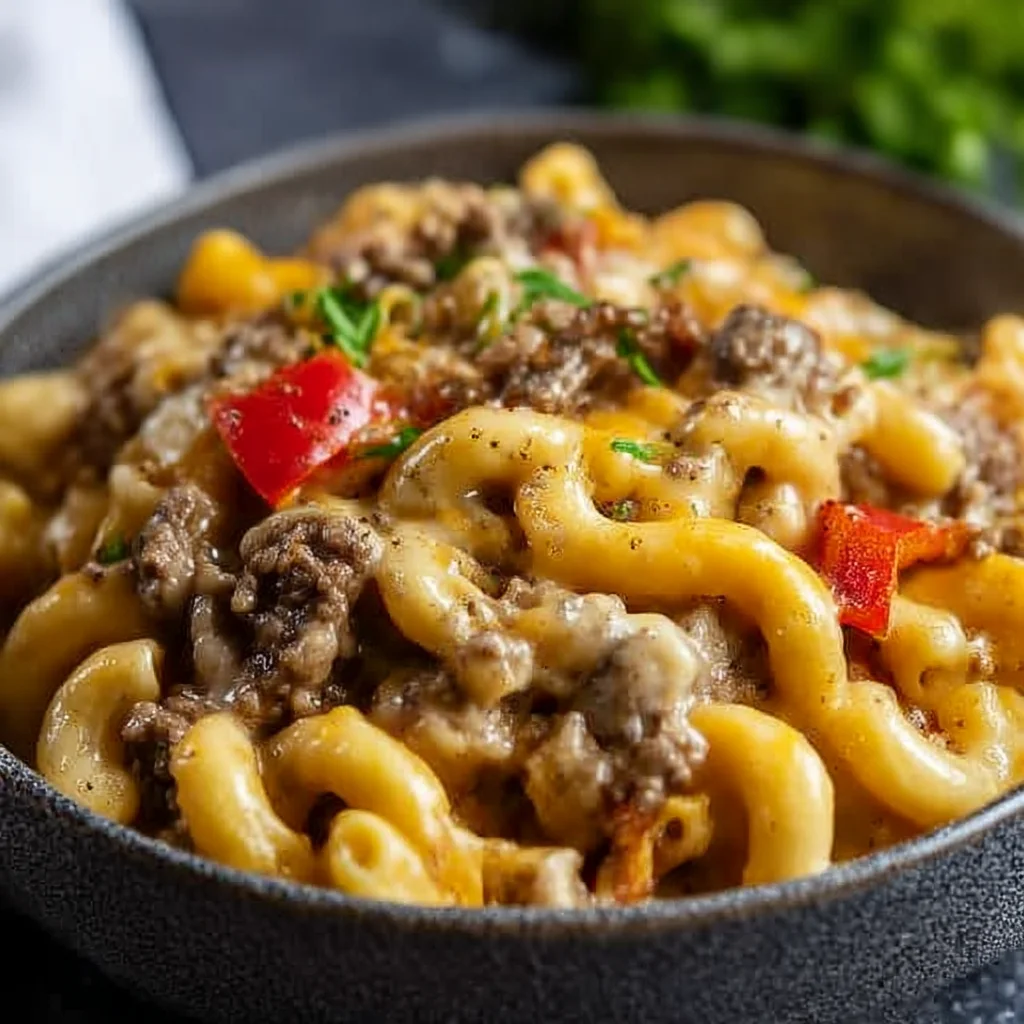
This high-protein Philly cheesesteak mac meal prep recipe combines lean steak, melty cheese, and protein pasta for a macro-friendly dinner that reheats perfectly.
Ingredients
Instructions
Begin by bringing a large pot of salted water to a rolling boil. Add the high-protein pasta and cook according to package directions until al dente, typically 7-9 minutes. High-protein pastas (like chickpea or lentil) require careful timing; they can become mushy if overcooked. Drain the pasta in a colander, rinse briefly with cool water to stop cooking, and set aside. Reserve about 1/2 cup of pasta water if you prefer a thinner sauce later.

While the pasta cooks, prepare the steak. Pat the lean sirloin dry with paper towels, then season generously with salt and black pepper. Heat 1/2 tablespoon of olive oil in a large nonstick skillet or cast-iron pan over high heat until shimmering. Working in a single layer (do not crowd the pan), add the sliced steak and sear undisturbed for 1-2 minutes until a deep brown crust forms. Toss and cook for another 1-2 minutes until just cooked through. Transfer the steak to a plate and set aside. Searing over high heat ensures the meat stays tender and develops rich flavor.
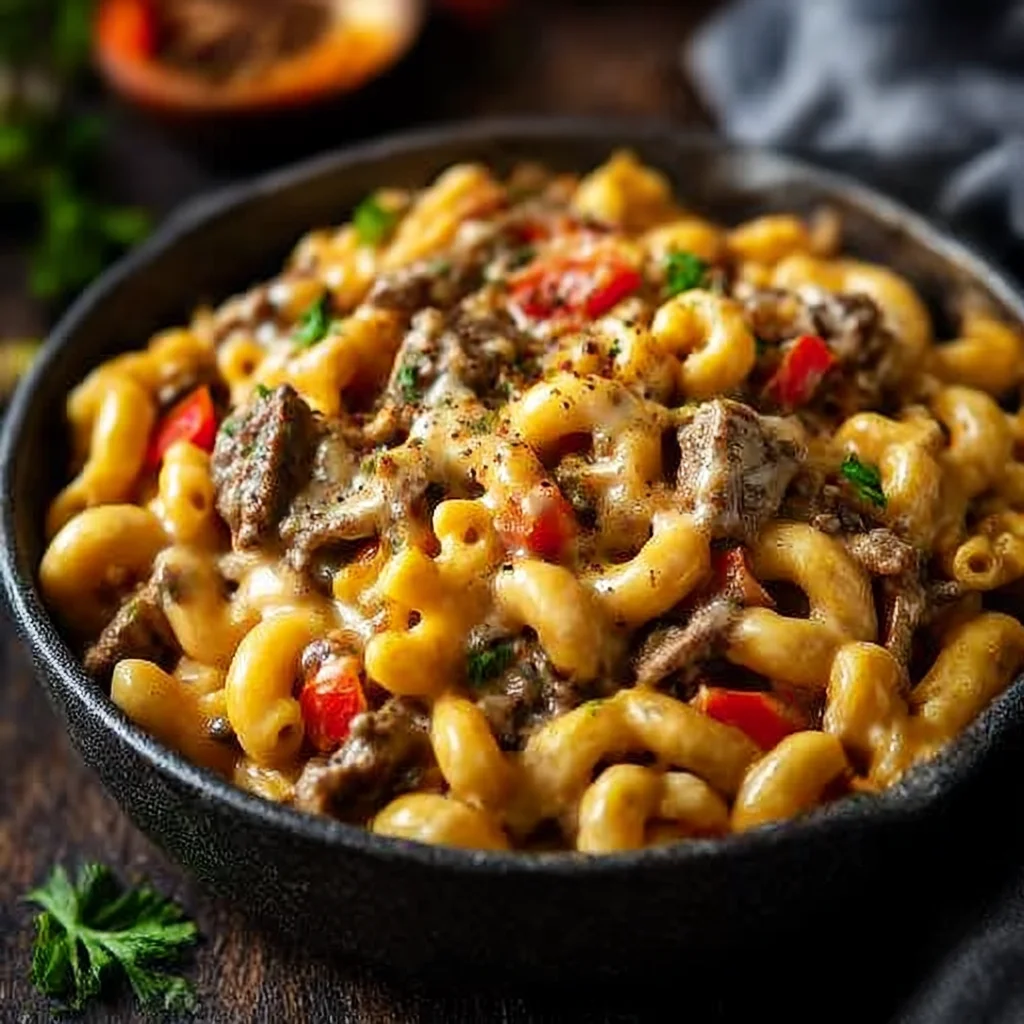
Reduce heat to medium-high and add the remaining 1/2 tablespoon olive oil to the same skillet. Add the sliced onion, bell pepper, and mushrooms. Sauté for 5-7 minutes, stirring occasionally, until the vegetables are softened and lightly caramelized. The mushrooms will release their moisture and then begin to brown—this is key for deep umami flavor. Add the minced garlic and cook for 30 seconds until fragrant.
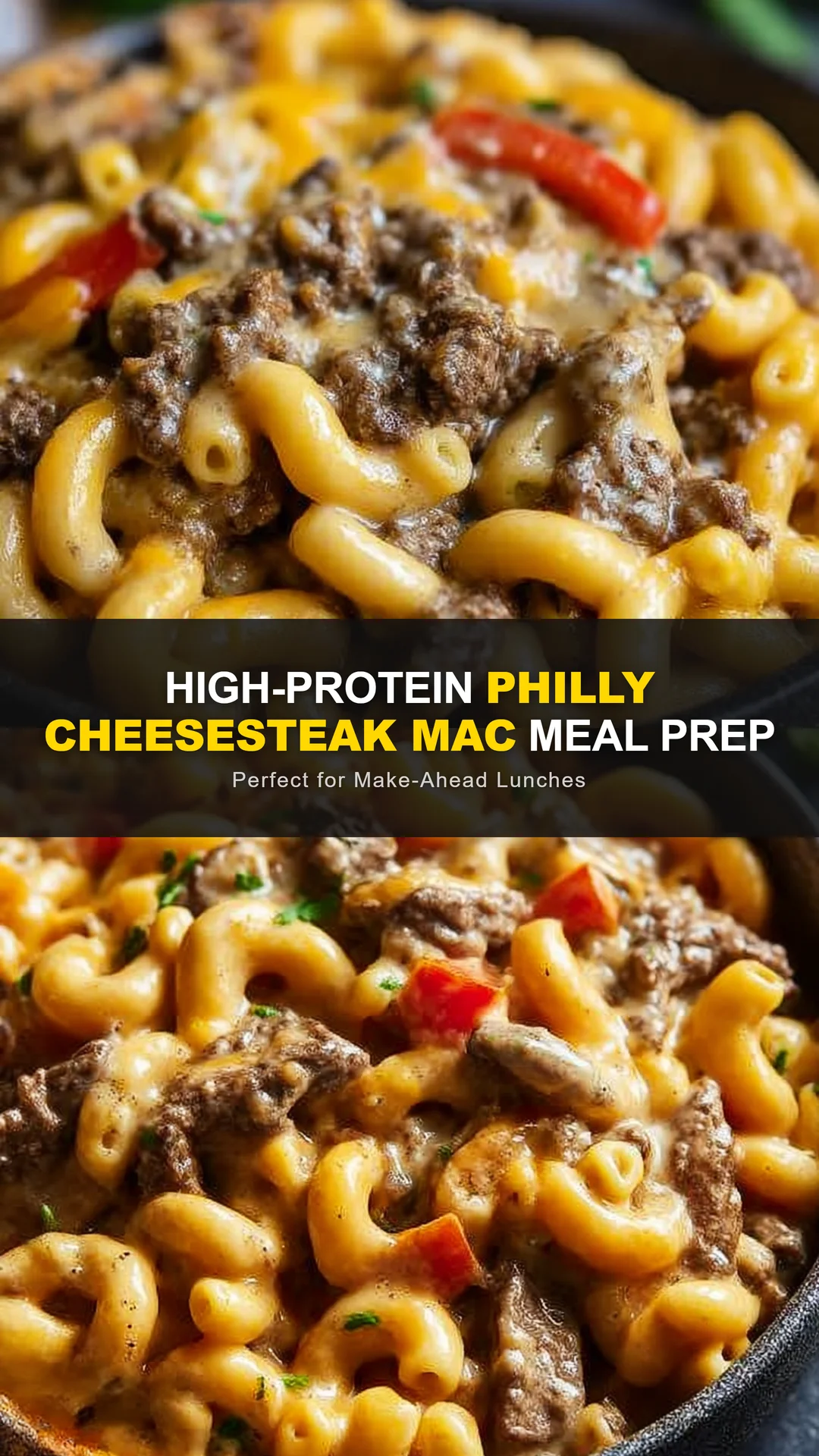
Sprinkle the flour over the vegetables and stir constantly for 1 minute to cook out the raw flour taste. Slowly pour in the almond milk while whisking vigorously to prevent lumps. Bring the mixture to a simmer, then reduce heat to low. Stir in the Worcestershire sauce, Dijon mustard, and shredded cheddar cheese. Continue stirring until the cheese is fully melted and the sauce is smooth and creamy. If the sauce seems too thick, add a splash of reserved pasta water or additional milk until desired consistency is reached.
Return the cooked steak and any accumulated juices to the skillet. Add the drained pasta and toss everything together until evenly coated in the cheesy sauce. Taste and adjust seasoning with salt and pepper. The flavors should be bold and savory, with a hint of tang from the mustard and Worcestershire.
Divide the mixture evenly among 4 oven-safe meal prep containers (or a 9×13 baking dish if serving immediately). Place one slice of provolone cheese on top of each portion. If desired, sprinkle with grated Parmesan for extra crispiness. At this point, you can either bake immediately or refrigerate for later. To serve now, preheat the oven to 375°F (190°C) and bake for 10-12 minutes until the cheese is bubbly and golden. If meal prepping, cover and refrigerate for up to 4 days. To reheat, remove the lid and microwave on high for 2-3 minutes, or reheat in the oven at 350°F for 15 minutes.

For best results
- Choosing the right cut of steak is crucial for tenderness. Sirloin, flank, or ribeye are excellent choices. For the most macro-friendly option, go with lean sirloin (trimmed of visible fat). Slice the steak against the grain into thin strips—this shortens the muscle fibers and ensures each bite is tender. If you have time, pop the steak in the freezer for 15 minutes before slicing; it firms up for easier precision cuts.
- High-protein pastas like chickpea, lentil, or edamame pasta are fantastic for boosting the protein content, but they require a gentle hand. Cook them al dente (firm to the bite) because they continue to soften when mixed with the hot sauce. Rinsing after draining stops the cooking process and removes excess starch that could make the dish gummy. If you prefer traditional pasta, use whole wheat for added fiber.
- For the creamiest cheese sauce without heavy cream, use reduced-fat sharp cheddar and low-moisture provolone. The sharpness of the cheddar provides big flavor with less cheese, and provolone melts smoothly without becoming greasy. Grate your own cheese from a block—pre-shredded cheese contains anti-caking agents that can make the sauce grainy. Always add cheese off the heat to avoid clumping.
- Meal prep success hinges on proper storage and reheating. Allow the dish to cool completely before sealing containers to prevent condensation (which can make the pasta soggy). Use airtight, microwave-safe containers. When reheating, add a splash of milk or water before microwaving to revive the sauce's creaminess. Stir halfway through for even heating. This recipe freezes well for up to 3 months; thaw overnight in the fridge before reheating.
- To save time on busy weeks, prep the components separately: cook the pasta, sear the steak, and sauté the vegetables in advance. Store them in separate containers and assemble when ready to eat. This method keeps the steak from overcooking during reheating and maintains distinct textures. The sauce can also be made ahead and refrigerated for up to 3 days.
Variations
- For a lower-carb version, swap the high-protein pasta for cauliflower florets or zucchini noodles. Roast cauliflower at 400°F for 20 minutes until tender, then toss with the cheesesteak mixture. Zucchini noodles should be added raw and will soften slightly when combined with the hot sauce. This reduces total carbohydrates by about 60% while keeping the protein high.
- Make it vegetarian by replacing the steak with 1 lb of extra-firm tofu (pressed and crumbled) or 2 cups of cooked lentils. Season the tofu with soy sauce, liquid smoke, and black pepper before searing to mimic the savory depth of beef. The lentils provide a meaty texture and boost fiber. For a vegan option, use vegan cheddar and provolone shreds, and replace the milk with unsweetened oat milk.
- Spice it up with a Southwestern twist: add 1 tsp chili powder, 1/2 tsp cumin, and a diced jalapeño (seeds removed for less heat) when sautéing the vegetables. Swap the provolone for pepper jack cheese and top with fresh cilantro. This variation adds a smoky, spicy kick that pairs beautifully with the creamy sauce.
- For a cheesesteak flavor bomb without the pasta, turn this into a stuffed bell pepper meal prep. Halve 4 large bell peppers and remove seeds. Parboil the peppers for 3 minutes, then fill with the cheesesteak mixture (omit the pasta). Top with provolone and bake at 375°F for 20 minutes. Each stuffed pepper contains about 35g protein and only 15g carbs.
Nutrition
- Calories485 kcal
- Total Fat18g
- Saturated Fat8g
- Cholesterol85mg
- Sodium620mg
- Total Carbohydrates38g
- Dietary Fiber6g
- Sugars8g
- Protein42g