
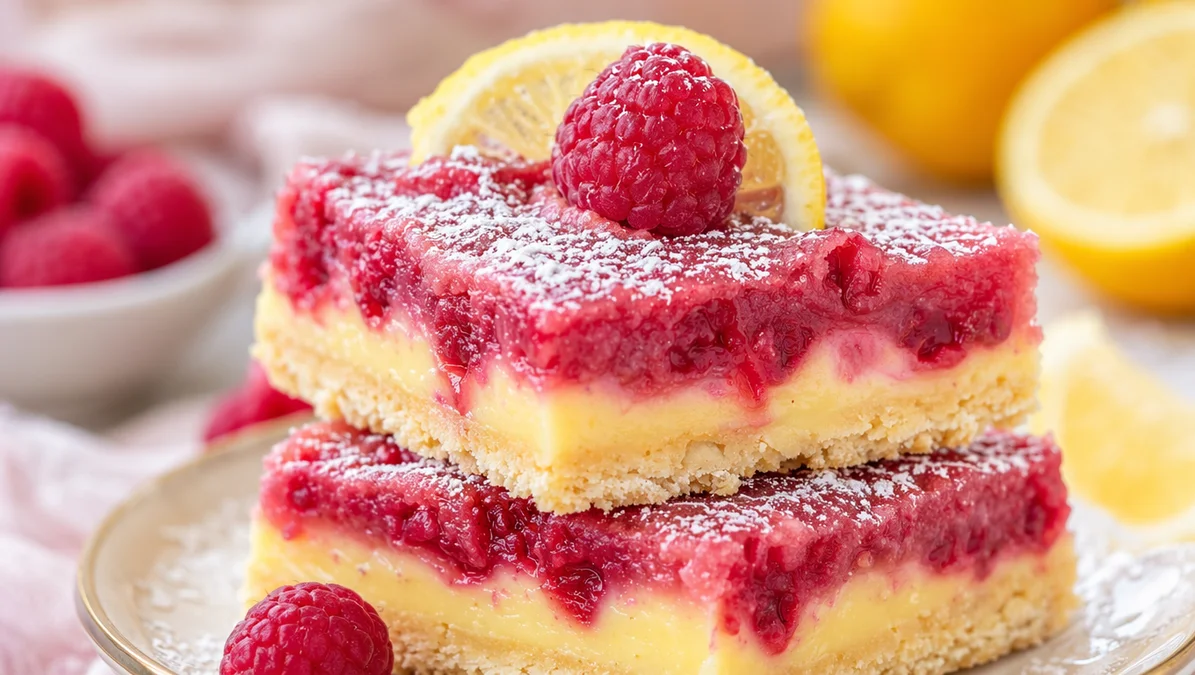
These high-protein lemon raspberry bars feature a buttery shortbread crust and tangy custard filling. Perfect for macro-friendly meals or healthy picnic food ideas.
Ingredients
Instructions
Preheat your oven to 350°F (175°C). Line an 8×8-inch baking pan with parchment paper, leaving an overhang on two opposite sides to easily lift the bars out later. This simple step ensures clean slices and effortless removal. In a medium bowl, combine the almond flour, 1/3 cup protein powder, and salt. Whisk thoroughly to break up any clumps—protein powders can be stubborn, so a whisk is your best friend here. Add the cold cubed butter and use a pastry cutter or your fingertips to work the butter into the dry ingredients until the mixture resembles coarse sand with pea-sized butter bits. The cold butter is crucial for a tender, flaky crust; it creates steam pockets as it melts in the oven, giving the crust a delicate crumb. Drizzle in the cold water, one tablespoon at a time, and stir with a fork until the dough just holds together when pressed. It should be moist but not sticky. If it crumbles, add another teaspoon of water. Press the dough evenly into the prepared pan, using the bottom of a measuring cup or your fingers to compact it firmly. Prick the crust with a fork about a dozen times to prevent bubbling. Bake for 12-15 minutes, until the edges are lightly golden and the crust feels set to the touch. The aroma will be nutty and buttery—resist the urge to overbake, as it will continue to firm up as it cools. Let the crust cool on a wire rack while you prepare the filling.
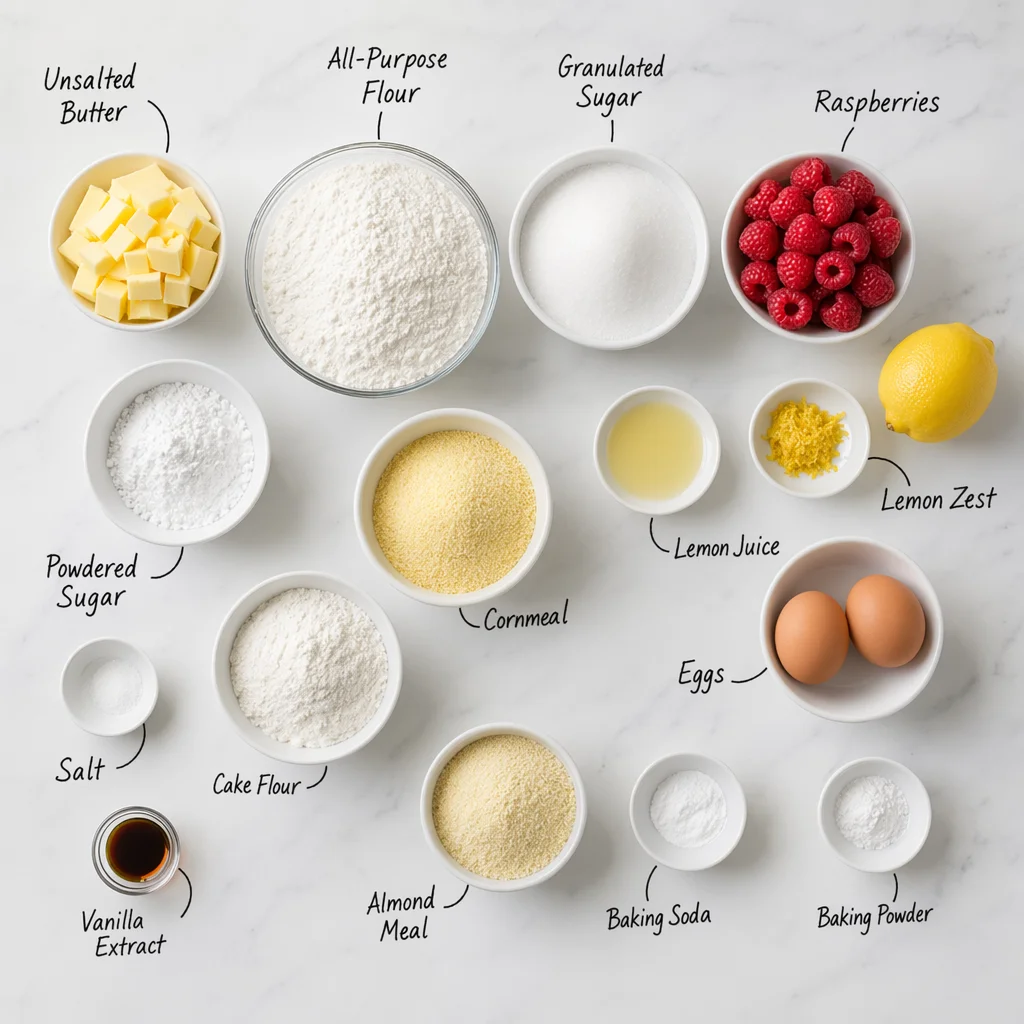
In a large mixing bowl, whisk together the eggs, lemon juice, lemon zest, sugar, 1/4 cup protein powder, and cornstarch until smooth and well combined. The mixture will be pale yellow and slightly thick. Slowly stream in the almond milk while whisking continuously to incorporate it evenly. The cornstarch acts as a stabilizer, ensuring the custard sets without becoming runny; the protein powder adds structure and a subtle creaminess. Pour the custard mixture through a fine-mesh sieve into another bowl to catch any stray bits of zest or undissolved protein powder—this guarantees a silky-smooth texture. Gently fold in the raspberries with a spatula, being careful not to crush them too much. If using frozen raspberries, do not thaw them first; the frozen berries will release less juice and keep their shape better during baking, resulting in beautiful ruby pockets throughout the custard. Pour the filling over the pre-baked crust, spreading it evenly. The raspberries will naturally distribute as you pour. Bake at 350°F for 25-30 minutes, until the edges are set and the center jiggles slightly when shaken—like a firm cheesecake. The surface may have a few small cracks, which is perfectly normal. Overbaking can cause the custard to curdle or become rubbery, so keep a close eye. The internal temperature should reach 170°F (77°C). Let the bars cool completely in the pan on a wire rack, then refrigerate for at least 2 hours, preferably overnight. Chilling is essential for clean slices; the custard firms up and the flavors meld beautifully.
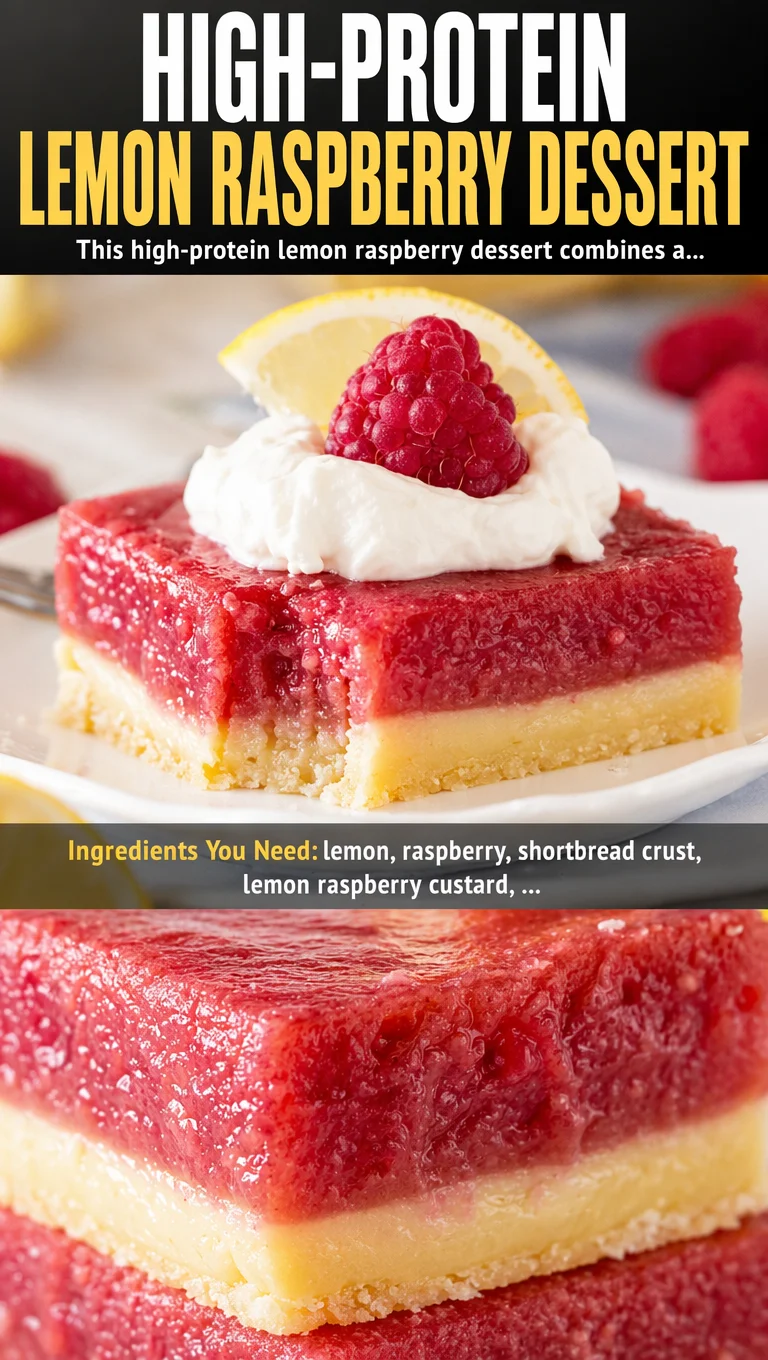
Once fully chilled, use the parchment overhang to lift the entire slab onto a cutting board. Using a sharp knife, trim the edges if desired for a pristine look, then cut into 16 equal squares. For the cleanest cuts, wipe the knife clean between slices. Dust lightly with powdered sugar just before serving. These bars are best served cold or at room temperature, and they store beautifully in the refrigerator for up to 5 days in an airtight container. For longer storage, freeze individual bars between layers of parchment paper in a freezer-safe container for up to 3 months. Thaw in the refrigerator overnight before serving.
For best results
- For the best lemon flavor, always use fresh lemons. Bottled lemon juice lacks the bright, aromatic oils that zest provides. Roll the lemons on the counter before juicing to maximize yield, and zest them first before cutting. If you only have limes, they make a delicious substitute—try lime and blackberry bars for a twist. For a more intense lemon punch, add an extra teaspoon of zest.
- The protein powder you choose significantly impacts texture and flavor. Whey protein isolate (vanilla or unflavored) works best for a neutral taste and smooth custard. Plant-based protein powders, especially pea or brown rice, can be grainier and may require an extra tablespoon of almond milk to achieve the right consistency. Avoid using collagen peptides, as they don't set like other proteins and will result in a runny filling.
- To prevent the crust from becoming soggy, pre-baking is non-negotiable. The par-baked crust creates a barrier that absorbs less moisture from the custard. Additionally, brushing the hot crust with a thin layer of beaten egg white (and baking for 2 more minutes) can seal it further—a technique used in classic pastry making. If you're short on time, you can skip this, but your crust will be slightly softer.
- When folding in the raspberries, use a gentle hand. Overmixing can break the berries and turn the custard pink, which is still delicious but less visually striking. If you want a uniform color, you can puree half the raspberries and swirl them into the custard for a marbled effect. For a seedless version, press the puree through a sieve before adding.
- Storage is key for texture. These bars must be refrigerated; they will become too soft at room temperature. For picnics, pack them in a cooler with ice packs. They actually improve after a day in the fridge as the flavors meld. If you freeze them, wrap each bar individually in plastic wrap and then foil to prevent freezer burn. Thaw in the fridge—never at room temperature—to avoid condensation making the crust soggy.
- For a lower-carb version, replace the sugar with a 1:1 granulated monk fruit or erythritol blend. Note that sugar alcohols can cause a cooling sensation and may not caramelize the same way, but the custard will still set. Reduce the almond milk by 2 tablespoons if using a liquid sweetener like stevia drops, as the custard may become too thin.
- If you don't have an 8×8 pan, you can use a 9×9 pan; the bars will be slightly thinner and bake 5 minutes less. For a 9×13 pan, double the recipe and bake for 35-40 minutes. Always check for doneness by the jiggle test—the center should wobble like gelatin, not ripple like liquid.
Variations
- Gluten-Free & Grain-Free: This recipe is naturally gluten-free if you use certified gluten-free almond flour and protein powder. For a nut-free version, substitute the almond flour with sunflower seed flour (or finely ground sunflower seeds) and add 1/4 teaspoon vitamin C powder to prevent the bars from turning green due to a chemical reaction with baking soda (though this recipe uses no baking soda, the reaction can still occur over time). Sunflower seed flour has a stronger flavor, so you may want to add a tablespoon of cocoa powder to mask it.
- Vegan Adaptation: Replace the eggs with a flaxseed gel (3 tablespoons ground flaxseed mixed with 9 tablespoons water, let sit for 10 minutes) and use a vegan butter stick. For the custard, use silken tofu as a base: blend 1 block (12 oz) silken tofu with lemon juice, zest, sugar, cornstarch, and plant-based protein powder until smooth. The tofu adds protein and a creamy texture. Bake as directed, but note that the custard will be slightly softer and may need an extra 5 minutes. Use vegan protein powder (pea or soy).
- Berry Medley Twist: Swap half the raspberries for fresh blueberries, blackberries, or sliced strawberries. Each berry brings its own sweetness and tartness; blueberries add a mild sweetness, blackberries a deeper tartness, and strawberries a juicy burst. If using strawberries, toss them in a teaspoon of cornstarch to absorb excess moisture. For a tropical version, use diced mango and lime zest instead of lemon.
- Chocolate Lemon Raspberry: Add 2 tablespoons of cocoa powder to the crust mixture for a chocolatey base. For the custard, melt 2 ounces of dark chocolate (70% cocoa) and swirl it into the lemon custard before adding raspberries. The combination of tangy lemon, sweet raspberry, and rich dark chocolate is irresistible. Reduce the sugar by 2 tablespoons to balance the bitterness of the chocolate.
- High-Protein Boost: Increase the protein content by adding an extra scoop of protein powder to the custard (total 1/3 cup) and reducing the almond milk by 2 tablespoons. You can also sprinkle 1/4 cup of chopped almonds or walnuts over the custard before baking for added crunch and healthy fats. Each bar will then contain around 8-10g of protein, making it a perfect post-workout snack.
Nutrition
- Calories215 kcal
- Total Fat12g
- Saturated Fat7g
- Cholesterol45mg
- Sodium180mg
- Total Carbohydrates26g
- Dietary Fiber1g
- Sugars17g
- Protein3g