

These tangy raspberry lemon bars combine a buttery shortbread crust with a vibrant citrus custard and raspberry swirls. An easy high-protein dessert perfect for summer picnics or macro-friendly weeknight treats.
Ingredients
Instructions
Preheat your oven to 350°F (175°C). Line a 9×9-inch square baking pan with parchment paper, leaving an overhang on two opposite sides for easy removal. The parchment sling is crucial because it allows you to lift the entire baked block of bars out cleanly without any sticking or crumbling. If you don’t have parchment, you can grease the pan thoroughly with butter and dust with flour, but the parchment method is far more reliable. Set the pan aside while you prepare the crust.
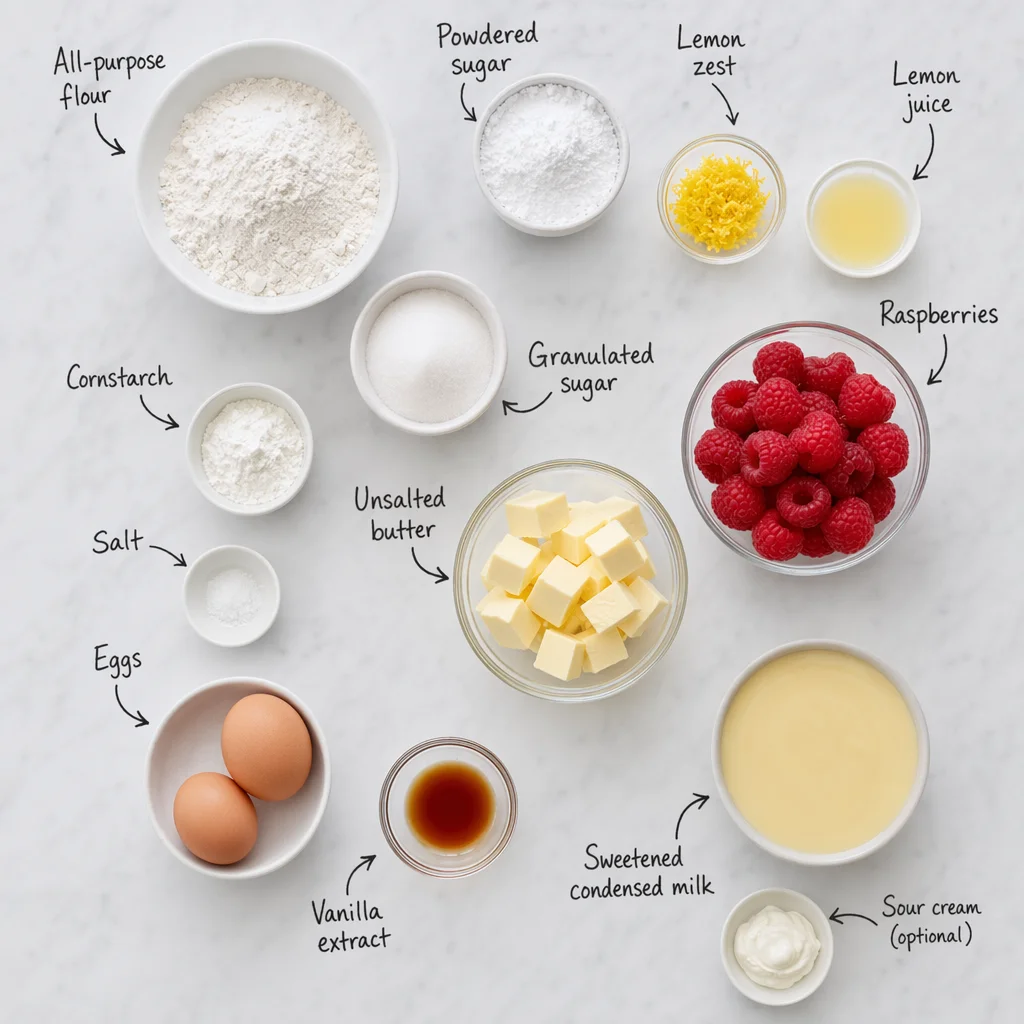
In a food processor, combine 1 1/2 cups all-purpose flour, 1/2 cup almond flour, 1/4 cup granulated sugar, and 1/4 teaspoon salt. Pulse a few times to mix the dry ingredients. Add the cold cubed butter and pulse in short bursts until the mixture resembles coarse meal with pea-sized butter pieces. The key here is to keep the butter cold — if it warms up, the crust will be greasy and less flaky. If you don’t have a food processor, you can use a pastry cutter or your fingertips, but work quickly. Once you have a crumbly texture, dump the mixture into the prepared pan and press it evenly into the bottom using your fingers or the bottom of a measuring cup. Press firmly to create a compact, even layer; any gaps will cause the crust to be uneven. Bake for 18-20 minutes until the edges are lightly golden and the center is set but not browned. Remove from the oven and let cool slightly while you prepare the filling. The crust will continue to firm up as it cools.

In a large bowl, whisk together 4 large eggs and 1 1/3 cups granulated sugar until the mixture is pale and thick, about 2 minutes. This step is important because whisking aerates the eggs, giving the custard a light, airy texture. Add the fresh lemon juice and lemon zest, and whisk until combined. The zest adds intense lemon aroma without extra liquid. In a separate small bowl, whisk together 1/4 cup all-purpose flour, 1/2 teaspoon baking powder, and 1/4 teaspoon salt. Gradually sift the dry ingredients into the wet mixture, whisking constantly to avoid lumps. Finally, fold in the Greek yogurt until just combined. The yogurt adds protein and a creamy tang that balances the sweetness. Do not overmix or the custard may become dense.
Pour the lemon custard filling over the pre-baked crust, spreading it evenly with a spatula. If you have raspberry jam, drop small spoonfuls over the surface and use a knife to create swirls. Then scatter the fresh or thawed raspberries evenly on top. The berries will sink slightly during baking, creating beautiful pockets of tart fruit. Bake at 350°F for 30-35 minutes, until the center is just set — it should jiggle slightly when shaken, like a cheesecake. A toothpick inserted near the center should come out with moist crumbs, not wet batter. Overbaking can cause the custard to crack and become dry. Let the bars cool completely in the pan on a wire rack, then refrigerate for at least 2 hours (or overnight) to fully set. Chilling is essential for clean slices.
Once chilled, use the parchment sling to lift the entire block out of the pan onto a cutting board. Use a sharp knife to cut into 16 squares, wiping the blade clean between cuts for neat edges. Dust with powdered sugar just before serving for a beautiful finish. Serve cold or at room temperature. Store leftovers in an airtight container in the refrigerator for up to 5 days, or freeze for up to 3 months. These bars are perfect for picnics, potlucks, or a make-ahead dessert that travels well.
For best results
- For the best flavor, use fresh lemons and zest them before juicing. Avoid bottled lemon juice, which can have a bitter, metallic taste. Roll the lemons on the counter before cutting to release more juice. If you only have bottled juice, add an extra teaspoon of zest to boost flavor. The zest contains essential oils that provide the bright, fresh lemon character that defines this dessert.
- Greek yogurt is the secret to boosting protein without altering texture. Full-fat yogurt yields a creamier custard, but 2% works too. For even more protein, you can substitute half the yogurt with cottage cheese blended until smooth — just be sure to strain it first. This swap adds about 2g more protein per serving while keeping the custard silky.
- To prevent the crust from becoming soggy, pre-bake it until it's just starting to color. The almond flour in the crust adds protein and helps create a barrier against moisture. If you're making a gluten-free version, use a high-quality 1:1 blend that contains xanthan gum to maintain structure. Let the crust cool for at least 10 minutes before pouring in the filling.
- When swirling raspberry jam, use a light hand. Over-swirling can muddy the lemon custard and cause uneven baking. Drop the jam in small dots and drag a knife through each dot once or twice. The goal is to create distinct ribbons of berry that contrast with the yellow custard. If using frozen raspberries, do not thaw them first — add them frozen to prevent excess liquid from bleeding into the custard.
- For perfectly clean cuts, refrigerate the bars for at least 2 hours, or overnight. Use a long, sharp chef's knife and wipe it with a damp paper towel between each slice. If the bars are still sticky, dip the knife in hot water and dry it before cutting. This technique works for any layered bar dessert. You can also line the pan with foil instead of parchment for easier cleanup, but foil may wrinkle and create uneven edges.
Variations
- Gluten-Free Version: Substitute the all-purpose flour in both crust and filling with a high-quality gluten-free 1:1 flour blend that contains xanthan gum. The almond flour in the crust is naturally gluten-free, so the swap is straightforward. Make sure to check that your baking powder is also gluten-free. The texture will be slightly more tender, but the bars will hold together well after chilling. For a nut-free alternative, replace almond flour with oat flour (certified gluten-free if needed).
- Vegan Adaptation: Replace eggs with a flax egg (1 tablespoon ground flaxseed + 3 tablespoons water per egg, let sit for 5 minutes) or use a commercial egg replacer. Use vegan butter or coconut oil (solid) for the crust. Substitute Greek yogurt with a thick plant-based yogurt like coconut or soy yogurt, and add 1 tablespoon cornstarch to help set the custard. Note that the texture will be slightly softer, so chill thoroughly before slicing. The raspberry flavor will still shine.
- High-Protein Boost: Increase the protein content by adding 1 scoop (30g) of unflavored or vanilla protein powder to the custard filling. Reduce the flour by 2 tablespoons to compensate. Whey protein works best; plant-based protein can make the custard grainy, so sift it well. You can also replace half the butter in the crust with 2 tablespoons of coconut oil and 2 tablespoons of nut butter for added protein and healthy fats. Each bar will then have about 6-8g protein.
- Berry Swap: Instead of raspberries, use fresh or frozen blueberries, blackberries, or diced strawberries. Adjust sweetness accordingly — blueberries are sweeter, so you may reduce sugar by 1-2 tablespoons. For a tropical twist, use diced mango and a splash of lime juice instead of lemon. The baking time remains the same. Mixed berries also work beautifully; just keep the total fruit amount to 1/2 cup to avoid excess moisture.
- Citrus Variation: Replace half the lemon juice with lime juice for a key lime-raspberry bar. Or use orange juice and zest for a creamsicle flavor. If using grapefruit, balance the bitterness with an extra tablespoon of sugar. The custard base is versatile, so feel free to experiment with different citrus combinations. Just maintain the total liquid volume to ensure proper setting.
Nutrition
- Calories215 kcal
- Total Fat12g
- Saturated Fat7g
- Cholesterol45mg
- Sodium180mg
- Total Carbohydrates26g
- Dietary Fiber1g
- Sugars17g
- Protein3g