
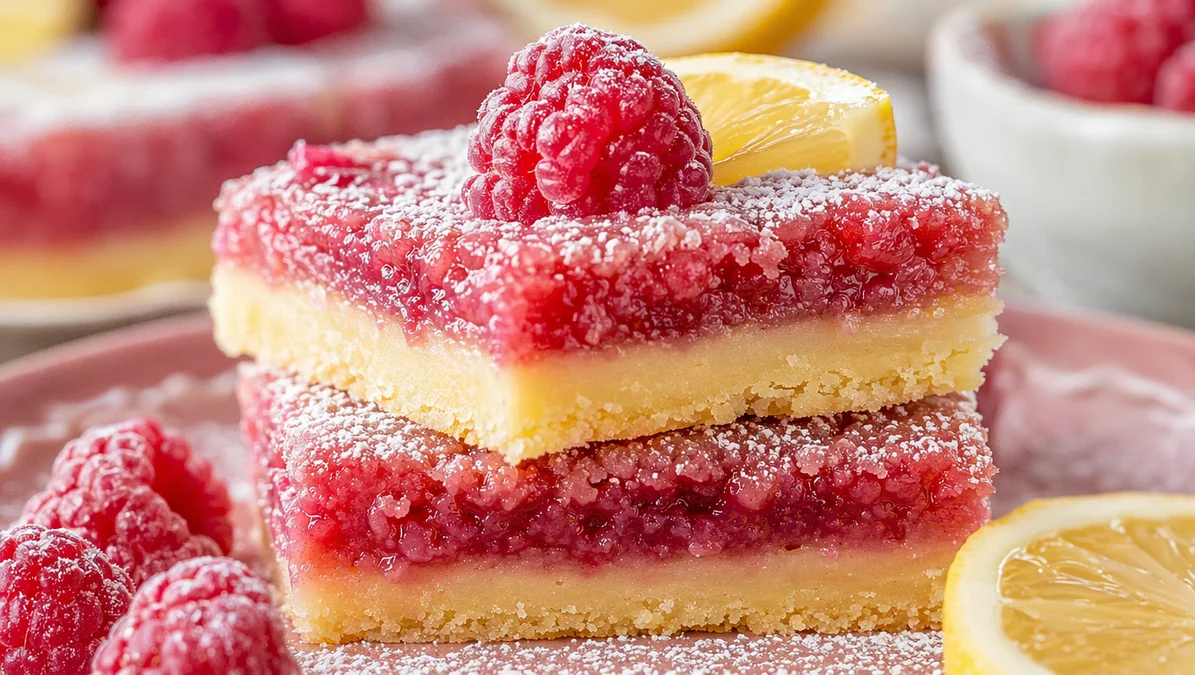
These macro-friendly lemon raspberry bars deliver classic tangy flavor with a protein boost. Easy high-protein dessert perfect for meal prep, picnic food ideas, or healthy weeknight meals.
Ingredients
Instructions
Preheat your oven to 350°F (175°C). Line an 8×8-inch baking pan with parchment paper, leaving overhang on two sides for easy lifting. This step ensures the bars come out cleanly without sticking. In a food processor, combine almond flour, oat flour, coconut flour, and a pinch of salt. Pulse a few times to blend. Add the cold cubed butter and pulse until the mixture resembles coarse crumbs with pea-sized butter pieces. The cold butter is crucial for a flaky crust—if it melts, the crust will be dense. Add cold water and lemon juice, then pulse until the dough just holds together when pressed. Do not overmix; you want a crumbly but cohesive dough. Press the dough evenly into the prepared pan, using the bottom of a measuring cup to compact it firmly. This ensures the crust holds together after baking. Bake for 12-15 minutes until lightly golden around the edges. The crust should be set but not browned. Remove from oven and let cool slightly while you prepare the custard.
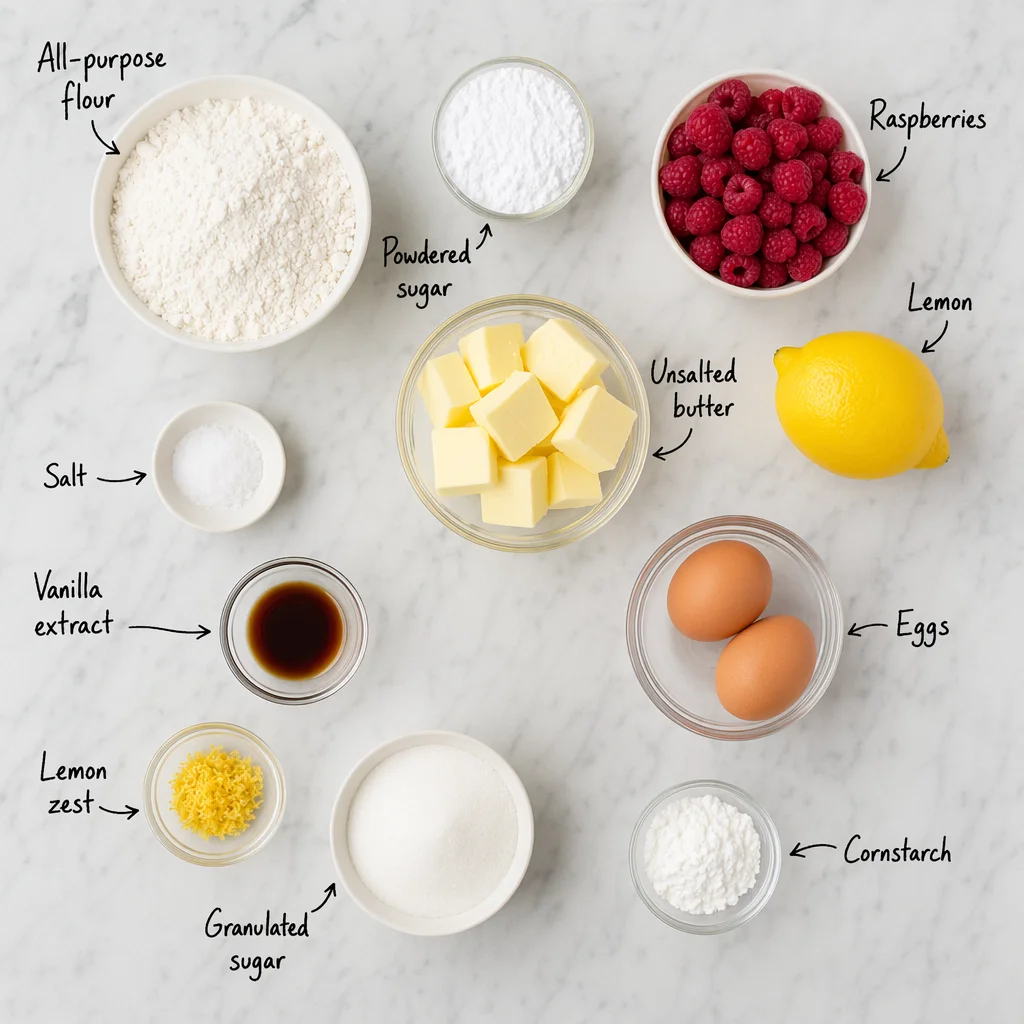
In a medium bowl, whisk together the granulated sweetener, eggs, and egg yolks until pale and slightly thickened, about 1 minute. The eggs provide structure and richness. Add the lemon juice, lemon zest, and vanilla extract if using. Whisk until well combined. In a small bowl, sift together the whey protein powder and cornstarch to avoid lumps. Gradually whisk the dry mixture into the wet ingredients until smooth. The protein powder adds a protein boost without altering the flavor, but make sure to use unflavored to keep the lemon taste prominent. The cornstarch helps thicken the custard. Let the mixture sit for 2 minutes to allow the starches to hydrate.

Gently fold in the fresh or frozen raspberries. If using frozen berries, do not thaw them first—they will hold their shape better during baking. Pour the custard over the pre-baked crust, spreading evenly with a spatula. Tap the pan gently on the counter to release any air bubbles. Bake at 350°F for 20-25 minutes until the custard is set but still slightly jiggly in the center. The edges should be firm and the top lightly golden. Overbaking can cause cracks, so start checking at 20 minutes. The custard will continue to set as it cools. Remove from oven and let cool completely in the pan on a wire rack, about 1 hour. Then refrigerate for at least 2 hours or overnight for clean slices. The chilling step is essential for a firm, sliceable texture.
Once fully chilled, use the parchment overhang to lift the entire block onto a cutting board. Use a sharp knife to cut into 16 equal bars. For clean cuts, wipe the knife clean between each slice. Dust with powdered sweetener (optional) and garnish with fresh raspberries and mint leaves. Serve cold or at room temperature. Store leftovers in an airtight container in the refrigerator for up to 5 days. These bars also freeze well—wrap individually in plastic wrap and freeze for up to 3 months.
For best results
- For the flakiest shortbread crust, keep all ingredients as cold as possible. Chill the butter and even the flours if your kitchen is warm. When pressing the dough into the pan, use a piece of plastic wrap over your fingers to prevent sticking and ensure an even layer. If the dough feels too dry, add a teaspoon more cold water; if too wet, add a teaspoon of almond flour. The crust should be firm but not hard after baking.
- Lemon zest is where the intense lemon flavor lives. Use a microplane to zest the lemons before juicing, and avoid the white pith which is bitter. For maximum flavor, rub the zest into the sweetener with your fingers before adding other ingredients—this releases the essential oils and infuses the custard with bright citrus notes.
- When using frozen raspberries, do not thaw them. Frozen berries release less juice during mixing, keeping the custard from becoming watery. They may bleed slightly during baking, creating beautiful marbled streaks. If you prefer a uniform color, use fresh berries and fold gently to avoid crushing.
- The protein powder can be substituted with an equal amount of additional cornstarch if you prefer a non-protein version, but the macros will change. For a dairy-free option, use pea protein isolate or brown rice protein—these may alter the texture slightly, so add an extra tablespoon of liquid if the batter seems thick.
- To prevent the custard from cracking, avoid opening the oven door during the first 15 minutes of baking. The sudden temperature drop can cause the custard to collapse. Also, let the bars cool gradually—first on the counter, then in the fridge. Rapid chilling can also cause cracks.
- For perfectly even bars, use a ruler to mark the cutting lines before slicing. Chill the bars for at least 4 hours or overnight—the longer they set, the cleaner the cuts. Run the knife under hot water, dry it, then slice for smooth edges. Clean the blade between each cut.
Variations
- Vegan adaptation: Replace butter with coconut oil (solid) in the crust, and use a flax egg (1 tbsp ground flax + 3 tbsp water per egg) plus 2 additional flax eggs for the custard. Use plant-based protein powder and ensure the sweetener is vegan. The texture will be slightly less rich but still delicious. Chill longer for firmness.
- Gluten-free option: The recipe is already gluten-free if using certified gluten-free oat flour. Substitute oat flour with additional almond flour (1/2 cup) for a grain-free version. The crust will be more delicate, so handle with care. Add 1/2 teaspoon xanthan gum to the custard for extra stability.
- Berry swap: Replace raspberries with blueberries, blackberries, or chopped strawberries. Each berry brings a different sweetness and color. Blueberries tend to sink less, while strawberries may release more juice—reduce liquid by 1 tablespoon if using strawberries. Mix berries for a mixed berry bar.
- Citrus twist: Use half lemon and half lime juice for a key lime-lemon bar. Or add a teaspoon of orange zest for a citrus medley. Grapefruit juice can also be used but reduce sweetener slightly as it's less tart. The protein powder will still complement the citrus flavors.
- Nut-free crust: Replace almond flour with sunflower seed flour or pumpkin seed flour. Note that sunflower seed flour can turn green when combined with baking soda (not used here) but is fine with this recipe. Add an extra tablespoon of coconut flour to absorb moisture.
Nutrition
- Calories215 kcal
- Total Fat12g
- Saturated Fat7g
- Cholesterol45mg
- Sodium180mg
- Total Carbohydrates26g
- Dietary Fiber1g
- Sugars17g
- Protein3g