
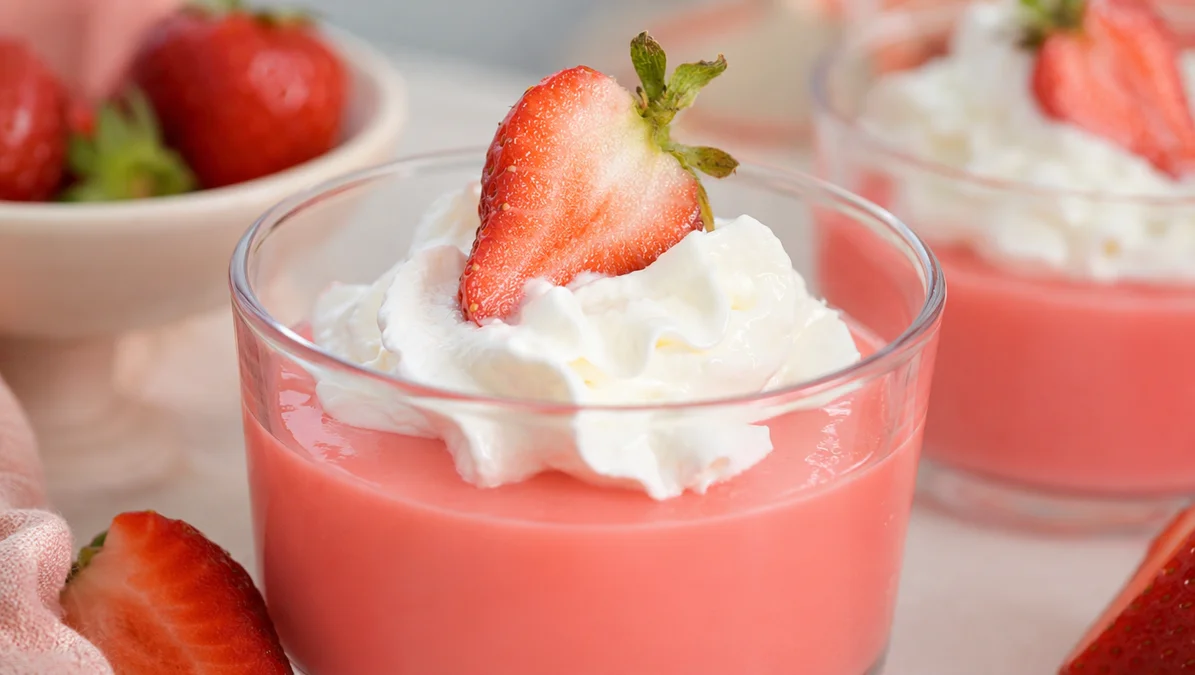
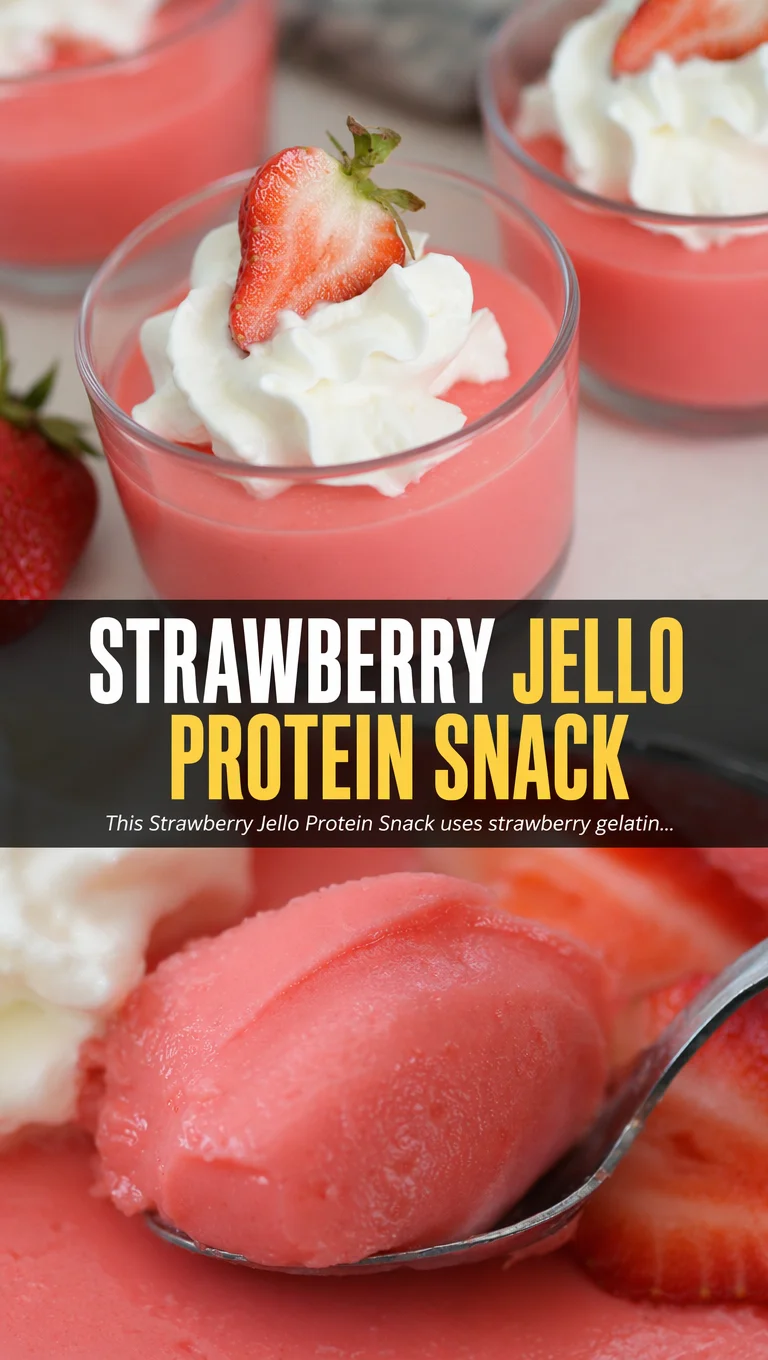
Make this 2-ingredient Strawberry Jello Protein Snack with Greek yogurt and gelatin. A quick, no-bake high-protein dessert perfect for meal prep.
Ingredients
Instructions
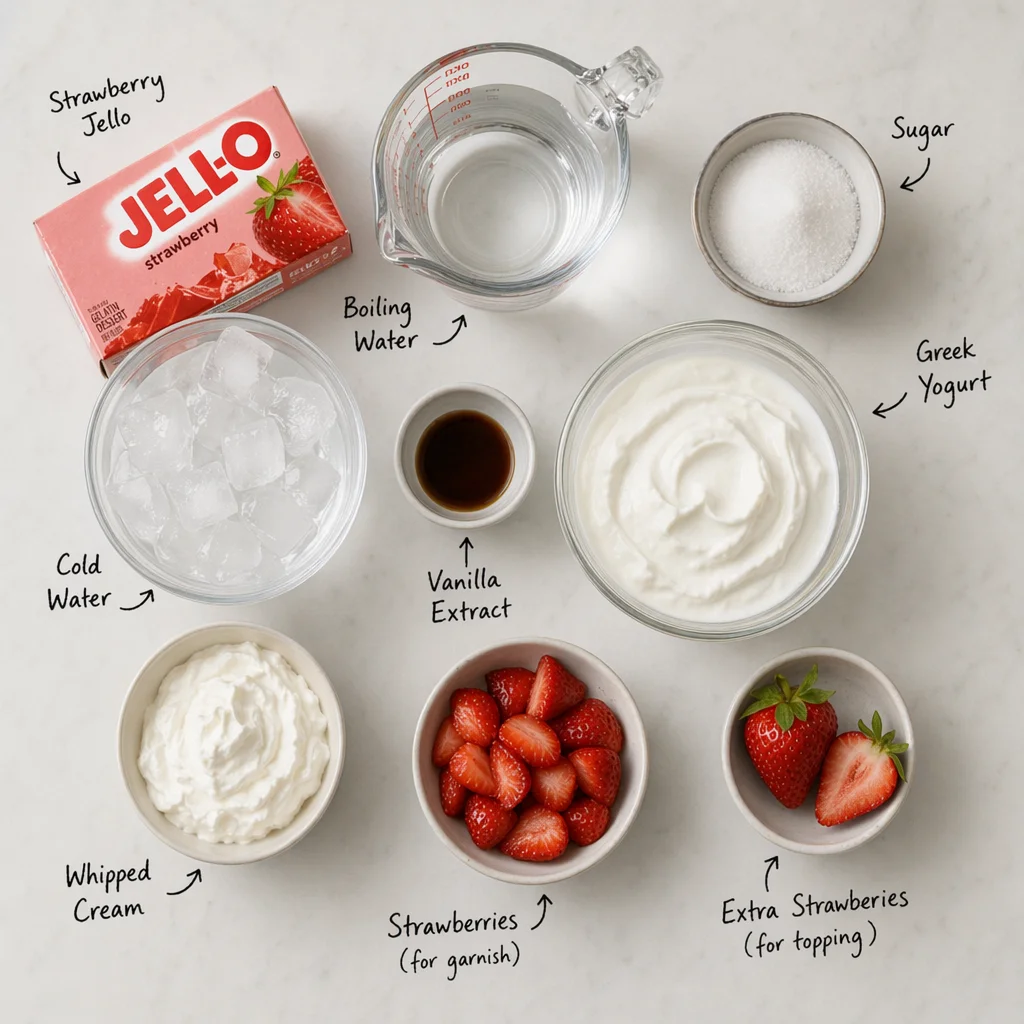
Begin by gathering your ingredients. You’ll need one 3-ounce box of strawberry gelatin (any brand works, but I recommend a quality brand like Jell-O for the best flavor and consistency). Choose a plain Greek yogurt—full-fat or 2% will give you a creamier, richer dessert, while nonfat works if you’re watching fat intake but will result in a slightly less luscious texture. Have a medium mixing bowl, a whisk, and four small serving cups (4-6 ounce capacity) ready. Measure out 1 cup of boiling water (use a kettle or microwave) and 1/2 cup of cold water. This recipe is incredibly simple, but precise water temperatures matter: the boiling water fully dissolves the gelatin, and the cold water helps it set without becoming rubbery.
In a medium heatproof bowl, pour the strawberry gelatin powder. Add the 1 cup of boiling water and whisk vigorously for about 2 minutes until the gelatin is completely dissolved. You should see no granules remaining; the liquid will be clear and bright red. Whisking thoroughly is crucial because undissolved gelatin can create gritty spots or prevent proper setting. The hot water activates the gelatin molecules, allowing them to form a network that will later trap water and create the jiggly texture. Once dissolved, add the 1/2 cup of cold water and stir to combine. This cools the mixture slightly and ensures the gelatin sets at the right rate.
Now, add the Greek yogurt to the gelatin mixture. Whisk continuously until the yogurt is fully incorporated and the mixture is smooth, with no white streaks. This may take a minute or two. The yogurt adds protein and a tangy creaminess that balances the sweetness of the gelatin. As you whisk, you’ll notice the mixture becoming thicker and slightly frothy—this is good. The yogurt’s proteins interact with the gelatin, creating a stable, mousse-like texture. If you see lumps, keep whisking; they will smooth out. The final mixture should be a uniform pale pink color and have the consistency of a thin milkshake.
Divide the mixture evenly among your four serving cups. Use a ladle or a liquid measuring cup with a spout for easy pouring. Fill each cup about three-quarters full, leaving a little room for any topping you might add later (like fresh strawberries or whipped cream). Tap each cup gently on the counter to release any air bubbles that may have formed during whisking. This step is optional but helps achieve a smooth, professional-looking surface. The mixture will still be liquid at this point—don’t worry, it will set in the fridge.
Place the cups in the refrigerator, uncovered, for at least 2 hours, or until fully set. For best results, chill for 4 hours or overnight. The gelatin needs time to cool and form its structure. During chilling, the gelatin molecules bond with water, creating a semi-solid gel. The yogurt proteins also contribute to the set, giving it a creamy, almost cheesecake-like consistency. To test if it’s set, gently tilt a cup—the surface should be firm and jiggle slightly. Do not disturb the cups during the first hour, as vibrations can disrupt the setting process. Once set, you can cover them with plastic wrap or lids if storing longer.
Serve the strawberry jello protein snack chilled, straight from the fridge. You can enjoy it as is, or add toppings like fresh sliced strawberries, a dollop of whipped cream, a sprinkle of granola, or a drizzle of honey. The dessert is light, refreshing, and satisfying—a perfect guilt-free treat. Store any leftovers covered in the refrigerator for up to 5 days. The texture remains stable, though the yogurt may separate slightly over time; a quick stir will bring it back together. This snack is ideal for meal prep: make a batch on Sunday and grab one for a quick protein boost during the week.
For best results
- Choose the Right Yogurt: The type of Greek yogurt you use significantly affects the final texture. Full-fat Greek yogurt (4-5% milkfat) yields the creamiest, most decadent result, similar to a panna cotta. 2% yogurt is a good middle ground—still creamy but lighter. Nonfat yogurt works but produces a slightly firmer, less rich texture. Avoid flavored yogurts, as they add extra sugar and artificial flavors that may clash with the gelatin. Also, ensure your yogurt is at room temperature before mixing; cold yogurt can cause the gelatin to seize and create lumps. Let it sit out for 15-20 minutes before starting.
- Perfecting the Gelatin Set: The ratio of liquid to gelatin is critical. This recipe uses 1.5 cups total liquid (1 cup boiling + 1/2 cup cold) per 3-ounce box, which is the standard for Jell-O. If you want a firmer dessert (like a jello mold), reduce the cold water to 1/4 cup. For a softer, more mousse-like texture, increase cold water to 3/4 cup. Do not use less than 1 cup boiling water, as the gelatin must fully dissolve. Also, avoid adding fresh pineapple, kiwi, or papaya, as these fruits contain enzymes that break down gelatin and prevent setting. If you want to add fruit, use canned or cooked versions.
- Speed Up Setting Time: If you're in a hurry, you can speed up the setting process. After dividing the mixture into cups, place them in the freezer for 15-20 minutes, then transfer to the refrigerator. The cold from the freezer helps the gelatin set faster. However, do not leave them in the freezer for more than 30 minutes, or the mixture may freeze and become icy. Alternatively, use a shallow dish (like a baking pan) to spread the mixture thin; it will set in about 1 hour. Then cut into squares for a fun jello snack.
- Make It Dairy-Free/Vegan: To make this recipe dairy-free, substitute the Greek yogurt with a thick plant-based yogurt, such as coconut yogurt or soy yogurt. Note that the texture will be softer and less firm because plant-based yogurts have different protein structures. You can also use silken tofu blended until smooth for a high-protein vegan version. The gelatin in standard Jell-O is not vegan (it's made from animal collagen), so for a fully vegan dessert, use a plant-based gelatin substitute like agar-agar. Follow the package instructions for liquid ratios, as agar sets differently.
- Storage and Meal Prep: These jello snacks are perfect for meal prep. Store them in airtight containers (or cover the cups with plastic wrap) in the refrigerator for up to 5 days. The texture remains stable, but the yogurt may separate slightly after a few days; simply stir before eating. Do not freeze, as freezing will destroy the gel structure and result in a watery, grainy mess. If you want to take them on the go, use containers with tight-fitting lids to prevent spills. They're great for lunchboxes, picnics, or post-workout snacks.
Variations
- Flavor Twist: Switch up the gelatin flavor! Try raspberry, lime, orange, or even lemon for a citrusy kick. Each flavor pairs beautifully with Greek yogurt. For a tropical version, use mango or pineapple gelatin (but remember, fresh pineapple prevents setting—use canned or cook it first). You can also mix two flavors, like strawberry and peach, for a layered effect. Pour the first flavor, let it set slightly (30 minutes), then add the second flavor on top.
- Protein Boost: For an extra protein punch, add a scoop of unflavored or vanilla protein powder to the yogurt before mixing. Whey protein works best as it blends smoothly; casein can thicken the mixture too much. Start with 1 scoop (about 25g) and whisk thoroughly to avoid clumps. You may need to add an extra tablespoon of water to maintain the right consistency. This variation boosts the protein content to around 15-20g per serving, making it an excellent post-workout recovery snack.
- Dessert Layering: Create a parfait by layering the jello mixture with additional Greek yogurt or whipped cream. After the jello sets, add a layer of plain yogurt, then another layer of jello. Repeat for a beautiful striped effect. You can also add a crumb layer: sprinkle crushed graham crackers or vanilla wafer crumbs between layers for a cheesecake-like texture. Top with fresh strawberries for a stunning presentation.
- Savory Version: Yes, you can make a savory jello snack! Use unflavored gelatin and replace the strawberry flavor with savory ingredients. Dissolve the gelatin in broth (chicken or vegetable), then mix with plain Greek yogurt and seasonings like garlic powder, onion powder, and fresh herbs. This creates a creamy, savory mousse that can be served as a dip with crackers or as a light appetizer. It's a unique way to incorporate protein into a savory course.
Nutrition
- Calories98 kcal
- Total Fat4g
- Saturated Fat2.5g
- Cholesterol15mg
- Sodium95mg
- Total Carbohydrates11g
- Dietary Fiber0g
- Sugars10g
- Protein7g