
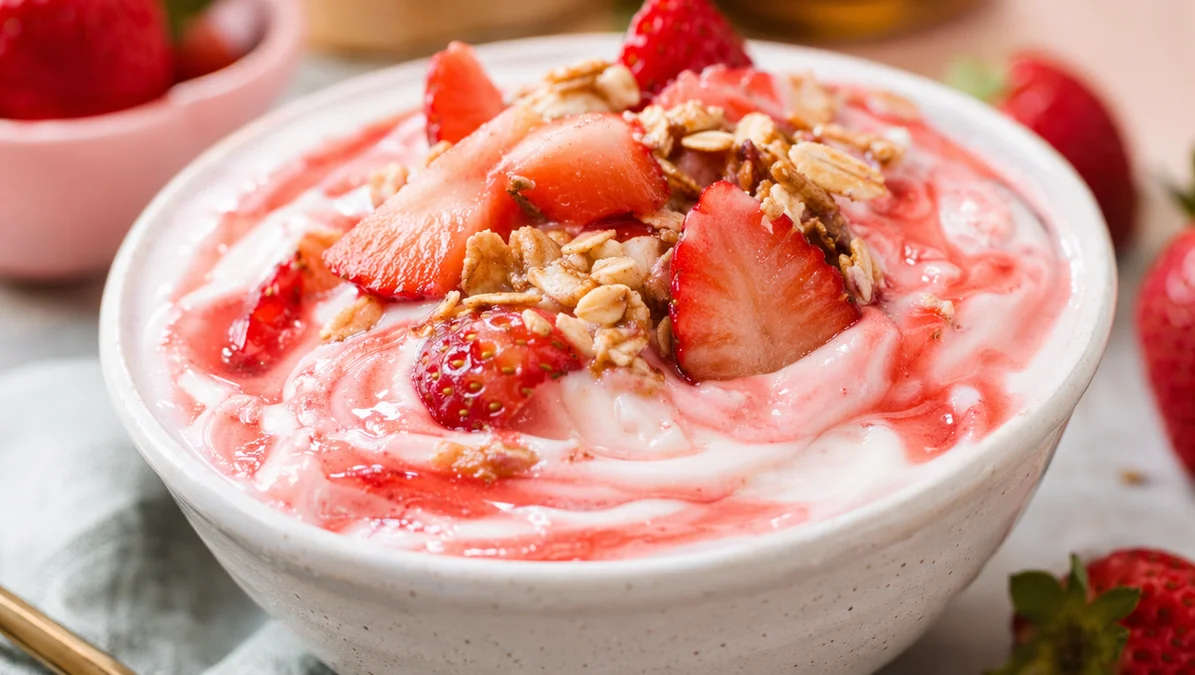
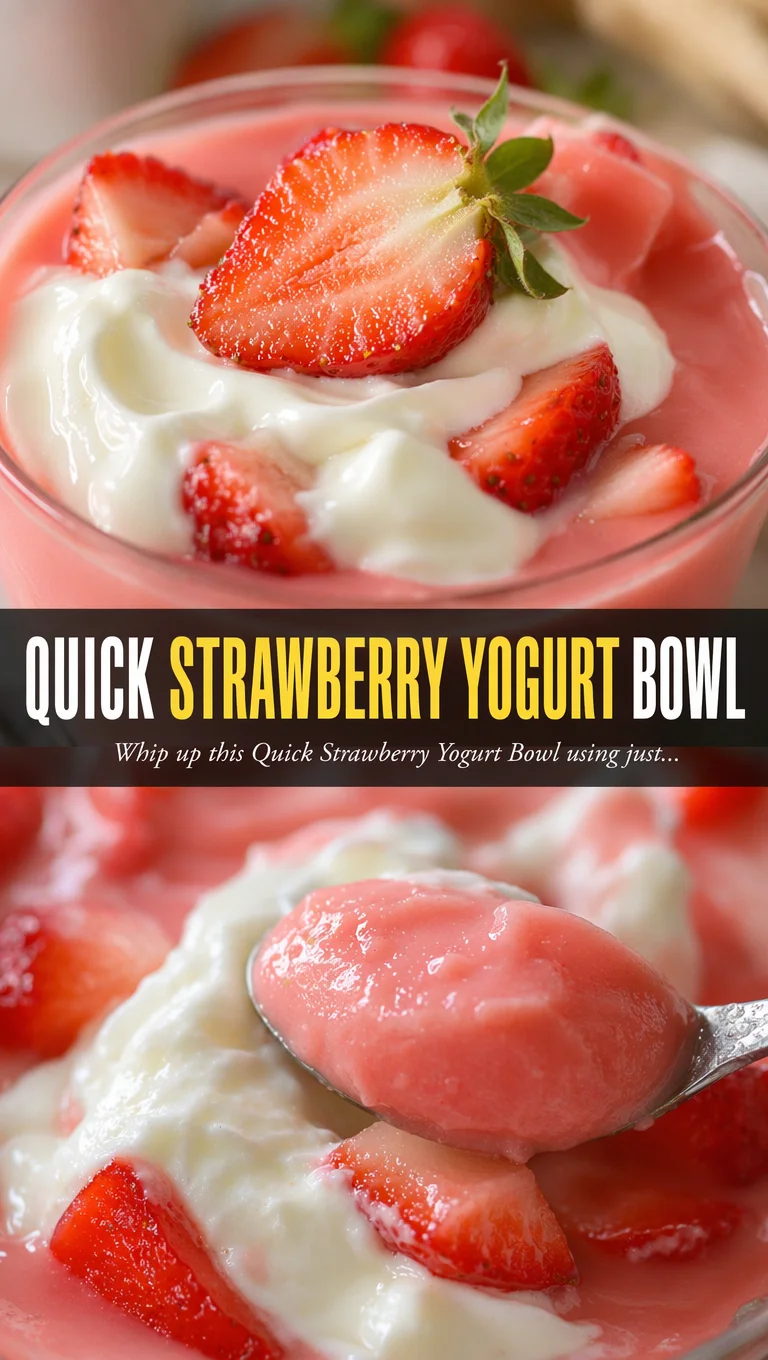
Whip up this Quick Strawberry Yogurt Bowl with just strawberry gelatin and Greek yogurt for a macro-friendly, high-protein dessert perfect for meal prep or a light treat.
Ingredients
Instructions
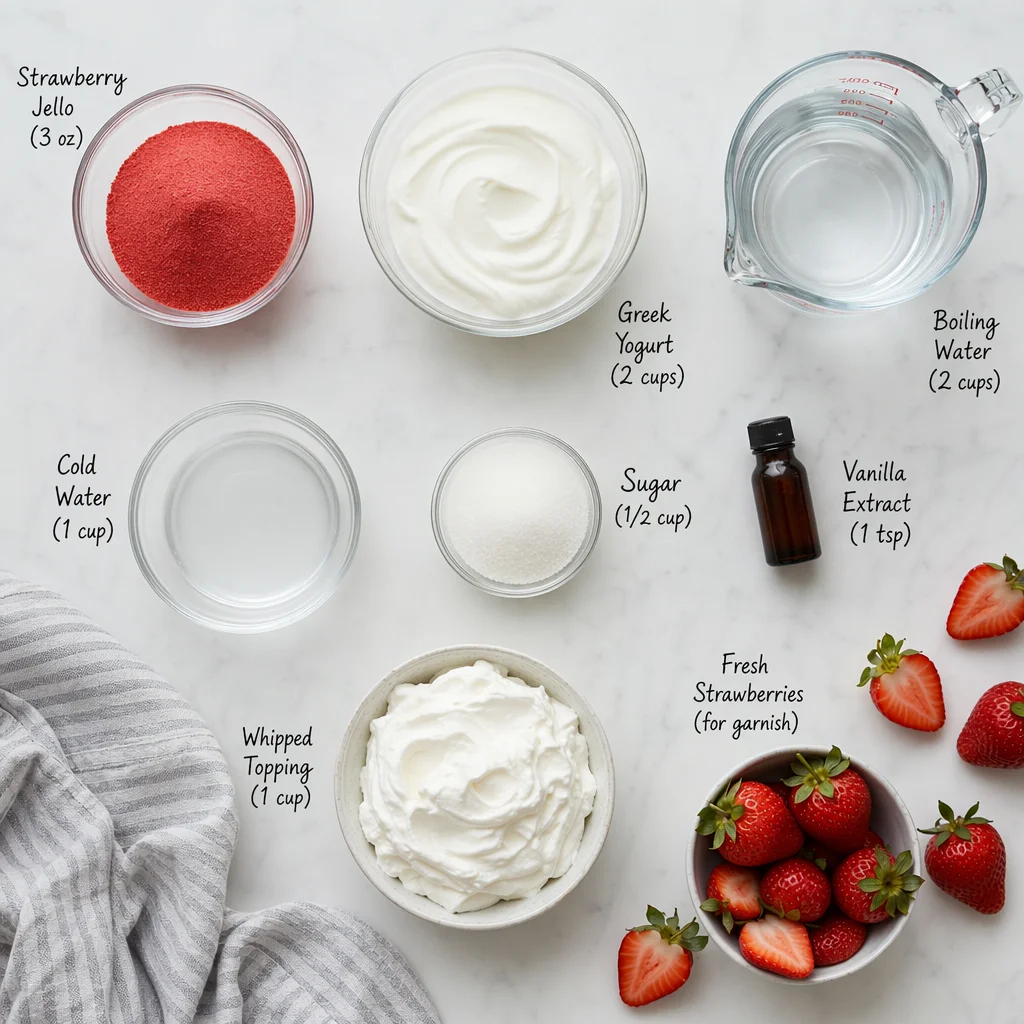
Start by gathering your ingredients. You will need one standard 85g (3 oz) package of strawberry gelatin and 2 cups (480g) of plain Greek yogurt. For the best texture and protein content, use full-fat or 2% Greek yogurt rather than nonfat, as the fat helps stabilize the foam and adds creaminess. If you prefer a sweeter dessert, have honey or your preferred sweetener on hand. Place a mixing bowl and a hand mixer or whisk ready. The process is incredibly simple but requires attention to timing for the perfect fluffy texture.
In a medium saucepan, bring 1 cup (240ml) of water to a rolling boil. Remove from heat immediately and pour in the strawberry gelatin powder. Whisk continuously for about 2 minutes until the gelatin is completely dissolved. You should see a clear, bright red liquid with no granules remaining. This step is crucial because undissolved gelatin can create gritty spots in the final dessert. Let the gelatin mixture cool for 5-10 minutes at room temperature, stirring occasionally. It should be warm but not hot to the touch—if it’s too hot, it will deflate the yogurt when combined.
While the gelatin cools, place the Greek yogurt in a large mixing bowl. Using a hand mixer or a sturdy whisk, beat the yogurt for 1-2 minutes until it becomes smooth and slightly aerated. This step lightens the yogurt, making it easier to incorporate the gelatin and resulting in a fluffier dessert. If you are using a sweetener, stir it into the yogurt now. The yogurt should be at room temperature or slightly chilled—if it’s too cold, it may cause the gelatin to set too quickly and create lumps.
With the mixer running on low speed (or while whisking vigorously), slowly pour the warm gelatin mixture into the yogurt in a thin, steady stream. Continue mixing until the gelatin is fully incorporated and the mixture is uniform in color—a soft pink hue. Scrape down the sides and bottom of the bowl to ensure no streaks of white yogurt remain. The mixture will be thin at this point but will thicken as it sets. Do not overmix, as this can deflate the air bubbles and result in a denser texture.
Divide the mixture evenly among four serving bowls, ramekins, or a single large dish. For the smoothest top, gently tap each bowl on the counter to release any air bubbles. Cover with plastic wrap or a lid and refrigerate for at least 4 hours, or until fully set. The dessert is ready when it is firm to the touch and jiggles slightly when shaken. For best results, chill overnight. The gelatin needs time to fully hydrate and create a stable network, resulting in a silky, sliceable texture.
Once set, remove from the refrigerator. Garnish with fresh strawberries, a dollop of whipped cream, or a sprinkle of granola if desired. Serve cold. The dessert can be stored in the refrigerator for up to 5 days, making it an excellent make-ahead treat. Enjoy the creamy, fruity, and protein-packed goodness!
For best results
- For the fluffiest texture, use full-fat Greek yogurt (at least 5% milk fat). The fat content helps stabilize the foam created when mixing, resulting in a mousse-like consistency. Nonfat yogurt can be used but will yield a denser, more pudding-like texture. If you must use nonfat, consider adding 1-2 tablespoons of heavy cream or coconut cream to mimic the richness.
- Temperature control is key. The gelatin must be warm (not hot) when added to the yogurt. If the gelatin is too hot, it will denature the yogurt proteins and cause the mixture to separate or become grainy. Conversely, if the yogurt is too cold, the gelatin may set in streaks before fully incorporating. Let the gelatin cool for 5-10 minutes and bring the yogurt to room temperature for 15 minutes before mixing.
- To reduce sugar, use sugar-free strawberry gelatin. The texture will be slightly softer but still delicious. You can also add a tablespoon of unflavored gelatin to the sugar-free version to improve firmness. If using sugar-free, taste the yogurt before adding sweetener—the gelatin may already provide enough sweetness for some palates.
- This dessert is naturally gluten-free and can be made dairy-free by substituting Greek yogurt with a thick, unsweetened plant-based yogurt such as coconut or soy yogurt. Note that dairy-free yogurts may have a thinner consistency, so add 1 teaspoon of unflavored gelatin or agar agar to help the dessert set properly.
- For a more intense strawberry flavor, puree 1/2 cup of fresh or frozen strawberries and swirl it into the mixture before chilling. This adds natural fruit pieces and boosts the nutritional value with fiber and vitamin C. Alternatively, use raspberry or mixed berry gelatin for a different flavor profile.
- Storage tip: Cover each serving tightly with plastic wrap to prevent a skin from forming. If you plan to keep the dessert for more than 3 days, consider storing it in an airtight container. The dessert can also be frozen for up to 1 month; thaw in the refrigerator overnight before serving. The texture may become slightly icy, but it will still taste great.
Variations
- Dairy-Free / Vegan: Substitute Greek yogurt with a thick, unsweetened coconut or soy yogurt. Use a vegan strawberry gelatin (made from agar agar or carrageenan) available at health food stores. Follow the package instructions for setting; typically, agar-based gels set at room temperature. The result will be a lighter, more delicate dessert that is completely plant-based.
- High-Protein Boost: Add 1 scoop of unflavored or strawberry protein powder (whey or plant-based) to the yogurt before mixing. This increases the protein content to around 20g per serving. If using a flavored protein powder, reduce or omit additional sweetener. Note that protein powder may thicken the mixture slightly, so you may need to add 1-2 tablespoons of milk to maintain a pourable consistency.
- Chocolate Strawberry Swirl: Replace half of the strawberry gelatin with chocolate or cherry gelatin. After mixing, gently fold in 2 tablespoons of unsweetened cocoa powder for a rich chocolate flavor. Swirl in some strawberry puree before chilling for a marbled effect. This variation satisfies chocolate cravings while keeping the protein high.
- Lemon Berry: Use lemon gelatin instead of strawberry, and fold in 1 cup of fresh blueberries or raspberries. The tart lemon pairs beautifully with the sweet berries. Add a teaspoon of lemon zest for extra brightness. This version is especially refreshing in summer.
- Keto / Low-Carb: Use sugar-free strawberry gelatin and replace Greek yogurt with full-fat yogurt or a combination of cream cheese and heavy cream (blended until smooth). This reduces carbs to under 5g per serving while keeping the dessert rich and creamy. Add a few drops of liquid stevia if needed.
Nutrition
- Calories215 kcal
- Total Fat12g
- Saturated Fat7g
- Cholesterol45mg
- Sodium180mg
- Total Carbohydrates26g
- Dietary Fiber1g
- Sugars17g
- Protein3g