
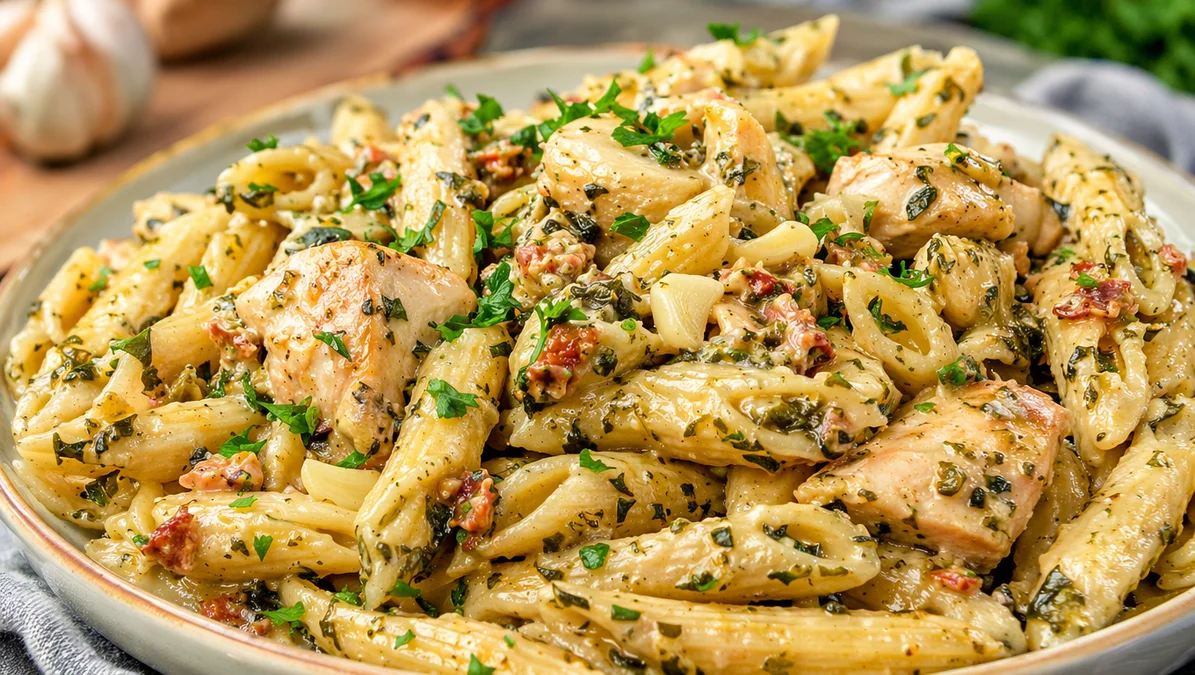
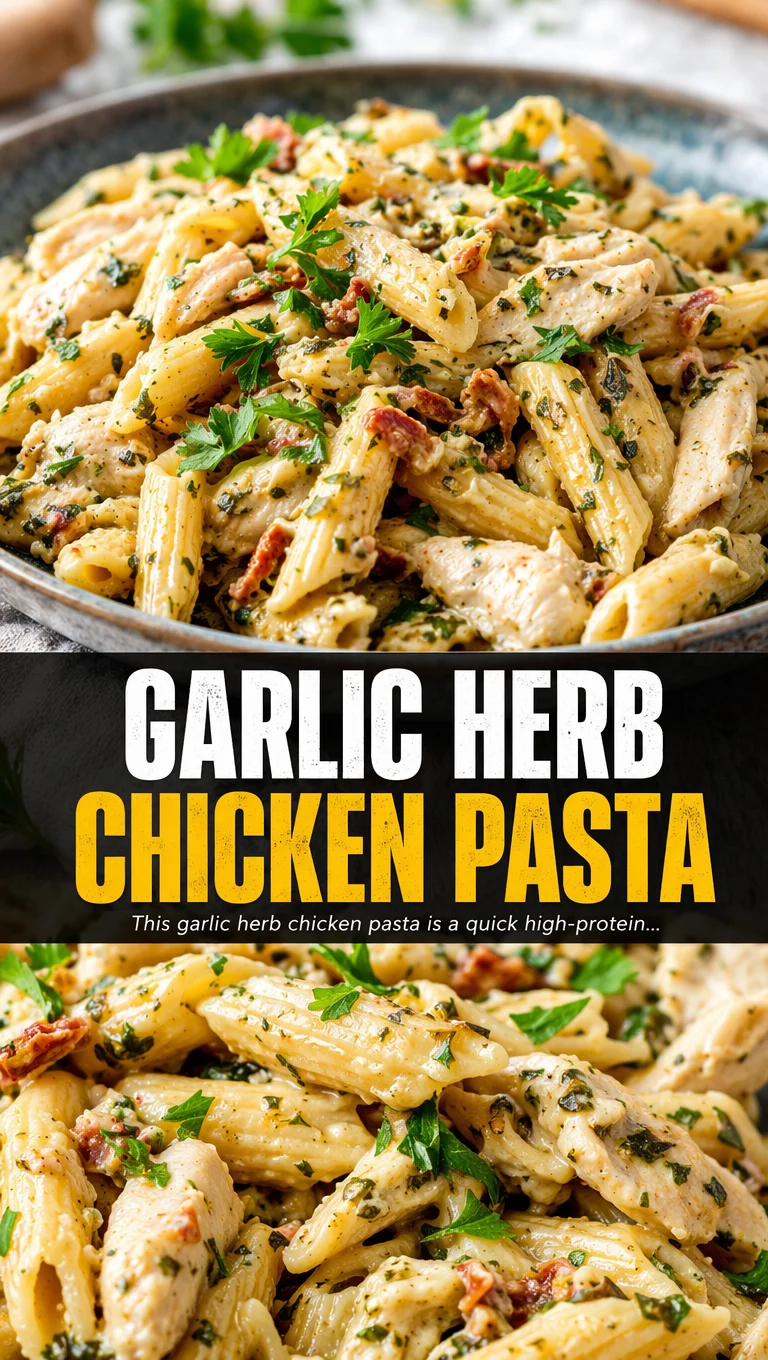
This garlic herb chicken pasta is a quick high-protein dinner featuring rotisserie chicken, garlic, and fresh herbs. An easy high-protein meal that comes together in minutes, perfect for macro-friendly weeknight…
Ingredients
Instructions
Bring a large pot of generously salted water (about 1 tablespoon of salt per 4 quarts of water) to a rolling boil. Add the pasta and cook according to package directions until al dente, usually 8-10 minutes. While the pasta cooks, use a liquid measuring cup to reserve at least 1/2 cup of the starchy pasta water just before draining. The starch in this water is crucial for emulsifying the sauce later, giving it a silky, clingy texture that coats every piece of pasta. Drain the pasta in a colander, but do not rinse—rinsing removes the starch and prevents the sauce from adhering properly. Set aside.
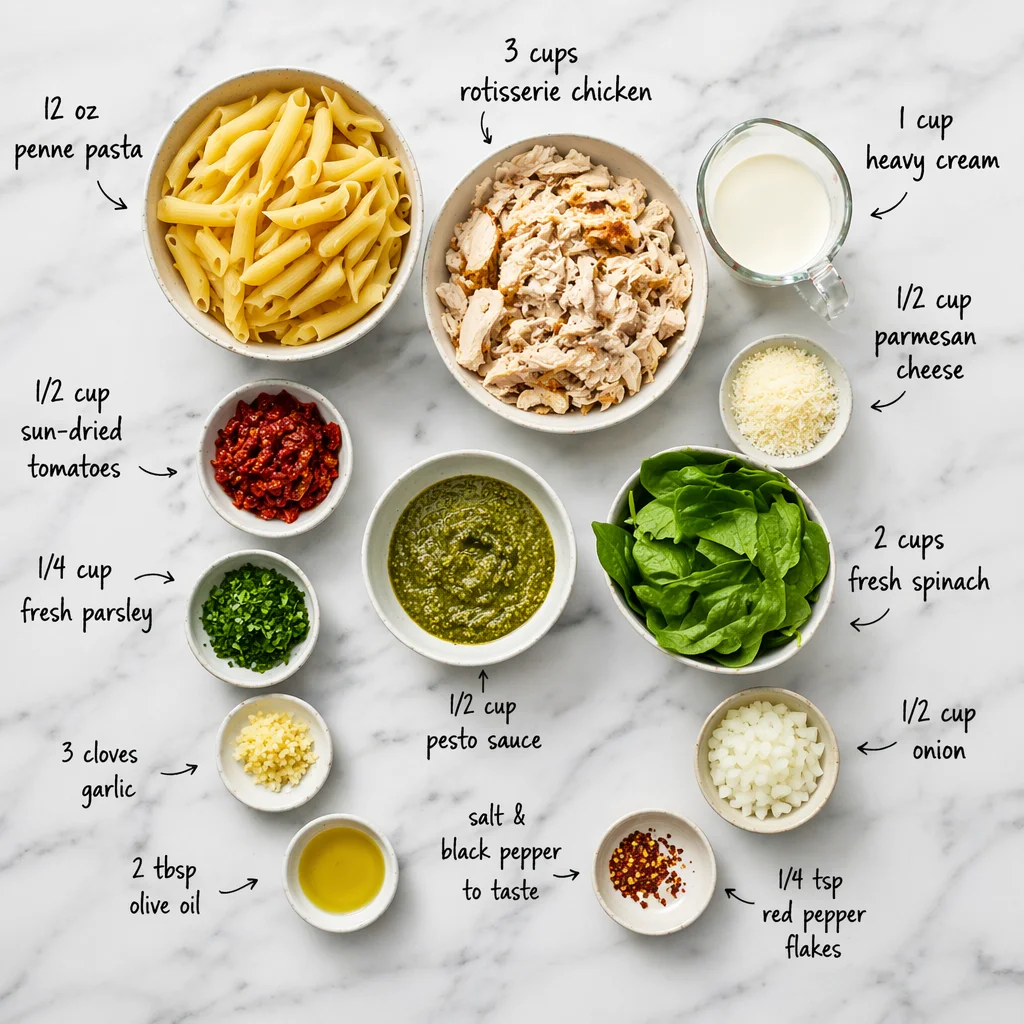
While the pasta is cooking, prepare the chicken and aromatics. If you haven’t already, shred the rotisserie chicken: remove the skin and bones, then use two forks to pull the meat into bite-sized pieces. You should have about 3 cups. Mince the garlic cloves finely—this ensures they release their essential oils quickly and evenly when cooked, without burning. Chop the fresh basil, parsley, and oregano. Grate the Parmesan cheese if not pre-grated; freshly grated melts more smoothly and has superior flavor.
In a large skillet or sauté pan, heat the olive oil over medium heat. Add the minced garlic and red pepper flakes (if using). Sauté for about 30-60 seconds, stirring constantly, until the garlic is fragrant and just starting to turn golden. Be careful not to let it burn—burnt garlic becomes bitter and acrid. The oil will become infused with garlic aroma. If using white wine, pour it in now and let it simmer for 1-2 minutes, scraping up any browned bits from the bottom of the pan, until reduced by half. This deglazing step adds depth and acidity that balances the richness of the chicken and cheese.
Add the shredded rotisserie chicken to the skillet. Toss to coat with the garlic oil and heat through, about 2 minutes. The chicken is already cooked, so you’re just warming it and allowing it to absorb the flavors. If the chicken seems dry, add a splash of reserved pasta water to moisten. Season with a pinch of salt and pepper. Taste a piece—it should be juicy and well-seasoned. The contrast of the tender, savory chicken against the pasta will be the highlight of the dish.
Reduce the heat to low. Add the drained pasta to the skillet with the chicken. Sprinkle the fresh herbs (basil, parsley, oregano) over everything, then add about 1/4 cup of the reserved pasta water. Toss vigorously using tongs or a wooden spoon to combine. The residual heat will wilt the herbs and meld the flavors. Gradually add the grated Parmesan cheese, tossing continuously. If the sauce seems too thick, add more pasta water a tablespoon at a time until it reaches a creamy, luscious consistency that coats the pasta without being watery. The cheese acts as an emulsifier, binding the oil and water into a smooth sauce.
Taste and adjust seasoning with salt and pepper. If you like a bit more heat, add an extra pinch of red pepper flakes. Serve immediately in warmed bowls, garnished with additional fresh herbs and a generous dusting of Parmesan. For a final touch, drizzle a tiny bit of extra-virgin olive oil over each serving for a glossy finish. The dish should be vibrant with green herbs, golden chicken, and creamy sauce clinging to every piece of pasta.
For best results
- Choosing the right rotisserie chicken makes all the difference. Look for a bird that is freshly roasted from the deli section—avoid pre-packaged ones that may be dry or overly salty. If possible, buy a plain or herb-roasted chicken to control the seasoning. For the juiciest results, shred the chicken while it's still warm; cold chicken tends to clump and can dry out when reheated. You can also use leftover homemade roasted chicken or even grilled chicken breasts in a pinch, but rotisserie chicken offers the most flavor with zero effort.
- Pasta water is liquid gold—don't skip reserving it! The starch suspended in the water thickens the sauce and helps it cling to the pasta without needing heavy cream or butter. For best results, reserve at least a full cup, even if you only use half. The extra can be stored in the fridge for up to a week and used to loosen leftovers or other sauces. When adding it to the skillet, start with a small amount and add more gradually; you want a silky coating, not a soupy mess.
- Fresh herbs are non-negotiable for that bright, aromatic punch. Dried herbs can be substituted in a pinch (use 1 teaspoon dried for every 1 tablespoon fresh), but they lack the volatile oils that make the dish sing. If you're growing herbs, this recipe is perfect for using up a bumper crop of basil and parsley. To store fresh herbs, trim the stems and place them in a glass of water in the fridge, loosely covered with a plastic bag—they'll stay fresh for up to a week.
- Don't overcook the garlic. The line between fragrant and burnt is thin—about 30 seconds over medium heat. If you're worried, add the garlic to the oil, then immediately add a splash of pasta water or wine to lower the temperature. This 'blanching' technique infuses the oil with garlic flavor without the risk of bitterness. Alternatively, you can use whole garlic cloves and remove them before serving for a milder taste.
- To make this dish even more macro-friendly, use whole wheat or legume-based pasta (like chickpea or lentil pasta) for added fiber and protein. The cooking time may vary slightly, so follow package instructions. Also, consider using part-skim mozzarella or a reduced-fat Parmesan to lower the fat content without sacrificing too much flavor. For a dairy-free version, omit the cheese and use nutritional yeast (about 2 tablespoons) for a cheesy, umami flavor.
- If you're meal-prepping, store the pasta and sauce separately to prevent the pasta from absorbing all the liquid and becoming mushy. When reheating, add a splash of water or chicken broth and microwave or reheat in a skillet over medium heat, tossing frequently. The dish keeps well in an airtight container in the fridge for up to 4 days. Freezing is not recommended because the texture of the pasta and herbs degrades significantly.
Variations
- Creamy Garlic Herb Pasta: For an indulgent twist, stir in 1/2 cup of heavy cream or half-and-half after adding the chicken, then simmer for 2 minutes before tossing with pasta and cheese. This creates a rich, velvety sauce that's still relatively high in protein. You can also use Greek yogurt (full-fat) for a tangy, protein-boosted creaminess—just be sure to temper it with a bit of hot pasta water first to prevent curdling.
- Lemon Herb Chicken Pasta: Brighten the dish with the zest and juice of one lemon. Add the zest along with the garlic, and squeeze the juice over the finished pasta just before serving. The acidity cuts through the richness and complements the herbs beautifully. You can also add a handful of arugula or spinach at the end for extra greens; the residual heat will wilt them slightly.
- Spicy Arrabbiata Chicken Pasta: Transform this into a red sauce version by replacing the white wine with 1/2 cup of crushed tomatoes or marinara sauce. Increase the red pepper flakes to 1 teaspoon and add a pinch of smoked paprika for depth. The tomato-based sauce pairs wonderfully with the rotisserie chicken and adds lycopene and antioxidants. Serve with a side of roasted broccoli for a complete meal.
- Vegetarian High-Protein Version: Omit the chicken and double the amount of pasta or add 1 can (15 oz) of drained chickpeas or white beans for plant-based protein. Sauté the garlic and herbs as directed, then add the beans and toss with the pasta. Use nutritional yeast instead of Parmesan for a vegan option. The beans provide fiber and protein, making this a satisfying meatless meal.
- Gluten-Free Adaptation: Simply use your favorite gluten-free pasta, such as brown rice, quinoa, or corn-based varieties. Be careful not to overcook gluten-free pasta as it can become mushy; cook it just until al dente and rinse only if the package instructs (some brands require rinsing to remove excess starch). The sauce works beautifully with gluten-free pasta, and the chicken ensures the dish remains hearty.
Nutrition
- Calories485 kcal
- Total Fat18g
- Saturated Fat5g
- Cholesterol85mg
- Sodium620mg
- Total Carbohydrates48g
- Dietary Fiber3g
- Sugars3g
- Protein35g