
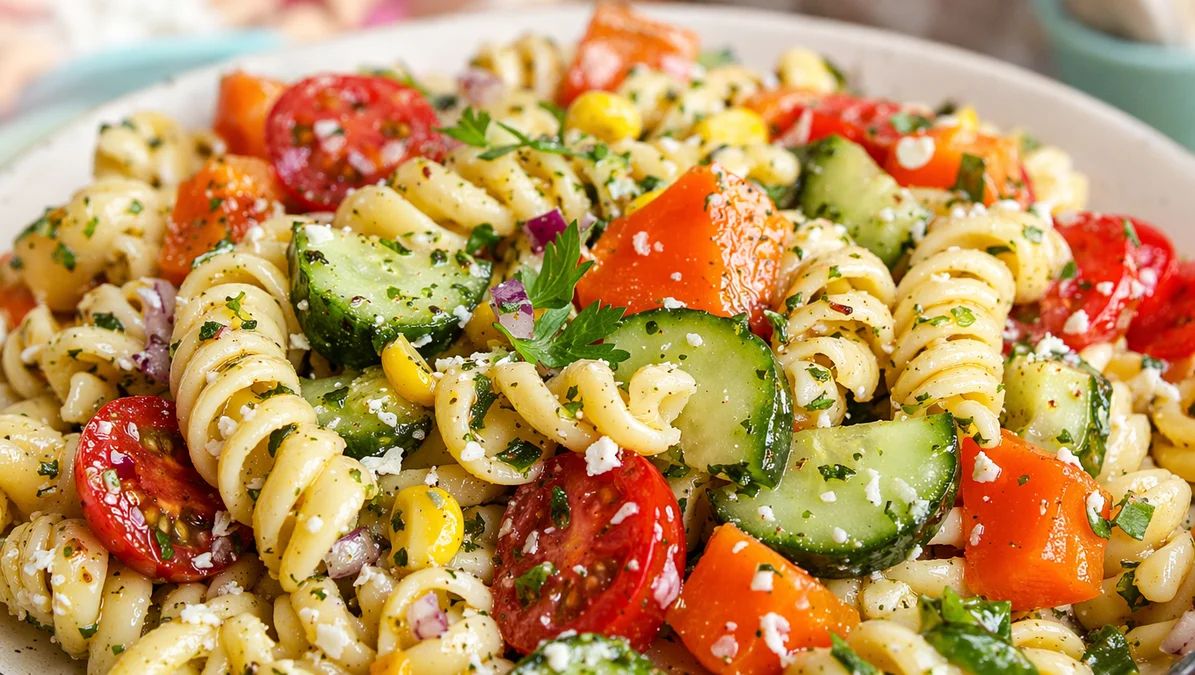
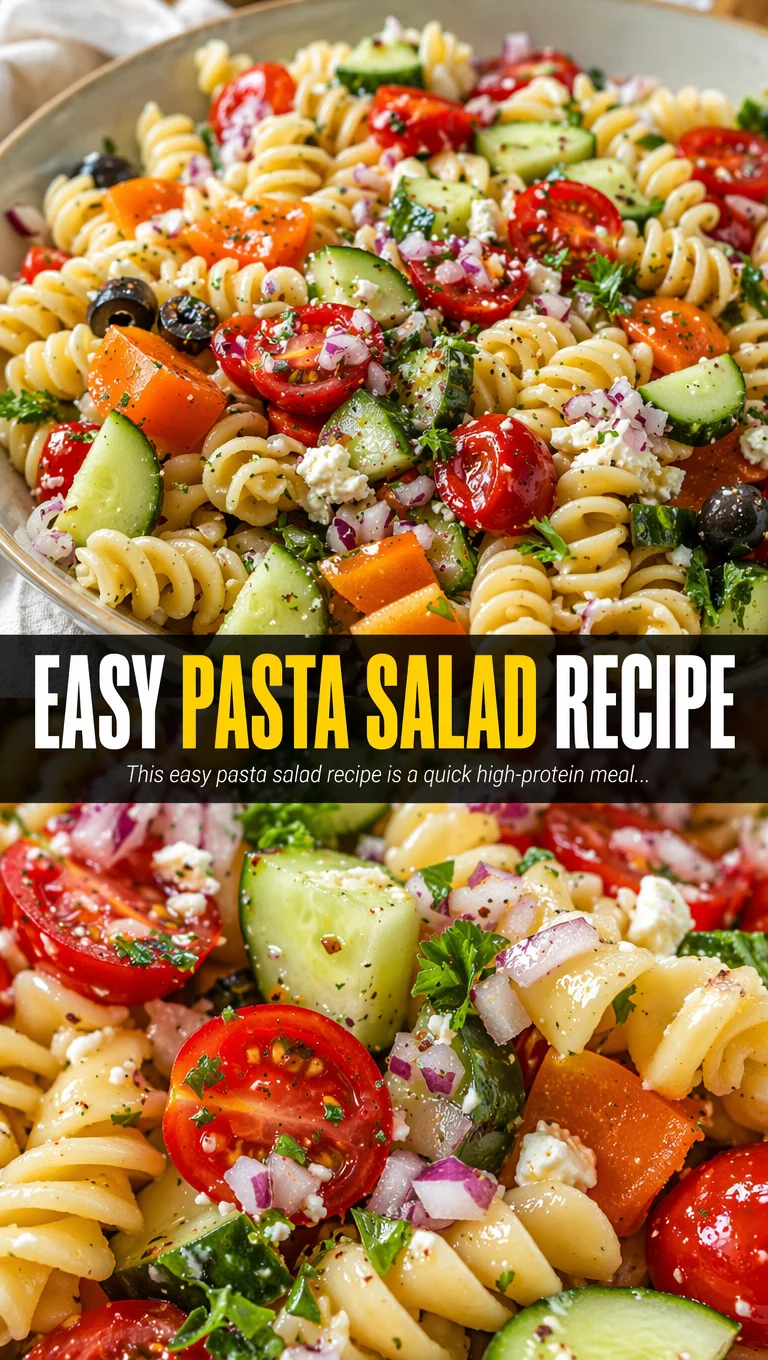
This easy pasta salad recipe is a quick high-protein meal perfect for summer picnics and party food ideas. Make it ahead for a stress-free, macro-friendly dinner.
Ingredients
Instructions
Bring a large pot of salted water to a rolling boil—use about 1 tablespoon of salt per 4 quarts of water. The salt seasons the pasta from the inside out, ensuring every bite is flavorful. Add the pasta and cook according to package directions until al dente, typically 8-10 minutes. Al dente pasta holds its shape better in the salad and won’t become mushy when dressed. Stir occasionally to prevent sticking. While the pasta cooks, prepare a large bowl of ice water. Once the pasta is done, drain it in a colander and immediately plunge it into the ice water to stop the cooking process. This shock step locks in the perfect texture and cools the pasta quickly for the salad. Drain again and transfer to a large mixing bowl. Drizzle with a teaspoon of olive oil and toss gently to prevent clumping.
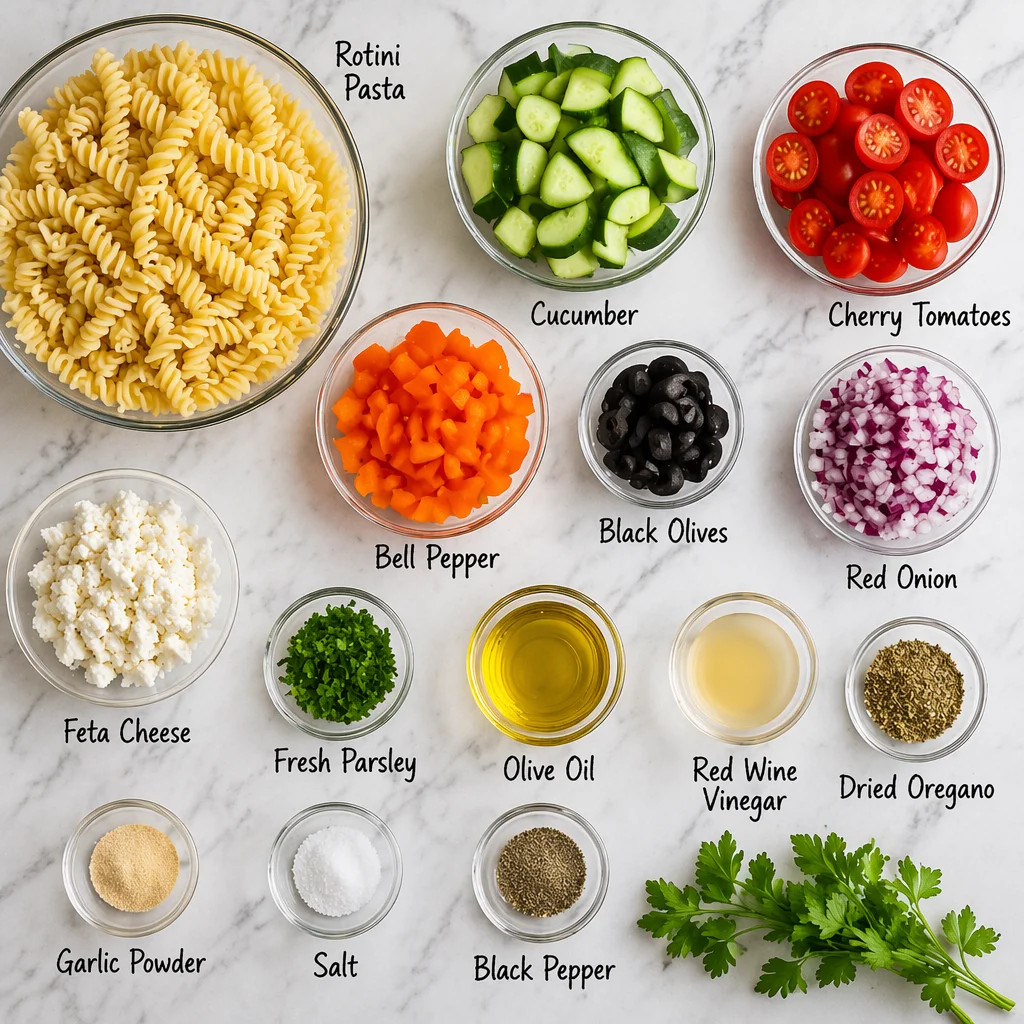
While the pasta cools, prepare the vegetables. Halve the cherry tomatoes: if they’re large, quarter them for easier eating. Dice the cucumber into bite-sized cubes—about 1/2 inch—and if the cucumber has thick skin, you may peel it partially for a more tender texture. Dice the yellow and red bell peppers into similar-sized pieces for a uniform look and balanced crunch. Finely dice the red onion; to mellow its sharp bite, soak the diced onion in cold water for 5 minutes, then drain. Thaw the frozen corn by placing it in a fine-mesh strainer and running cool water over it. Pat all vegetables dry with paper towels to remove excess moisture that could water down the dressing.
In a small bowl or a jar with a tight-fitting lid, combine the extra-virgin olive oil, red wine vinegar, lemon juice, Dijon mustard, minced garlic, dried oregano, salt, and black pepper. If using a jar, secure the lid and shake vigorously for 30 seconds until the dressing is emulsified and creamy. If using a bowl, whisk continuously while drizzling the oil slowly into the vinegar mixture. Taste the dressing and adjust seasoning—it should be tangy with a hint of garlic and herbs. The Dijon acts as an emulsifier, helping the oil and vinegar stay combined. Set aside.
To the bowl with the cooled pasta, add the halved cherry tomatoes, diced cucumber, diced bell peppers, thawed corn, and finely diced red onion. If using chickpeas for extra protein, add them now. The chickpeas not only boost the protein content but also add a creamy texture and nutty flavor. Sprinkle the chopped fresh parsley over the top. Pour the prepared dressing over the salad. Using two large spoons or a spatula, gently toss everything together until the pasta and vegetables are evenly coated. Be careful not to crush the tomatoes or break the pasta. The salad should look glossy and vibrant.
Cover the bowl with plastic wrap or a lid and refrigerate for at least 30 minutes to allow the flavors to meld. For best results, let it sit for 2 hours or overnight. The pasta will absorb some of the dressing, becoming more flavorful. Before serving, give the salad a good stir. If it seems dry, add a splash of olive oil or a teaspoon of vinegar to refresh. Taste and adjust salt and pepper if needed. If using Parmesan, sprinkle it on top just before serving for a salty, umami kick. Serve chilled or at room temperature. This salad is perfect for picnics, potlucks, or as a make-ahead lunch.
For best results
- Choosing the Right Pasta: For pasta salad, short shapes with nooks and crannies like rotini, fusilli, or farfalle are ideal because they catch the dressing and small vegetable pieces. Avoid long, delicate pastas like spaghetti or angel hair, which tend to clump and break when tossed. Cook the pasta to al dente—firm to the bite—since it will continue to soften slightly as it marinates in the dressing. Overcooked pasta becomes mushy and unappetizing. If you're making the salad a day ahead, undercook the pasta by 1 minute to maintain texture.
- Dressing Emulsion and Flavor: The key to a great pasta salad dressing is a stable emulsion. Use a 3:1 ratio of oil to acid (vinegar/lemon juice) for a balanced tang. Dijon mustard not only adds flavor but also helps emulsify the dressing, preventing it from separating. Always whisk or shake vigorously before pouring. For a creamier dressing, you can add a tablespoon of mayonnaise or Greek yogurt. Let the dressed salad rest in the fridge for at least 30 minutes—this allows the pasta to absorb the flavors, resulting in a more cohesive dish. If the salad seems dry after chilling, revive it with a splash of olive oil or a squeeze of lemon.
- Vegetable Prep and Moisture Management: Watery vegetables can dilute the dressing and make the salad soggy. After washing, thoroughly dry all vegetables with a salad spinner or paper towels. For cucumbers, you can seed them by slicing lengthwise and scraping out the seeds with a spoon; this reduces moisture significantly. If using tomatoes, choose firm cherry or grape tomatoes and avoid overripe ones. Salt the diced cucumber and let it sit for 10 minutes, then pat dry—this draws out excess water. Similarly, if using canned chickpeas, rinse and drain them well, then pat dry to prevent a watery salad.
- Make-Ahead and Storage: This pasta salad is designed to be made ahead, but there are a few tricks to keep it fresh. Store the salad in an airtight container in the refrigerator for up to 4 days. If you plan to keep it longer, consider storing the dressing separately and tossing just before serving to maintain maximum crunch. The pasta will absorb dressing over time, so you may need to add a little extra olive oil or vinegar when serving leftovers. Do not freeze pasta salad—the texture of the vegetables and pasta will suffer upon thawing. For picnics, keep the salad chilled in a cooler with ice packs and consume within 2 hours of removing from refrigeration.
- Protein Boosters: While this recipe already includes chickpeas for plant-based protein, you can easily add more protein to make it a complete meal. Grilled chicken breast, diced and cooled, adds lean protein and pairs beautifully with the tangy dressing. Cooked shrimp, cubed ham, or crumbled feta cheese are also excellent options. For a vegan version, add edamame, tofu cubes, or extra chickpeas. The key is to add protein after the pasta has cooled to avoid warming the salad. If using cheese like Parmesan or feta, add it just before serving to maintain its texture and flavor.
- Herb and Flavor Variations: Fresh herbs elevate pasta salad from good to extraordinary. Besides parsley, try basil, dill, chives, or mint. Basil adds a sweet, peppery note that works well with tomatoes and balsamic vinegar. Dill pairs nicely with cucumber and lemon. For a Mediterranean twist, use oregano, thyme, and a splash of balsamic vinegar. You can also add olives, sun-dried tomatoes, artichoke hearts, or roasted red peppers. If you like heat, add a pinch of red pepper flakes or a diced jalapeño. The possibilities are endless, so feel free to customize based on what you have on hand.
Variations
- Mediterranean Pasta Salad: Replace the red wine vinegar with balsamic vinegar and add 1/2 cup of kalamata olives, 1/2 cup of crumbled feta cheese, and 1/4 cup of sun-dried tomatoes (rehydrated if dry). Swap the parsley for fresh basil and oregano. This version is robust and tangy, perfect for serving alongside grilled meats or as a hearty vegetarian main. The feta adds a salty creaminess that balances the acidity of the balsamic.
- Creamy Avocado Pasta Salad: Omit the olive oil-based dressing and instead make a creamy avocado dressing: blend 1 ripe avocado, 1/4 cup Greek yogurt, 2 tablespoons lime juice, 1 clove garlic, and salt to taste until smooth. Toss with the pasta and vegetables. Add 1 cup of cooked corn and black beans for extra protein and fiber. This variation is rich, creamy, and packed with healthy fats. Serve immediately to prevent browning, or add extra lime juice to preserve color.
- Southwest Pasta Salad: Use a lime-cilantro dressing: whisk together 1/4 cup olive oil, 3 tablespoons lime juice, 1 teaspoon cumin, 1/2 teaspoon chili powder, and 2 tablespoons chopped cilantro. Add 1 can of black beans (rinsed), 1 cup of corn, 1 diced avocado, and 1/2 cup of diced red bell pepper. Top with crushed tortilla chips for crunch. This version is bold and zesty, perfect for a Tex-Mex themed party. The cumin and chili powder give it a warm, smoky flavor.
- Greek Pasta Salad: Use the same base but add 1 cup of diced cucumber, 1 cup of cherry tomatoes, 1/2 cup of kalamata olives, 1/2 cup of crumbled feta, and 1/4 cup of thinly sliced red onion. For the dressing, use a lemon-oregano vinaigrette: 1/4 cup olive oil, 2 tablespoons lemon juice, 1 teaspoon dried oregano, and salt/pepper. This classic combination is refreshing and bright, ideal for summer gatherings. Serve with a side of grilled pita bread.
- High-Protein Chicken Pasta Salad: Add 2 cups of diced, cooked chicken breast (about 300g) to the base recipe. Use a creamy Greek yogurt dressing: mix 1/2 cup plain Greek yogurt, 2 tablespoons lemon juice, 1 tablespoon olive oil, 1 clove garlic (minced), and salt/pepper. Toss with the pasta, veggies, and chicken. This variation packs over 30g of protein per serving, making it a satisfying post-workout meal. The yogurt dressing keeps it light and tangy.
- Vegan Pasta Salad: Omit the Parmesan cheese and ensure all ingredients are plant-based. Use the base dressing but add 1 tablespoon of nutritional yeast for a cheesy flavor. Add 1 cup of cooked lentils or extra chickpeas for protein. For creaminess, include 1/2 cup of diced avocado or a tahini dressing (2 tablespoons tahini, 2 tablespoons lemon juice, 1 tablespoon maple syrup, water to thin). This version is hearty and nutrient-dense.
Nutrition
- Calories385 kcal
- Total Fat12g
- Saturated Fat2g
- Cholesterol5mg
- Sodium320mg
- Total Carbohydrates26g
- Dietary Fiber3g
- Sugars5g
- Protein12g