
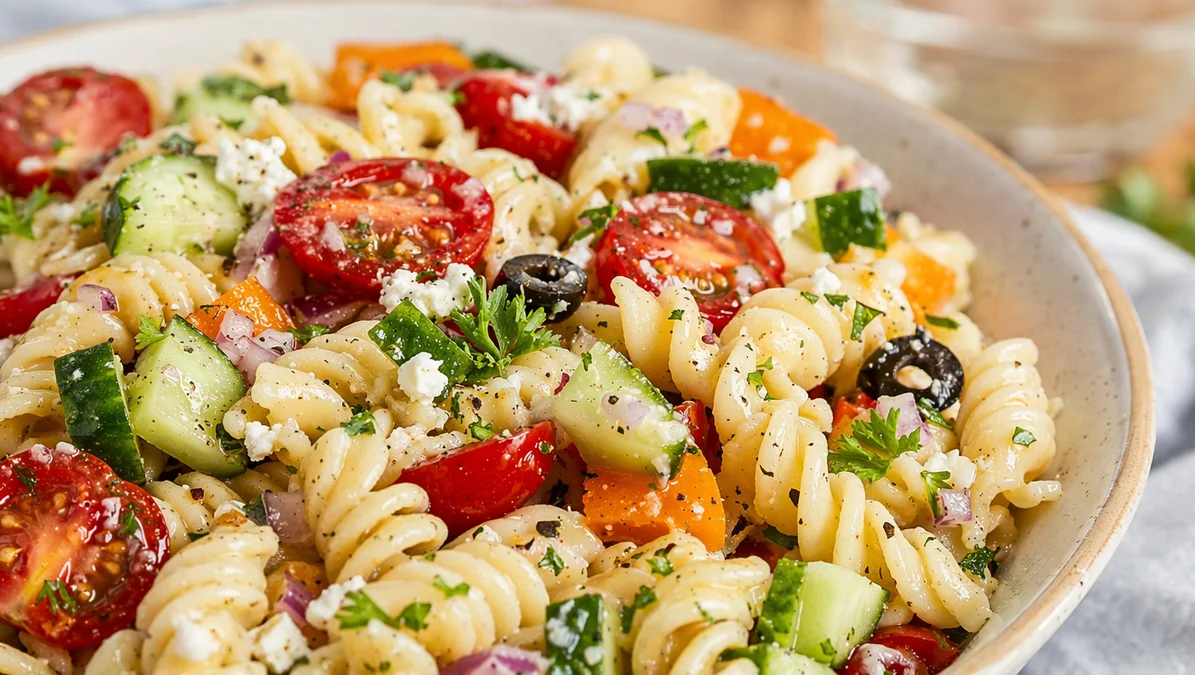
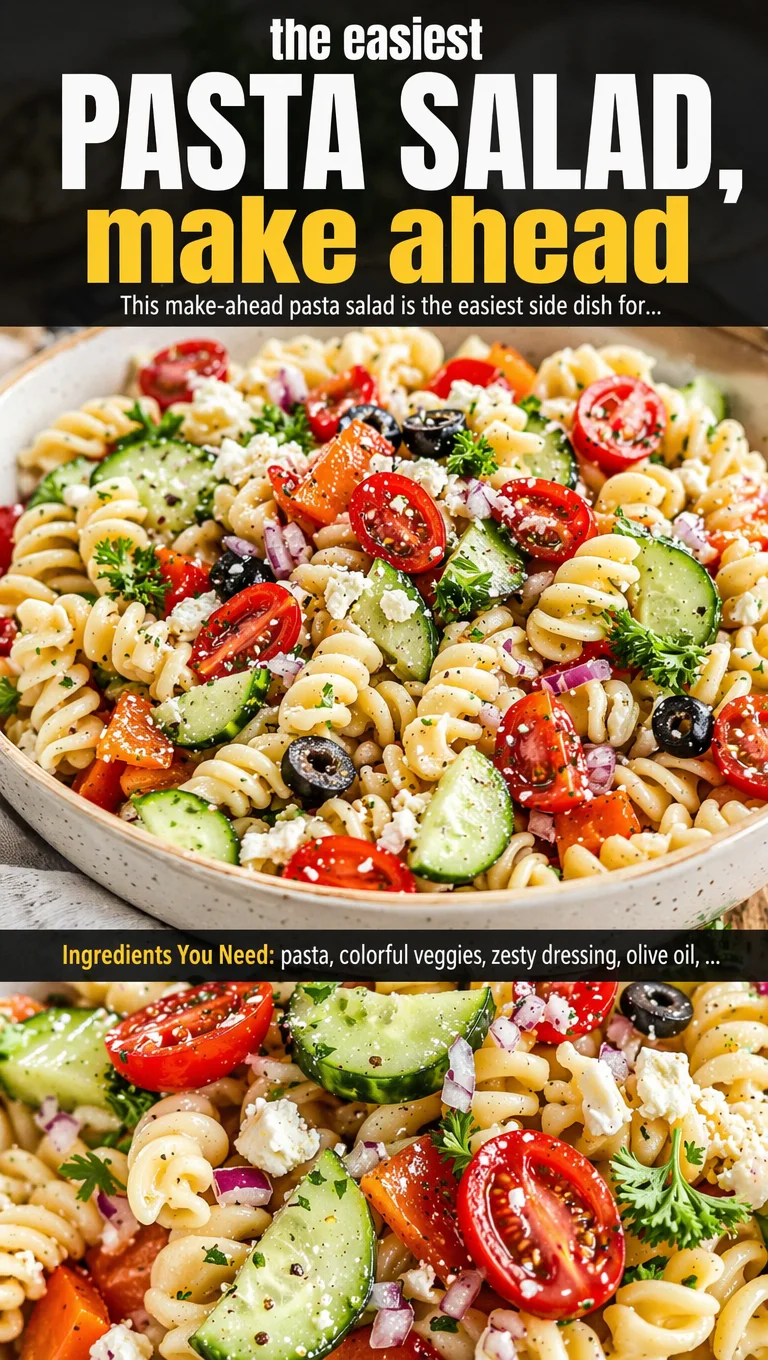
This make-ahead pasta salad is the easiest side dish for summer gatherings, packed with colorful veggies and a zesty dressing. Perfect for quick high-protein dinners or picnic food ideas.
Ingredients
Instructions
Bring a large pot of salted water to a rolling boil. The water should taste like the sea – about 1 tablespoon of salt per 4 quarts of water. Add the pasta and cook according to package directions until al dente. For rotini or fusilli, this is typically 8-10 minutes. Al dente means the pasta is tender but still has a slight bite at the center; it will continue to absorb dressing as it sits, so slightly undercooking prevents mushiness. Once cooked, drain the pasta in a colander and rinse immediately under cold running water to stop the cooking process. Shake off excess water and let it cool completely while you prepare the vegetables. Rinsing also removes excess starch, which helps the dressing cling better without becoming gummy.
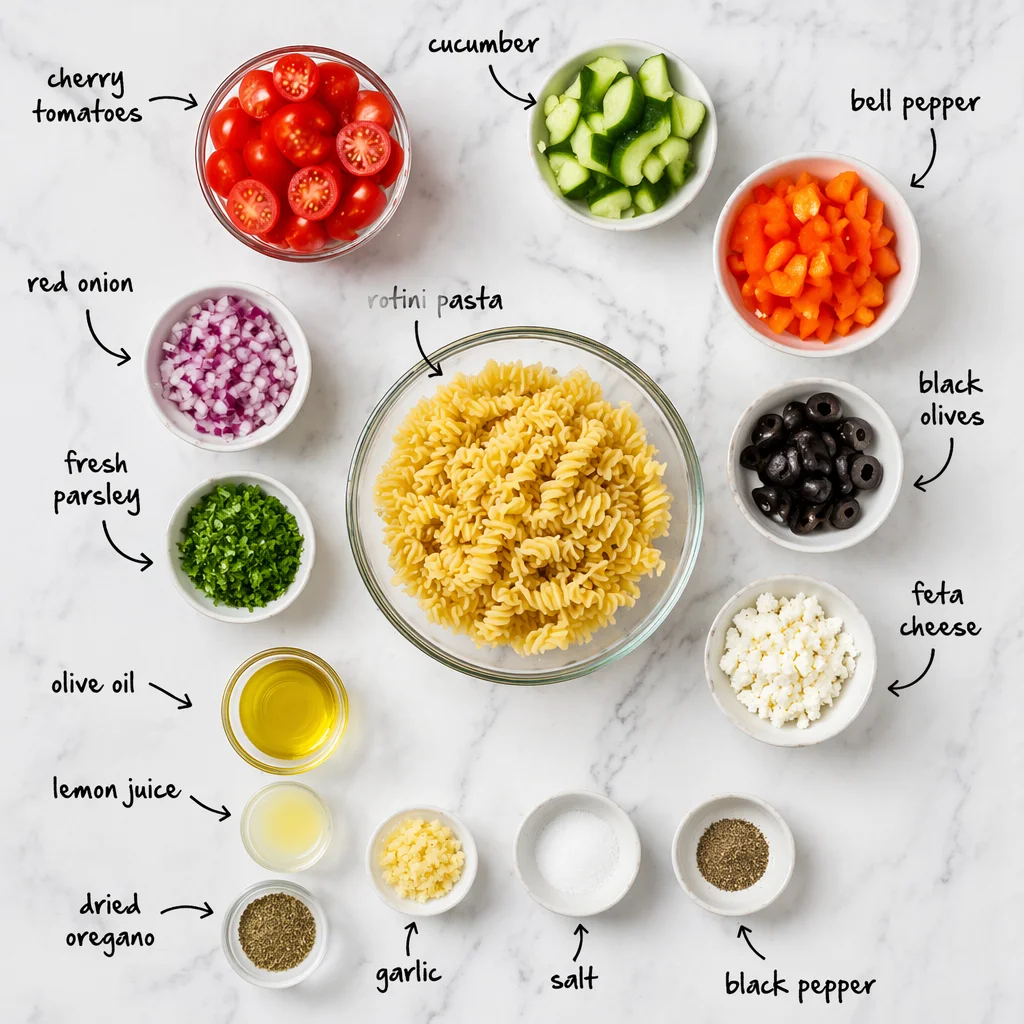
While the pasta cools, prepare the vegetables. Halve the cherry tomatoes; if they are large, quarter them. Dice the cucumber into bite-sized pieces – about 1/2-inch cubes. If the cucumber has a thick, waxy skin, you may peel it partially or fully, but the skin adds color and nutrients. Dice the bell pepper into similar-sized pieces. Finely dice the red onion; for a milder flavor, soak the diced onion in cold water for 5 minutes, then drain. Slice the black olives into rings. If using feta, crumble it into small pieces. Place all prepared vegetables and feta into a large mixing bowl. The variety of colors and textures will make the salad visually appealing and provide a range of nutrients.
In a small bowl or a jar with a tight-fitting lid, combine the extra virgin olive oil, red wine vinegar, lemon juice, dried oregano, salt, black pepper, minced garlic, Dijon mustard, and honey or maple syrup if using. Whisk vigorously until the dressing is emulsified and slightly thickened. Alternatively, shake the jar vigorously for about 30 seconds. The Dijon mustard acts as an emulsifier, helping the oil and vinegar stay combined. Taste the dressing and adjust seasoning – it should be tangy, slightly sweet, and well-seasoned. Remember that the flavors will mellow as the salad sits, so the dressing should be slightly punchy.
Add the cooled pasta to the bowl with the vegetables. Pour the dressing over the top. Using two large spoons or a spatula, toss everything gently but thoroughly until the pasta and vegetables are evenly coated. Make sure to scrape the bottom of the bowl to incorporate any dressing that settles. At this point, the salad will look bright and glossy. If you plan to serve immediately, let it sit at room temperature for 10-15 minutes to allow flavors to meld. For make-ahead, cover the bowl tightly with plastic wrap or transfer to an airtight container and refrigerate for at least 1 hour, preferably 4-6 hours or overnight. The pasta will absorb the dressing, becoming more flavorful.
Before serving, give the pasta salad a good stir. If it seems dry, add a splash of olive oil or a teaspoon of vinegar to refresh the dressing. Taste and adjust salt and pepper if needed. Garnish with fresh basil leaves or chopped parsley for a pop of green. Serve chilled or at room temperature. This salad is perfect for picnics, potlucks, or as a quick high-protein side dish. It pairs wonderfully with grilled chicken, fish, or tofu. Store leftovers in the refrigerator for up to 5 days – the flavors only get better!
For best results
- **Cook Pasta Al Dente**: The golden rule for pasta salad is to cook the pasta until it is al dente – firm to the bite. Because the pasta will continue to absorb dressing as it sits, starting with slightly undercooked pasta prevents it from becoming mushy. Rinse the pasta under cold water immediately after draining to stop the cooking process and remove excess starch. This ensures each piece remains distinct and doesn't clump together. If you're meal prepping, you can even cook the pasta a day ahead and store it in the refrigerator in a sealed bag; just toss with a little oil to prevent sticking.
- **Dress While Warm (or Cold)**: There are two schools of thought for dressing pasta salad. Dressing the pasta while it is still slightly warm allows it to absorb more flavor, but you must let it cool completely before refrigerating to avoid condensation. Alternatively, dressing the pasta after it has fully cooled yields a lighter coating. For make-ahead, I recommend dressing the salad while the pasta is still warm (but not hot) to maximize flavor absorption, then refrigerate immediately. The salad will taste even better the next day.
- **Balance Your Veggies**: The key to a colorful, nutritious pasta salad is a variety of vegetables with different textures and colors. Cherry tomatoes add juicy bursts, cucumber provides crunch, bell pepper offers sweetness, red onion gives a sharp bite, and olives contribute brininess. Feel free to swap or add based on seasonality – zucchini, corn, or artichoke hearts work wonderfully. For a protein boost, add canned chickpeas, diced grilled chicken, or cubed mozzarella. The vegetables should be cut into similar-sized pieces for even distribution.
- **Make the Dressing Ahead**: The dressing can be made up to a week in advance and stored in the refrigerator. Simply shake or whisk before using. If the olive oil solidifies, let it come to room temperature or run the jar under warm water. You can also double the dressing recipe and use it for other salads or as a marinade. The combination of red wine vinegar, lemon, Dijon, and oregano is classic Italian-style and pairs well with many dishes.
- **Storage and Shelf Life**: This pasta salad keeps beautifully in the refrigerator for up to 5 days in an airtight container. The flavors meld and deepen over time. Before serving, let it sit at room temperature for 15-20 minutes to take the chill off, then stir well. If the salad seems dry, add a drizzle of olive oil and a splash of vinegar. Do not freeze pasta salad, as the vegetables will become watery and the pasta will turn mushy upon thawing.
- **Make It a Meal**: To transform this side dish into a complete high-protein meal, add 1-2 cups of cooked protein such as grilled chicken breast, shrimp, canned tuna, chickpeas, or edamame. You can also mix in some cooked quinoa or farro for extra fiber and protein. For a vegetarian version, add crumbled tofu or tempeh. This salad is incredibly versatile and can be customized to fit your macros.
Variations
- **Mediterranean Pasta Salad**: Replace the feta with crumbled goat cheese or omit cheese for a vegan version. Add 1/2 cup of chopped sun-dried tomatoes, 1/4 cup of capers, and a handful of fresh spinach. Use Kalamata olives instead of black olives for a more robust flavor. The dressing can be enhanced with a teaspoon of za'atar spice blend for an earthy, herby note.
- **Southwest Pasta Salad**: Substitute black olives with canned black beans (rinsed and drained) and add 1 cup of corn kernels (fresh, frozen, or canned). Replace the red wine vinegar with lime juice and add 1 teaspoon of cumin and 1/2 teaspoon of chili powder to the dressing. Top with diced avocado just before serving to prevent browning. This version pairs beautifully with grilled chicken or fish.
- **Greek Pasta Salad**: Add 1/2 cup of diced cucumber (in addition to the regular cucumber), 1/4 cup of sliced pepperoncini, and 1/2 cup of crumbled feta. Use a dressing with extra lemon juice and a pinch of dried dill. This variation is tangy and refreshing, perfect for summer picnics.
- **High-Protein Chicken Pasta Salad**: Add 2 cups of diced, cooked chicken breast (about 12 oz). You can use rotisserie chicken for convenience. To keep the chicken moist, toss it with a little dressing before adding to the salad. This boosts the protein content to about 25g per serving, making it a satisfying main dish.
- **Vegan & Gluten-Free Option**: Use gluten-free pasta (such as brown rice or chickpea pasta) and omit the feta cheese. Add 1 cup of cooked chickpeas or edamame for protein. The dressing is naturally vegan. Ensure the mustard and any sweetener are vegan-friendly. This version is just as delicious and inclusive for various dietary needs.
Nutrition
- Calories285 kcal
- Total Fat12g
- Saturated Fat2.5g
- Cholesterol5mg
- Sodium380mg
- Total Carbohydrates36g
- Dietary Fiber3g
- Sugars5g
- Protein7g