
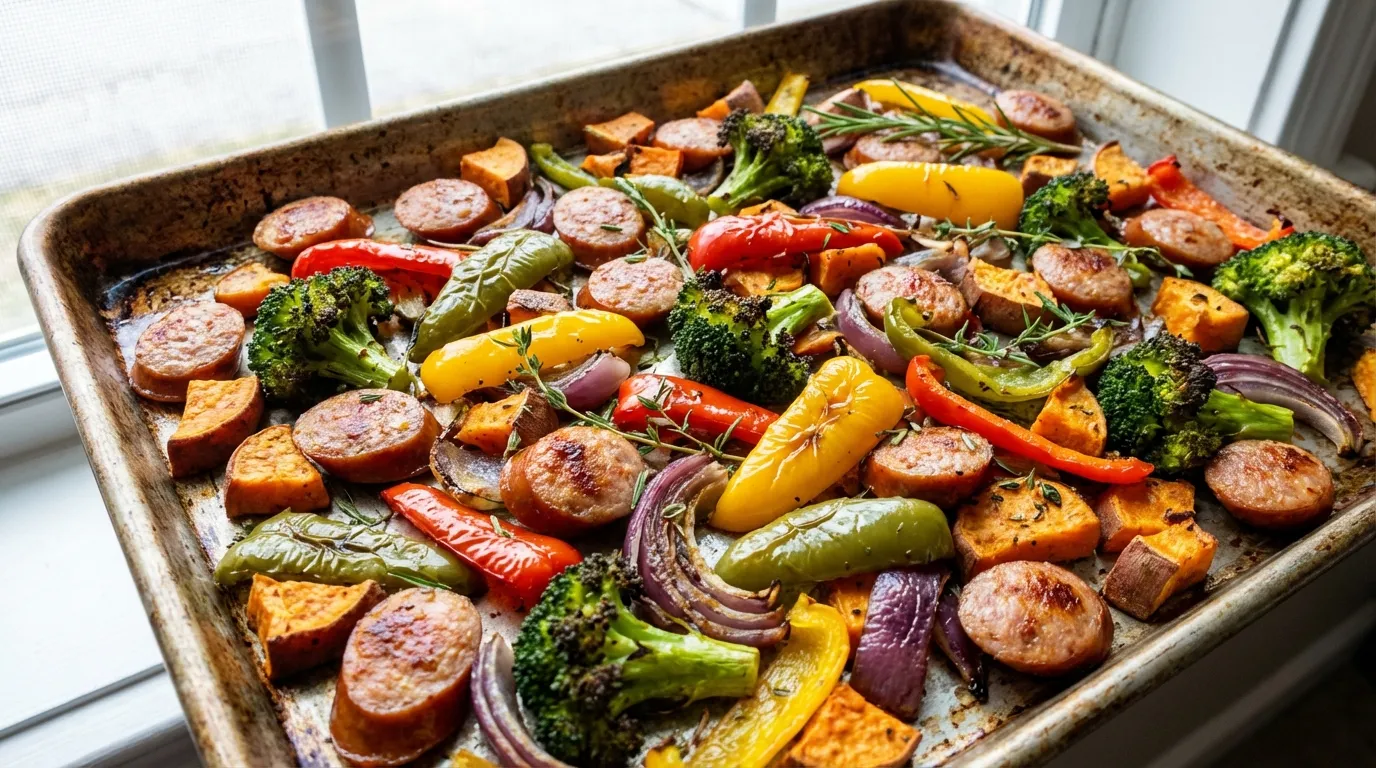
The Secret to Crispy Frozen Vegetables
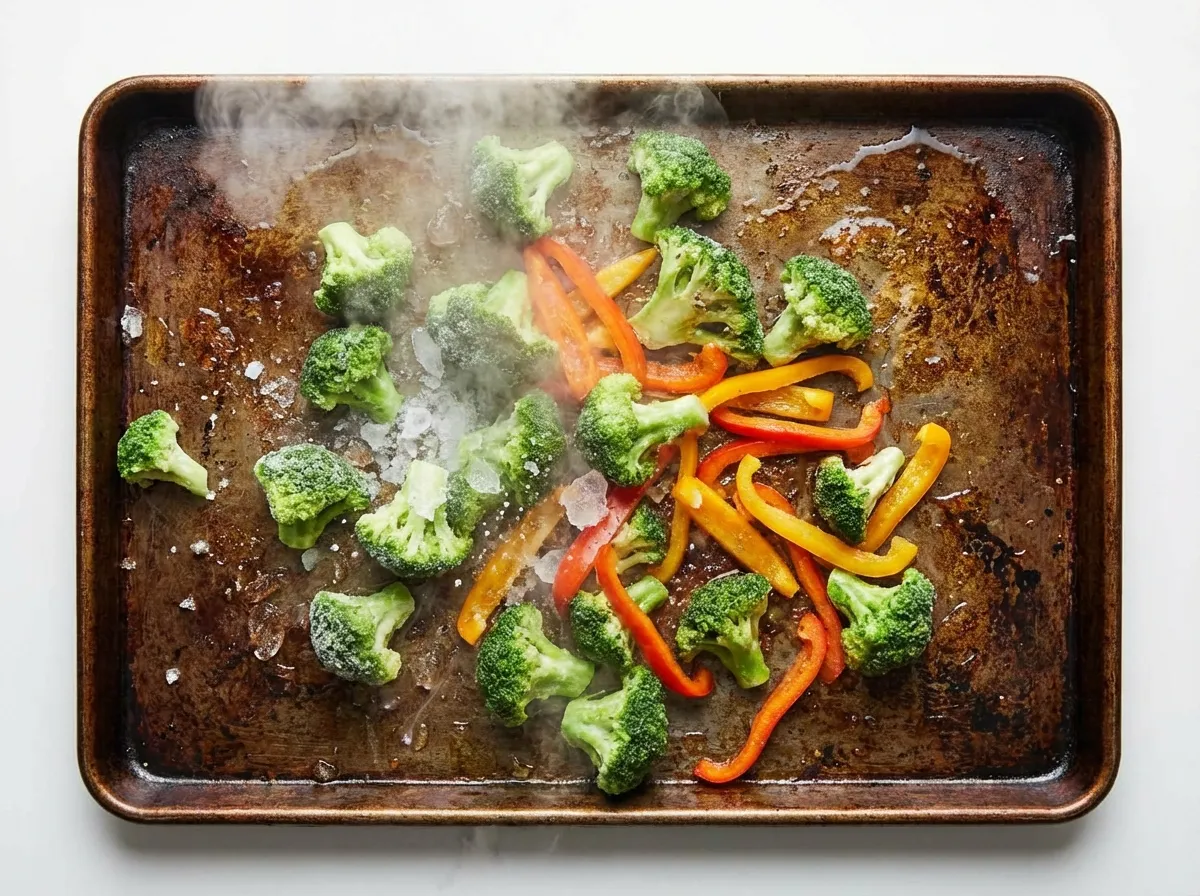
Pre-heating your pan is the secret to avoiding soggy frozen vegetables.
Roasting frozen vegetables requires a pre-heated sheet pan and a consistent 425°F oven temperature. By placing frozen produce on a hot surface, you trigger immediate surface ice evaporation, preventing the vegetables from steaming. This method produces a crisp texture for high-protein meals in under 25 minutes for approximately $3.12 per serving.
Definition: Thermal conductivity is the property of a material, such as a heavy-duty metal baking sheet, to transfer heat rapidly to food, facilitating browning and moisture evaporation.
This sheet-pan method leverages thermal conductivity to ensure vegetables roast rather than stew. Utilizing a heavy-duty rimmed baking sheet creates a reliable cooking environment that supports caloric deficit goals without high costs.
The High-Heat Frozen Veggie Hack
Maillard reaction is a heat-driven chemical reaction between amino acids and sugars that creates browning and complex flavor at temperatures above 300°F. To achieve this with frozen produce, you must place vegetables directly onto a pre-heated metal pan at 425°F. Thawing vegetables beforehand destroys cellular structure, leading to a mushy final texture.
Quick Answer: Always use a heavy-gauge rimmed baking sheet and avocado oil. The high smoke point of avocado oil (520°F) allows for safe roasting at 425°F without burning, ensuring the Maillard reaction occurs effectively on the surface of the frozen florets.
When choosing equipment, avoid thin aluminum pans that warp at high temperatures. Use a professional-grade half-sheet pan and silicone baking mats to maximize heat distribution and simplify cleanup.
High-Protein Ingredient Selection and Budget Breakdown
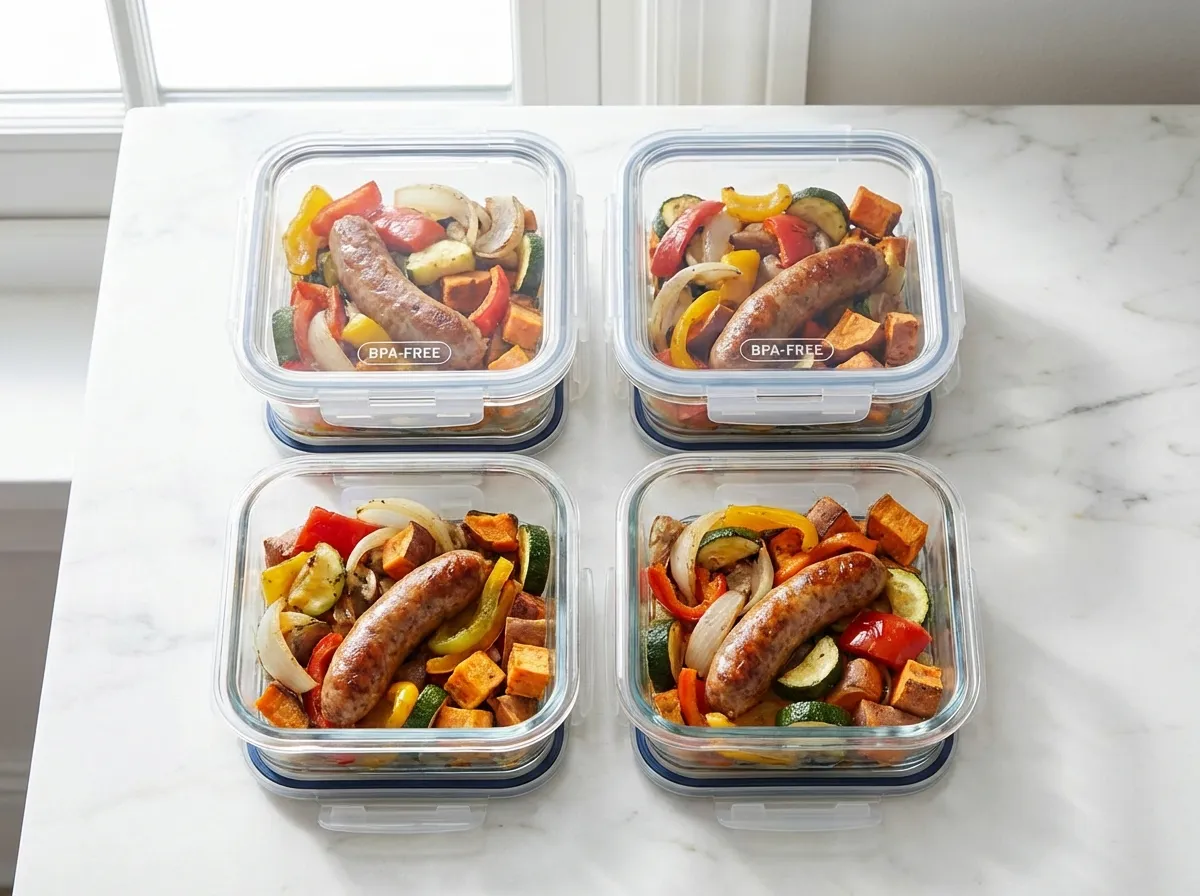
Portion your meals into glass containers to maintain texture throughout the week.
Lean turkey or chicken sausage provides approximately 15 grams of protein per link, offering a high protein-to-cost ratio. When combined with bulk-frozen vegetable medleys, the total cost remains under $3.20 per serving while providing 30 grams of protein. This combination blunts insulin response and supports muscle hypertrophy through high fiber and lean protein, making it a staple alongside other high-protein meals using leftovers that keep costs low.
| Ingredient | Protein (g) | Est. Cost (USD) |
|---|---|---|
| Lean Turkey/Chicken Sausage (12oz) | 45g | $4.50 |
| Frozen Broccoli/Bell Pepper Mix (1lb) | 12g | $1.50 |
| Avocado Oil & Spices | 0g | $0.25 |
| Total Per Batch (2 Servings) | 28.5g / serving | $3.12 / serving |
Step-by-Step Implementation Workflow
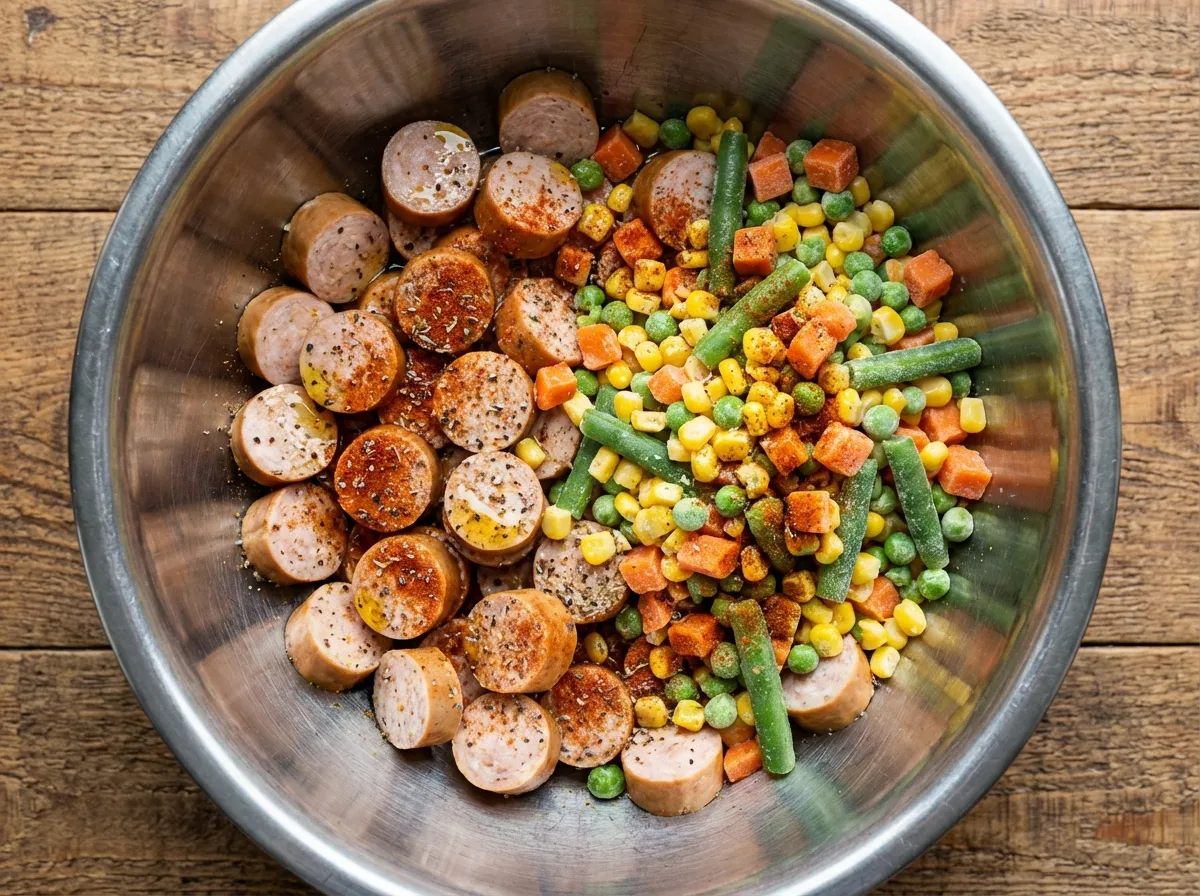
Toss your frozen ingredients in high-smoke point oil for the best roasting results.
This batch-cooking system requires 5 minutes of active preparation and 20 minutes of roasting. Preheating the baking sheet while the oven reaches 425°F is mandatory for immediate searing. Use a digital food scale to ensure protein portions remain consistent across all meal prep containers.
Prep Time: 5 minutes
Cook Time: 20 minutes
Yield: 4 servings
Ingredients:
* 12 oz Lean turkey or chicken sausage (pre-cooked, sliced into 1/2-inch rounds)
* 16 oz (1 lb) Frozen broccoli and bell pepper mix (do not thaw)
* 2 tbsp Avocado oil
* 1 tsp Garlic powder
* 1 tsp Smoked paprika
* 1/2 tsp Sea salt
* 1/2 tsp Black pepper
Instructions:
1. Place a heavy-duty rimmed baking sheet in the oven and preheat to 425°F.
2. Place frozen vegetables in a large mixing bowl.
3. Toss vegetables with avocado oil, garlic powder, smoked paprika, sea salt, and black pepper.
4. Remove the hot pan from the oven and spread seasoned vegetables in a single layer.
5. Nestle sliced sausage among the vegetables without overlapping.
6. Roast at 425°F for 18 to 22 minutes, tossing halfway through.
7. Cool for 10 minutes before portioning into glass meal prep containers.
Frequently Asked Questions
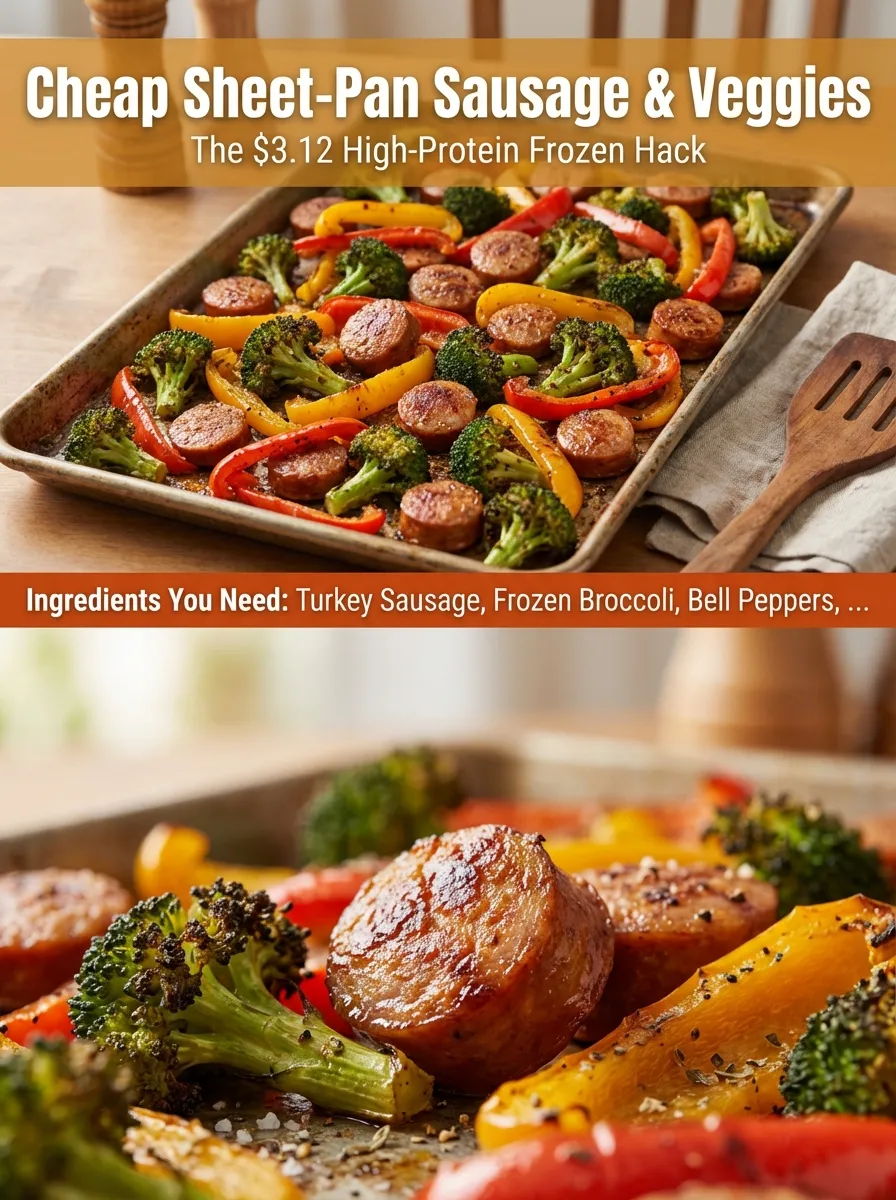
Save this budget-friendly high-protein hack to your Pinterest meal prep board!
Why did my frozen vegetables turn out mushy?
Mushy vegetables result from an oven temperature below 425°F or skipping the pre-heating of the baking sheet. If the pan is not hot enough to evaporate ice crystals instantly, the vegetables steam in their own moisture. Ensure the pan is not overcrowded to maintain proper airflow during the roasting process.
Can I use fresh vegetables instead of frozen?
Yes, you can substitute fresh broccoli and bell peppers. Reduce the roasting time by 5 to 7 minutes compared to the frozen method. Fresh vegetables contain less surface water, meaning they reach the desired level of char significantly faster than their frozen counterparts at the same 425°F temperature.
How long does this stay fresh in the fridge?
This meal remains fresh for 4 days when stored in airtight glass containers. Glass is preferred over plastic because it prevents odor retention and allows for safe, even microwave reheating. Proper storage prevents the vegetables from absorbing moisture, which maintains their structural integrity during the reheating phase.
Build Your Budget Prep System
Mastering the frozen vegetable sheet-pan dinner creates a sustainable, low-cost meal prep routine. By focusing on affordable protein staples and high-heat cooking techniques, you can reach your goals for bodybuilding on a budget without expensive ingredients. Consistency is driven by automated preparation rather than complex cooking methods.