
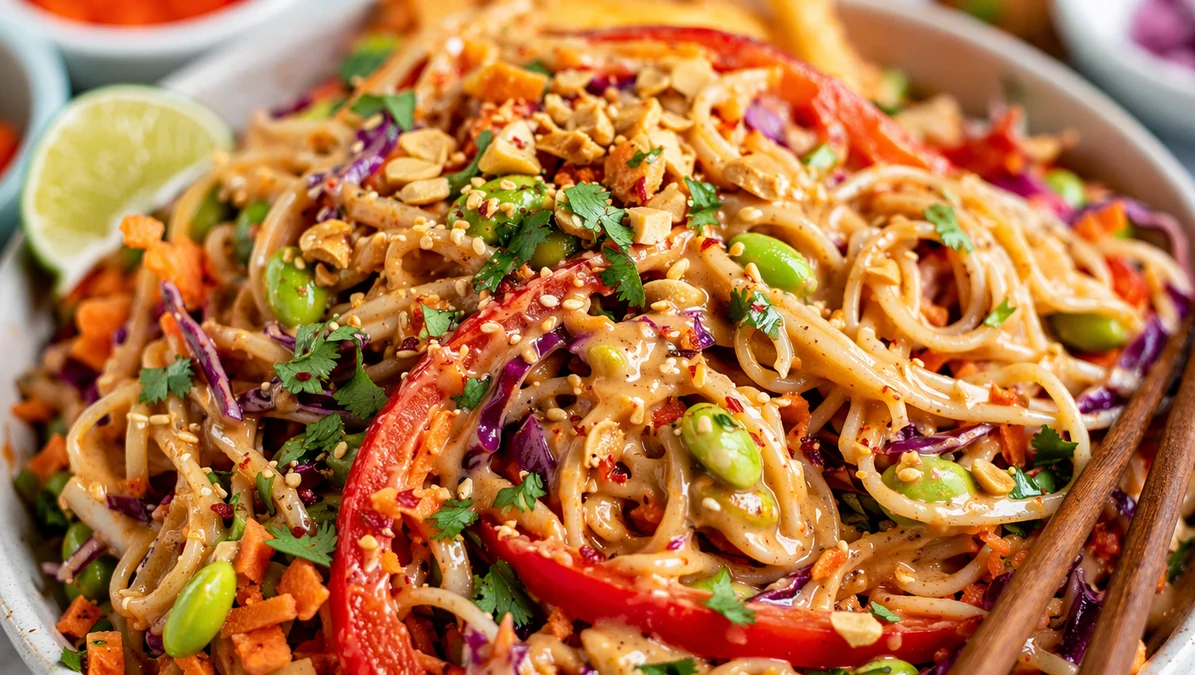
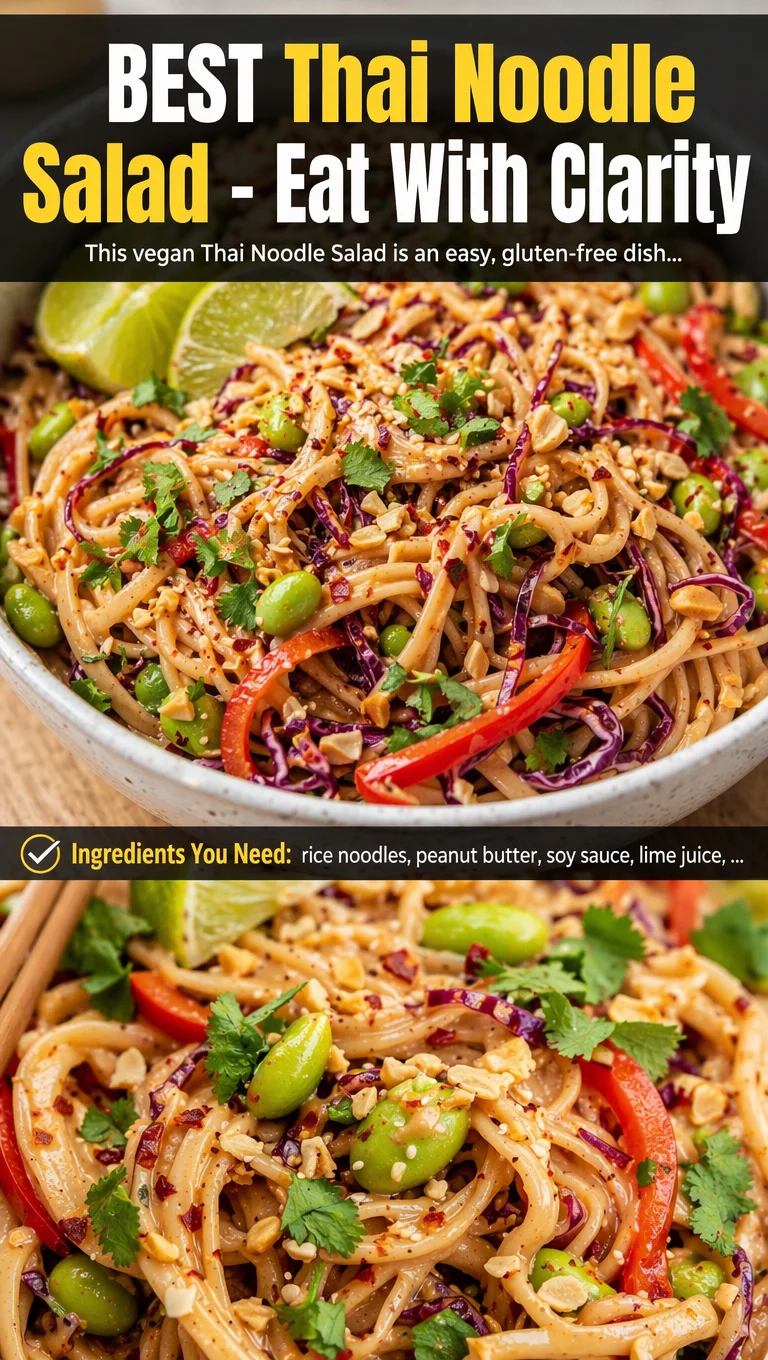
This vegan Thai Noodle Salad is an easy, gluten-free dish perfect for summer parties. Fresh vegetables and perfectly cooked noodles are tossed in the BEST Thai peanut sauce for a…
Ingredients
Instructions
Begin by preparing the rice noodles according to package directions. Typically, you’ll bring a large pot of water to a boil, then remove from heat and add the noodles. Let them soak for 6-8 minutes until tender but still chewy (al dente). Stir occasionally to prevent clumping. The noodles should be opaque and flexible when done. Drain immediately in a colander and rinse under cold running water to stop the cooking process and remove excess starch. This step is crucial for a non-gummy salad. Shake off excess water and set aside. If you’re not using them right away, toss with a teaspoon of sesame oil to keep them from sticking.
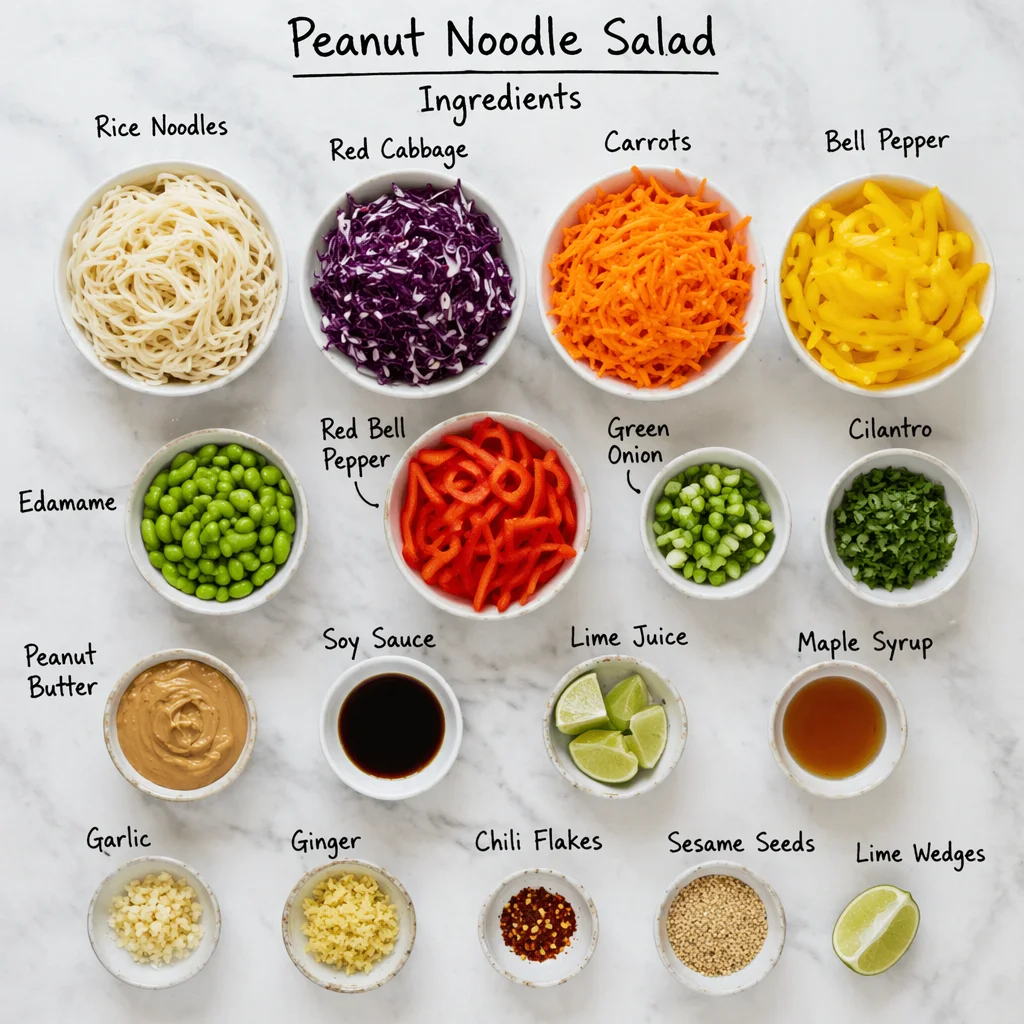
While the noodles soak, make the peanut dressing. In a small bowl, whisk together the peanut butter, soy sauce, lime juice, maple syrup, sesame oil, minced garlic, and grated ginger. The mixture will be thick at first. Add warm water, one tablespoon at a time, while whisking until you achieve a smooth, pourable consistency. Taste and adjust: more lime for acidity, more maple for sweetness, or a splash of sriracha for heat. The dressing should be bold and balanced—salty, sweet, tangy, and nutty. Set aside.
Prepare the vegetables. Peel the carrot and julienne it into thin matchsticks (or use a box grater for quicker shreds). Slice the red bell pepper into thin strips, about 2 inches long. If using edamame, thaw them under warm water and pat dry. Place all vegetables in a large mixing bowl. Add the cooked noodles on top.
Pour the peanut dressing over the noodles and vegetables. Use tongs or two large forks to toss everything together thoroughly, ensuring every strand of noodle is coated in the creamy sauce. The dressing will cling to the noodles and veggies, creating a glossy, appetizing look. If the salad seems dry, add an extra splash of warm water or lime juice.
Transfer the salad to a serving platter or individual bowls. Garnish with fresh cilantro, sliced green onions, and crushed peanuts (if using). For an extra kick, drizzle with sriracha or chili garlic sauce. Serve immediately at room temperature or chilled. This salad is delicious both ways. The flavors meld and deepen as it sits, making it a great make-ahead option.
For best results
- For the best texture, do not overcook the rice noodles. They continue to soften slightly after draining, so aim for a firm bite. Rinsing with cold water stops the cooking and removes surface starch, preventing a sticky mess. If making ahead, toss with a tiny bit of sesame oil to keep them separate.
- Peanut butter varies widely in consistency and saltiness. Natural peanut butter (with just peanuts and salt) works best because it's less sweet and oily than processed brands. If your dressing is too thick, add warm water a teaspoon at a time. Too thin? Add a little more peanut butter. Always taste and adjust seasoning before tossing.
- Julienning vegetables by hand gives the most attractive result, but a mandoline or food processor with a shredding disc saves time. For a colorful twist, use a mix of purple cabbage, shredded broccoli stems, or thinly sliced snap peas. The key is to keep vegetables uniform in size so they integrate well.
- This salad is incredibly meal-prep friendly. Store the dressing separately and toss just before serving to keep the noodles from absorbing all the liquid and becoming soggy. The salad keeps well in the fridge for up to 3 days. The flavors actually improve overnight as they meld.
- To boost the protein content further, add grilled tofu, edamame, or shredded cooked chicken (if not vegan). For a nut-free version, substitute sunflower seed butter or tahini. The dressing will have a slightly different flavor but remains delicious.
- If you like a spicy kick, add sriracha or chili garlic sauce to the dressing. Start with 1 teaspoon and adjust to your heat preference. Alternatively, serve with fresh sliced Thai bird chilies on the side for an extra punch.
Variations
- Protein-Packed Version: Add 8 oz (225g) of grilled or baked tofu, cut into cubes, or 1 cup of shredded rotisserie chicken. For a seafood twist, toss in cooked shrimp or flaked salmon. The neutral flavor of the noodles and the bold dressing pair well with any protein.
- Low-Carb / Zoodle Version: Replace rice noodles with spiralized zucchini or summer squash. To avoid a watery salad, salt the zoodles lightly and let them sit for 10 minutes, then squeeze out excess moisture before adding the dressing. You can also use shirataki (konjac) noodles for near-zero carbs.
- Crunchy Veggie Boost: Add 1/2 cup of thinly sliced purple cabbage, 1/2 cup of bean sprouts, and 1/4 cup of chopped roasted peanuts for extra crunch. The cabbage adds color and a peppery bite, while sprouts provide a fresh, hydrating element.
- Mango Thai Salad: Toss in 1/2 cup of ripe mango, julienned, for a sweet-tart contrast. The mango complements the peanut dressing beautifully and adds a tropical flair. Reduce the maple syrup slightly if the mango is very sweet.
- Creamy Avocado Twist: Mash half an avocado into the dressing for extra creaminess and healthy fats. This will make the dressing thicker and richer. Add a splash more lime juice to keep it bright.
Nutrition
- Calories385 kcal
- Total Fat16g
- Saturated Fat3g
- Cholesterol0mg
- Sodium520mg
- Total Carbohydrates52g
- Dietary Fiber5g
- Sugars10g
- Protein12g