
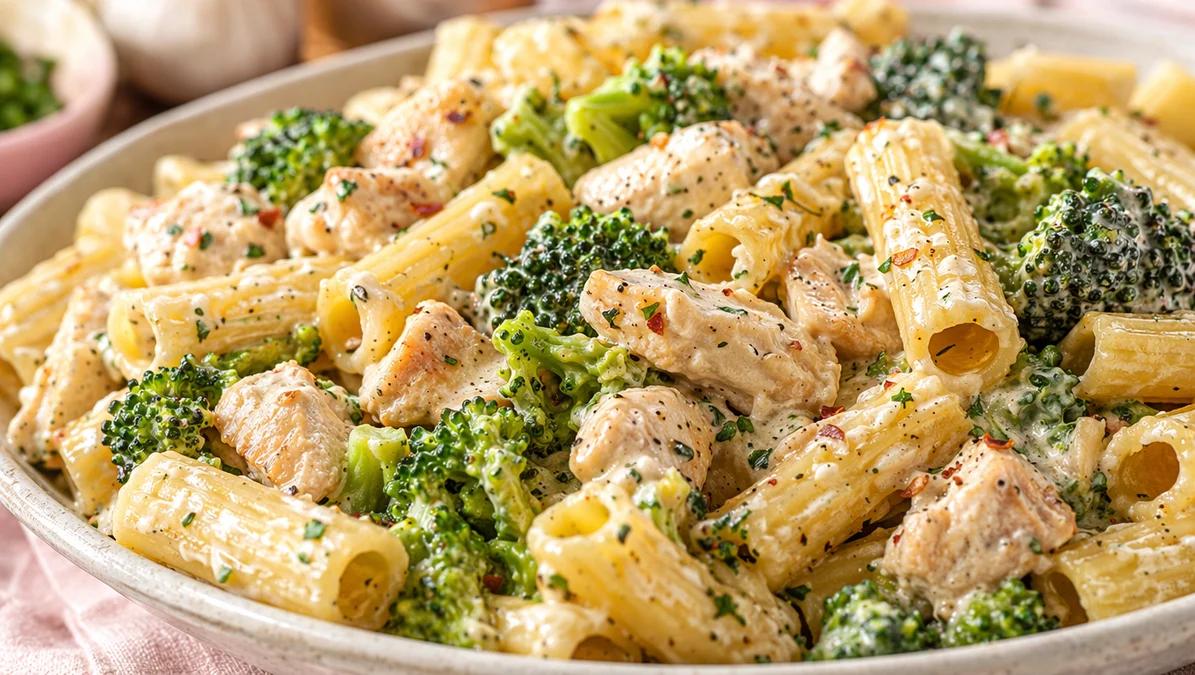
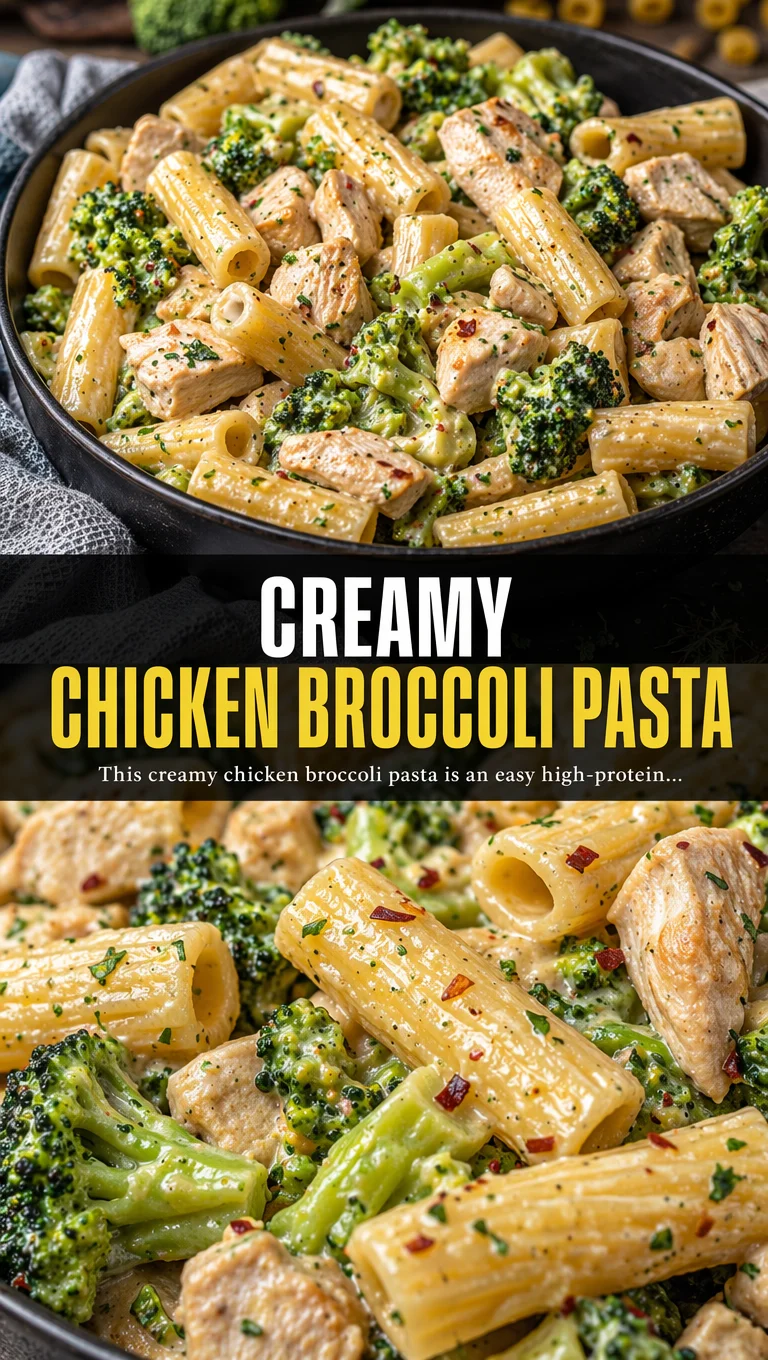
This creamy chicken broccoli pasta is an easy high-protein dinner that comes together in just 30 minutes. Tender chicken, fresh broccoli, and a luscious light cream sauce make it a…
Ingredients
Instructions
Bring a large pot of salted water to a rolling boil. Add the penne pasta and cook according to package directions until al dente, usually about 10-12 minutes. Reserve about 1 cup of pasta water before draining. The pasta will finish cooking in the sauce later, so al dente is perfect to avoid mushiness. While the pasta cooks, you can prepare the chicken and broccoli to save time.
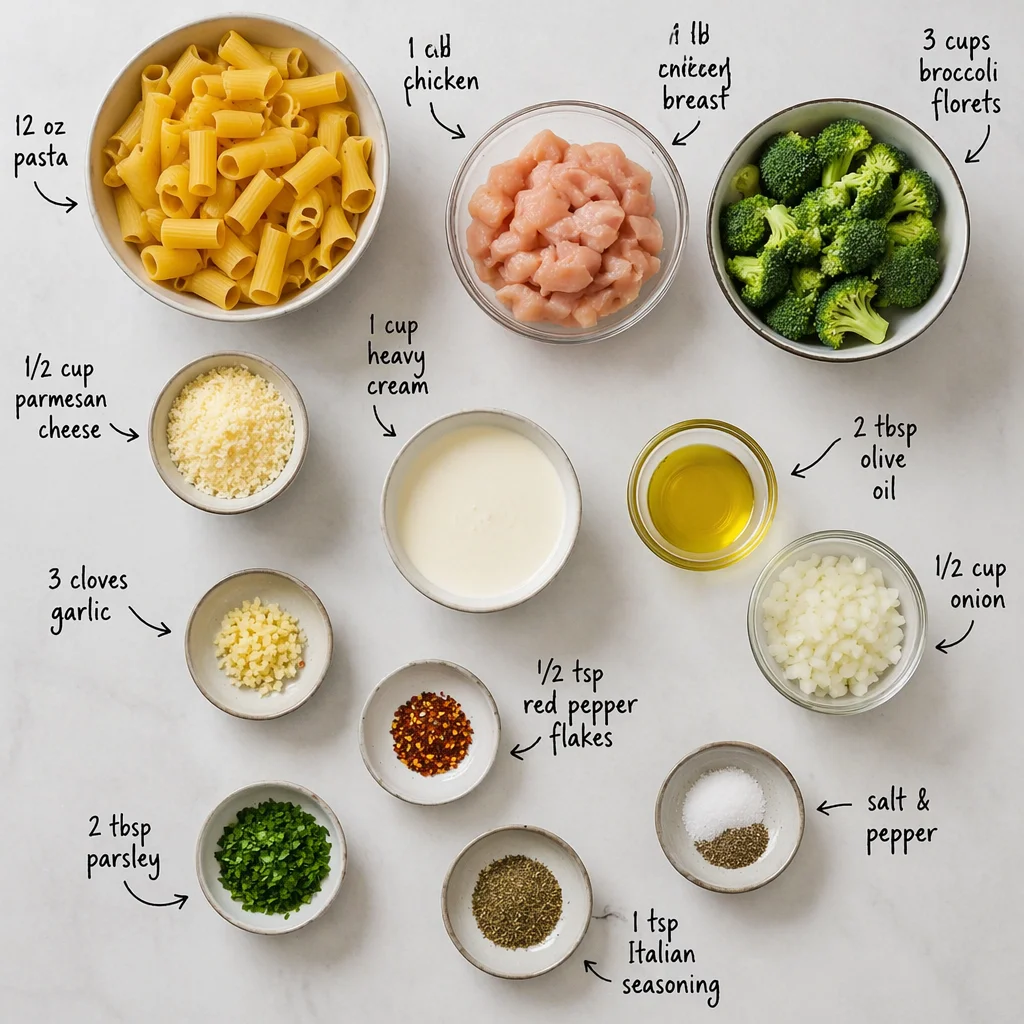
While the pasta cooks, season the chicken pieces with 1/4 teaspoon salt and 1/8 teaspoon black pepper. In a large skillet or Dutch oven, heat 1 tablespoon of olive oil over medium-high heat until shimmering. Add the chicken in a single layer (work in batches if necessary to avoid overcrowding). Cook without moving for 3-4 minutes until the bottom is golden brown. Flip the pieces and cook another 3-4 minutes until cooked through and golden on all sides. The internal temperature should reach 165°F (74°C). Remove the chicken to a plate and set aside.
In the same skillet, add the remaining 1 tablespoon of olive oil. Add the broccoli florets and cook over medium-high heat for 3-4 minutes, stirring occasionally, until they are bright green and slightly charred in spots. The char adds a lovely nutty flavor. If the pan seems dry, add a splash of chicken broth to help steam the broccoli. Once the broccoli is tender-crisp (you can pierce with a fork but it still has bite), remove it to the plate with the chicken.
Reduce the heat to medium. Add the minced garlic to the skillet and sauté for 30 seconds until fragrant, stirring constantly to prevent burning. Pour in the chicken broth, using a wooden spoon to scrape up any browned bits from the bottom of the pan (this is called deglazing and adds immense flavor). Let the broth simmer for 2-3 minutes until reduced by about half.
Reduce the heat to low and stir in the heavy cream, Parmesan cheese, Dijon mustard, remaining 1/4 teaspoon salt, 1/8 teaspoon black pepper, and red pepper flakes if using. Whisk until the sauce is smooth and the Parmesan is melted. Taste and adjust seasoning. The sauce should be creamy and slightly thick but still pourable. If it’s too thick, add a splash of the reserved pasta water to thin it out.
Add the cooked pasta, chicken, and broccoli back to the skillet. Toss everything together gently with tongs until the pasta and chicken are evenly coated in the sauce. Let it cook for 1-2 minutes over low heat so the flavors meld. If the sauce seems too thick, add more pasta water a tablespoon at a time until it reaches your desired consistency. The sauce will continue to thicken as it sits.
Remove from heat. Garnish with fresh chopped parsley and extra Parmesan if desired. Serve immediately while hot. The pasta is best enjoyed fresh, but leftovers can be stored in an airtight container in the refrigerator for up to 3 days. To reheat, add a splash of milk or broth and warm gently on the stovetop or microwave to revive the creaminess.
For best results
- For the most tender chicken, avoid overcooking. Use a meat thermometer to ensure the internal temperature reaches exactly 165°F (74°C). Let the chicken rest for a few minutes after cooking before slicing to keep juices locked in. If you prefer even more browning, pat the chicken dry with paper towels before seasoning—moisture is the enemy of a good sear.
- To keep broccoli vibrant green and crisp, blanch it briefly in boiling salted water for 1-2 minutes, then plunge into ice water before adding to the skillet. Alternatively, roasting the broccoli at 400°F (200°C) for 10-12 minutes adds a deeper, caramelized flavor that complements the creamy sauce beautifully.
- The sauce is the star of this dish. For a lighter version, substitute half-and-half or whole milk for the heavy cream. If using milk, add 1 teaspoon of cornstarch mixed with 2 teaspoons of cold water (slurry) to help thicken the sauce. For a dairy-free option, use full-fat coconut milk (the canned kind) and nutritional yeast instead of Parmesan—though the flavor will change slightly.
- Pasta water is liquid gold. It contains starch that helps bind the sauce to the pasta and adjusts consistency without diluting flavor. Always reserve at least 1 cup before draining. If you forget, mix 1 teaspoon of cornstarch with 1/2 cup of water as a makeshift thickener.
- This recipe is highly adaptable to what you have on hand. Swap chicken for turkey breast, shrimp, or tofu. Use any short pasta like fusilli, farfalle, or rigatoni—the ridges and curves hold the sauce better than long strands. Broccoli can be replaced with asparagus, green beans, or spinach (add spinach at the end and wilt).
- To make this a complete one-pot meal, cook the pasta directly in the skillet after deglazing. Add 2 cups of chicken broth and 8 oz of uncooked pasta, cover, and simmer for 10-12 minutes until pasta is tender, stirring occasionally. Then proceed with the cream sauce. This method infuses the pasta with even more flavor and reduces cleanup.
Variations
- **Lighter Cream Sauce**: Replace heavy cream with 1/2 cup of low-fat evaporated milk and 1/4 cup of Greek yogurt (added off heat to prevent curdling). This cuts calories and fat while boosting protein. The sauce will be slightly tangy but still creamy. Add a pinch of nutmeg for warmth.
- **Spicy Cajun Twist**: Season the chicken with 1 tablespoon of Cajun seasoning (like Tony Chachere's) before cooking. Add diced andouille sausage along with the chicken for extra smokiness. Replace broccoli with bell peppers and onions, and use fire-roasted diced tomatoes in place of some broth. The result is a bold, Louisiana-inspired pasta that packs heat.
- **Vegetarian/High-Protein**: Omit the chicken and double the broccoli. Add a can of drained chickpeas or white beans for plant-based protein. For even more umami, toss in 8 oz of sliced cremini mushrooms when cooking the broccoli. Use vegetable broth instead of chicken broth, and add a tablespoon of nutritional yeast for cheesy flavor.
- **Gluten-Free Adaptation**: Use your favorite gluten-free pasta (brown rice or chickpea-based works best). Be sure to cook it al dente as gluten-free pasta can turn mushy quickly. Thicken the sauce with an extra tablespoon of cornstarch slurry since gluten-free pasta releases less starch. Check that your Dijon mustard and broth are certified gluten-free.
- **Sun-Dried Tomato & Spinach**: After cooking the chicken, sauté 1/4 cup of chopped sun-dried tomatoes (drained of oil) with the garlic. Add 3 cups of fresh spinach at the end and stir until wilted. The sun-dried tomatoes add a sweet-tart depth that pairs beautifully with the creamy sauce. Omit broccoli or use half broccoli, half spinach.
Nutrition
- Calories485 kcal
- Total Fat22g
- Saturated Fat10g
- Cholesterol105mg
- Sodium520mg
- Total Carbohydrates35g
- Dietary Fiber3g
- Sugars4g
- Protein38g