
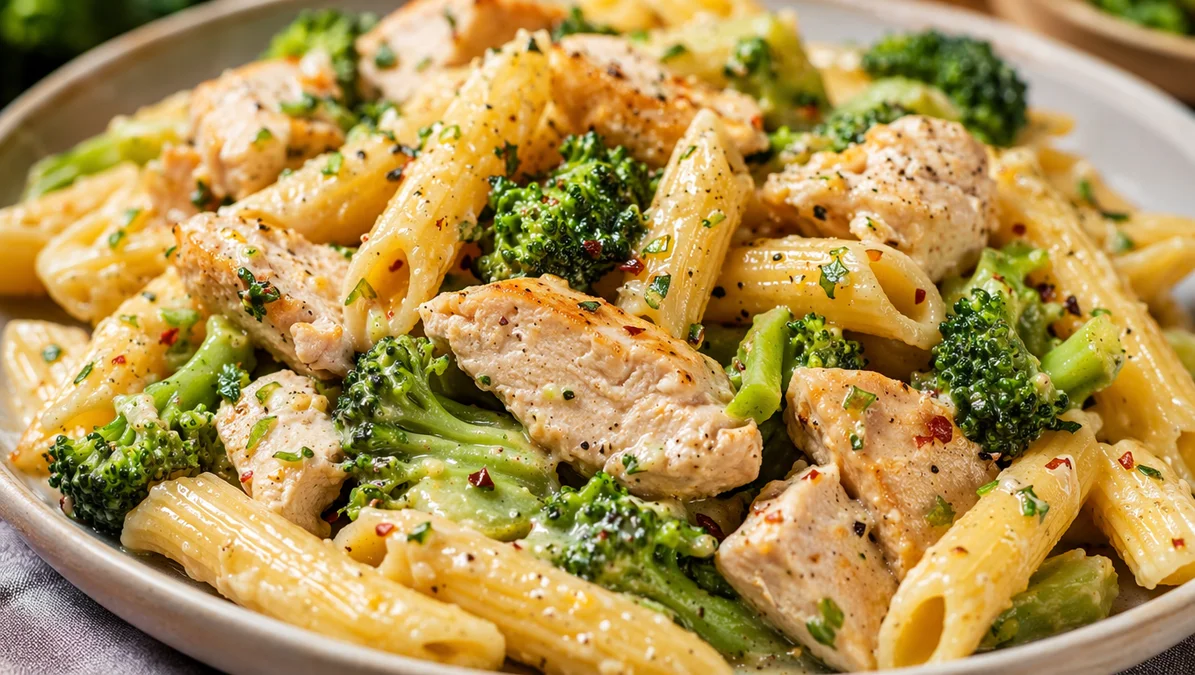
This light chicken broccoli pasta is a quick high-protein meal that feels indulgent without the guilt. Tender chicken, fresh broccoli, and a delicate cream sauce come together in under 30…
Ingredients
Instructions
Bring a large pot of salted water to a rolling boil. Add the pasta and cook according to package directions until al dente, typically 8–10 minutes. About 2 minutes before the pasta is done, add the broccoli florets directly to the boiling water. This blanches the broccoli, turning it bright green and tender-crisp. Reserve about 1 cup of pasta water before draining. Drain the pasta and broccoli together in a colander and set aside. The residual heat will continue to soften the broccoli slightly, so avoid overcooking.

While the pasta cooks, season the chicken pieces evenly with salt and pepper. In a large skillet, heat 1 tablespoon of olive oil over medium-high heat until shimmering. Add the chicken in a single layer (work in batches if necessary to avoid overcrowding). Cook without moving for 3–4 minutes until the bottom is golden brown and releases easily from the pan. Flip and cook another 2–3 minutes until the chicken is cooked through (internal temperature 165°F / 74°C). Transfer the chicken to a plate and tent with foil to keep warm.

Reduce the heat to medium and add the remaining 1 tablespoon of olive oil to the skillet. Add the minced garlic and sauté for about 30 seconds until fragrant, stirring constantly to prevent burning. Pour in the chicken broth, scraping up any browned bits from the bottom of the pan with a wooden spoon—this deglazing step adds incredible flavor to the sauce. Let the broth simmer for 1 minute to reduce slightly.
Lower the heat to medium-low and stir in the heavy cream. Let the sauce gently simmer for 2–3 minutes, stirring occasionally, until it thickens enough to coat the back of a spoon. Avoid boiling vigorously or the cream may curdle. Whisk in the grated Parmesan cheese until melted and smooth. Season with salt, pepper, and red pepper flakes if using. Taste and adjust seasoning—the sauce should be creamy, savory, with a subtle kick from the pepper flakes.
Return the cooked chicken to the skillet along with any accumulated juices. Add the drained pasta and broccoli. Toss everything together gently with tongs until the pasta and chicken are evenly coated in the sauce. If the sauce seems too thick, add a splash of reserved pasta water (about 2–3 tablespoons at a time) until it reaches your desired consistency. The pasta water’s starch helps the sauce cling beautifully. Serve immediately, garnished with fresh parsley and extra Parmesan if desired.
For best results
- For the best texture, use a short pasta like rotini, fusilli, or penne. Their ridges and curves catch the sauce perfectly, ensuring every bite is flavorful. Avoid long strands like spaghetti, which don't hold the cream sauce as well and can become clumpy. Cook the pasta al dente—it will continue to cook slightly when tossed with the hot sauce, so starting firmer prevents mushiness.
- To keep the chicken tender and juicy, slice it into uniform bite-sized pieces before cooking. This ensures even cooking and prevents dry, overcooked edges. Pat the chicken dry with paper towels before seasoning; excess moisture inhibits browning. Let the skillet get hot enough that the chicken sizzles immediately upon contact—that's the secret to a beautiful golden crust.
- Blanching the broccoli in the pasta water is a time-saving trick that also infuses the broccoli with a subtle saltiness from the pasta water. For even more flavor, you can sauté the broccoli in the skillet after cooking the chicken instead of boiling. Just add the florets with a splash of broth and cook covered for 2–3 minutes until tender-crisp. This method adds a slight char and deeper flavor.
- The cream sauce is the star of this dish, but it's easy to adjust its richness. For a lighter version, substitute half-and-half or whole milk for the heavy cream. If using milk, add 1 teaspoon of cornstarch mixed with 2 teaspoons of water (slurry) to thicken the sauce. For a dairy-free alternative, full-fat coconut milk works surprisingly well—just reduce the amount of broth to maintain consistency.
- Reserving pasta water is a game-changer. The starchy water not only loosens the sauce but also helps it emulsify and cling to the pasta. Add it gradually—you may not need the full cup. If you forget to reserve water, you can use a splash of warm chicken broth or even milk. But for the silkiest sauce, pasta water is best.
- This recipe is perfect for meal prep. Cook the pasta, chicken, and broccoli as directed, but store the sauce separately. When reheating, warm the sauce gently on the stove or microwave, then toss with the pasta. Add a splash of milk or broth to revive the creamy texture. The dish keeps well in the refrigerator for up to 4 days in an airtight container.
Variations
- Vegetarian Version: Swap the chicken for 1 can (15 oz) of chickpeas, drained and rinsed, or 8 ounces of firm tofu, cubed and pan-seared. Use vegetable broth instead of chicken broth. The chickpeas add fiber and protein while keeping the dish hearty. For extra umami, toss in a handful of sun-dried tomatoes or mushrooms along with the garlic.
- Gluten-Free Adaptation: Use your favorite gluten-free pasta, such as brown rice pasta or chickpea pasta. Be careful not to overcook gluten-free pasta, as it can become mushy quickly. Check the package directions, and add the broccoli just 1 minute before the pasta is done. The sauce is naturally gluten-free, so no other changes are needed.
- Spicy Cajun Twist: Season the chicken with 1 teaspoon of Cajun seasoning before cooking. Add a diced bell pepper (any color) along with the garlic for extra crunch and sweetness. Replace the Parmesan with a sprinkle of smoked paprika and a squeeze of lemon juice at the end. This variation brings a Southern-inspired heat that pairs beautifully with the creamy sauce.
- Lemon Herb Version: Add the zest of 1 lemon and 1 tablespoon of fresh lemon juice to the sauce after removing from heat. Stir in 2 tablespoons of chopped fresh basil or dill along with the parsley. The bright citrus cuts through the richness of the cream, making the dish feel even lighter. Perfect for spring or summer evenings.
- Protein Boost: Increase the protein content by adding 8 ounces of cooked shrimp or sliced turkey sausage along with the chicken. You can also stir in a handful of baby spinach at the end until wilted—it adds volume and nutrients without altering the flavor significantly. For a vegetarian boost, top with a poached egg.
Nutrition
- Calories485 kcal
- Total Fat18g
- Saturated Fat8g
- Cholesterol95mg
- Sodium520mg
- Total Carbohydrates46g
- Dietary Fiber4g
- Sugars4g
- Protein35g