
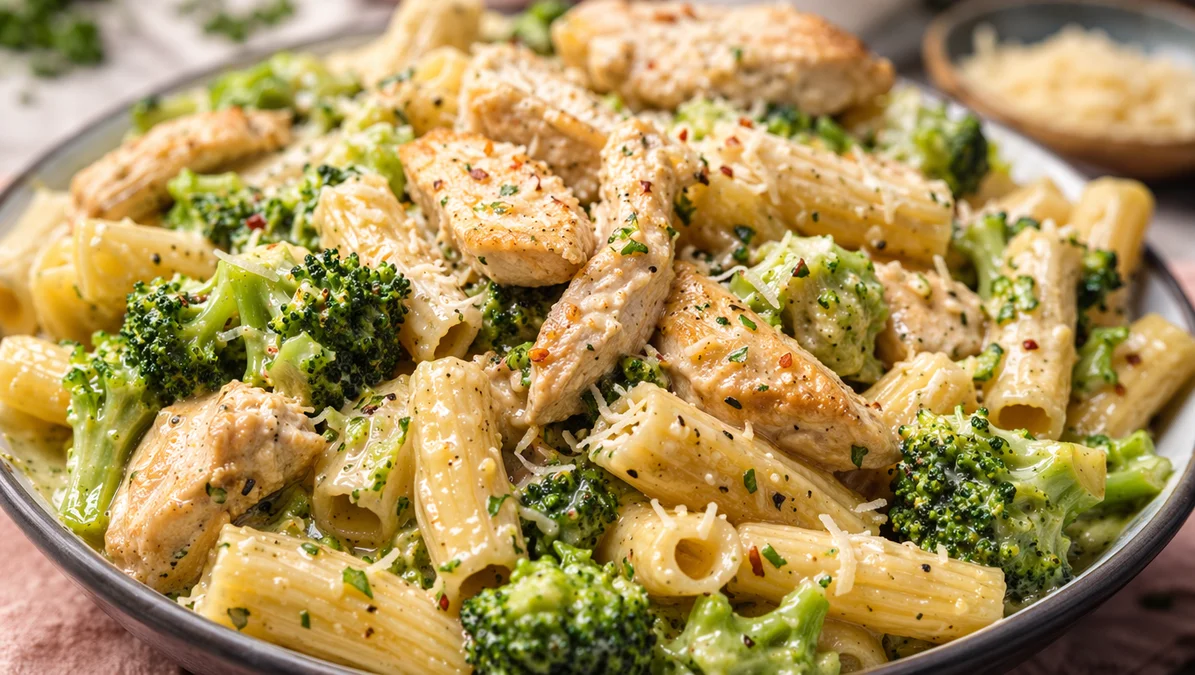
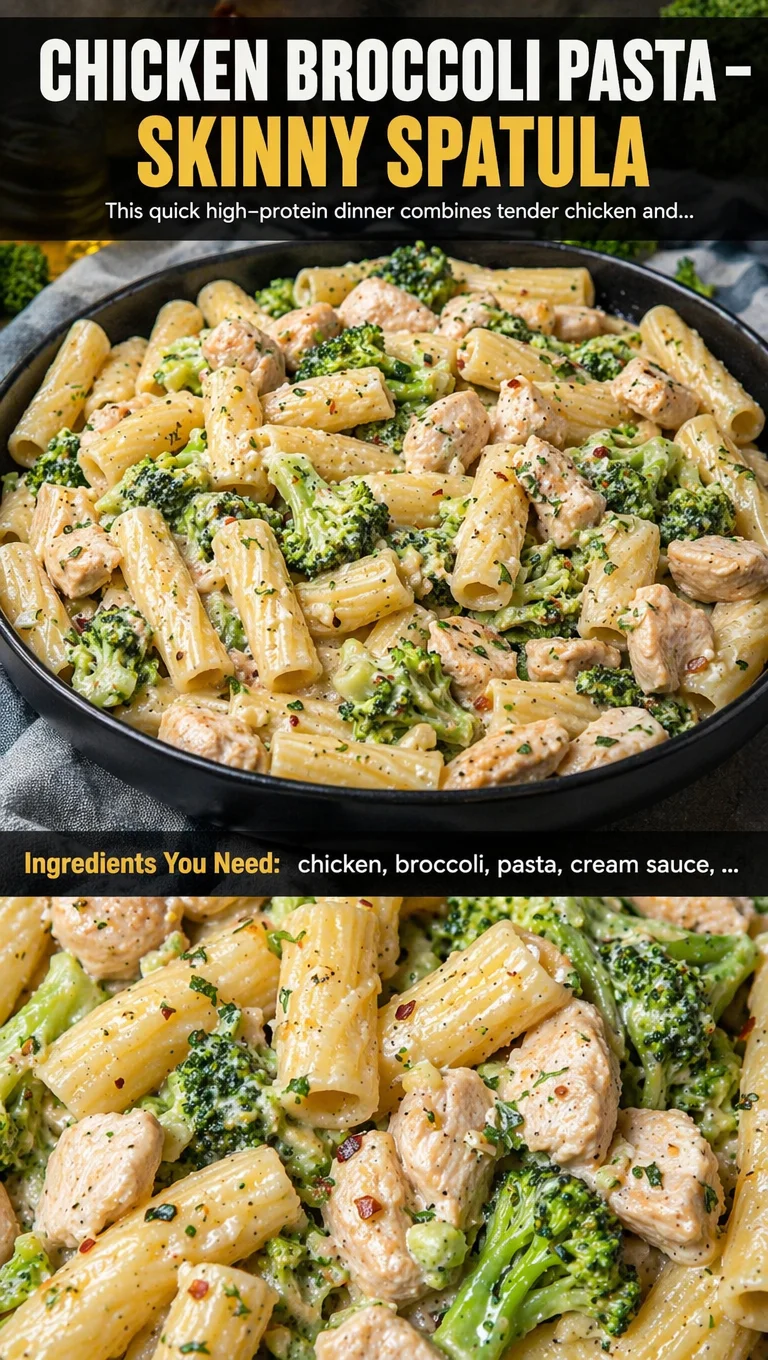
This quick high-protein dinner combines tender chicken and nutritious broccoli in a creamy balanced sauce for a satisfying 30-minute meal. Perfect for busy weeknights.
Ingredients
Instructions
Bring a large pot of salted water to a rolling boil. Add the pasta and cook according to package directions until al dente, usually about 8-10 minutes. About 2 minutes before the pasta is done, add the broccoli florets to the boiling water to blanch them. This ensures the broccoli is tender but still bright green and slightly crisp. Reserve about 1 cup of pasta water before draining. Drain the pasta and broccoli together and set aside. The reserved starchy water will help thicken the sauce later.
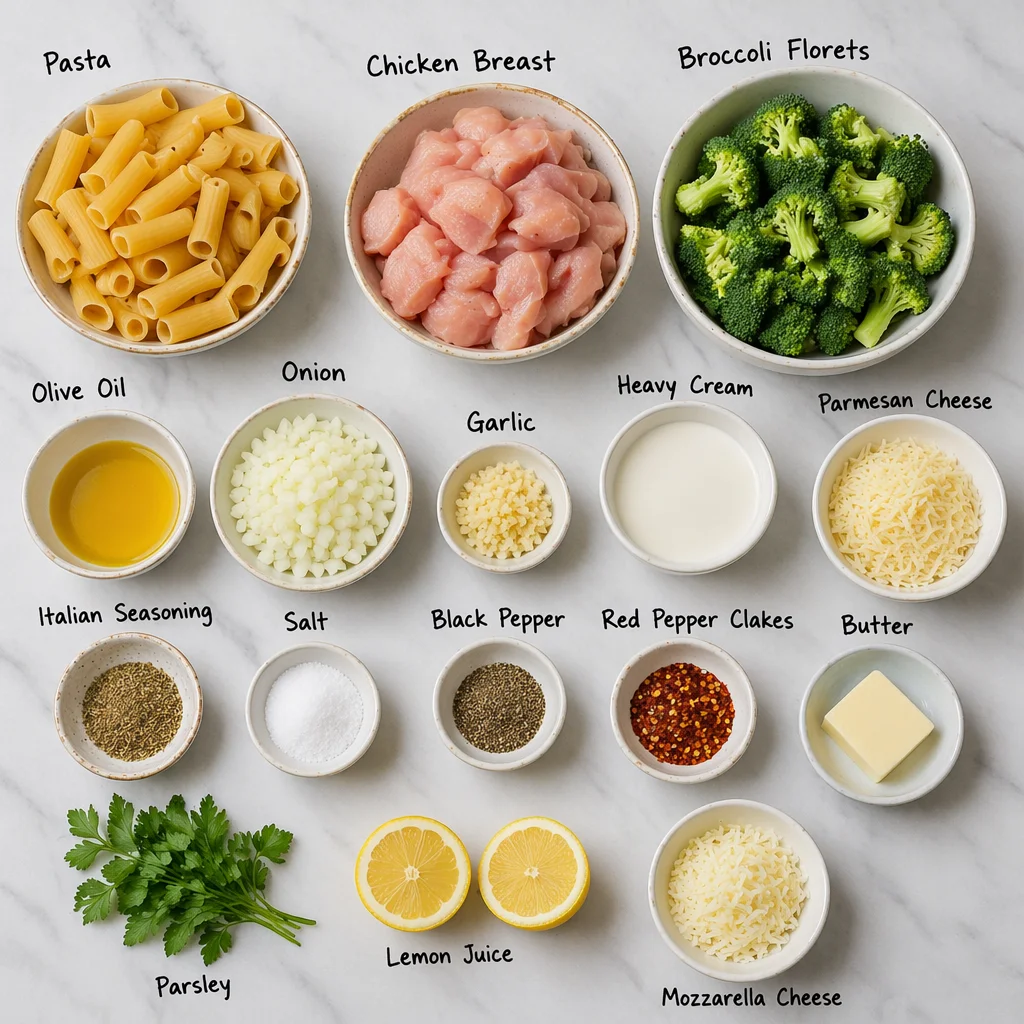
While the pasta cooks, season the chicken pieces evenly with salt, pepper, and Italian seasoning. Heat 1 tablespoon of olive oil in a large skillet or Dutch oven over medium-high heat. Add the chicken in a single layer (work in batches if necessary to avoid overcrowding, which would steam rather than sear). Cook without moving for 3-4 minutes until the underside is golden brown and releases easily from the pan. Flip and cook another 3-4 minutes until the chicken is cooked through and reaches an internal temperature of 165°F (74°C). Transfer the chicken to a plate and set aside.
Reduce the heat to medium. Add the remaining 1 tablespoon of olive oil and the minced garlic to the skillet. Sauté for about 30 seconds until fragrant, stirring constantly to prevent burning. The garlic should become aromatic but not browned. If you like a little heat, add the red pepper flakes at this point.
Pour the chicken broth into the skillet, scraping up any browned bits from the bottom with a wooden spoon. This deglazing step incorporates all the flavorful fond into the sauce. Let the broth simmer for 2-3 minutes until it reduces slightly. Then lower the heat to medium-low and stir in the heavy cream. Allow the sauce to gently simmer for another 2 minutes, stirring occasionally, until it thickens enough to coat the back of a spoon.
Remove the skillet from the heat. Stir in the grated Parmesan cheese until melted and smooth. Taste the sauce and adjust seasoning with additional salt and pepper if needed. If the sauce is too thick, add a splash of the reserved pasta water (start with 2 tablespoons) to reach your desired consistency. The starch in the water will help emulsify the sauce and make it silky.
Return the cooked chicken and the drained pasta-broccoli mixture to the skillet. Toss everything together gently but thoroughly until all components are evenly coated in the creamy sauce. If desired, stir in the tablespoon of butter for extra gloss and richness. Serve immediately, garnished with additional Parmesan cheese and chopped fresh parsley.
For best results
- For the best texture, cook the pasta al dente. Overcooked pasta becomes mushy and won't hold up well when tossed with the sauce. Remember that the pasta will continue to absorb liquid from the sauce after mixing, so err on the side of slightly undercooked. The reserved pasta water is your secret weapon: it's loaded with starch that helps bind the sauce to the pasta and gives it a velvety finish. Add it gradually until the sauce looks glossy and coats each piece evenly.
- Chicken breast can dry out quickly, so use a meat thermometer to ensure you don't overcook it. Aim for 160°F (71°C) before resting, as carryover cooking will bring it to 165°F. If you prefer extra juicy chicken, consider brining the pieces in salt water for 15-20 minutes before cooking. This step enhances moisture and flavor throughout the meat.
- Blanching the broccoli in the pasta water is a time-saving trick that also infuses the broccoli with a touch of salt from the pasta water. Be careful not to overcook: the broccoli should be bright green and just fork-tender. If you like more crunch, add it even later, about 1 minute before draining. For a deeper flavor, you can roast the broccoli separately at 400°F (200°C) for 15 minutes while the pasta cooks.
- Heavy cream gives the sauce a luxurious richness, but you can substitute half-and-half or whole milk for a lighter version. If using milk, the sauce may be thinner; compensate by simmering longer to reduce, or add a slurry of 1 teaspoon cornstarch mixed with 2 tablespoons cold water. Stir the slurry into the sauce after adding the milk and simmer until thickened.
- Grate your own Parmesan cheese from a block rather than using pre-shredded. Pre-shredded cheese often contains anti-caking agents that prevent smooth melting, leading to a grainy sauce. Freshly grated Parmesan melts effortlessly and adds a nutty, salty depth that elevates the entire dish.
- This dish is best served immediately, but if you have leftovers, store them in an airtight container in the refrigerator for up to 3 days. Reheat gently in a skillet over low heat with a splash of milk or broth to revive the sauce. Avoid microwaving on high, as it can make the chicken rubbery and the sauce separate.
Variations
- Dairy-Free / Vegan: Substitute the chicken with extra-firm tofu (pressed and cubed) or chickpeas. Use full-fat canned coconut milk instead of heavy cream and nutritional yeast in place of Parmesan. The coconut milk adds a subtle sweetness that pairs beautifully with broccoli. Sauté the tofu until golden and crispy before adding to the sauce.
- Gluten-Free: Simply use your favorite gluten-free pasta, such as brown rice or chickpea-based pasta. Chickpea pasta also boosts the protein content further. Be careful not to overcook gluten-free pasta, as it tends to become mushy more quickly. Follow package directions and test frequently.
- Low-Carb / Keto: Replace the pasta with spiralized zucchini or shirataki noodles. For zucchini, sauté the noodles briefly after cooking to remove excess moisture. Use full-fat cream and add extra Parmesan for fat content. You can also add cooked bacon bits for additional flavor and crunch.
- Protein Swap: Use boneless skinless chicken thighs for a juicier, more flavorful option. Or substitute shrimp (cook until pink, about 2 minutes per side) or Italian sausage (casings removed, crumbled and browned). Each protein brings a unique taste and texture to the dish.
- Extra Veggies: Boost the vegetable content by adding sautéed mushrooms, bell peppers, or sun-dried tomatoes. Mushrooms add an umami depth, bell peppers bring sweetness and color, and sun-dried tomatoes contribute a tangy, concentrated tomato flavor. Add them after the garlic and before the broth.
Nutrition
- Calories485 kcal
- Total Fat22g
- Saturated Fat11g
- Cholesterol110mg
- Sodium520mg
- Total Carbohydrates38g
- Dietary Fiber3g
- Sugars4g
- Protein38g