
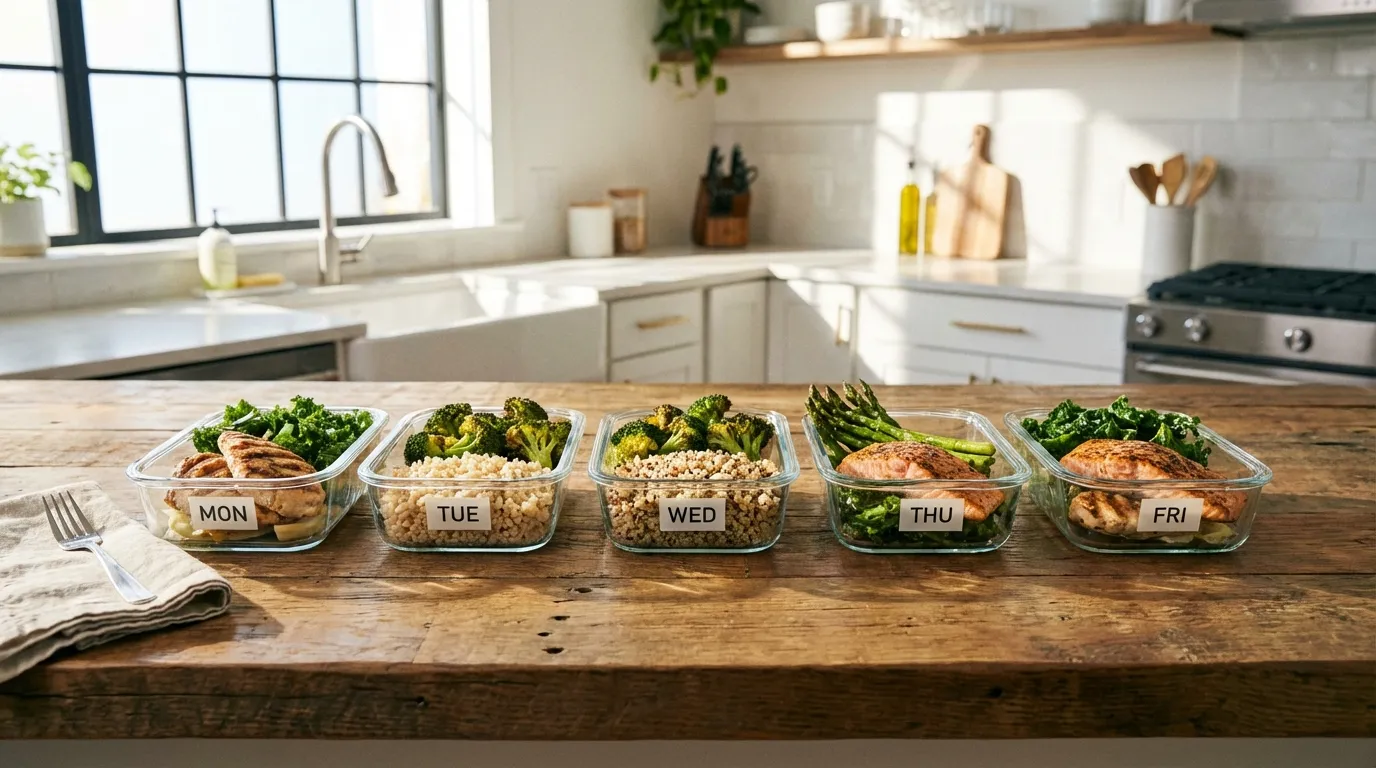
The Sunday Reset Philosophy: Why Efficiency Equals Consistency
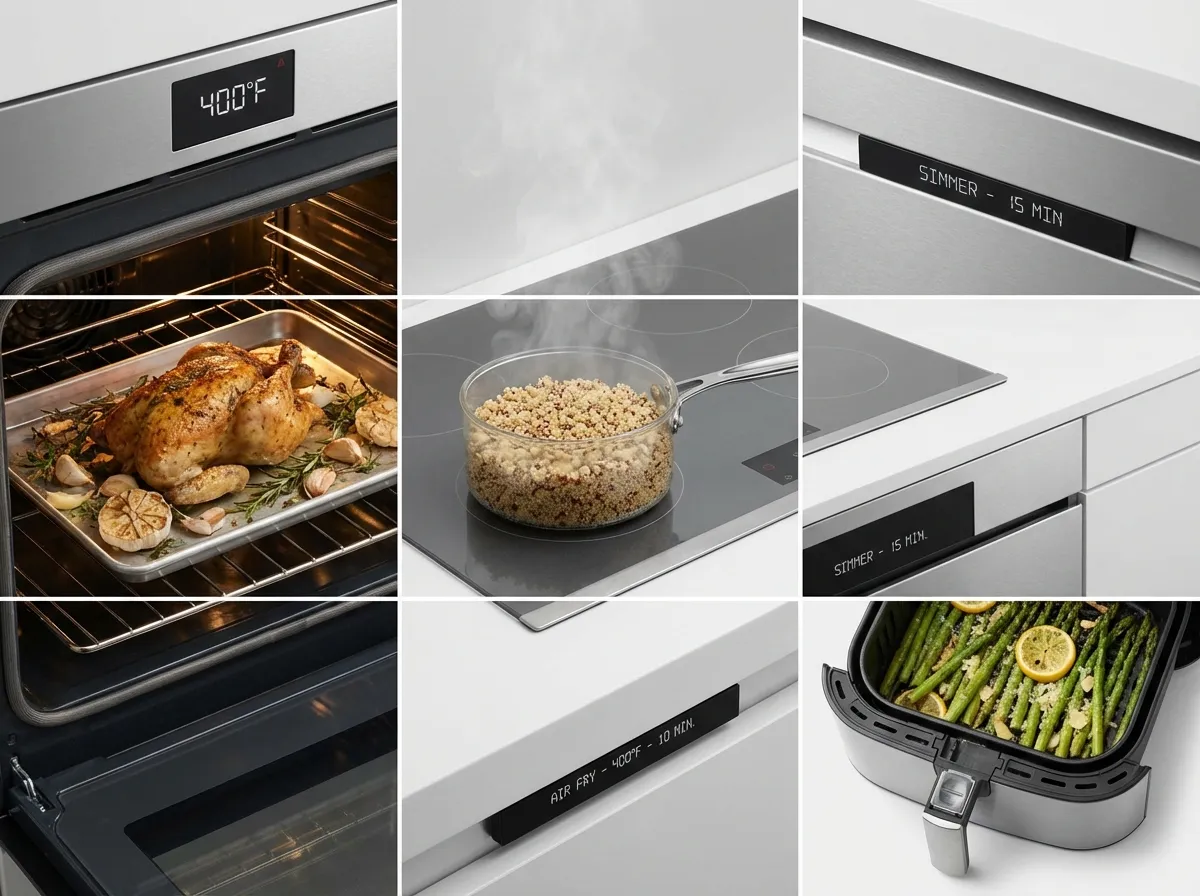
Maximize your output by utilizing the Oven, Stovetop, and Air Fryer zones simultaneously.
The Sunday Reset is a systems-engineering approach to nutrition that eliminates decision fatigue by automating meal selection. By dedicating 60 minutes to batch-cooking, athletes ensure a consistent intake of at least 30 grams of protein per meal, which is essential for muscle hypertrophy and sustained metabolic health throughout the work week.
Consistency acts as the primary driver for body composition changes. When you standardize your nutritional anchors, you remove the psychological friction of daily meal planning. This system focuses on manufacturing nutrition rather than gourmet cooking, ensuring you meet baseline requirements without the risk of diet non-compliance or kitchen burnout.
The Parallel Cooking Framework: How to Own the Hour
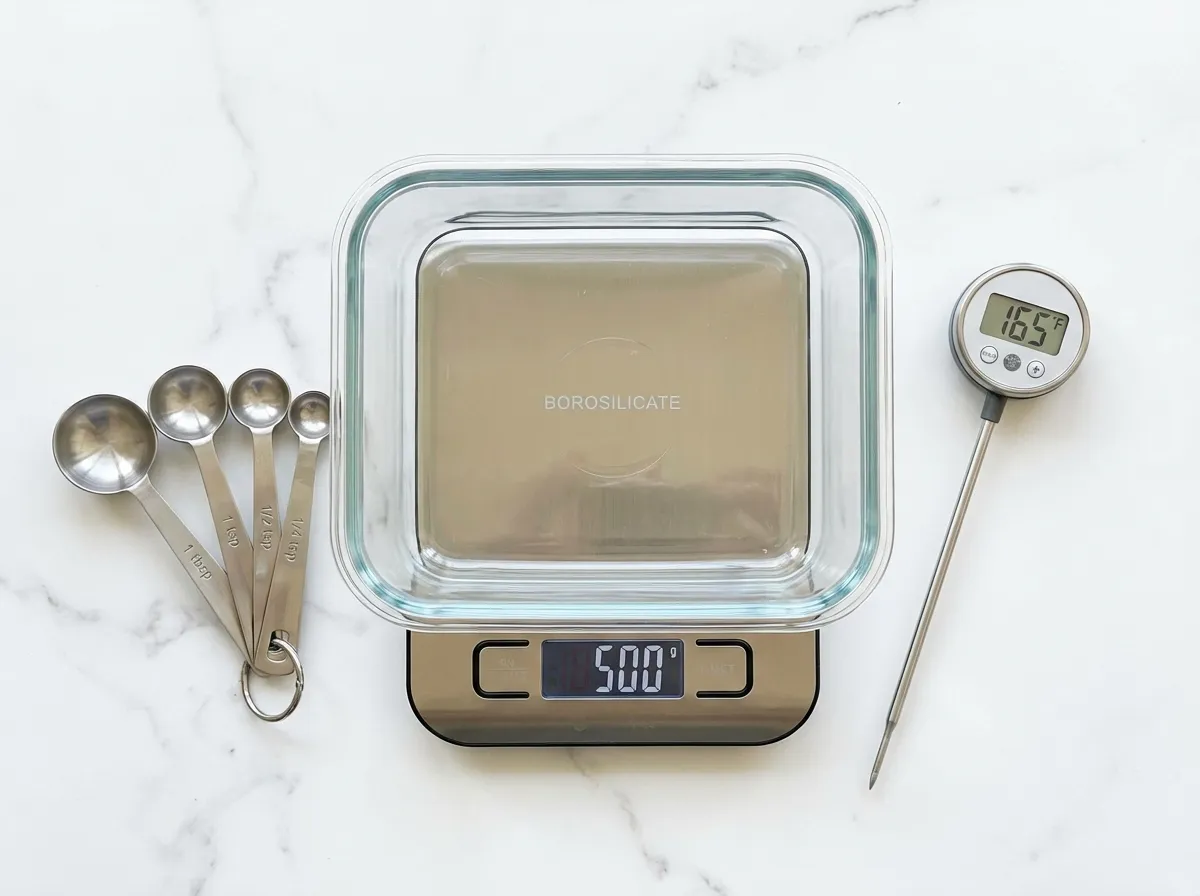
Precision tools like digital scales are non-negotiable for hitting exact daily protein targets.
The Zone Method is a parallel processing technique that utilizes three distinct heat sources simultaneously to complete meal prep in exactly 60 minutes. By delegating proteins, grains, and vegetables to the oven, stovetop, and air fryer at the same time, you eliminate sequential waiting periods and maximize kitchen efficiency.
- Zone 1 (Oven): Set to 400°F. Roast 2.5 pounds of lean protein on a heavy-duty sheet pan for 25 minutes to create a big batch roasted vegetable and protein mix that serves as your primary base.
- Zone 2 (Stovetop): Boil water immediately after starting the oven. Simmer complex carbohydrates like brown rice or quinoa until tender.
- Zone 3 (Air Fryer): Roast fibrous vegetables like broccoli or asparagus at 400°F for 10–12 minutes to achieve a crisp texture.
Essential Gear for Macro-Precision
Precision in meal prep requires specific hardware to eliminate estimation errors and ensure food safety. Accurate weighing and proper storage are non-negotiable for athletes tracking specific macronutrient targets.
- Digital Food Scale: Use this to weigh proteins in grams after cooking. Note that meat typically loses 25% of its raw weight during the cooking process.
- Glass Airtight Containers: Use borosilicate glass to prevent chemical leaching, staining, and odor absorption. These are microwave-safe and leak-proof.
- Vacuum Sealer: Use this to remove oxygen from containers, which prevents oxidation and maintains food texture for the final two days of the week.
Why Pan Material and Tool Quality Matters
Performance in the kitchen is directly tied to heat distribution. Heavy-gauge stainless steel or cast iron pans prevent hot spots, ensuring protein sears evenly without burning. For air frying, silicone liners increase surface area coverage, prevent sticking, and reduce cleanup time to stay within your 60-minute constraint.
Cost and Efficiency: The Macro-Budget Analysis
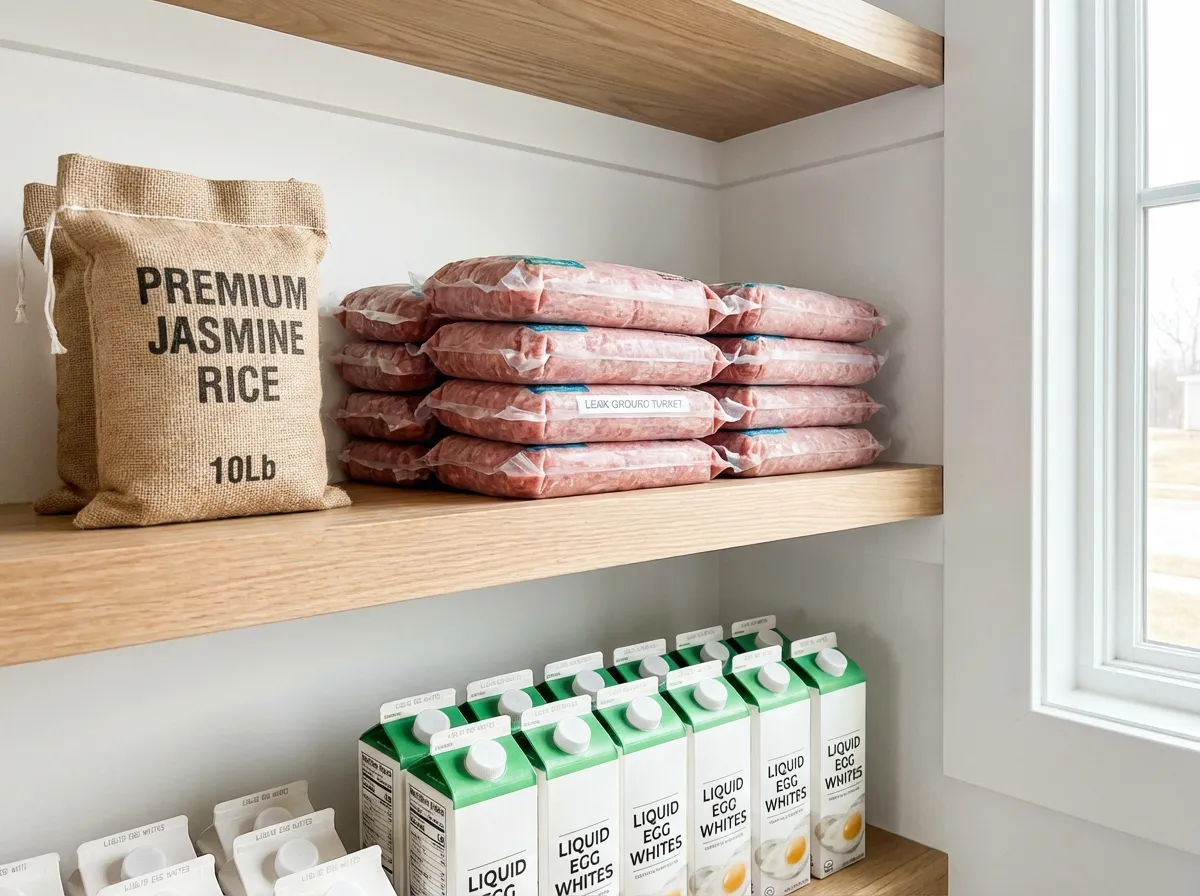
Buying in bulk reduces per-serving costs and ensures your pantry is always macro-ready.
High-protein eating is cost-effective when using bulk-purchasing strategies for lean ingredients. By prioritizing staples like 93/7 ground turkey and dry grains, you can maintain a high-protein intake for under three dollars per serving, saving approximately $60 to $80 per week compared to takeout alternatives.
- Protein Per Dollar: Focus on lean ground turkey and egg whites, which offer the highest protein-to-cost ratio.
- Bulk Purchasing: Buy grains in 10-pound to 20-pound bags to reduce per-serving costs by nearly 40%.
Performance Optimization: Macro-Tracking and Muscle Support
Your meal prep success depends on tracking data accurately to support muscle protein synthesis. Aim for 30 to 40 grams of complete protein per meal and pair these with low-glycemic complex carbohydrates to maintain steady blood glucose levels throughout the afternoon.
- Tracking Protocol: Weigh food in the same state (raw vs. cooked) every time to maintain consistency.
- Glycemic Balance: Pair proteins with slow-digesting carbs like quinoa or brown rice to prevent insulin spikes and energy crashes.
Core Protein Bases: The 150g Weekly Anchor
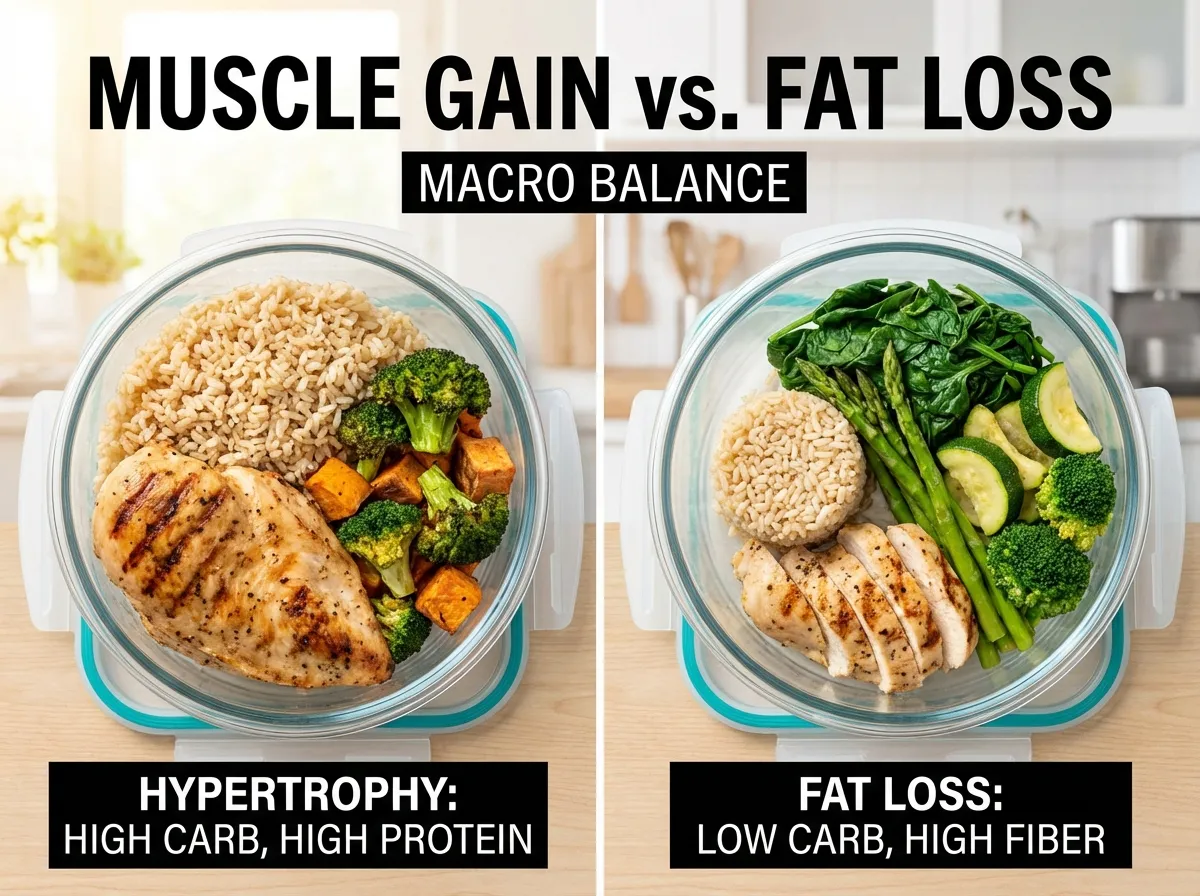
Scale your macros by adjusting carb and fiber volumes while keeping your protein base constant.
The 150-gram protein anchor is a daily nutritional foundation consisting of 30 grams of protein per meal. To prevent moisture loss during reheating, apply a 15-minute brine—soaking meat in a solution of 1/4 cup kosher salt to 4 cups water—before cooking to denature proteins and retain water.
- Temperature Control: Use a digital instant-read thermometer to pull chicken breasts from the oven at exactly 165°F. This ensures safety while preventing the meat from drying out.
Carb and Fiber Foundations for Sustained Energy
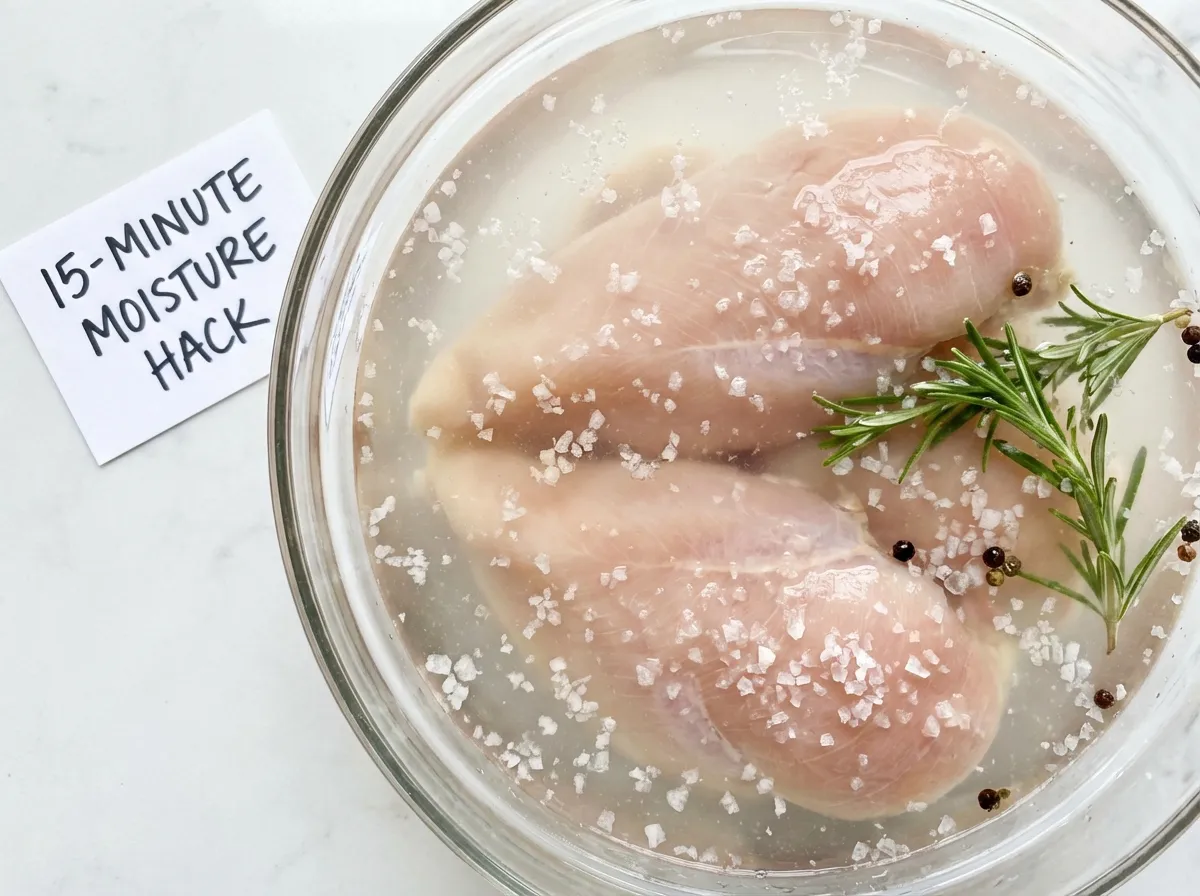
A simple 15-minute brine is the secret to keeping lean proteins juicy for five days.
Volumetrics is a nutritional strategy that prioritizes high-fiber, low-calorie foods to trigger satiety. By filling half of your container with fibrous vegetables like spinach or green beans, you increase the physical volume of the meal, which signals fullness to the brain without exceeding your caloric budget.
- Fiber Target: Aim for 8 to 10 grams of fiber per container. For those in a more aggressive fat loss phase, integrating a high-fiber cabbage soup for deep cutting can help hit these targets while keeping satiety high.
- Structural Integrity: Use par-boiled brown rice or quinoa, as these grains maintain texture better than pasta when stored for five days.
The 60-Minute Execution Timeline
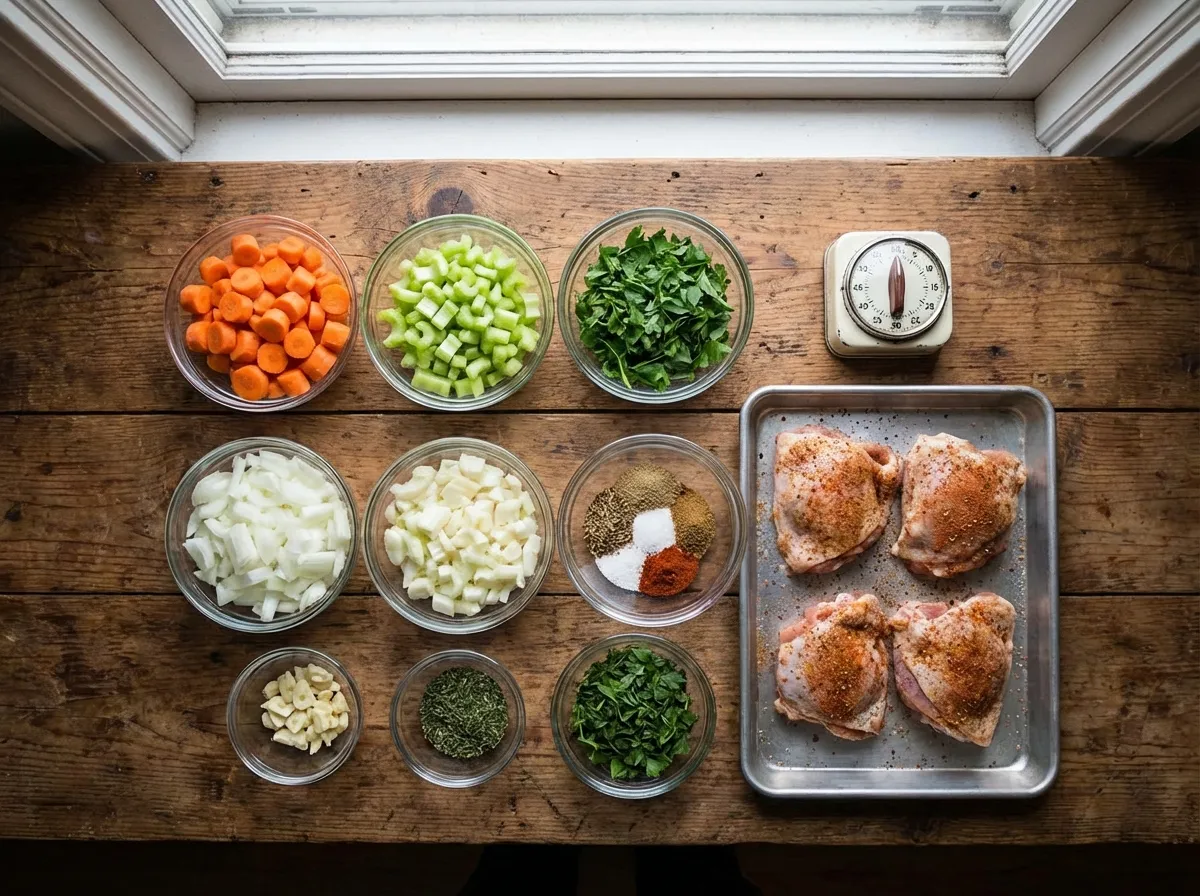
Success in the 60-minute timeline depends on having your ‘mise en place’ ready before the clock starts.
This timeline relies on mise en place, where all ingredients are measured and ready before the first heat source is activated.
| Minute | Action Item | Heat Source |
|---|---|---|
| 00-10 | Protein Brining & Veggie Chopping | N/A |
| 10-15 | Preheating & Grain Start | Stovetop |
| 15-45 | Main Protein & Veggie Roast | Oven/Air Fryer |
| 45-55 | Cooling & Macro-Portioning | Scale |
| 55-60 | Cleanup & Storage | N/A |
Flavor Fatigue Solutions: The Sauce-on-the-Side Rule
Flavor fatigue is the loss of appetite for a meal due to repetitive seasoning. To avoid this, cook a neutral protein base seasoned only with salt, pepper, garlic powder, and paprika. Portion your meals into containers, then add two-ounce ramekins (“Flavor Pods”) containing different sauces or glazes at the time of consumption. You can also supplement your main meals with a structured snack box prep to keep your palate engaged throughout the day.
Scaling for Your Goal: Hypertrophy vs. Fat Loss
Adjust your macro ratios based on your specific training phase while keeping the protein base constant. To ensure you stay fueled from the start of the day, consider incorporating freezer-friendly breakfast burrito meal prep into your Sunday routine.
| Goal | Carb Portion | Fat Portion | Fiber Volume |
|---|---|---|---|
| Hypertrophy (Surplus) | 1.5 cups | 1 tbsp | Moderate |
| Maintenance | 1 cup | 0.5 tbsp | High |
| Fat Loss (Deficit) | 0.5 cup | 0 tbsp | Maximum |
Storage Science: The 5-Day Freshness Protocol
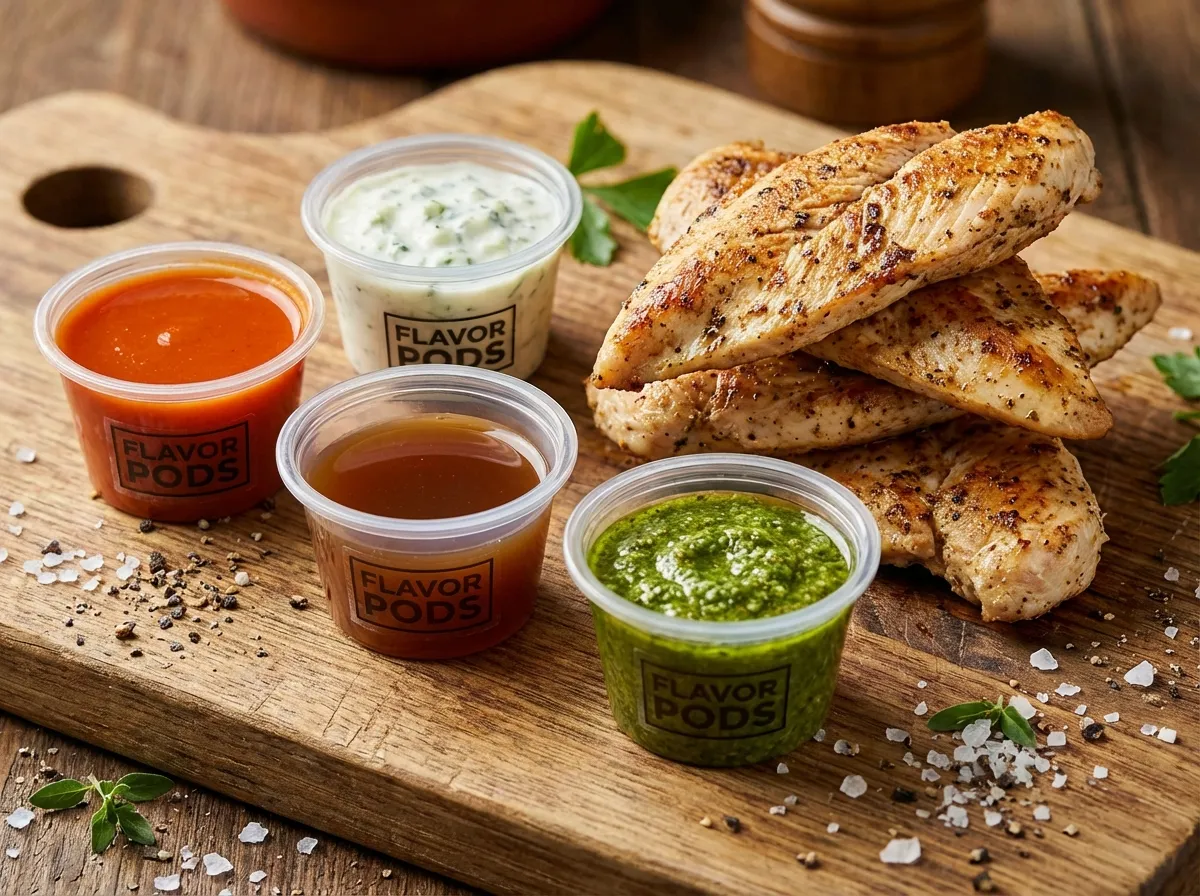
Use the Flavor Pod method to enjoy five different cuisines from one single protein base.
The “Cool-Before-Close” rule requires that food reaches room temperature (below 40°F) before being sealed. Sealing hot food creates condensation, which leads to soggy vegetables and accelerated bacterial growth. Spread food on a baking sheet to accelerate cooling before transferring to airtight glass containers.
Frequently Asked Questions
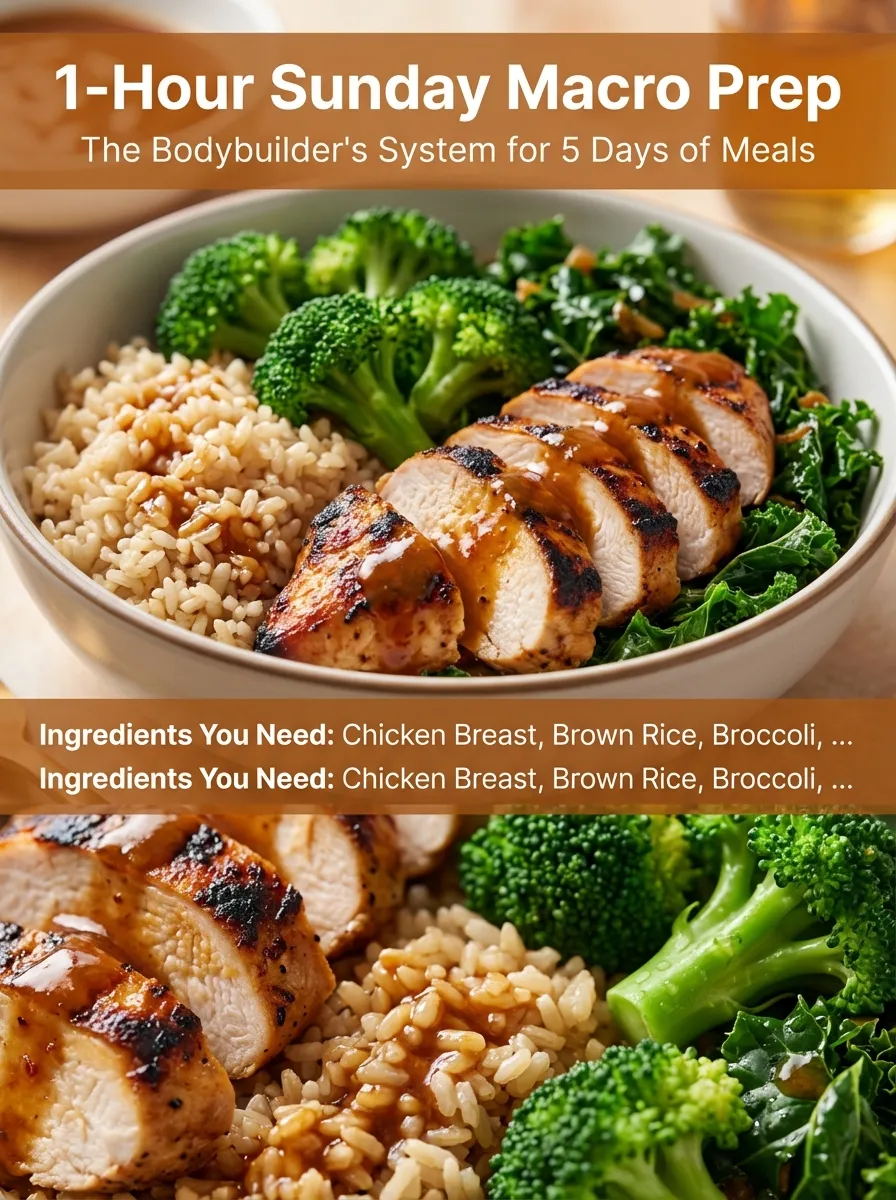
Save this system to your Pinterest board for your next Sunday Reset.
Can I freeze these meals?
Yes, but prioritize freezing complex grains and ground proteins. Whole chicken breasts often suffer cellular damage when frozen, resulting in a spongy texture upon thawing.
How do I prevent my rice from getting hard?
Rice starches crystallize in the refrigerator. To fix this, add one tablespoon of water to the container and cover with a damp paper towel before microwaving to rehydrate the grains.
Is 5-day chicken safe to eat?
Yes, if cooked to 165°F, cooled rapidly, and stored in airtight glass containers at 40°F or below, it remains safe to consume for five days.
Final Conversion and Next Steps
Execute the Sunday Reset by gathering your scale and containers to complete your first 60-minute cycle.
- Action: Download the Sunday Reset Shopping List.
- Next Step: Test the workflow with a 50g Protein Lean Turkey & Rice Bowl or try our 5-day chicken burrito bowls.