
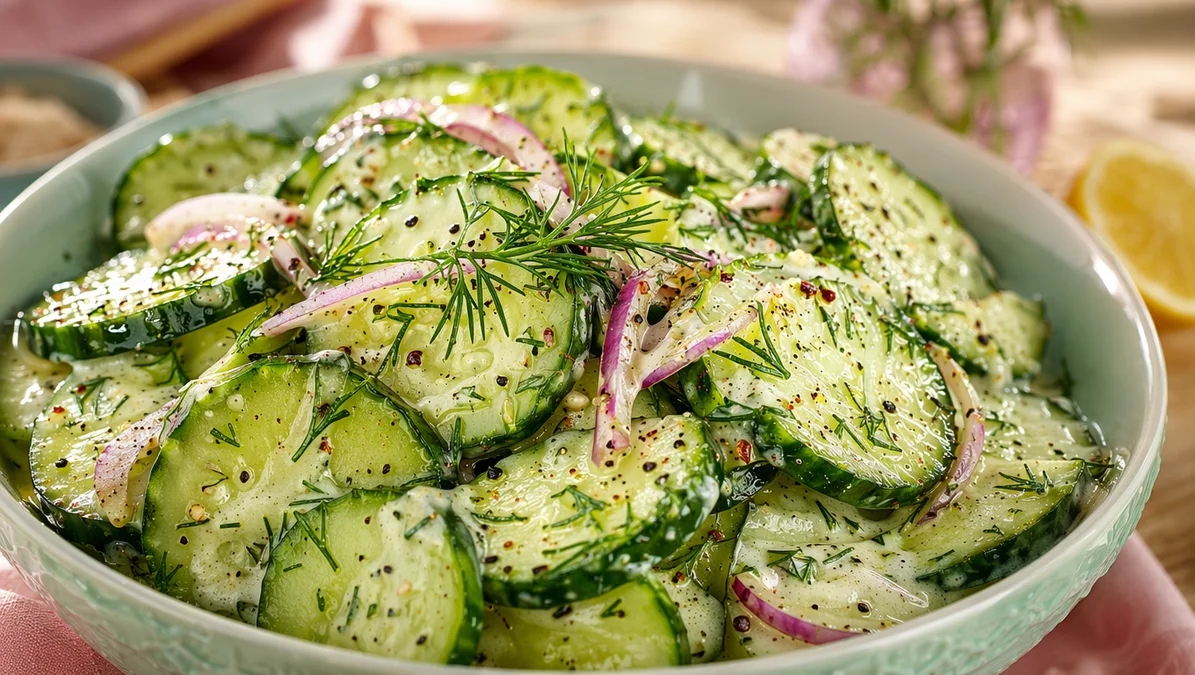
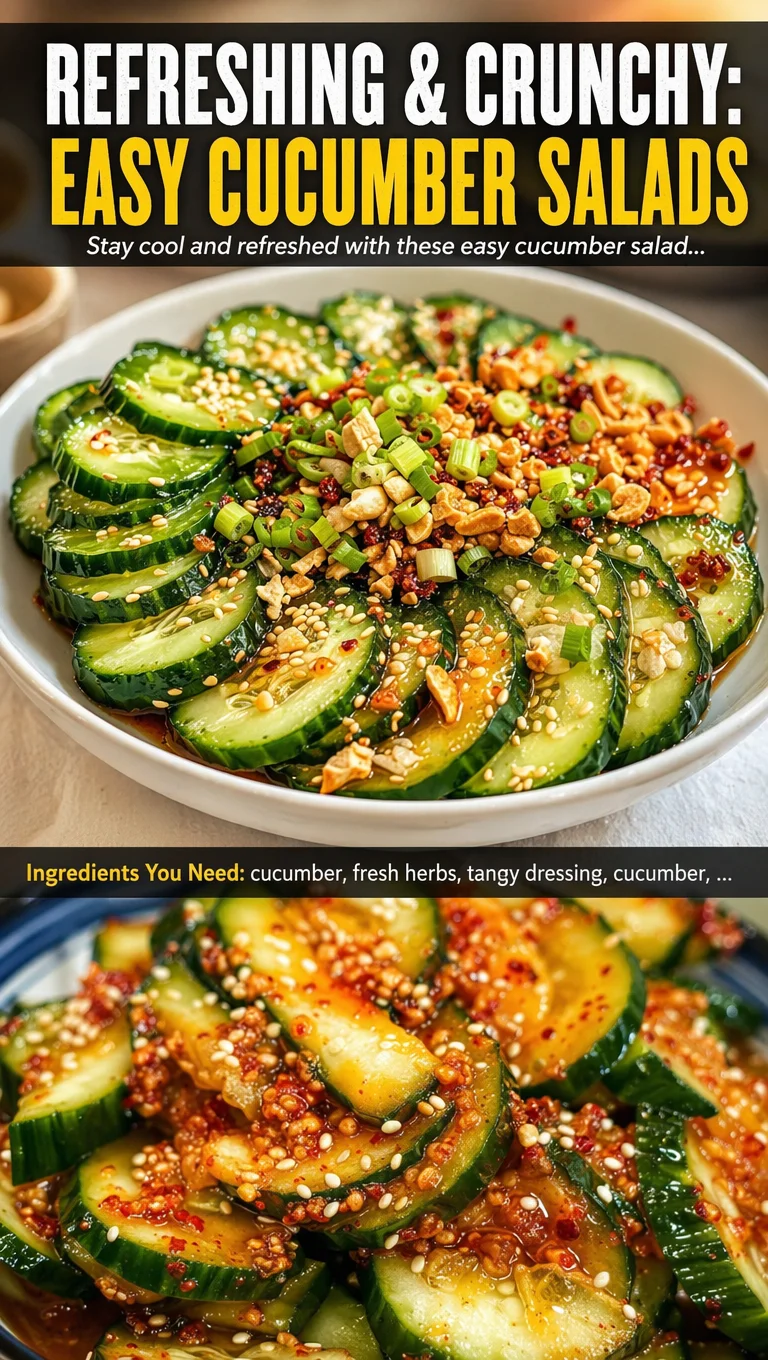
Stay cool and refreshed with these easy cucumber salad recipes, perfect for a quick high-protein dinner side or healthy picnic food. Perfectly crisp with vibrant flavors from tangy dressings and…
Ingredients
Instructions
Prepare the cucumbers: Start by selecting English cucumbers (also known as hothouse cucumbers) because they have thin skin, fewer seeds, and a crisp texture that holds up well in salads. Avoid waxed garden cucumbers, which have thicker skin and more seeds that can make the salad watery. Wash the cucumbers thoroughly under cool running water. Using a sharp knife or a mandoline slicer set to about 1/8-inch thickness, slice the cucumbers into uniform rounds. Uniformity ensures even marinating and a consistent crunch in every bite. If you don’t have a mandoline, a sharp chef’s knife works well—just try to keep slices even. Place the sliced cucumbers in a large colander set over a bowl. Sprinkle with 1/2 teaspoon of the kosher salt and toss gently. Let them sit for 10 minutes. This process, called “degorging,” draws out excess moisture, preventing a watery dressing and concentrating the cucumber flavor. After 10 minutes, pat the cucumbers dry with a clean kitchen towel or paper towels. This extra step is the secret to a crunchy, non-soggy salad.
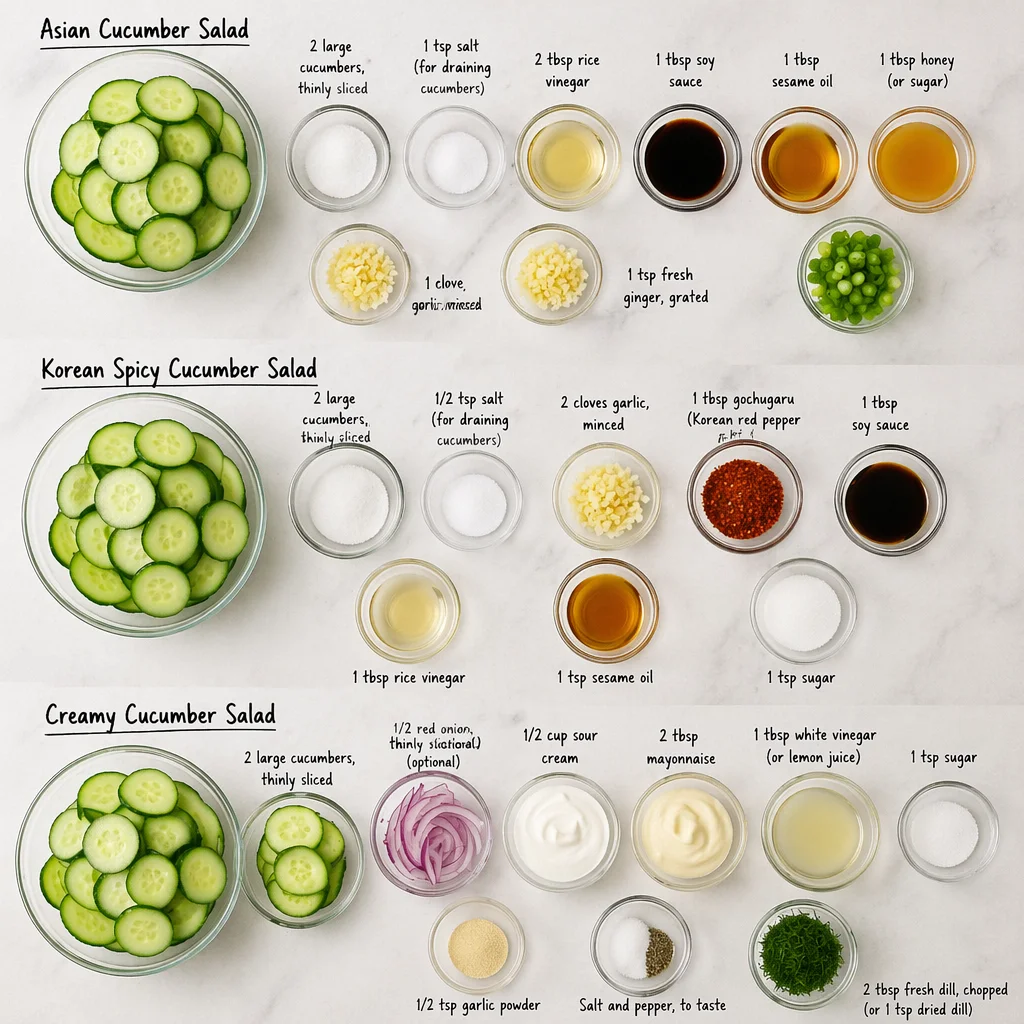
Prepare the red onion: While the cucumbers are draining, slice the red onion thinly into half-moons. To reduce the sharp, pungent bite of raw onion, place the sliced onion in a small bowl and cover with cold water. Let it soak for 5–10 minutes. This mellows the onion’s sulfur compounds, making it sweeter and more palatable in the salad. Drain the onion slices and pat them dry. Alternatively, you can quick-pickle the onion by soaking it in the rice vinegar for 10 minutes—this adds a tangy flavor that complements the dressing beautifully. For this recipe, we’ll add the onion directly to the salad after soaking in water to maintain a balanced crunch.
Make the dressing: In a small bowl or a jar with a tight-fitting lid, combine the rice vinegar, extra-virgin olive oil, fresh lemon juice, remaining 1/2 teaspoon kosher salt, and freshly ground black pepper. Whisk vigorously until the dressing is emulsified, or shake the jar for about 20 seconds. Taste the dressing and adjust seasoning if needed—it should be tangy and bright, with a hint of richness from the oil. The rice vinegar provides a mild acidity that doesn’t overpower the cucumbers, while the lemon juice adds a fresh citrus note. For a creamier variation, you can add a tablespoon of Greek yogurt or sour cream, but for this classic version, we keep it light and vinaigrette-style.
Assemble the salad: In a large mixing bowl, combine the drained cucumbers, soaked red onion, chopped fresh dill, parsley, and mint. Pour the dressing over the vegetables. Using a rubber spatula or two large spoons, gently toss everything together until the cucumbers and onion are evenly coated with the dressing. Be careful not to overmix, as the cucumber slices can break. The herbs should be distributed throughout, adding pops of green and fresh aroma. At this point, if you’re adding feta cheese or toasted sesame seeds, sprinkle them on top and give a light toss. The feta adds a salty, creamy contrast, while sesame seeds provide a nutty crunch.
Serve immediately or chill: For the best texture, serve the salad right away while the cucumbers are at peak crispness. However, if you prefer a more marinated flavor, you can let the salad sit in the refrigerator for 15–30 minutes. The cucumbers will soften slightly and absorb the dressing, but they’ll still retain a satisfying crunch. To serve, transfer the salad to a shallow bowl or platter. Garnish with additional fresh herbs or a sprinkle of sesame seeds. This salad pairs beautifully with grilled chicken, fish, or tofu for a complete high-protein dinner. It’s also perfect as a light lunch or a side for picnics and barbecues. Enjoy the refreshing crunch!
For best results
- Choosing the right cucumber is crucial for a crunchy salad. English cucumbers are the gold standard because they have a thin, edible skin and minimal seeds. If you can only find garden cucumbers, peel them partially (alternating strips) and halve them lengthwise to scoop out the watery seeds with a spoon before slicing. This prevents the salad from becoming watery. Persian cucumbers are another excellent alternative—they're small, crisp, and nearly seedless. For the best texture, avoid waxed cucumbers, which have a tough skin and more seeds.
- Degorging (salting) the cucumbers is a game-changer for texture. Many people skip this step, but it's the key to a non-soggy salad. The salt draws out excess water through osmosis, concentrating the cucumber flavor and keeping the dressing from thinning out. After salting, be sure to pat the cucumbers dry thoroughly. If you're short on time, you can skip degorging, but the salad will be less crisp and more watery. For a quicker method, place the sliced cucumbers in a salad spinner, add salt, spin, and let them sit for 5 minutes before spinning again to remove water.
- Fresh herbs make this salad sing. Dill, parsley, and mint are classic pairings with cucumber, but you can mix and match based on what you have. Dill adds an earthy, slightly tangy note; parsley brings freshness; and mint offers a cool, sweet finish. To keep herbs vibrant, wash and dry them thoroughly before chopping. Wet herbs will dilute the dressing and make the salad soggy. If you're preparing the salad ahead, add the herbs just before serving to prevent them from wilting. For a twist, try substituting basil or cilantro for a different flavor profile.
- The dressing can be customized to your taste. Rice vinegar is mild and slightly sweet, but you can substitute apple cider vinegar, white wine vinegar, or even lime juice for a different acidity. For a creamier dressing, blend in 2 tablespoons of Greek yogurt or buttermilk. If you prefer a sweeter dressing, add 1 teaspoon of honey or maple syrup. For an Asian-inspired version, replace the olive oil with toasted sesame oil and add a splash of soy sauce. Always adjust salt and pepper at the end, as different vinegars have varying saltiness.
- To boost the protein content of this salad without changing the flavor profile, add 1/2 cup of cooked chickpeas, edamame, or grilled chicken strips. For a vegetarian option, crumbled feta or goat cheese adds protein and creaminess. You can also toss in some toasted nuts like slivered almonds or chopped walnuts for healthy fats and extra crunch. If you're meal-prepping, store the dressing separately and toss just before eating to maintain crunch. The salad will keep in the refrigerator for up to 2 days, but the cucumbers will soften over time.
Variations
- Creamy Dill Cucumber Salad: For a classic creamy version, substitute the vinaigrette dressing with a mixture of 1/2 cup plain Greek yogurt, 2 tablespoons mayonnaise, 1 tablespoon lemon juice, and 1 minced garlic clove. Add the same fresh herbs and a pinch of onion powder. This variation is richer and pairs wonderfully with grilled meats or as a dip for crudités. The Greek yogurt boosts protein content, making it an even more macro-friendly side dish. For a dairy-free option, use a plant-based yogurt and vegan mayo.
- Asian Sesame Cucumber Salad: Swap the olive oil for toasted sesame oil and add 1 tablespoon of soy sauce (or tamari for gluten-free) and 1 teaspoon of sugar to the dressing. Toss in 1 tablespoon of toasted sesame seeds and a pinch of red pepper flakes for heat. Garnish with sliced green onions and chopped cilantro instead of dill and mint. This version is incredibly flavorful and pairs beautifully with grilled salmon or tofu. For extra crunch, add a handful of crushed peanuts or wonton strips on top.
- Mediterranean Cucumber Salad: Add 1/2 cup cherry tomatoes (halved), 1/4 cup Kalamata olives (sliced), 1/4 cup crumbled feta cheese, and 1/4 cup diced red bell pepper. Use a dressing of red wine vinegar, olive oil, dried oregano, and lemon juice. Fresh oregano or basil can replace the dill. This hearty variation is almost a meal on its own and is perfect for picnics. The feta and olives add saltiness and protein, while the tomatoes provide juiciness. Serve with warm pita bread for a complete lunch.
- Spicy Cucumber Salad: For those who love heat, add 1 thinly sliced jalapeño (seeds removed for less heat) and 1/2 teaspoon red pepper flakes to the dressing. Use lime juice instead of lemon and add a pinch of cayenne pepper. Fresh cilantro and mint are ideal herbs. This salad is refreshing yet fiery, perfect for pairing with grilled shrimp or tacos. You can also add a splash of fish sauce for an umami kick. Adjust the spice level to your preference—start with less and add more.
Nutrition
- Calories85 kcal
- Total Fat7g
- Saturated Fat1g
- Cholesterol0mg
- Sodium490mg
- Total Carbohydrates5g
- Dietary Fiber1g
- Sugars2g
- Protein1g