
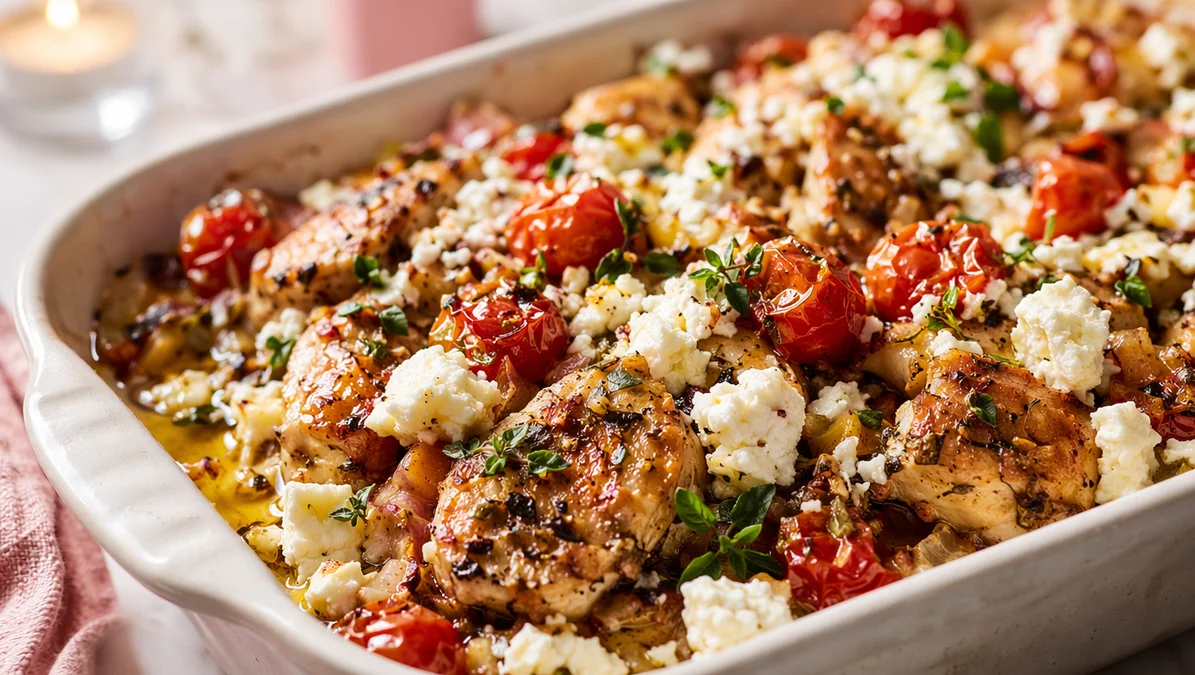
Whip up this quick high-protein Greek chicken casserole on busy nights when you need a healthy meal fast. Loaded with juicy chicken, tangy feta, and Mediterranean flavors.
Ingredients
Instructions
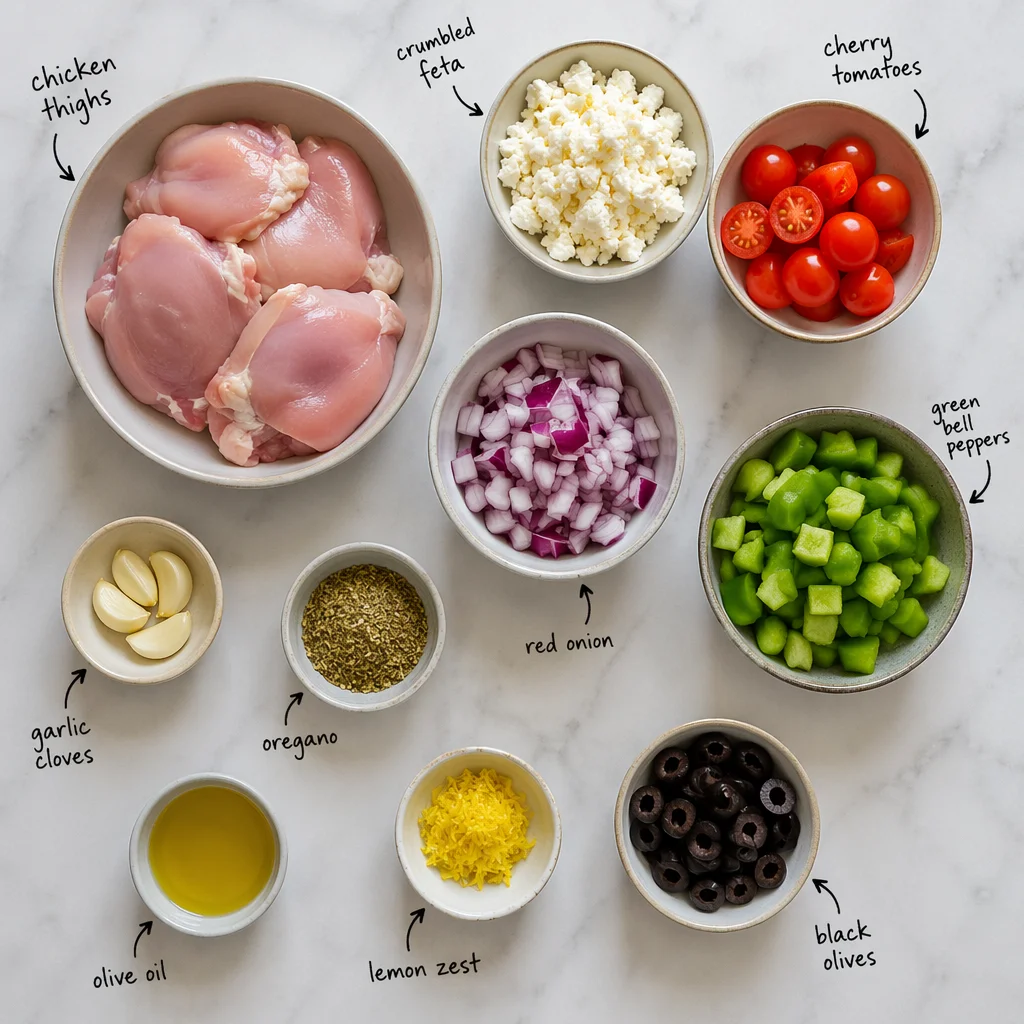
Preheat your oven to 400°F (200°C) and position a rack in the center. While the oven heats, prepare all your ingredients: cut the chicken thighs into uniform 1.5-inch chunks—this ensures even cooking and a juicy interior. Dice the red onion and green bell pepper into small, even pieces, about 1/4 inch, so they soften properly during baking. Mince the garlic cloves finely to distribute flavor without large chunks. Halve the cherry tomatoes and olives. Having everything prepped before you start cooking (mise en place) makes the process smooth and prevents overcooking.
Heat 1 tablespoon of olive oil in a large oven-safe skillet or Dutch oven over medium-high heat. Once the oil shimmers, add the chicken chunks in a single layer—do not overcrowd the pan; you may need to work in batches. Sear the chicken for 3-4 minutes per side until golden brown. This browning (Maillard reaction) creates deep savory flavor that will infuse the casserole. The chicken does not need to be cooked through at this point; it will finish in the oven. Transfer the seared chicken to a plate and set aside.
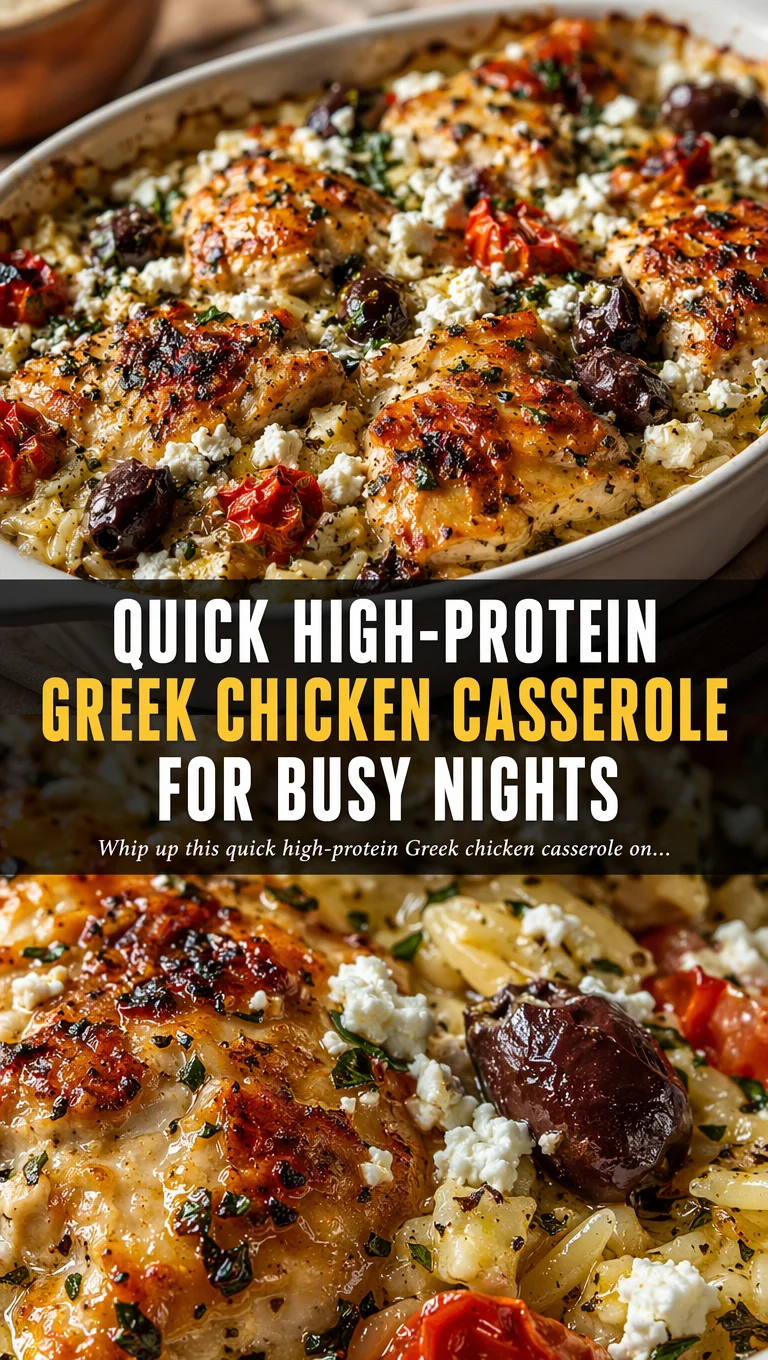
Reduce the heat to medium and add the diced red onion and green bell pepper to the same skillet. Sauté for 4-5 minutes, stirring occasionally, until the onions become translucent and the peppers soften. The moisture released will help deglaze the pan, lifting the flavorful browned bits from the bottom. Add the minced garlic and cook for 30 seconds until fragrant, being careful not to burn it. Then stir in the dried oregano, thyme, and red pepper flakes (if using), allowing the spices to bloom for about 1 minute.
Add the halved cherry tomatoes and Kalamata olives to the skillet, stirring to combine. Cook for 2 minutes until the tomatoes begin to soften and release their juices. Pour in the chicken broth and bring to a gentle simmer, scraping up any remaining browned bits. Remove the skillet from heat and stir in the Greek yogurt until fully incorporated—this adds creaminess and a subtle tang that balances the briny olives and feta. Season with salt and pepper to taste.
Return the seared chicken chunks to the skillet, nestling them into the sauce. Sprinkle the crumbled feta cheese evenly over the top. Transfer the skillet to the preheated oven and bake for 20-25 minutes, until the chicken is cooked through (internal temperature reaches 165°F/74°C) and the sauce is bubbly and slightly thickened. The feta will soften and meld into the sauce, creating a luscious texture. If you desire a golden top, switch the oven to broil for the last 2 minutes—watch closely to prevent burning.
Remove the casserole from the oven and let it rest for 5 minutes. This resting period allows the juices to redistribute, ensuring each bite is moist. Garnish with fresh parsley and lemon zest for a bright finish. Serve hot over steamed rice, quinoa, or with warm crusty bread to soak up the flavorful sauce. This casserole also pairs beautifully with a crisp Greek salad or roasted vegetables.
For best results
- For the best texture and flavor, use boneless, skinless chicken thighs rather than breasts. Thighs have a higher fat content that keeps them moist during baking, while breasts can dry out quickly. If you prefer white meat, reduce the baking time by 5 minutes and check for doneness early.
- To enhance the Mediterranean character of this dish, consider toasting the dried oregano in the pan for 30 seconds before adding other ingredients. This releases the essential oils and intensifies the herb's aroma. Similarly, using a high-quality extra-virgin olive oil makes a noticeable difference in the final taste.
- Greek yogurt is a key ingredient that adds creaminess without heavy cream. However, to prevent curdling, ensure the yogurt is at room temperature before stirring it into the hot pan. You can also stir a spoonful of the hot broth into the yogurt first to temper it, then add the mixture back to the skillet.
- This casserole is perfect for meal prep. Assemble the entire dish (without baking) in a baking dish, cover tightly with foil, and refrigerate for up to 24 hours. When ready to eat, simply bake as directed, adding 10-15 minutes to the cooking time since the dish starts cold. The flavors will meld beautifully overnight.
- If you prefer a dairy-free version, substitute the Greek yogurt with a thick coconut cream or a cashew-based cream, and use dairy-free feta (available in many stores). The texture will be slightly different but still delicious. For a lower-fat option, use 2% Greek yogurt and reduce the olive oil to 2 teaspoons.
- Leftovers can be stored in an airtight container in the refrigerator for up to 4 days. Reheat gently in a 350°F oven or on the stovetop with a splash of chicken broth to restore moisture. This casserole also freezes well for up to 3 months—thaw overnight in the fridge before reheating.
Variations
- Vegetarian adaptation: Replace the chicken with 1.5 lbs of firm tofu (pressed and cubed) or 2 cups of cooked chickpeas. Sear the tofu until golden, then proceed with the recipe. The chickpeas can be added directly without searing. Both options provide a hearty texture and absorb the Mediterranean flavors beautifully.
- Spicy twist: Increase the red pepper flakes to 1 teaspoon or add a chopped fresh chili (like serrano or Fresno) when sautéing the onions. For extra heat, drizzle with harissa paste before serving. This variation pairs well with a cooling tzatziki sauce on the side.
- Seafood version: Substitute the chicken with 1.5 lbs of large shrimp (peeled and deveined) or firm white fish like cod. Since seafood cooks quickly, reduce the baking time to 12-15 minutes, or until the shrimp are pink and opaque. Add the seafood halfway through baking to avoid overcooking.
- Low-carb option: Serve the casserole over cauliflower rice or spiralized zucchini noodles instead of grains. To keep it keto-friendly, use full-fat Greek yogurt and add extra olive oil. You can also stir in a handful of spinach at the end for extra nutrients without many carbs.
- Herb garden variation: In addition to oregano and thyme, add 2 tablespoons of fresh dill or mint at the end of cooking. These herbs brighten the dish and add a traditional Greek touch. You can also swap the feta for crumbled goat cheese for a tangier flavor profile.
Nutrition
- Calories425 kcal
- Total Fat22g
- Saturated Fat8g
- Cholesterol145mg
- Sodium680mg
- Total Carbohydrates12g
- Dietary Fiber3g
- Sugars6g
- Protein38g