
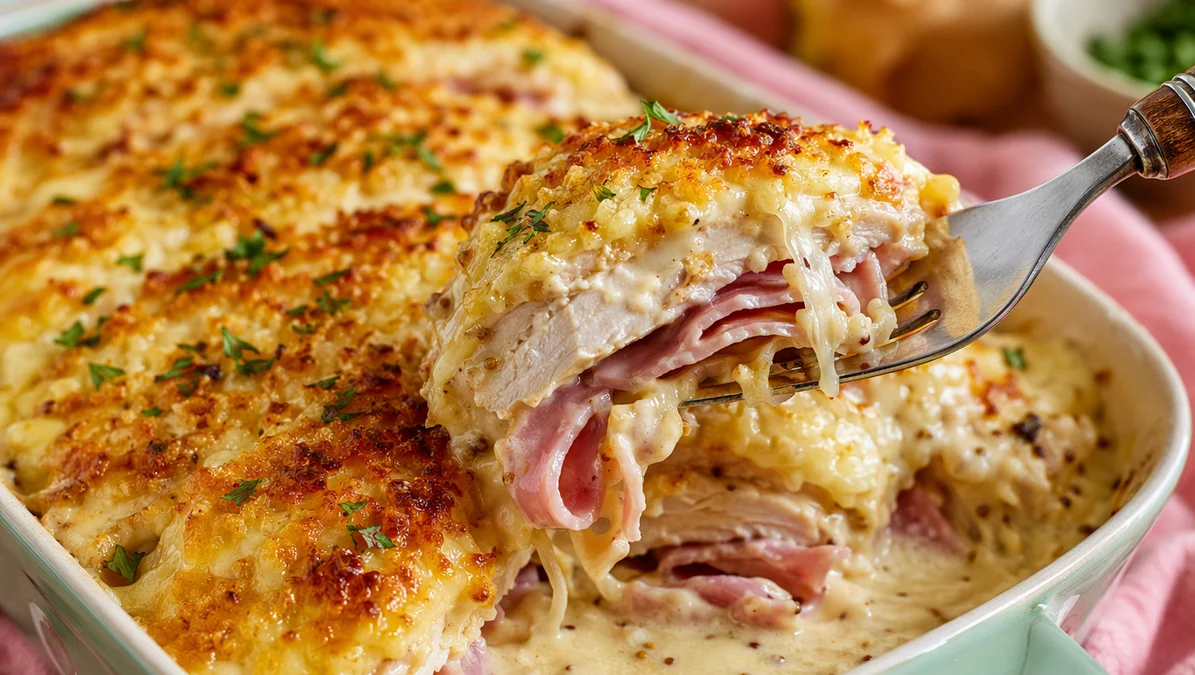
This macro-friendly twist on a classic delivers 35g of protein per serving using simple ingredients like chicken breast, lean ham, and reduced-fat Swiss cheese.
Ingredients
Instructions
Preheat your oven to 375°F (190°C). While the oven is heating, prepare a 9×9-inch baking dish (or similar 2-quart dish) by lightly spraying it with non-stick cooking spray. This step ensures easy cleanup and prevents the casserole from sticking. The spray creates a thin barrier that allows the cheese to bubble without adhering to the dish. If you prefer, you can also use a thin layer of olive oil or butter, but cooking spray is the most convenient and adds negligible calories.
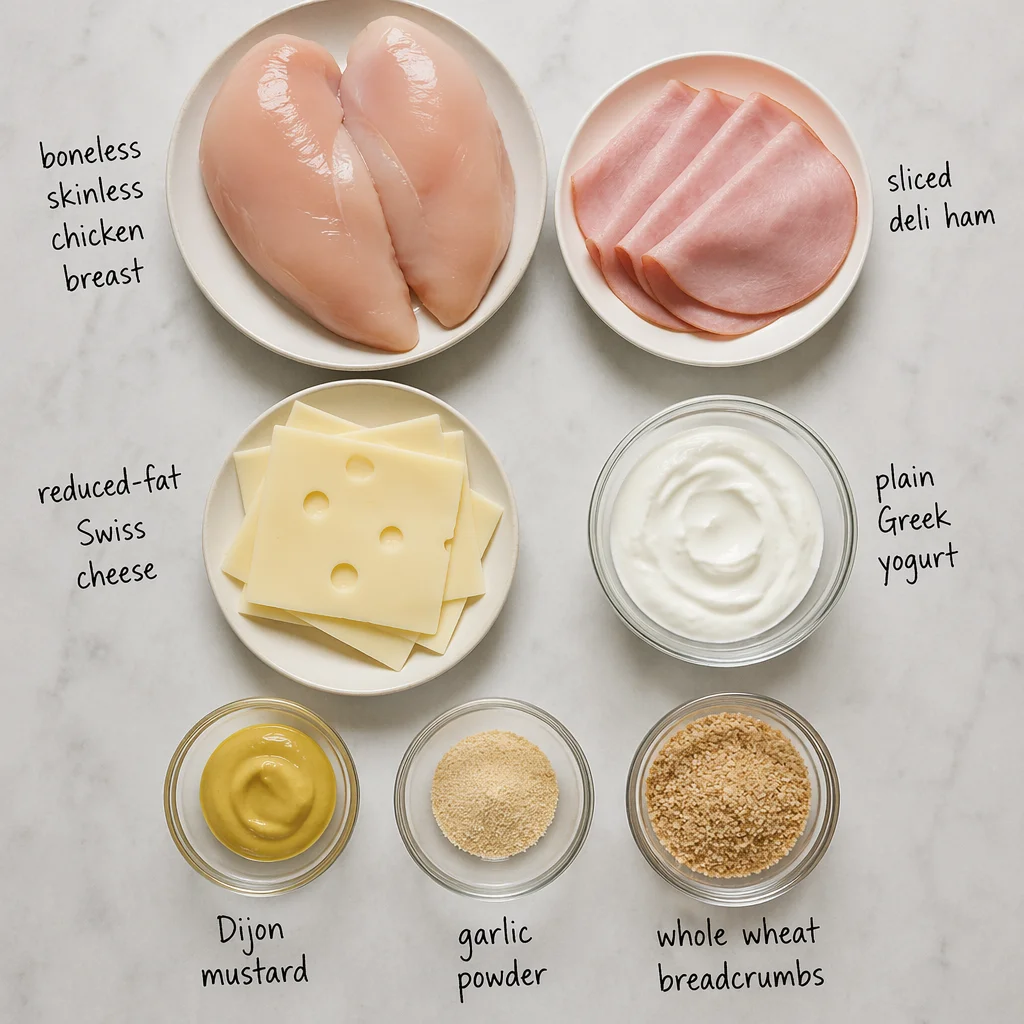
In a large mixing bowl, combine the cubed chicken breast, chopped ham, and shredded Swiss cheese. Toss gently with a spatula or your hands to distribute the ingredients evenly. The key here is to ensure each piece of chicken is surrounded by ham and cheese so that every bite has that classic cordon bleu flavor. The ham adds a salty, smoky note while the Swiss cheese brings a nutty, creamy element that will melt beautifully during baking.

In a separate small bowl, whisk together the Greek yogurt, Dijon mustard, garlic powder, onion powder, salt, and black pepper. This mixture forms the creamy sauce that binds the casserole. The Greek yogurt is a high-protein substitute for heavy cream or butter, providing tanginess and richness without the extra fat. Dijon mustard is essential for that signature cordon bleu tang; it cuts through the richness and brightens the dish. Make sure the yogurt is at room temperature for easier mixing; if it’s too cold, it may clump. Whisk until the sauce is smooth and uniform, about 30 seconds.
Pour the yogurt-mustard sauce over the chicken mixture and stir until every piece is well coated. Use a rubber spatula to scrape the sides and bottom of the bowl, ensuring no dry spots remain. The sauce should cling to the chicken and ham, creating a cohesive mixture. If the sauce seems too thick, you can add a tablespoon of water or chicken broth to thin it slightly, but typically the yogurt provides enough moisture. Overmixing can break down the chicken, so fold gently just until combined.
Transfer the mixture to the prepared baking dish and spread it into an even layer using the spatula. Smooth the top so that it bakes uniformly. In a small bowl, mix the whole wheat breadcrumbs with the optional Parmesan cheese. Sprinkle this topping evenly over the casserole. The breadcrumbs create a golden, crispy crust that contrasts with the creamy interior. Whole wheat breadcrumbs add fiber and a nutty flavor; you can also use panko for extra crunch. Parmesan adds a salty, umami kick that complements the Swiss cheese.
Bake the casserole on the center rack of the preheated oven for 18-22 minutes, or until the chicken is cooked through (internal temperature reaches 165°F/74°C) and the topping is golden brown and bubbly. The baking time may vary depending on the size of your chicken cubes and the depth of your dish. Check at 18 minutes: the edges should be bubbling, and the breadcrumbs should be lightly browned. If the top is browning too quickly, tent loosely with foil for the last 5 minutes. Let the casserole rest for 5 minutes before serving. This resting period allows the sauce to set slightly, making it easier to portion and preventing a watery consistency.
Serve the casserole hot, garnished with fresh parsley or chives if desired. Scoop onto plates using a large spoon, making sure to get the crispy topping in every serving. This dish pairs beautifully with a side salad dressed with lemon vinaigrette or steamed green beans. Leftovers can be stored in an airtight container in the refrigerator for up to 4 days. Reheat in the microwave or oven until warmed through. The casserole also freezes well for up to 3 months; thaw overnight in the fridge before reheating.
For best results
- For the best texture, use chicken breast that is uniformly cut into 1-inch cubes. If the pieces vary in size, smaller ones may overcook and become dry while larger ones remain undercooked. To ensure even cooking, try to cut all cubes to roughly the same size. You can also use pre-cooked rotisserie chicken to save time; just reduce the baking time to 15 minutes since the chicken is already cooked. However, raw chicken breast yields a juicier result because it releases moisture during baking, which combines with the sauce.
- Choosing the right ham is crucial for flavor and macros. Look for lean deli ham with less than 2g of fat per serving. Avoid honey-glazed or maple-flavored hams, as they add unnecessary sugar. Black Forest ham or low-sodium smoked ham are excellent choices. For a more authentic cordon bleu experience, use prosciutto or speck, but note that these are higher in fat and sodium. If you prefer a vegetarian version, substitute with smoked tofu or tempeh, though the protein content will differ.
- Greek yogurt is the secret to a creamy, high-protein sauce without heavy cream. Use nonfat plain Greek yogurt for the lowest fat content; full-fat yogurt will work but increases calories and fat. If you don't have Greek yogurt, you can substitute with cottage cheese blended until smooth, or a mixture of sour cream and a little milk. However, the tanginess of yogurt is key to balancing the richness of the cheese and ham. For a dairy-free option, use a thick cashew cream or unsweetened coconut yogurt, but the flavor will change slightly.
- Dijon mustard is non-negotiable for that classic cordon bleu tang. If you only have yellow mustard, you can use it but the flavor will be milder and less complex. Add a teaspoon of white wine vinegar or lemon juice to mimic the acidity of Dijon. Whole-grain mustard also works well and adds texture. For a spicy kick, mix in a pinch of cayenne pepper or a dash of hot sauce. The mustard not only flavors the sauce but also helps emulsify the yogurt, preventing it from separating during baking.
- To achieve a perfectly crispy topping, toast the breadcrumbs in a dry skillet over medium heat for 2-3 minutes before sprinkling them on the casserole. This pre-toasting ensures they stay crunchy even after baking, as the moisture from the casserole can soften untoasted crumbs. You can also mix the breadcrumbs with a teaspoon of olive oil or melted butter for extra browning. If using panko, they will be crunchier than regular breadcrumbs. For a gluten-free option, use crushed pork rinds or almond flour mixed with a little Parmesan.
Variations
- For a lower-carb version, omit the breadcrumb topping and instead sprinkle with extra cheese or crushed pork rinds. You can also replace the breadcrumbs with almond flour mixed with a bit of Parmesan for a keto-friendly crust. The casserole itself is already relatively low in carbs due to the minimal use of breadcrumbs, but this variation reduces net carbs to under 5g per serving. Serve with cauliflower rice or roasted vegetables to keep the meal low-carb.
- To make this dish gluten-free, use certified gluten-free breadcrumbs or crushed gluten-free crackers. Ensure that the ham and Dijon mustard are also gluten-free (most are, but check labels). The rest of the ingredients are naturally gluten-free. This adaptation is perfect for those with celiac disease or gluten sensitivity. You can also use a mixture of almond flour and grated Parmesan for a grain-free topping that adds a nutty flavor and crispy texture.
- For a spicier twist, add 1/2 teaspoon of smoked paprika and a pinch of cayenne pepper to the yogurt sauce. You can also use pepper jack cheese instead of Swiss for a creamy, spicy kick. The ham can be replaced with spicy chorizo or andouille sausage for a Cajun-inspired version. This variation pairs well with a side of black beans or corn salad. Adjust the salt accordingly, as chorizo can be quite salty.
- If you prefer a white meat alternative, use turkey breast instead of chicken. Turkey has a slightly milder flavor but works wonderfully with the ham and Swiss. You can also use pork tenderloin, cut into cubes, for a different protein profile. For a vegetarian version, substitute the chicken with extra-firm tofu or seitan, and replace the ham with smoked tempeh or vegan ham. Use vegan cheese and yogurt to keep it plant-based. The cooking time may need adjustment: tofu and seitan require less time, so check for doneness at 15 minutes.
Nutrition
- Calories385 kcal
- Total Fat12g
- Saturated Fat5g
- Cholesterol110mg
- Sodium720mg
- Total Carbohydrates9g
- Dietary Fiber1g
- Sugars3g
- Protein35g