
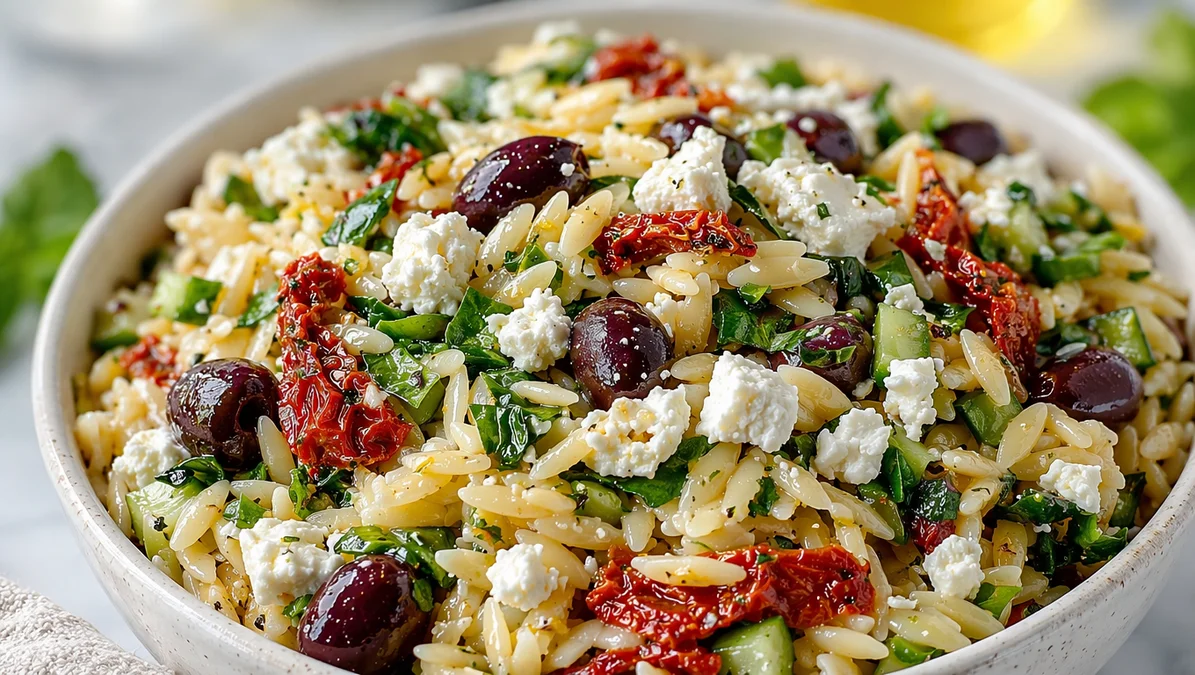
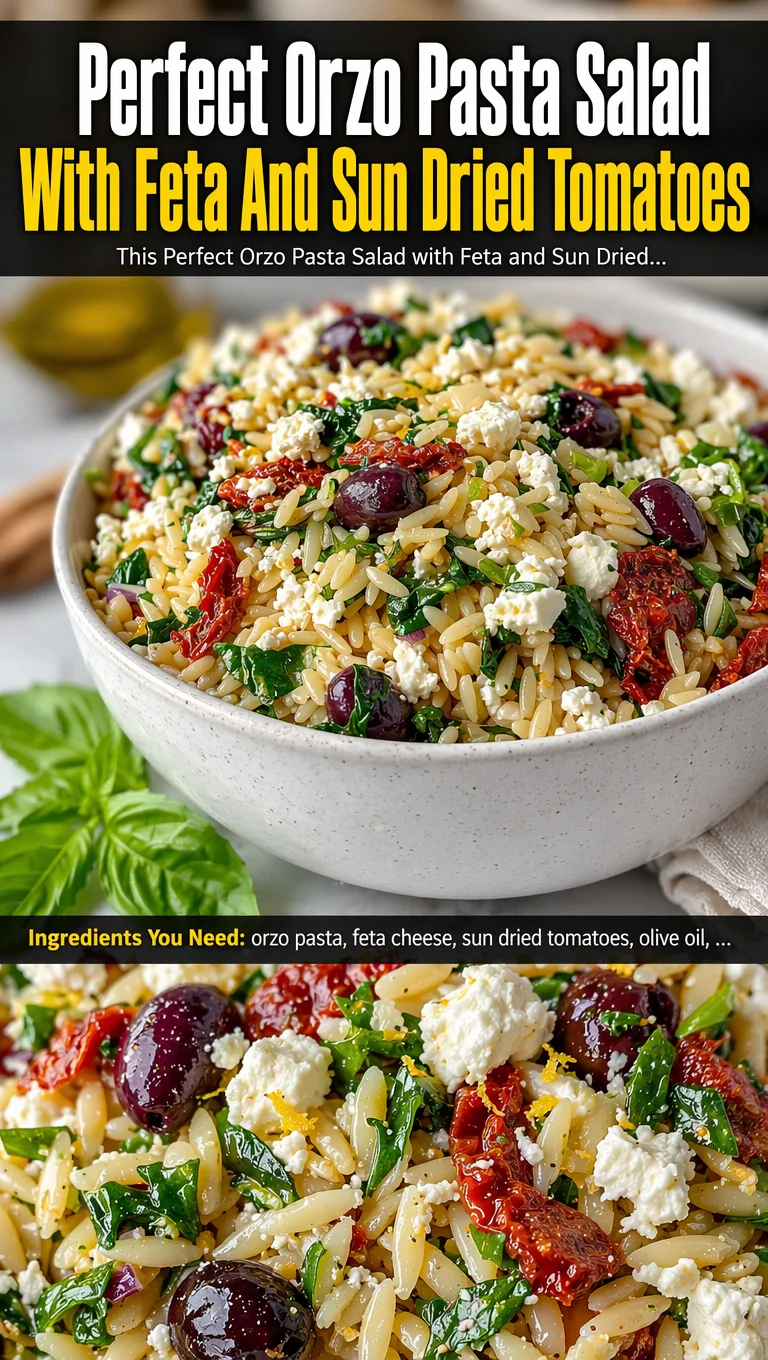
This Perfect Orzo Pasta Salad with Feta and Sun Dried Tomatoes is a fresh, flavorful dish perfect for picnics, potlucks, or easy lunches. A quick high-protein dinner idea packed with…
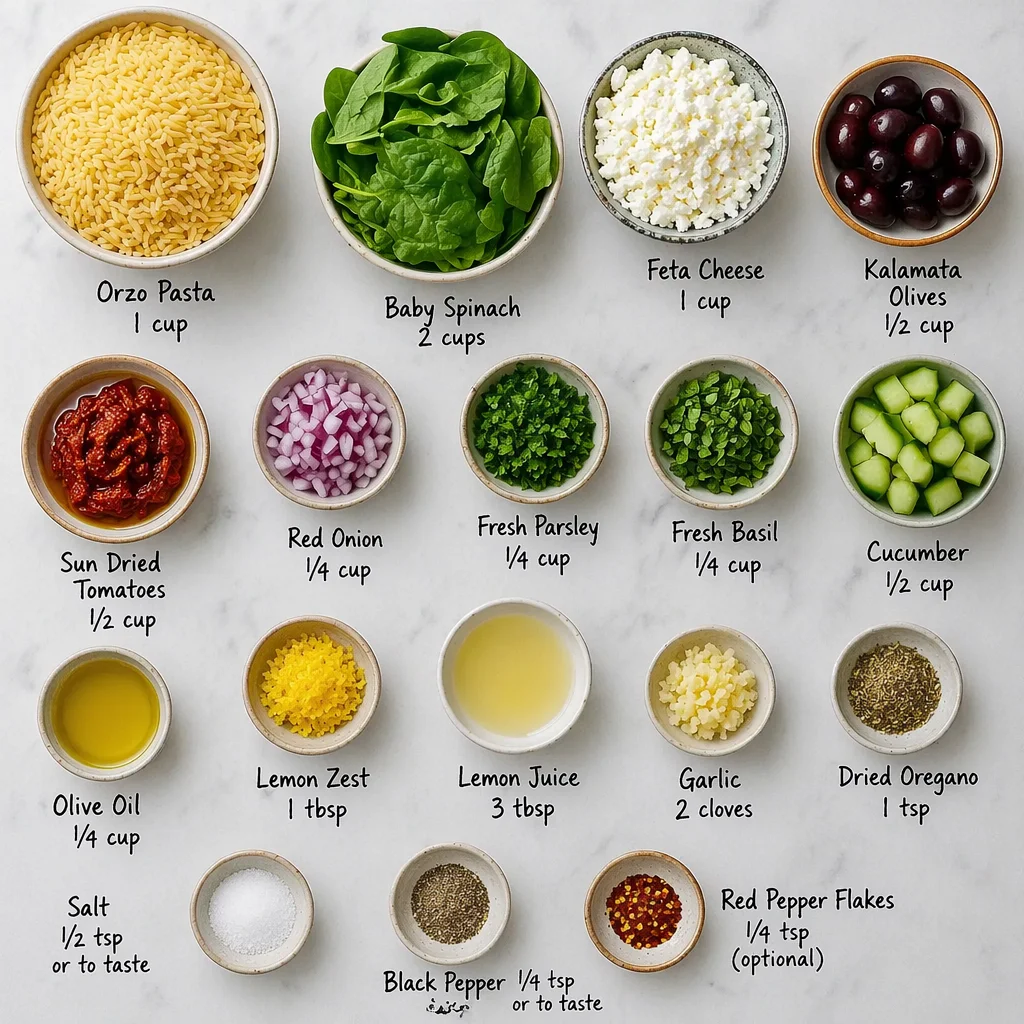
Ingredients
Instructions
Bring a large pot of well-salted water (about 4 quarts water with 1 tablespoon salt) to a rolling boil. The salt is crucial here because it seasons the pasta from the inside out, ensuring every bite of orzo is flavorful rather than bland. Add the orzo and cook according to package directions until al dente, typically about 8-9 minutes. Al dente means the pasta should be tender but still have a slight bite in the center—overcooking will result in mushy orzo that won’t hold up well in the salad. Stir occasionally to prevent sticking. While the pasta cooks, prepare an ice bath (a large bowl filled with ice and water) to shock the orzo immediately after draining. This stop-cooking technique preserves the perfect texture and brightens the color of the pasta.
Drain the orzo in a fine-mesh strainer and immediately plunge it into the prepared ice bath. Swirl gently with a spoon for about 30 seconds to cool it down rapidly. This step not only stops the cooking process but also rinses away excess starch, preventing the pasta from becoming gummy. Once the orzo is completely cool to the touch, drain it thoroughly in the strainer, shaking off as much water as possible. You can even pat it dry with a clean kitchen towel to remove any residual moisture—this helps the dressing cling better to the pasta later. Transfer the cooled orzo to a large mixing bowl.
In a small bowl or a jar with a tight-fitting lid, combine the extra-virgin olive oil, fresh lemon juice, minced garlic, a pinch of salt, and a few grinds of black pepper. Whisk vigorously or shake the jar until the dressing is emulsified and slightly thickened. The emulsion happens because the lemon juice acts as a binder between the oil and water-based ingredients, creating a creamy, cohesive dressing that coats every piece of orzo evenly. Taste the dressing and adjust seasoning—it should be bright and tangy, with a subtle garlic kick. Set aside.
Pour the dressing over the cooled orzo and toss gently with a rubber spatula or large spoon until every grain is coated. Add the chopped sun-dried tomatoes and crumbled feta cheese, then fold them in carefully to avoid crushing the feta too much. The sun-dried tomatoes bring a concentrated umami sweetness that balances the salty, creamy feta. At this point, you can also fold in the fresh basil and parsley, reserving a small handful for garnish. The herbs add a burst of freshness and color that makes the salad look as good as it tastes. If using, add the toasted pine nuts or walnuts now for a pleasant crunch.
Transfer the salad to a serving platter or bowl. Garnish with the reserved fresh herbs and an extra sprinkle of feta cheese if desired. For best flavor, let the salad rest at room temperature for about 15 minutes before serving—this allows the flavors to meld together beautifully. Or, cover and refrigerate for at least 30 minutes to serve cold. The orzo will absorb some of the dressing as it sits, making the salad even more flavorful. Enjoy as a main dish or alongside grilled chicken, fish, or a simple green salad.
For best results
- For the best texture, cook the orzo just until al dente and then shock it in an ice bath. This not only halts the cooking but also removes surface starch, preventing the pasta from clumping together. If you skip the ice bath, rinse the orzo under cold running water for at least 30 seconds, tossing it in a colander to ensure even cooling. The key is to cool it quickly so it doesn't continue to steam and become mushy.
- When selecting sun-dried tomatoes, opt for the ones packed in oil rather than the dry-packed variety. The oil-packed tomatoes are more plump and flavorful, and they rehydrate the pasta salad with a subtle richness. If you only have dry-packed tomatoes, rehydrate them in hot water for 10 minutes, then drain and chop. You may need to add an extra tablespoon of olive oil to the dressing to compensate for the lack of oil in the tomatoes.
- Feta cheese can be a star or a disaster depending on how you handle it. Use a block of feta stored in brine rather than pre-crumbled feta, which often contains anti-caking agents that make it dry and less creamy. Crumble the feta yourself by pressing it gently with a fork—it will yield larger, more flavorful chunks that hold their shape in the salad. For a milder flavor, use a Greek-style feta made from sheep's milk; for a tangier punch, choose a Bulgarian or French feta.
- This salad is incredibly versatile and can be made ahead of time. In fact, it tastes even better the next day as the flavors meld. To store, transfer the salad to an airtight container and refrigerate for up to 5 days. Before serving, let it sit at room temperature for 10–15 minutes to take the chill off, then taste and adjust seasoning—you may need to add a splash of lemon juice or a drizzle of olive oil to refresh the flavors, as the pasta will absorb some dressing overnight.
- To boost the protein content without changing the flavor profile significantly, add 1 cup of cooked chickpeas or 8 ounces of grilled chicken breast, diced. Both options complement the Mediterranean flavors beautifully. If adding chicken, season it simply with salt, pepper, and a pinch of oregano before grilling or pan-searing. The chickpeas can be tossed in directly from the can (rinsed and drained) for a no-cook protein boost that adds fiber as well.
Variations
- Make it vegan: Omit the feta cheese and replace with a vegan feta alternative made from tofu or almonds, or simply add 1/2 cup of Kalamata olives and 1/4 cup of nutritional yeast for a cheesy, savory flavor. Use a high-quality extra-virgin olive oil and increase the lemon juice slightly to keep the dressing bright. The sun-dried tomatoes and herbs will still provide plenty of umami and freshness.
- Turn it into a main-course protein bowl: Add 1 can (15 oz) of drained and rinsed chickpeas or 8 ounces of grilled shrimp or chicken. For a vegetarian high-protein version, mix in 1/2 cup of cooked edamame or 3/4 cup of crumbled firm tofu marinated in lemon and herbs. This transforms the side dish into a satisfying, macro-friendly meal with around 25 grams of protein per serving.
- Switch up the herbs and cheese: Instead of basil and parsley, try fresh mint and dill for a more refreshing, summery twist. Swap feta for crumbled goat cheese or grated Parmesan for a different tangy profile. Goat cheese will add a creamy, tangy richness, while Parmesan brings a nutty, salty bite. Adjust the dressing accordingly: goat cheese pairs well with a honey-lemon dressing, while Parmesan calls for a balsamic vinaigrette.
- Add vegetables for crunch and color: Toss in 1/2 cup of diced cucumber, 1/2 cup of halved cherry tomatoes, and 1/4 cup of thinly sliced red onion. These add freshness, texture, and additional nutrients. If you want to keep the salad from becoming watery, seed the cucumber and pat it dry with paper towels before adding. For a heartier version, roast the cherry tomatoes and onion with a little olive oil and oregano before folding them in.
Nutrition
- Calories215 kcal
- Total Fat12g
- Saturated Fat7g
- Cholesterol45mg
- Sodium180mg
- Total Carbohydrates26g
- Dietary Fiber1g
- Sugars17g
- Protein3g