
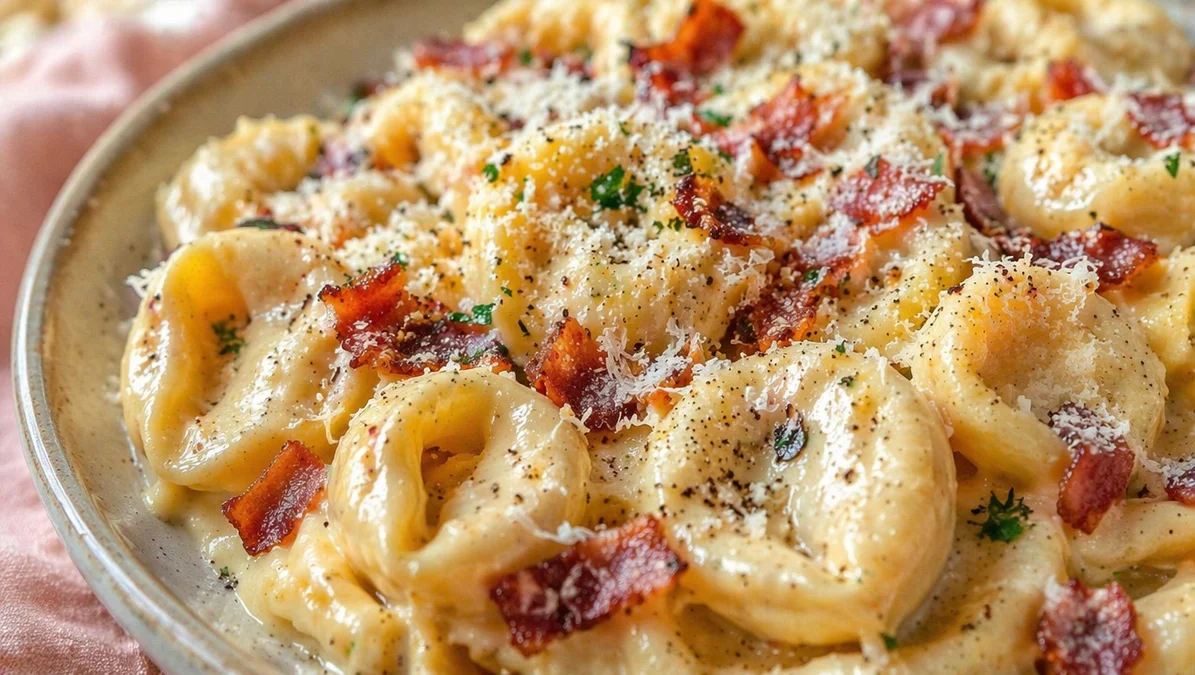
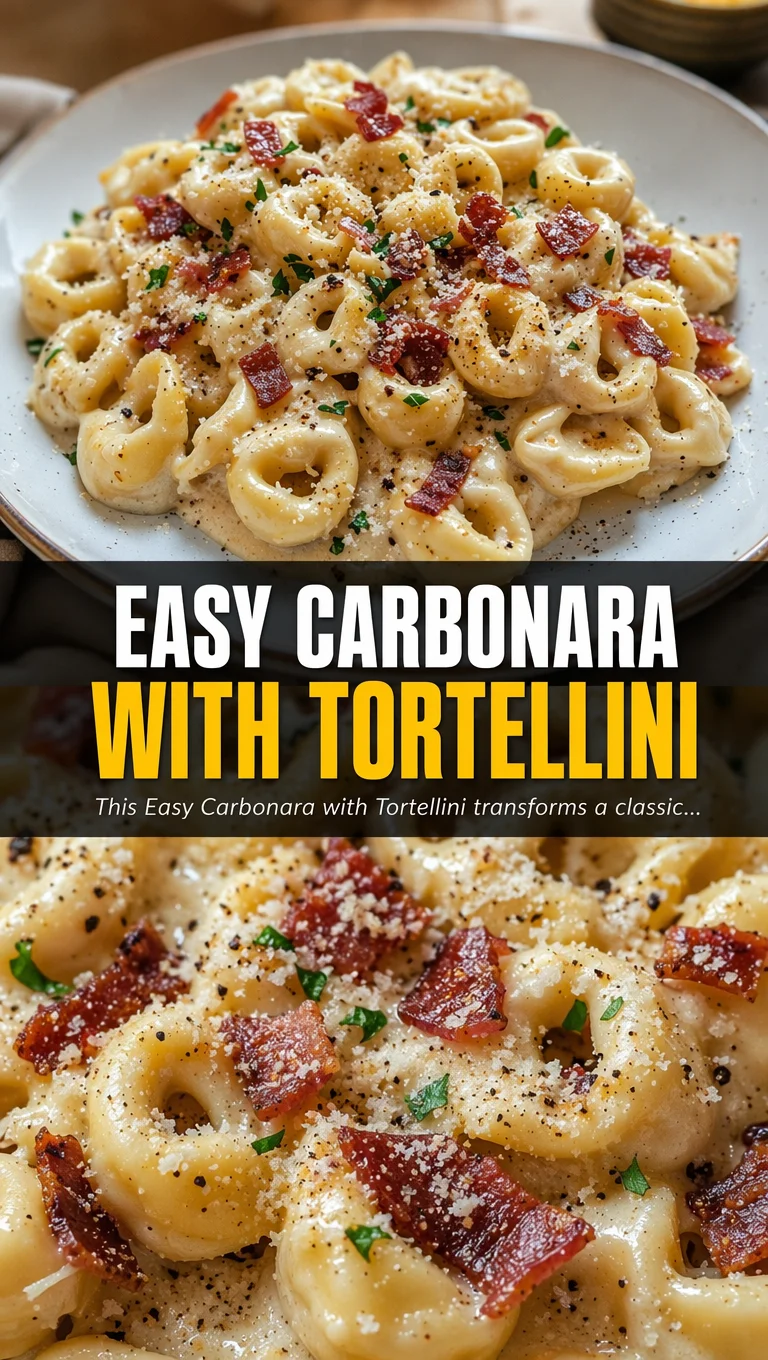
This Easy Carbonara with Tortellini transforms a classic Italian dish into a quick, high-protein meal ready in just 30 minutes. Cheese-stuffed tortellini pairs perfectly with a creamy sauce made from…
Ingredients
Instructions
Bring a large pot of generously salted water to a rolling boil. Use about 1 tablespoon of salt per 4 quarts of water—this is your only chance to season the pasta from within. While the water heats, dice your pancetta into small, even cubes (about 1/4 inch). The goal is uniform size so they crisp evenly. If using a leaner pancetta, add a drizzle of olive oil to the pan to prevent sticking. Set a large skillet over medium heat and add the pancetta. Cook slowly, stirring occasionally, for 8-10 minutes until the fat renders and the meat turns golden brown and crispy. Do not rush this step; low and slow renders more fat and creates a deeper flavor. When done, use a slotted spoon to transfer the pancetta to a paper towel-lined plate, leaving the rendered fat in the skillet. Turn off the heat but keep the skillet handy.
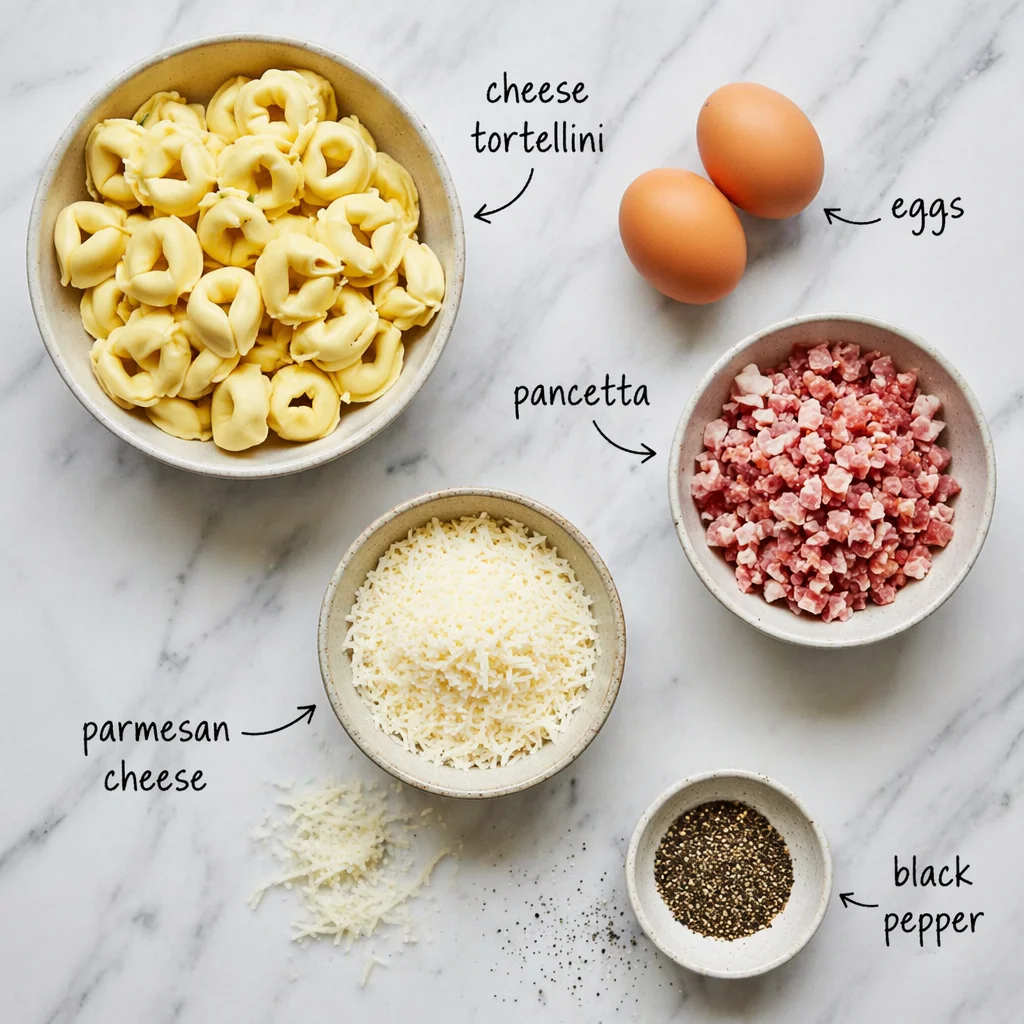
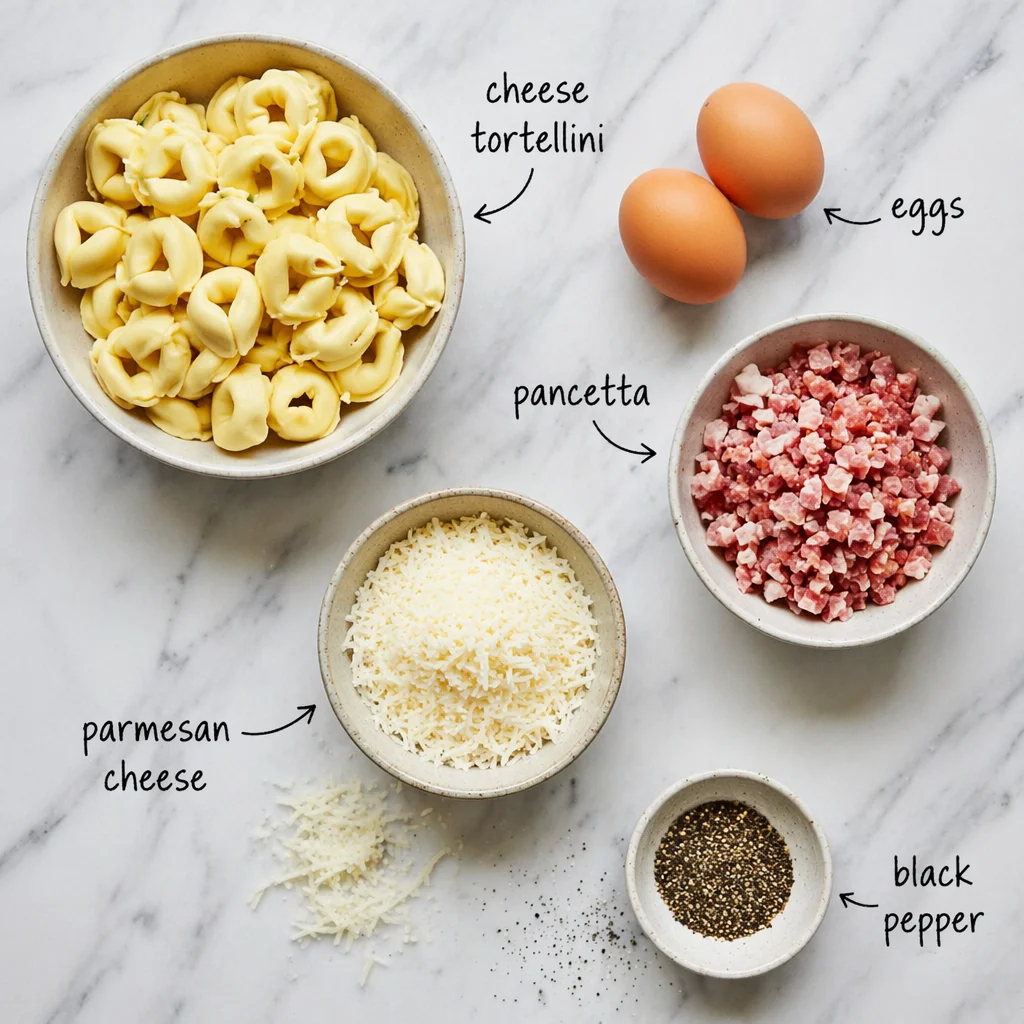
While the pancetta cooks, prepare the carbonara sauce. In a medium bowl, whisk together 4 whole eggs and 2 extra egg yolks until completely homogeneous and slightly frothy. The extra yolks add richness and help the sauce cling to the tortellini. Add the freshly grated Parmigiano-Reggiano—never use pre-shredded, as it contains anti-caking agents that prevent smooth melting—and the cracked black pepper. Whisk vigorously until the mixture is thick and creamy. The cheese should be fully incorporated with no clumps. Set the bowl aside near the stove; it will be tempered later with hot pasta water.
Once the water is boiling, add the tortellini. Fresh tortellini will cook in 2-4 minutes; frozen may take 4-6 minutes. Cook according to package directions until al dente—firm to the bite but fully cooked. About 30 seconds before the pasta is done, use a ladle to scoop out 1 cup of the starchy pasta water and set it aside. This water is liquid gold: the starch helps emulsify the sauce and prevents curdling. Drain the tortellini (do not rinse!) and immediately transfer them to the skillet with the reserved pancetta fat. Toss quickly to coat each tortellini in the fat, which adds flavor and creates a non-stick surface for the sauce.
Now for the crucial tempering step. With the skillet off the heat, slowly drizzle about 2 tablespoons of the hot pasta water into the egg and cheese mixture while whisking constantly. This gradually raises the temperature of the eggs without scrambling them. Then, pour the tempered egg mixture over the hot tortellini in the skillet. Using tongs or a wooden spoon, toss vigorously and continuously for 1-2 minutes. The residual heat from the pasta and skillet will gently cook the eggs into a luscious, creamy sauce that coats every tortellini. If the sauce seems too thick, add a splash more pasta water; if too thin, continue tossing—it will thicken as it cools slightly. The final texture should be silky, not clumpy or watery.
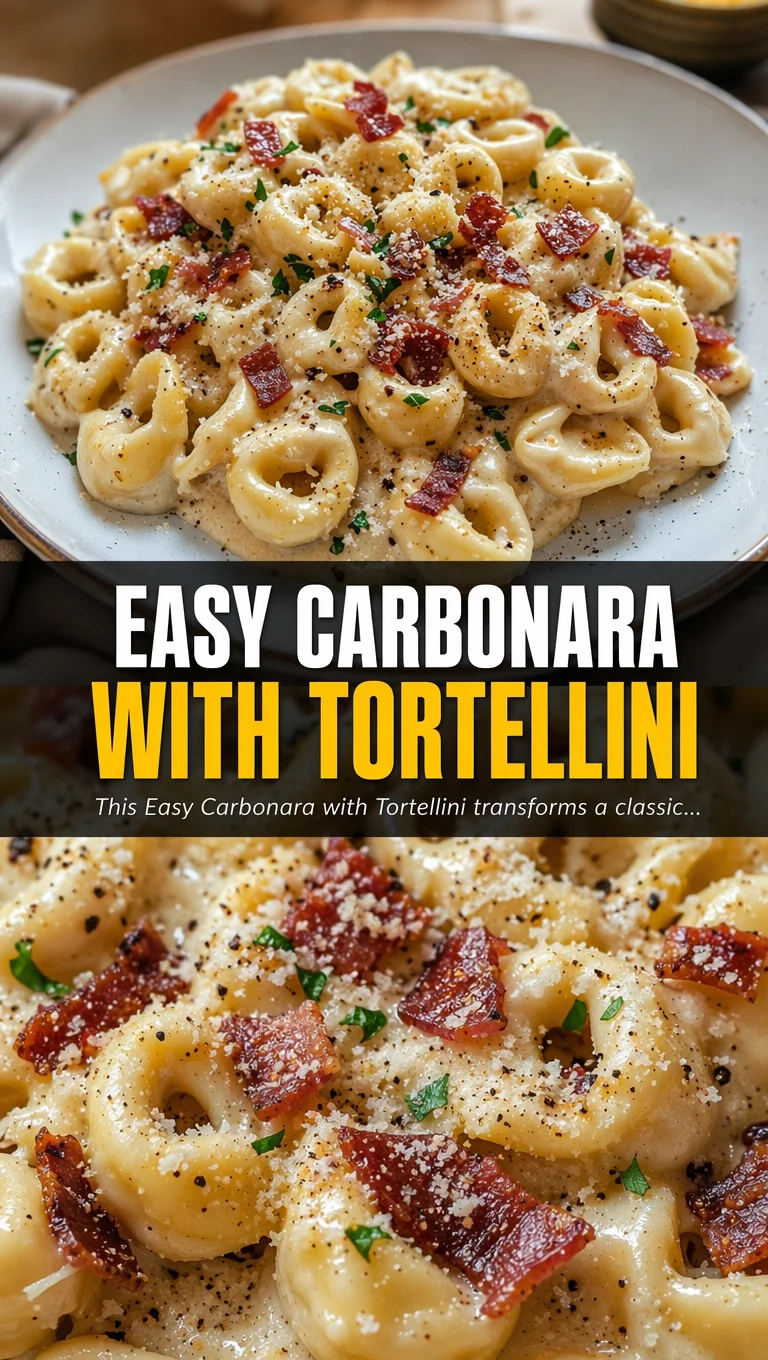
Add the crispy pancetta back to the skillet and toss to distribute evenly. Taste and adjust seasoning with salt if needed—remember the pancetta and cheese are salty. Serve immediately on warm plates to prevent the sauce from setting too much. Garnish each portion with an extra shower of grated Parmigiano-Reggiano and a generous crack of black pepper. For a touch of freshness, you can add a few small parsley leaves, though traditional carbonara does not include herbs. The dish is best enjoyed right away while the sauce is still velvety and the tortellini are tender. Leftovers can be stored in an airtight container in the refrigerator for up to 2 days, but note that the sauce will thicken upon reheating; revive with a splash of water or milk.
For best results
- Use high-quality, fresh cheese tortellini from the refrigerated section of your grocery store. Fresh tortellini has a tender, delicate texture that pairs beautifully with the creamy carbonara sauce. Look for brands that list cheese as the first filling ingredient and avoid those with fillers like breadcrumbs. If using frozen tortellini, do not thaw before cooking—add them directly to the boiling water and add an extra minute to the cooking time. The key is to cook them al dente so they hold their shape and don't become mushy when tossed with the sauce.
- Pancetta is the traditional cured pork belly for carbonara, but you can substitute guanciale (cured pork jowl) for an even richer, more authentic flavor. Guanciale has a higher fat content and a more pronounced pork taste. If neither is available, use thick-cut bacon, but blanch it first in boiling water for 2 minutes to reduce smokiness, then pat dry and crisp as directed. Avoid using turkey bacon or other lean alternatives, as they won't render enough fat to create the proper sauce base.
- The egg mixture is the heart of carbonara, and temperature control is everything. Always use room-temperature eggs for the smoothest emulsion; cold eggs can cause the sauce to seize. When tempering, add the hot pasta water in a thin stream while whisking constantly—this is not the time to multitask. If you accidentally scramble the eggs, start over; there is no saving curdled sauce. To be extra safe, you can use a double boiler: place the bowl with egg mixture over a pot of simmering water and whisk until it thickens to a custard-like consistency before adding to the pasta.
- Freshly grate your Parmigiano-Reggiano from a block. Pre-grated cheese contains cellulose and anti-caking agents that prevent it from melting smoothly, resulting in a grainy sauce. Use the fine side of a box grater or a Microplane for a fluffy, melt-in-your-mouth texture. For a more complex flavor, substitute half the Parmesan with Pecorino Romano, which is saltier and sharper. Just reduce the added salt accordingly.
- Reserve more pasta water than you think you'll need—at least 1 cup. The starch content varies depending on the pasta brand and water volume, so having extra ensures you can adjust the sauce consistency perfectly. If you forget to reserve water before draining, you can use starchy water from boiling potatoes or simply add a pinch of cornstarch to regular water, but the results won't be as good. Always add water a tablespoon at a time while tossing to avoid thinning the sauce too much.
- For a lighter version with more protein, swap half the tortellini for chickpea or lentil-based pasta. These alternatives have a different texture and may require slightly different cooking times, so follow package directions. You can also add a handful of baby spinach or arugula after tossing the sauce; the residual heat will wilt the greens without making them soggy. This adds color and nutrients without overpowering the carbonara flavor.
Variations
- Vegetarian Carbonara: Omit the pancetta and instead sauté 8 ounces of cremini mushrooms, sliced, in 2 tablespoons of olive oil until golden and crispy. The mushrooms provide a savory, umami depth that mimics the meatiness of pancetta. You can also add 1/2 cup of frozen peas for sweetness and color. For extra protein, stir in 1 cup of cooked edamame or crumbled firm tofu that has been pan-fried until golden.
- Spicy Arrabbiata Carbonara: Add 1/2 teaspoon of red pepper flakes to the pancetta while it crisps, or stir in 1 tablespoon of Calabrian chili paste with the egg mixture. The heat cuts through the richness of the sauce beautifully. Finish with a drizzle of chili-infused olive oil and a sprinkle of toasted breadcrumbs for crunch. This variation is perfect for those who enjoy a kick of heat.
- Smoked Salmon Carbonara: Replace pancetta with 4 ounces of smoked salmon, cut into thin strips. Do not cook the salmon; instead, fold it into the finished carbonara just before serving so it warms gently without becoming tough. Add a tablespoon of fresh dill and a squeeze of lemon juice to brighten the flavors. The smoky, salty salmon pairs wonderfully with the creamy egg sauce and cheese tortellini.
- Gluten-Free Carbonara: Use your favorite gluten-free tortellini (many brands now offer cheese-filled options made with rice or corn flour). Be sure to cook them al dente, as gluten-free pasta can become mushy quickly. The sauce is naturally gluten-free, so no changes needed. Check that your pancetta and Parmesan are certified gluten-free to avoid cross-contamination.
- Dairy-Free Carbonara: For those avoiding dairy, replace the Parmesan with 1/2 cup of nutritional yeast for a cheesy flavor, plus 2 tablespoons of vegan butter or olive oil for richness. Use a dairy-free tortellini (check labels) or make your own with a cashew-based filling. The egg sauce remains the same, but you may need to add a bit more pasta water to achieve the desired creaminess since nutritional yeast doesn't melt like cheese.
Nutrition
- Calories485 kcal
- Total Fat28g
- Saturated Fat14g
- Cholesterol245mg
- Sodium920mg
- Total Carbohydrates36g
- Dietary Fiber2g
- Sugars3g
- Protein28g