
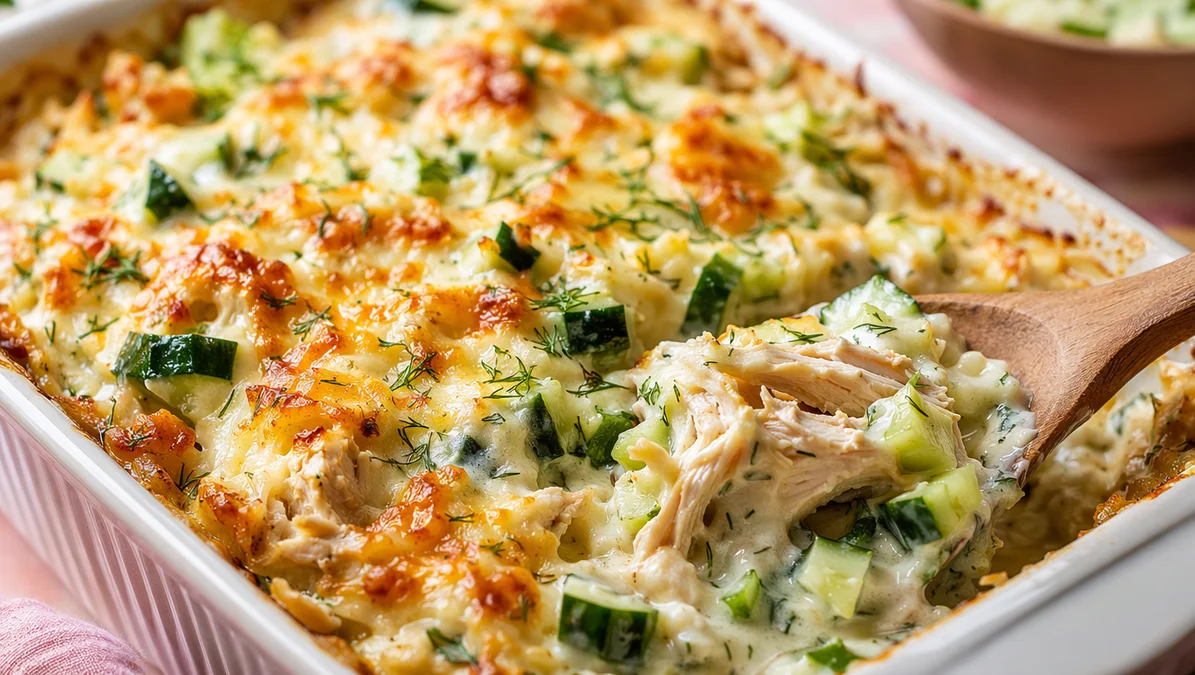
This dump and bake chicken tzatziki casserole is the ultimate quick high-protein dinner with minimal prep. Juicy chicken, creamy Greek yogurt, and fresh cucumber come together for a macro-friendly meal…
Ingredients
Instructions
Preheat your oven to 400°F (200°C). This relatively high temperature is key for two reasons: first, it helps the chicken cook quickly and stay juicy, and second, it encourages the yogurt sauce to thicken and develop a beautiful golden crust on top. While the oven heats, lightly grease a 9×13-inch baking dish or a similar casserole dish with a bit of olive oil or nonstick spray. This prevents sticking and makes cleanup a breeze. Set the dish aside.
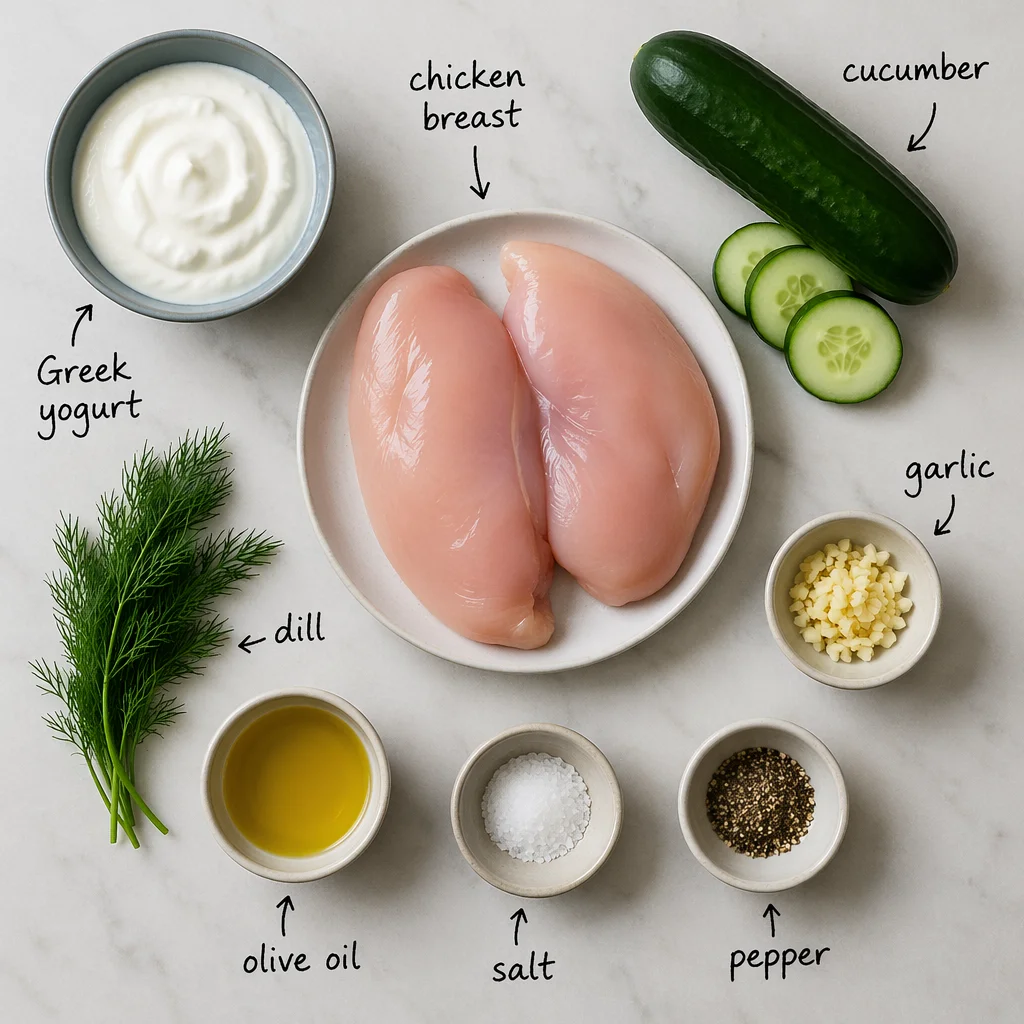
In a large mixing bowl, combine the bite-sized chicken pieces, Greek yogurt, diced cucumber, minced garlic, fresh dill, olive oil, salt, and pepper. Use a spatula or your hands (with gloves) to toss everything together until every piece of chicken is evenly coated in the creamy, herb-flecked yogurt mixture. The yogurt acts as a tenderizing marinade, breaking down proteins in the chicken for extra tenderness. The cucumber adds fresh crunch and moisture that will steam into the casserole as it bakes. Make sure the cucumber is seeded to avoid excess wateriness.

Transfer the chicken mixture into the prepared baking dish, spreading it into an even layer. If you’re using the optional cheeses, sprinkle the crumbled feta and shredded mozzarella evenly over the top. The feta adds a tangy, salty punch that complements the tzatziki flavors, while the mozzarella melts into a gooey, golden-brown crust that adds texture and visual appeal. The cheese is optional, but it elevates the dish from simple to spectacular.
Place the baking dish on the middle rack of your preheated oven and bake for 20-22 minutes, or until the chicken is cooked through and reaches an internal temperature of 165°F (74°C). The yogurt sauce will bubble gently around the edges, and the top will turn a lovely golden brown, especially if you added cheese. If you want an extra-bronzed top, switch the oven to broil for the last 1-2 minutes, watching closely to prevent burning. The casserole is done when the chicken is no longer pink and the juices run clear.
Remove the casserole from the oven and let it rest for 5 minutes. This resting period allows the juices to redistribute throughout the chicken, ensuring every bite is moist and flavorful. During this time, the yogurt sauce will also set slightly, making it easier to serve. Garnish with additional fresh dill or a sprinkle of black pepper if desired. Serve warm, spooned over rice, quinoa, or with warm pita bread and a side of fresh vegetables for a complete meal.
For best results
- For the juiciest chicken, avoid overcooking. Use an instant-read thermometer to check for 165°F (74°C) at the thickest part of a piece. The yogurt marinade helps keep the chicken tender, but leaving it in the oven too long can dry it out. If your oven runs hot, start checking at 18 minutes. Also, cutting the chicken into uniform bite-sized pieces ensures even cooking.
- To prevent a watery casserole, seed the cucumber properly. Cut the cucumber in half lengthwise and use a small spoon to scrape out the seeds and the soft center pulp. This step removes excess moisture that could dilute the yogurt sauce and make the casserole soupy. For extra insurance, you can salt the diced cucumber and let it sit for 10 minutes, then pat dry with paper towels.
- Greek yogurt is the star here, but not all yogurts are created equal. Use full-fat or 2% Greek yogurt for the creamiest, richest sauce. Nonfat yogurt can work, but it may curdle or separate slightly during baking due to its lower fat content. If you must use nonfat, stir in a teaspoon of cornstarch to stabilize it. Also, avoid flavored or sweetened yogurts—they will ruin the savory profile.
- Fresh dill provides a bright, herbaceous flavor that is quintessential in tzatziki. If you only have dried dill, use 2 teaspoons (since dried herbs are more concentrated) and add it early so it has time to rehydrate. Other herbs like fresh mint or parsley can be used for a twist, but dill is classic. For a more intense dill flavor, add an extra tablespoon of fresh dill at the end as a garnish.
- This casserole is incredibly versatile for meal prep. Assemble the dish up to 24 hours in advance, cover tightly with foil, and refrigerate. When ready to bake, add about 5-10 minutes to the cooking time since you're starting from cold. The flavors meld beautifully overnight. You can also portion leftovers into airtight containers and refrigerate for up to 4 days. Reheat in the microwave or oven until warmed through.
- For a low-carb version, serve the casserole over cauliflower rice or a bed of fresh spinach. The creamy tzatziki sauce acts as a dressing, wilting the spinach slightly. You can also add more vegetables like diced bell peppers, zucchini, or cherry tomatoes to the casserole itself for extra nutrients and color. Just be mindful of moisture—sauté watery veggies first or add them in the last 10 minutes of baking.
Variations
- Make it a vegetarian meal by swapping the chicken for 1.5 pounds of firm tofu or halloumi cheese. Press and cube the tofu, then toss with the yogurt mixture and bake as directed. Halloumi holds its shape beautifully and gets delightfully chewy. For a vegan version, use a plant-based yogurt (coconut or soy-based) and omit the cheese. Add chickpeas or white beans for extra protein.
- Transform the flavor profile by using Mediterranean spices. Add 1 teaspoon of dried oregano, 1/2 teaspoon of ground cumin, and a pinch of cinnamon to the yogurt mixture. These warm spices complement the dill and garlic, giving the casserole a more complex, earthy character. Top with toasted pine nuts or slivered almonds for crunch.
- For a spicy kick, stir in 1/2 teaspoon of red pepper flakes or a minced fresh jalapeño (seeds removed for less heat) into the yogurt mixture. The heat cuts through the creamy richness and adds a pleasant tingle. Serve with a dollop of extra yogurt on top to cool things down. This variation is great for those who love a little heat in their comfort food.
- Protein swap: Use boneless skinless chicken thighs instead of breasts for an even juicier, more flavorful casserole. Thighs have a higher fat content, which keeps them moist during baking. You can also use ground chicken or turkey; brown it first in a skillet, then mix with the yogurt sauce and bake for 15 minutes. This reduces the total cooking time and adds a different texture.
- Make it a complete one-dish meal by adding cooked rice or orzo directly to the casserole. Stir in 1 cup of cooked rice or 1/2 cup of dry orzo (increase liquid slightly) before baking. The grains will absorb the flavorful yogurt sauce as they cook, creating a hearty, all-in-one dinner. Adjust baking time if needed—add 5 minutes for orzo to become tender.
Nutrition
- Calories385 kcal
- Total Fat18g
- Saturated Fat6g
- Cholesterol110mg
- Sodium720mg
- Total Carbohydrates8g
- Dietary Fiber1g
- Sugars4g
- Protein45g