
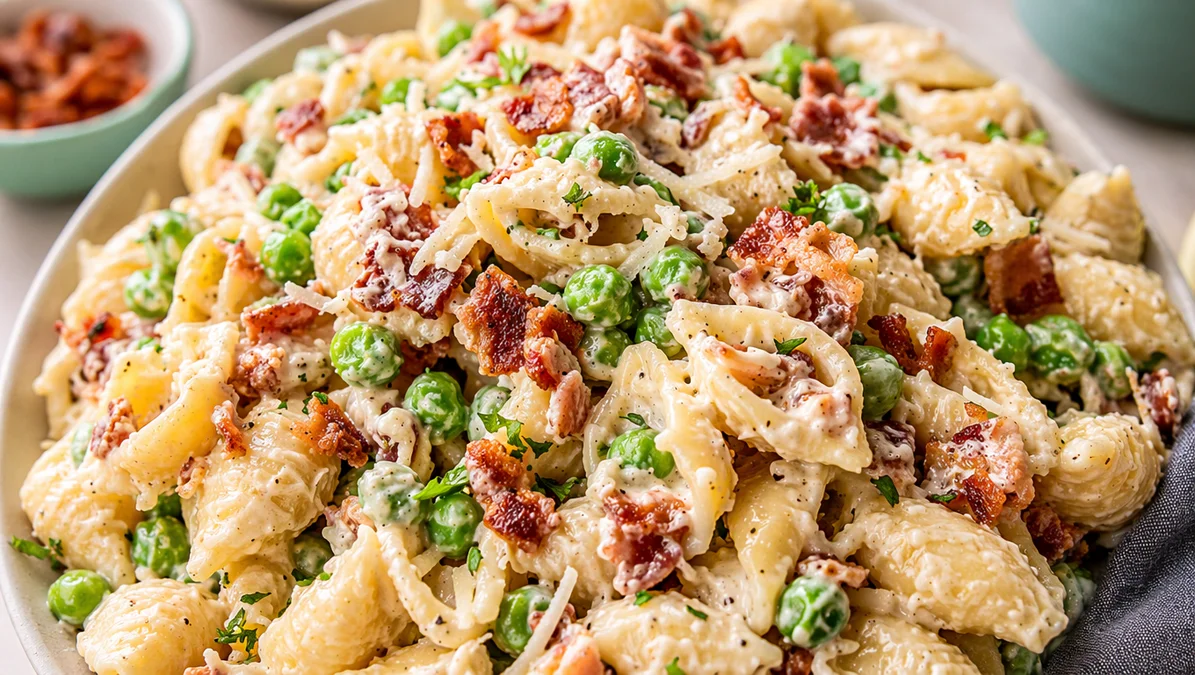
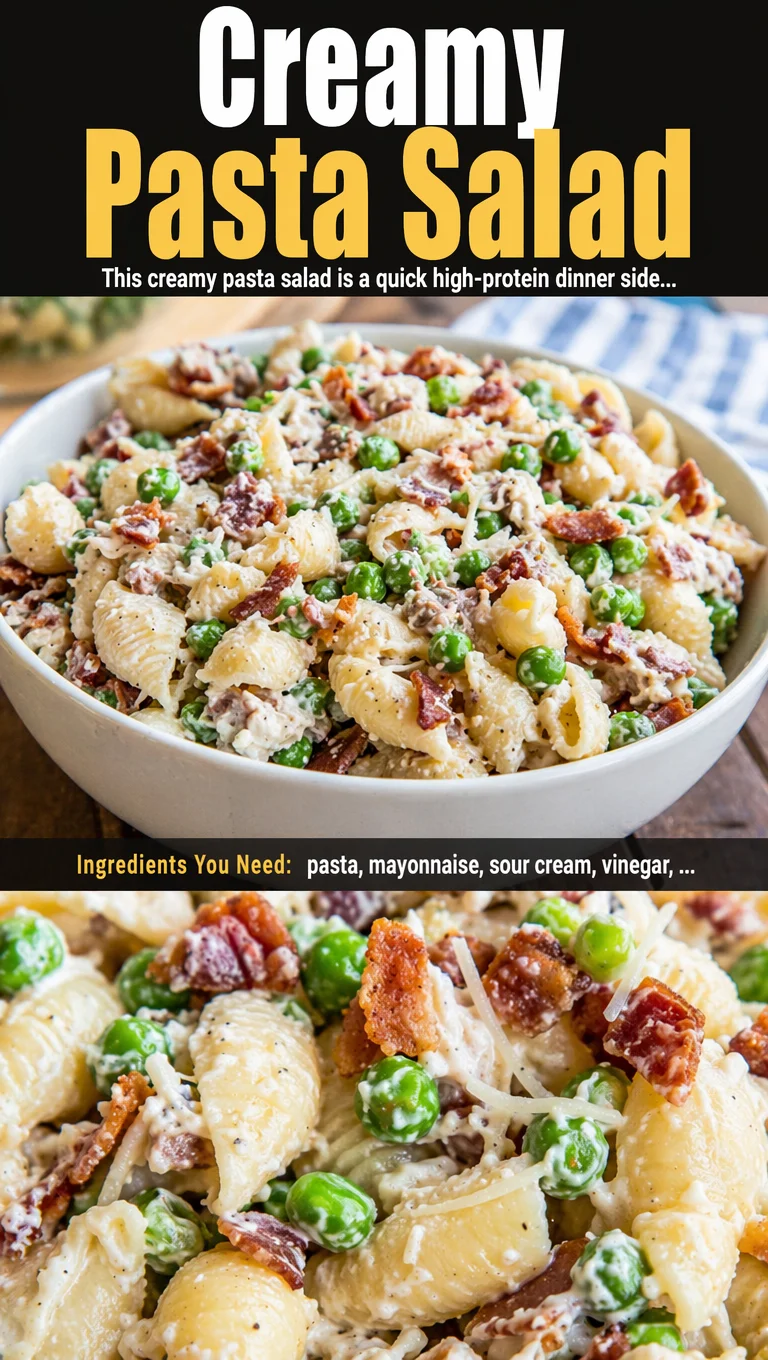
This creamy pasta salad is a quick high-protein dinner side dish perfect for busy professionals. Easy meal prep idea that pairs with grilled chicken for a macro-friendly weeknight dinner.
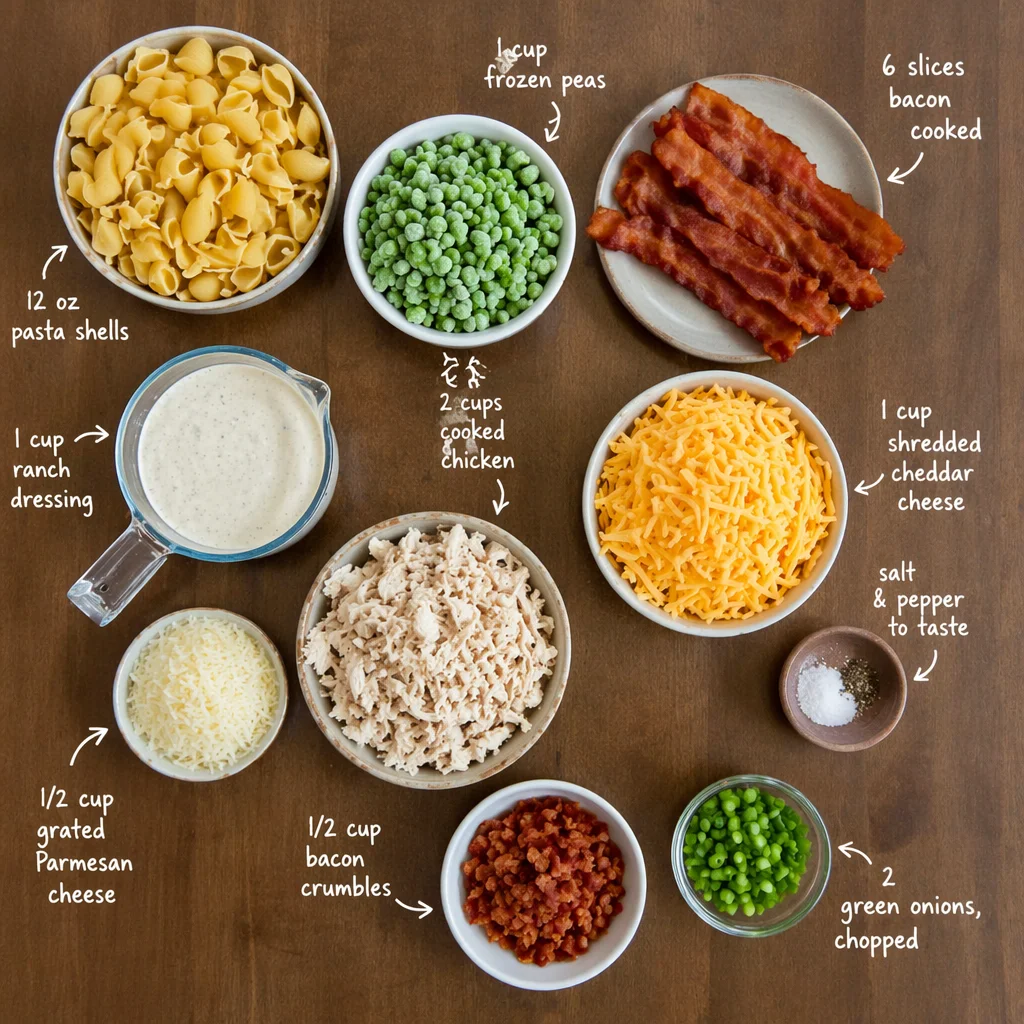
Ingredients
Instructions
Bring a large pot of generously salted water to a rolling boil over high heat. The water should taste like the sea – this is your only chance to season the pasta from within. Add 8 ounces (226g) of elbow macaroni or any short pasta shape like fusilli, rotini, or shells. Stir immediately to prevent sticking. Cook according to package directions until al dente – typically 7-9 minutes. Al dente means the pasta is tender but still has a slight bite at the center; this texture holds up best in salads because it won’t become mushy when mixed with dressing. While the pasta cooks, set a timer and taste a piece about 1 minute before the suggested time to ensure perfect doneness.
Once the pasta is al dente, drain it in a colander and immediately rinse under cold running water for 30-60 seconds. This stops the cooking process instantly and washes away excess starch that would make the dressing gummy. Shake the colander well to remove as much water as possible. For best results, spread the drained pasta on a baking sheet in a single layer and let it cool completely to room temperature, about 10 minutes. If you’re in a hurry, you can pop it in the refrigerator for 5 minutes. Hot pasta will cause the mayonnaise and sour cream to separate and become oily, so cooling is non-negotiable.
While the pasta cools, prepare the creamy dressing. In a large mixing bowl, combine 1/2 cup (120ml) of mayonnaise and 1/2 cup (120ml) of sour cream. Whisk together until smooth and fully incorporated. The combination of mayo and sour cream gives the dressing richness and tang – the mayo provides creaminess and body, while sour cream adds a pleasant acidity that brightens the dish. Add 2 tablespoons (30ml) of apple cider vinegar or white vinegar. Apple cider vinegar lends a fruity, mellow tang, while white vinegar is sharper and more neutral. Both work beautifully. Season with 1/2 teaspoon of salt and 1/4 teaspoon of black pepper. Whisk again until the dressing is homogeneous. Taste and adjust seasoning if needed – the dressing should be slightly saltier than you think because it will be diluted by the pasta.
Add the completely cooled pasta to the bowl with the dressing. Using a rubber spatula or large spoon, fold gently until every piece of pasta is evenly coated. Be careful not to overmix, which can break the pasta and make the salad mushy. The dressing should cling to each noodle, creating a luscious, creamy coating. If the salad looks too dry, you can add a splash of milk or an extra tablespoon of mayonnaise. At this point, fold in any optional add-ins like chopped fresh parsley, chives, diced celery, or bell peppers for crunch and color. For a protein boost, stir in 1 cup of shredded rotisserie chicken or canned chickpeas.
Cover the bowl with plastic wrap or transfer to an airtight container and refrigerate for at least 30 minutes before serving. This chilling time allows the flavors to meld and the pasta to absorb some of the dressing, resulting in a more cohesive and flavorful salad. The salad will keep well in the refrigerator for up to 4 days, making it an excellent make-ahead option for meal prep or picnics. Before serving, give it a good stir and adjust seasoning if needed. If the salad has thickened too much after chilling, stir in a teaspoon of milk or water to loosen it. Serve chilled or at room temperature.
For best results
- For the best texture, always cook your pasta al dente and rinse with cold water immediately. This stops carryover cooking and removes surface starch. If you skip rinsing, the pasta will continue to soften and the dressing may become gluey. Additionally, tossing the cooled pasta with a teaspoon of olive oil before adding dressing can help prevent clumping and add a subtle richness.
- Mayonnaise and sour cream are the classic base, but you can swap sour cream with plain Greek yogurt for a higher protein, lower fat alternative. Greek yogurt has a tangier flavor and thicker consistency; if using, you may need to thin it with a tablespoon of milk. For a dairy-free version, use vegan mayonnaise and a plant-based sour cream or yogurt. The key is to maintain the creamy, tangy profile.
- Seasoning is critical. The dressing should be well-seasoned before mixing with pasta because the bland noodles will absorb salt and pepper. Taste the dressing and add salt gradually; it should taste pleasantly salty and tangy. Remember that chilling dulls flavors, so slightly overseason the dressing at room temperature. A pinch of sugar can balance the acidity if the vinegar is too sharp.
- Let the salad rest in the refrigerator for at least 30 minutes, but preferably 1-2 hours. This resting period allows the flavors to marry and the pasta to absorb the dressing, resulting in a more harmonious dish. However, if the salad sits too long (overnight), the pasta may absorb too much liquid and become dry. To revive, stir in a little milk or extra mayonnaise before serving.
- Add-ins can elevate this simple salad to a complete meal. For crunch, add diced celery, bell peppers, cucumbers, or red onion. For protein, add shredded chicken, canned tuna, hard-boiled eggs, or chickpeas. For extra flavor, mix in crumbled bacon, shredded cheddar cheese, or fresh herbs like dill, basil, or parsley. Just be mindful that watery vegetables (like cucumbers) should be seeded and patted dry to avoid thinning the dressing.
Variations
- High-Protein Chicken Bacon Ranch Pasta Salad: Add 1.5 cups of shredded rotisserie chicken, 4 strips of crumbled bacon, and 1/2 cup of shredded cheddar cheese. Replace the vinegar with 1 tablespoon of ranch seasoning mix and reduce salt accordingly. This turns the side dish into a hearty main course with about 35g of protein per serving.
- Mediterranean Creamy Pasta Salad: Omit the vinegar and instead use 2 tablespoons of lemon juice. Add 1/2 cup of crumbled feta cheese, 1/4 cup of sliced Kalamata olives, 1/4 cup of chopped sun-dried tomatoes, and 2 tablespoons of chopped fresh oregano. The briny olives and tangy feta complement the creamy dressing beautifully. Serve with grilled lamb or chicken.
- Vegan Avocado Cream Pasta Salad: Replace mayonnaise and sour cream with 1 ripe avocado, 1/4 cup of plant-based yogurt, and 2 tablespoons of lime juice. Blend until smooth. Add 1/4 cup of chopped cilantro and 1/2 cup of corn kernels. This version is rich in healthy fats and has a vibrant green color. It's best eaten the same day to avoid browning.
- Spicy Southwest Pasta Salad: Add 1/2 cup of canned black beans (rinsed), 1/2 cup of corn, 1/4 cup of diced red bell pepper, and 2 tablespoons of chopped pickled jalapeños. Replace half the sour cream with plain Greek yogurt and add 1 teaspoon of chili powder and 1/2 teaspoon of cumin. This variation is perfect for picnics and pairs with grilled steak or tacos.
Nutrition
- Calories215 kcal
- Total Fat12g
- Saturated Fat7g
- Cholesterol45mg
- Sodium180mg
- Total Carbohydrates26g
- Dietary Fiber1g
- Sugars17g
- Protein3g