
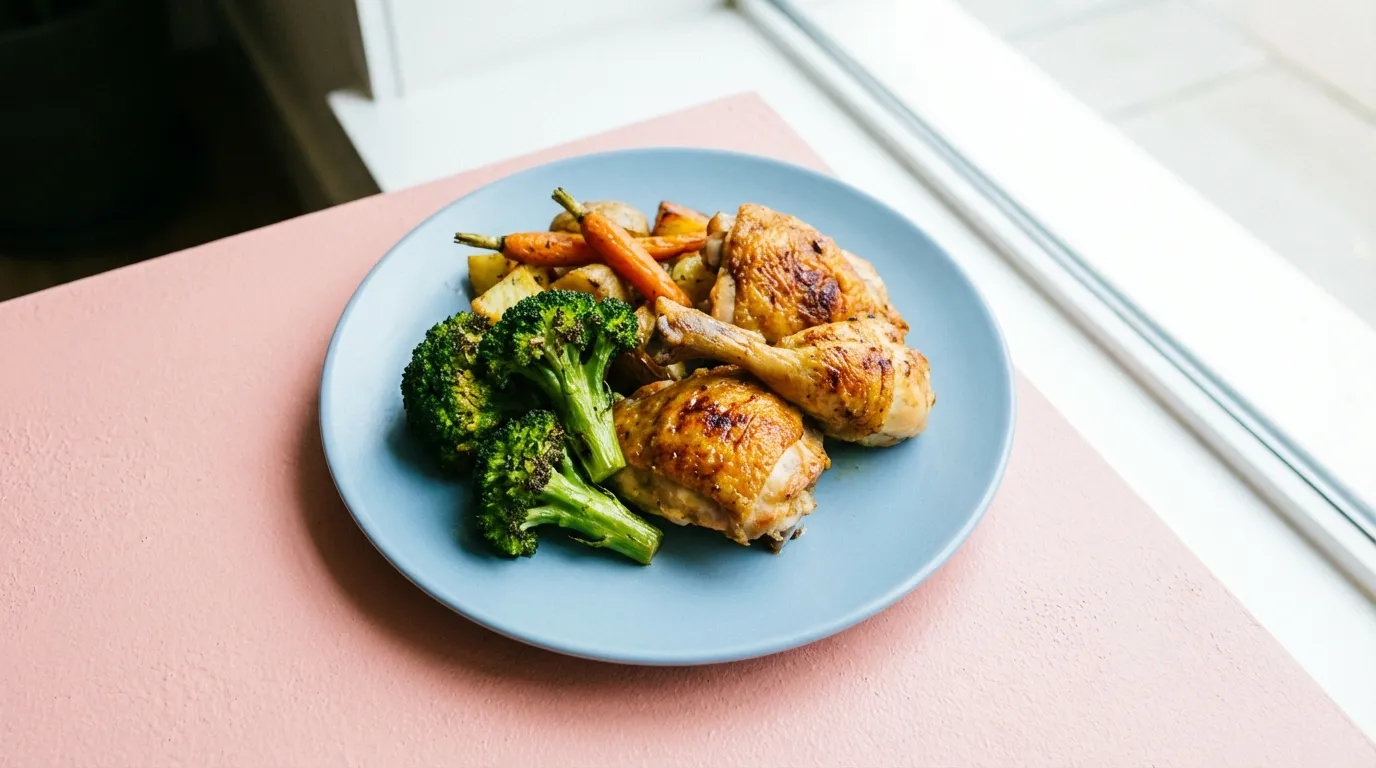
The Mix-and-Match Roasting System Explained
The mix-and-match roasting system is a modular meal preparation method that uses designated pan zones and staggered oven entry times to process proteins, carbohydrates, and vegetables. This mechanism ensures consistent internal temperatures, prevents cross-steaming, and maintains optimal texture, allowing users to hit specific macronutrient targets while eliminating mid-week flavor fatigue.
{{IMG:pillar4_spoke5_&_match_prep_img1.webp}}
Master the Roasting Workflow
Mastering the roasting workflow requires a systematic separation of ingredients based on their water content and structural density. By utilizing a staggered entry matrix, you ensure that dense root vegetables achieve a Maillard reaction—the chemical browning process that creates complex flavors—without drying out delicate proteins or causing fibrous vegetables to become soggy.
Mixing all ingredients in one bowl creates “macro-mush” due to excessive steam. To optimize performance, implement the “Two-Pan Rule”: dedicate one heavy-gauge aluminum sheet pan to proteins and dense carbohydrates, and a second pan to high-water fibrous vegetables. This separation prevents moisture from pooling, which is essential for achieving a crisp, roasted texture.
{{IMG:pillar4_spoke5_&_match_prep_img2.webp}}
For optimal thermal density management, use the Staggered Entry Matrix. When operating a convection oven at 400°F (200°C), load ingredients based on their specific structural breakdown time.
The Staggered Entry Matrix (At 400°F)
| Ingredient Category | Thermal Density | Oven Entry Time | Target Outcome |
|---|---|---|---|
| Complex Carbs | High | Minute 0 | Deep caramelization, fork-tender core. |
| Lean Protein | Medium | Minute 10 | 165°F internal temp, golden crust. |
| Fibrous Veg | Low | Minute 15-20 | Crisp-tender texture, color retention. |
{{IMG:pillar4_spoke5_&_match_prep_img3.webp}}
By treating your oven as a controlled assembly line, you ensure proteins reach a safe 165°F internal temperature while vegetables maintain their structural integrity, yielding a full week of meals in one 30-minute cycle.
The 3-Tier Assembly: Protein, Carbs, and Fibrous Veg
Assembling your meal prep requires a strict three-tier approach: a weighed protein foundation, a scalable complex carbohydrate base, and a high-volume fibrous vegetable fill. This modular structure allows for precise manipulation of daily macronutrient intake to match training intensities while keeping the average cost per serving under $3.
Protein First: The Digital Scale Requirement
Because lean poultry loses 20% to 25% of its raw weight during roasting, you must use a digital food scale to weigh protein after cooking. To reach a 35g–40g protein threshold per meal, aim for 5.5 to 6 ounces of cooked chicken breast. This precision ensures you consistently meet your hypertrophy requirements.
The Carb Base: Macro-Partitioning
Your carbohydrate base should scale dynamically based on training demands.
- Training Days: Increase complex carbohydrate portions (e.g., sweet potatoes) to facilitate glycogen replenishment.
- Rest Days: Decrease carbohydrate portions and increase the volume of low-calorie fibrous vegetables (e.g., zucchini) to maintain satiety.
The Fiber Fill
Fibrous vegetables serve as your primary volume lever. Ingredients like roasted broccoli, asparagus, or green beans add significant physical bulk to your meals without introducing calorie bloat, which is essential for hunger management during a calorie-restricted cutting phase.
Strategic Seasoning for Reheat Longevity
Strategic seasoning involves using a neutral base of high-smoke-point fats and basic spices to prevent lipid oxidation and “warmed-over flavor.” By preparing a neutral foundation, you can alter the daily flavor profile post-reheat using cold-prep sauces, which prevents the monotony that leads to meal prep abandonment.
Neutral Base Components
- Fats: Use avocado oil (smoke point: 520°F) to prevent the formation of inflammatory compounds at 400°F.
- Seasoning: Use kosher salt, coarse black pepper, and garlic powder.
The Sauce Pivot
Apply these sauces only after reheating to maintain freshness:
- Greek Yogurt Ranch: 0% Greek yogurt, dill, garlic powder, and almond milk (adds 5g protein).
- Spicy Soy: Low-sodium soy sauce, sriracha, and rice vinegar (near-zero calories).
- Lemon Tahini: Tahini, lemon juice, warm water, and cumin (provides healthy fats).
Storage Logic: Keeping Macros Fresh for 5 Days
Storage logic is the application of thermodynamic control to maintain food safety and texture during a five-day refrigerator cycle. Implementing a flash-cooling protocol prevents condensation, which is the primary cause of soggy textures and bacterial growth in stored meal prep.
The Flash-Cool Method
Never seal hot food. Allow roasted components to rest on the sheet pan at room temperature for 20 minutes until the surface temperature drops below 90°F. This prevents trapped steam from turning muscle fibers into rubber.
Glass vs. Plastic
Use borosilicate glass containers exclusively. Unlike porous plastic, borosilicate glass does not absorb odors, stain, or leach chemicals when subjected to microwave heat, ensuring your meals retain their intended flavor profile through day five.
Reheating Physics: The Water Droplet Trick
To prevent lean proteins from drying out in the microwave, add 0.5 teaspoons of water to the container and leave the lid slightly askew. This creates a micro-steam environment that rehydrates the meat fibers during the heating process.
Frequently Asked Questions
Can I roast frozen vegetables and fresh meat together?
No. The rapid moisture release from thawing frozen vegetables will flood the sheet pan, effectively boiling your meat instead of roasting it. If using frozen vegetables, roast them on a completely separate pan and drain excess water halfway through the cooking cycle to ensure proper caramelization.
How long does roasted chicken stay safe in the fridge?
Four days is the industry standard for peak texture and safety when stored at or below 40°F (4°C). If you are prepping for five or six days, freeze the final two portions immediately on Sunday and transfer them to the refrigerator to thaw on Wednesday night.
Which oils are best for high-protein roasting?
Avocado oil or clarified butter (Ghee) are the optimal choices. Both possess high smoke points that prevent acrolein formation—the chemical responsible for burnt, bitter flavors. Avoid extra virgin olive oil for 400°F roasting, as the oil will burn and degrade, negatively impacting the flavor of your protein.
{{IMG:pillar4_spoke5_&_match_prep_pinterest.webp}}
Ready to automate your nutrition and stop guessing your macros?
Take your batch-cooking to the next level by integrating this mix-and-match method into your broader routine. Dive into our comprehensive guide on The Bodybuilder’s 1-Hour Sunday Macro Prep System to streamline your entire weekend workflow.
Want our exact ‘Budget Protein’ grocery list and prep-timing cheat sheet sent directly to your inbox? Subscribe below.
Upgrade your kitchen arsenal: Stop eating out of warped plastic. Grab our recommended Borosilicate Glass Prep Containers to ensure your macros stay fresh, safe, and perfectly portioned all week long.