
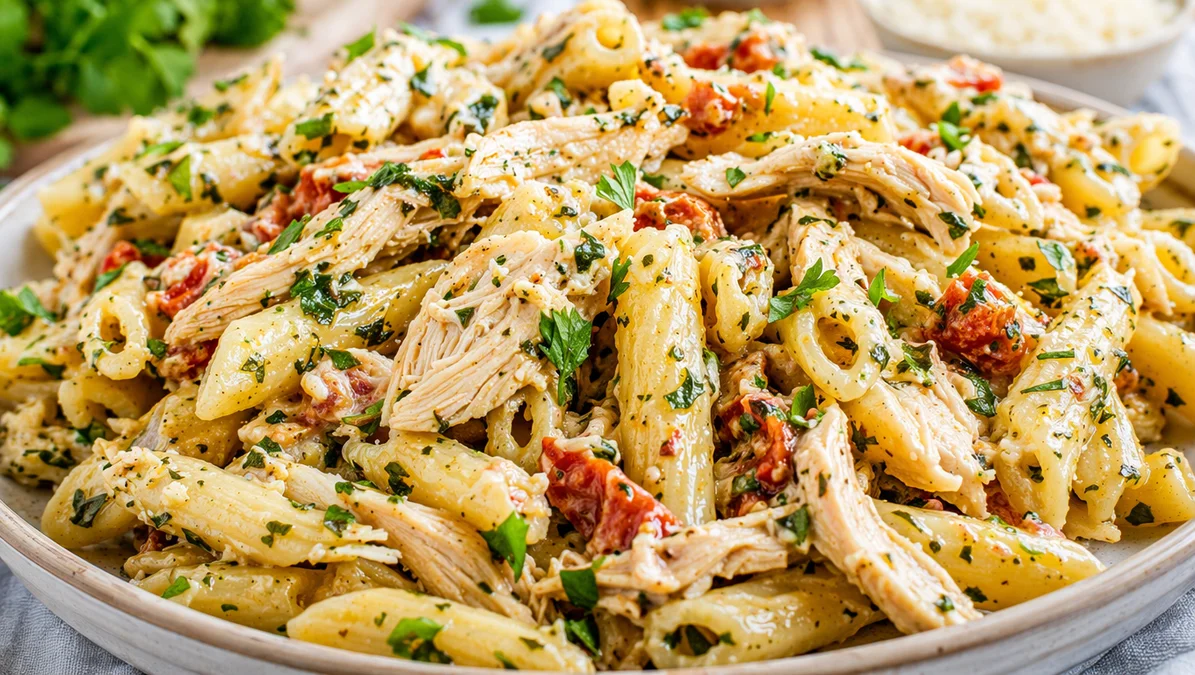
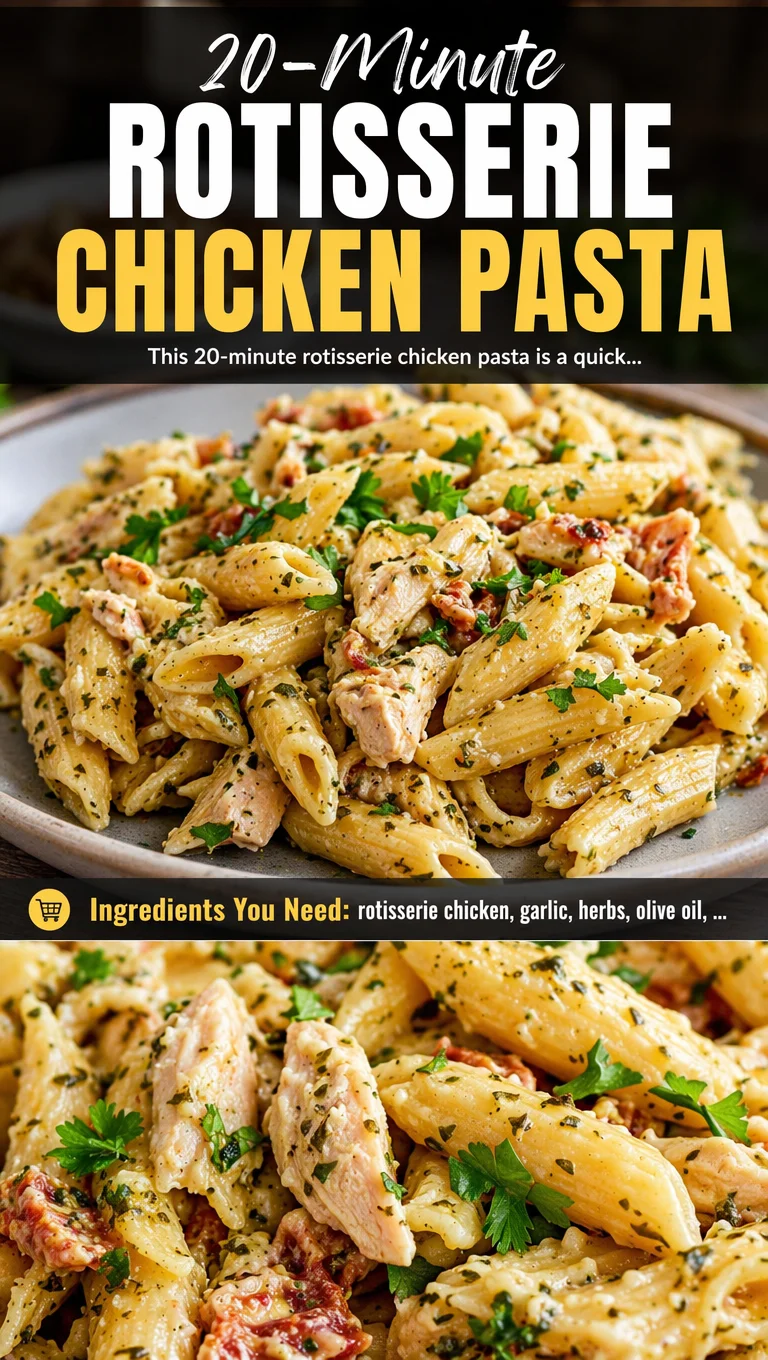
This 20-minute rotisserie chicken pasta is a quick high-protein dinner bursting with garlic and herb flavors. Made with rotisserie chicken and olive oil, it's an easy high-protein meal perfect for…
Ingredients
Instructions
Bring a large pot of generously salted water to a rolling boil. The water should taste like the sea—this is your only chance to season the pasta from within. Add the dried pasta and cook according to package directions until al dente. Al dente means the pasta is tender but still has a slight firmness at the center when bitten; it will continue cooking briefly in the sauce. Before draining, reserve at least 1/2 cup of the starchy pasta water. The starch in this water is a secret weapon: it thickens the sauce and helps it cling to every noodle. Drain the pasta in a colander, but do not rinse it—rinsing removes the starch that helps the sauce adhere. Set the pasta aside.
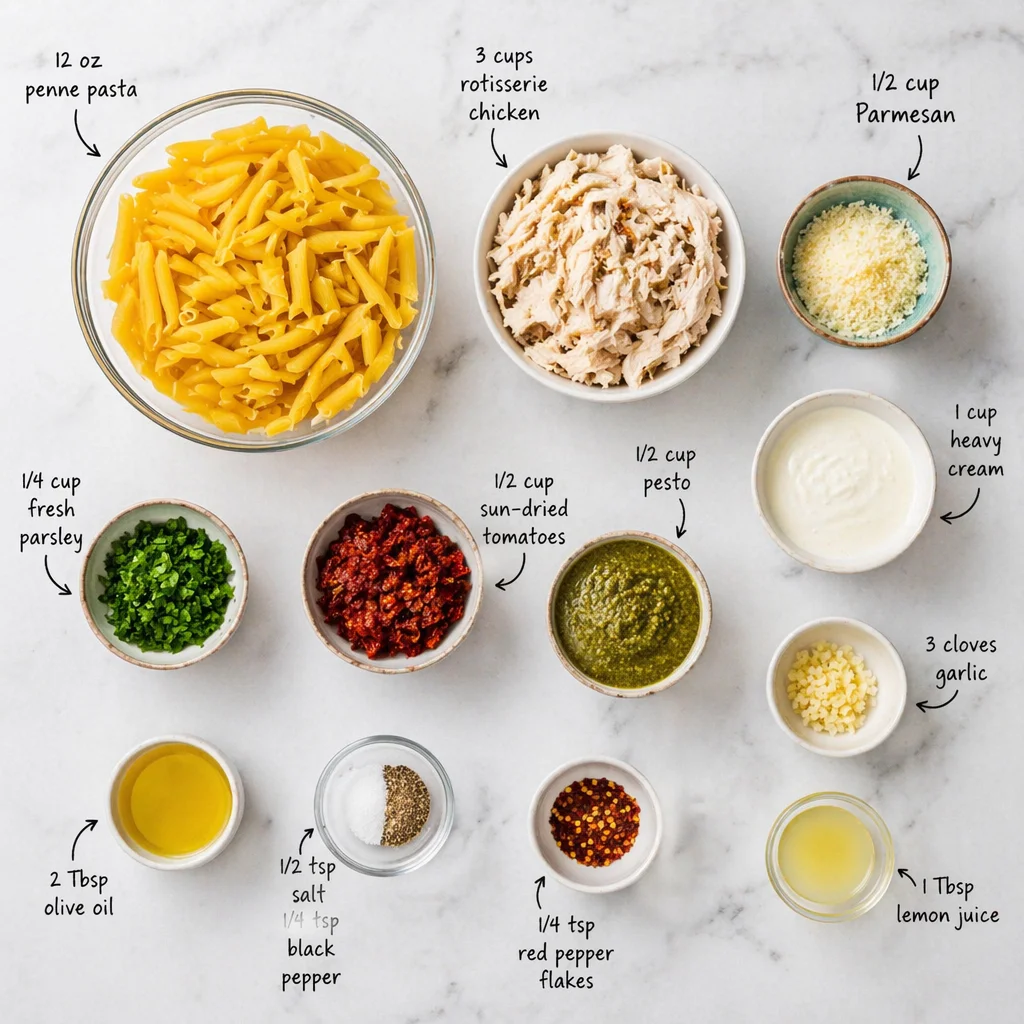
While the pasta cooks, prepare the chicken and aromatics. Using two forks or your clean hands, shred the rotisserie chicken into bite-sized pieces, discarding the skin and bones. Rotisserie chicken is a time-saver because it’s already cooked and seasoned; the skin can be fatty, so removing it keeps the dish lean and lets the garlic-herb flavor shine. Mince the garlic cloves finely—this ensures they release their aromatic oils quickly without burning. If you’re using a microplane, you can grate the garlic for an even more intense flavor that melts into the sauce.
In a large skillet or sauté pan, heat the extra-virgin olive oil over medium heat. The oil should shimmer but not smoke—if it smokes, the heat is too high. Add the minced garlic and red pepper flakes (if using) and sauté for about 30 seconds until fragrant. Garlic burns easily and becomes bitter, so keep it moving and watch for that first whiff of nutty aroma. If you’re using white wine, pour it in now and let it sizzle and reduce by half, about 1 minute. The wine adds acidity that balances the richness of the chicken and cheese. If you’re using chicken broth instead, add it now and let it simmer briefly.
Add the shredded rotisserie chicken to the skillet, along with the dried oregano and dried basil. Stir well to coat the chicken in the garlic oil. Cook for 2–3 minutes, stirring occasionally, until the chicken is heated through and starts to get slightly crispy edges. The goal is to warm the chicken without drying it out; the residual moisture from the rotisserie chicken will keep it tender. Season with a pinch of salt and black pepper. Taste the chicken—it should be savory and aromatic; adjust seasoning if needed.
Reduce the heat to low and add the drained pasta to the skillet. Toss everything together using tongs or a wooden spoon. Pour in about 1/4 cup of the reserved pasta water and toss vigorously. The starch in the water will emulsify with the olive oil and any juices in the pan, creating a silky sauce that coats each piece of pasta and chicken. If the sauce seems too thick, add more pasta water a tablespoon at a time until you reach a consistency that glides off the spoon. The sauce should not be watery—it should cling to the pasta like a light glaze.
Remove the skillet from the heat. Sprinkle the grated Parmesan cheese over the pasta and toss again until the cheese melts into the sauce. The residual heat from the pasta is enough to melt the Parmesan without clumping. Add the fresh parsley and lemon zest (if using) and toss one last time. The parsley adds a fresh, herbaceous note that contrasts the richness, while lemon zest brightens the entire dish. Taste and adjust salt and pepper. Serve immediately in warm bowls, garnished with extra Parmesan and a drizzle of olive oil if desired. The pasta is best enjoyed right away, while the sauce is still glossy and the chicken is tender.
For best results
- Choose the right pasta shape: Short, sturdy pasta like penne, fusilli, or farfalle work best because they have ridges and nooks that catch the sauce. Long pasta like spaghetti can work but tends to be slippery with a light olive oil sauce. For the best texture, cook the pasta until just al dente—it will finish cooking in the hot sauce. Always reserve extra pasta water than you think you'll need; you can always add more, but you can't add it back if you forget.
- Maximize rotisserie chicken flavor: Rotisserie chicken is a flavor powerhouse because it's already seasoned with a spice blend. To get the most out of it, shred the chicken while it's still warm—it's easier and the meat stays juicier. If you want a deeper flavor, you can crisp the shredded chicken in the skillet for an extra minute before adding the garlic. For a leaner option, remove the skin completely; the olive oil and Parmesan will provide enough richness.
- Master the garlic: Garlic is the star of this dish, but it can quickly turn bitter if burned. Always add it after the oil is hot but not smoking, and keep it moving. If you want a milder garlic flavor, you can smash the cloves instead of mincing them and remove them before serving. For a more intense garlic kick, add a second round of fresh minced garlic at the very end, just before serving.
- Use the pasta water wisely: The starchy pasta water is the key to a restaurant-quality sauce. It emulsifies the olive oil and cheese into a creamy coating without needing heavy cream. Start with a small amount and add more gradually; the sauce should be glossy and coat the back of a spoon. If you accidentally add too much, let the pasta simmer for an extra minute to reduce it. Never use plain water—it will make the sauce watery and bland.
- Make it a complete meal: This pasta is already high in protein, but you can boost the vegetable content by adding a handful of baby spinach or arugula in the last step. The heat from the pasta will wilt the greens in seconds. You can also toss in cherry tomatoes halved, roasted red peppers, or sautéed mushrooms for extra nutrients and color. For a fiber boost, use whole wheat or legume-based pasta.
- Storage and reheating: This dish is best fresh, but leftovers can be stored in an airtight container in the refrigerator for up to 3 days. To reheat, add a splash of water or chicken broth to a skillet over medium-low heat and toss the pasta until warmed through. Avoid microwaving, as it can make the pasta mushy and dry out the chicken. If meal prepping, undercook the pasta slightly so it doesn't become too soft when reheated.
Variations
- Creamy Tuscan version: For a richer, creamier sauce, add 1/2 cup of heavy cream or half-and-half along with the pasta water. Stir in 1/4 cup of sun-dried tomatoes (chopped) and 1 cup of fresh spinach. The cream mellows the garlic and creates a luscious sauce that clings to every bite. This variation is more indulgent but still high in protein. Reduce the Parmesan slightly to balance the richness.
- Lemon herb chicken pasta: Brighten the dish with the juice of 1 whole lemon (instead of just zest) and double the fresh parsley. Add 1 tablespoon of capers for a briny pop and serve with a side of steamed asparagus. This version is lighter and perfect for spring or summer. The acidity of the lemon cuts through the fat and makes the flavors sing.
- Spicy arrabbiata twist: Omit the dried herbs and instead use 1 teaspoon of red pepper flakes (or more to taste) and 1/2 teaspoon of smoked paprika. Add a 14-ounce can of crushed tomatoes along with the pasta water and let it simmer for 5 minutes before adding the chicken. This creates a spicy, tomato-based sauce that's incredibly satisfying. Top with fresh basil instead of parsley.
- Vegetarian adaptation: Replace the rotisserie chicken with 2 cups of cooked chickpeas or white beans (drained and rinsed) and 1 cup of sautéed mushrooms. The chickpeas provide a similar protein boost and a hearty texture. Use vegetable broth instead of white wine. The garlic and herbs will still shine, and the dish becomes a fiber-rich, plant-based meal.
- Cheesy baked casserole: Turn this into a baked pasta by tossing the cooked pasta and chicken mixture with 1 cup of shredded mozzarella and transferring to a baking dish. Top with breadcrumbs and bake at 375°F for 15 minutes until golden and bubbly. This is a great way to use leftover pasta and makes for an impressive dinner party dish.
Nutrition
- Calories485 kcal
- Total Fat18g
- Saturated Fat5g
- Cholesterol85mg
- Sodium520mg
- Total Carbohydrates48g
- Dietary Fiber3g
- Sugars3g
- Protein35g