
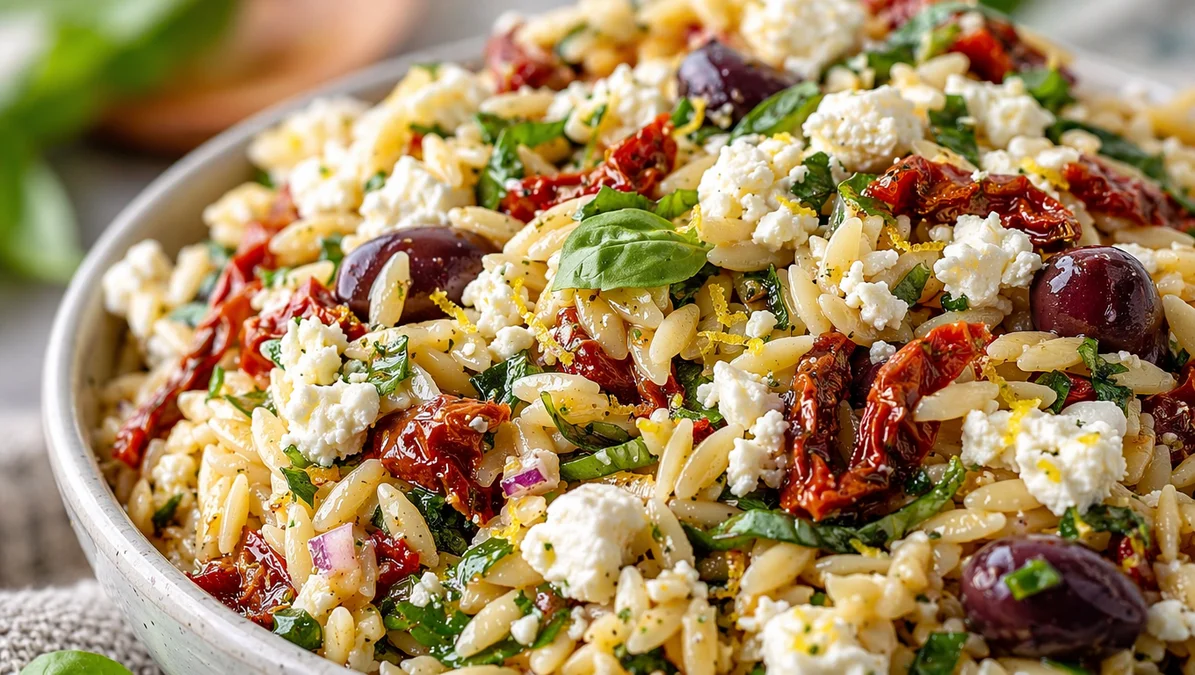
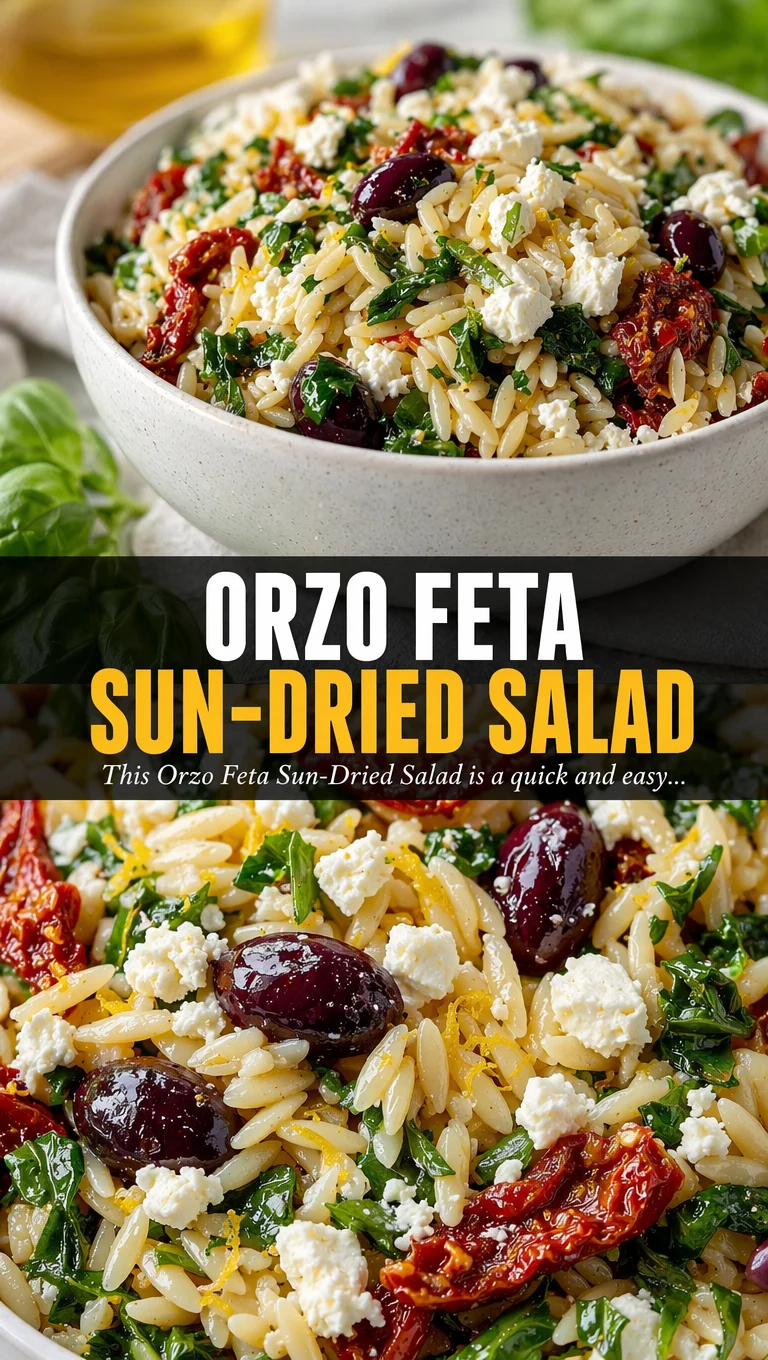
This Orzo Feta Sun-Dried Salad is a quick and easy high-protein meal, ideal for busy weeknights or healthy picnic ideas. Packed with creamy feta and tangy sun-dried tomatoes, it's a…
Ingredients
Instructions
Bring a large pot of generously salted water to a rolling boil. The water should taste like the sea—this is your only chance to season the pasta from within. Add 1 cup of uncooked orzo and cook according to package directions until al dente, typically 8-10 minutes. Orzo, being a small rice-shaped pasta, can quickly become mushy if overcooked, so start checking at the 7-minute mark. The goal is a tender but firm bite that holds its shape when tossed with the other ingredients. Once cooked, drain the orzo in a fine-mesh sieve and rinse briefly with cool water to stop the cooking process and remove excess starch. Shake the sieve well to remove as much water as possible; any residual moisture will dilute the dressing. Transfer the drained orzo to a large mixing bowl and set aside to cool slightly while you prepare the remaining ingredients.
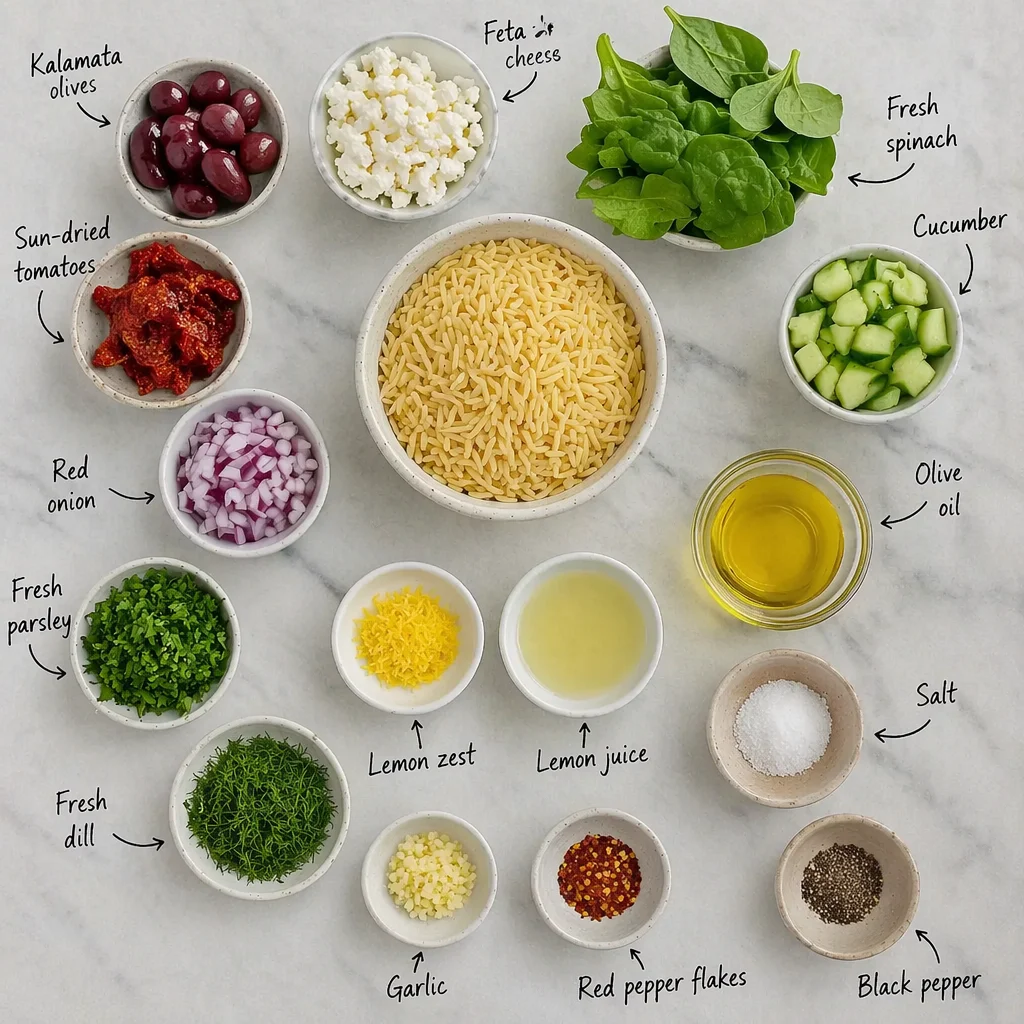
While the orzo cooks, prepare the sun-dried tomatoes and fresh herbs. Drain 1/3 cup of sun-dried tomatoes packed in oil, reserving about 1 tablespoon of the oil for added flavor (optional). Chop the tomatoes into thin strips or small bite-sized pieces—this ensures every forkful gets a burst of tangy sweetness. Next, chiffonade the basil: stack the leaves, roll them tightly into a cigar shape, and slice crosswise into thin ribbons. This technique releases the herb’s aromatic oils without bruising the leaves. Finely chop the parsley and mince the garlic clove. Set all the prepared ingredients aside.
In a small bowl or jar, whisk together the dressing: 3 tablespoons of extra virgin olive oil, 2 tablespoons of fresh lemon juice, and the minced garlic. Season with a pinch of salt and a few grinds of black pepper. If you reserved the sun-dried tomato oil, you can substitute 1 tablespoon of it for an equal amount of olive oil to deepen the tomato flavor. Whisk vigorously until the dressing is emulsified and slightly thickened. Taste and adjust the acidity or saltiness to your preference—the dressing should be bright and punchy to balance the creamy feta.
Pour the dressing over the slightly cooled orzo and toss gently with a rubber spatula or wooden spoon until every grain is coated. Add the chopped sun-dried tomatoes, basil, and parsley, and toss again to distribute evenly. Finally, fold in the crumbled feta cheese, being careful not to overmix to keep the feta in distinct creamy chunks. The feta will soften slightly from the dressing but should retain its texture. Taste the salad and adjust seasoning with additional salt, pepper, or lemon juice as needed. For best flavor, let the salad rest at room temperature for 10-15 minutes to allow the orzo to absorb the dressing. Alternatively, cover and refrigerate for at least 30 minutes if serving cold.
Transfer the orzo pasta salad to a serving platter or bowl. Garnish with a few extra basil leaves and a light drizzle of olive oil if desired. Serve immediately as a main dish or alongside grilled chicken, lamb, or roasted vegetables. For meal prep, portion into airtight containers and refrigerate for up to 4 days. The salad tastes even better the next day as the flavors meld. If the salad seems dry after refrigeration, revive it with a splash of lemon juice or olive oil before serving.
For best results
- For the best texture, cook the orzo just until al dente. Overcooked orzo becomes sticky and mushy, turning your salad into a clumpy mess. To avoid this, set a timer and taste a piece at the minimum cooking time. Rinsing with cold water after draining not only stops cooking but also washes away excess starch, keeping the grains separate. If you prefer a warm salad, skip the rinse and toss immediately with the dressing while the orzo is still hot—it will absorb more flavor.
- Sun-dried tomatoes come in two varieties: dry-packed (chewy, less acidic) and oil-packed (soft, tangy, and more flavorful). This recipe calls for oil-packed because they blend seamlessly into the salad and the infused oil adds depth. If using dry-packed, rehydrate them in hot water for 10 minutes, then drain and chop; you may need to increase the olive oil in the dressing by 1-2 tablespoons to compensate for the missing oil.
- Feta cheese can be salty, so adjust the added salt accordingly. For a creamier, less salty option, use French feta (often made from sheep's milk) or a block-style feta packed in brine. Crumble the feta yourself rather than buying pre-crumbled; pre-crumbled feta often contains anti-caking agents that prevent it from melting into the salad, and it tends to be drier and less flavorful.
- Let the salad rest after tossing to allow the flavors to marry. If you have time, refrigerate for an hour before serving—this is a classic make-ahead trick used by Greek tavernas. The orzo absorbs the lemon-herb dressing, and the feta softens slightly, creating a cohesive dish. Just remember to bring it back to room temperature for about 15 minutes before serving to restore the olive oil's fruitiness.
- To add a protein boost without changing the flavor profile, stir in 1 cup of cooked chickpeas or shredded rotisserie chicken. Both pair beautifully with the Mediterranean flavors and increase the protein content to over 20 grams per serving, making this a complete meal for post-workout refueling or meal prep lunches.
Variations
- Make it vegan: Omit the feta cheese and substitute with a plant-based feta or crumbled firm tofu marinated in lemon juice, olive oil, and nutritional yeast. Use a vegan-friendly orzo (most are egg-free, but check labels). The sun-dried tomatoes and herbs will still provide plenty of flavor. Add 1/2 cup of toasted pine nuts for extra richness and texture.
- Add more vegetables: This salad is a perfect canvas for seasonal produce. In summer, toss in diced cucumber, cherry tomatoes, and bell peppers. In fall, add roasted butternut squash cubes and dried cranberries. For a Greek twist, include chopped Kalamata olives, red onion, and a handful of arugula. Just be mindful of moisture—if adding watery vegetables like cucumber, salt them first and pat dry to prevent the salad from becoming watery.
- Switch the protein: For a heartier main-dish salad, add grilled shrimp, sliced grilled chicken breast, or flaked canned tuna. The lemon-herb dressing complements seafood especially well. Alternatively, stir in 1/2 cup of cooked quinoa or farro for a double-grain salad that's even more filling and nutrient-dense.
- Make it gluten-free: Substitute the orzo with gluten-free orzo (made from rice or corn) or use another small gluten-free pasta like ditalini or pastina. Alternatively, use cooked quinoa or cauliflower rice for a low-carb option. Adjust cooking times according to the package directions, as gluten-free pasta can become mushy quickly.
Nutrition
- Calories385 kcal
- Total Fat18g
- Saturated Fat6g
- Cholesterol25mg
- Sodium420mg
- Total Carbohydrates44g
- Dietary Fiber3g
- Sugars5g
- Protein12g