
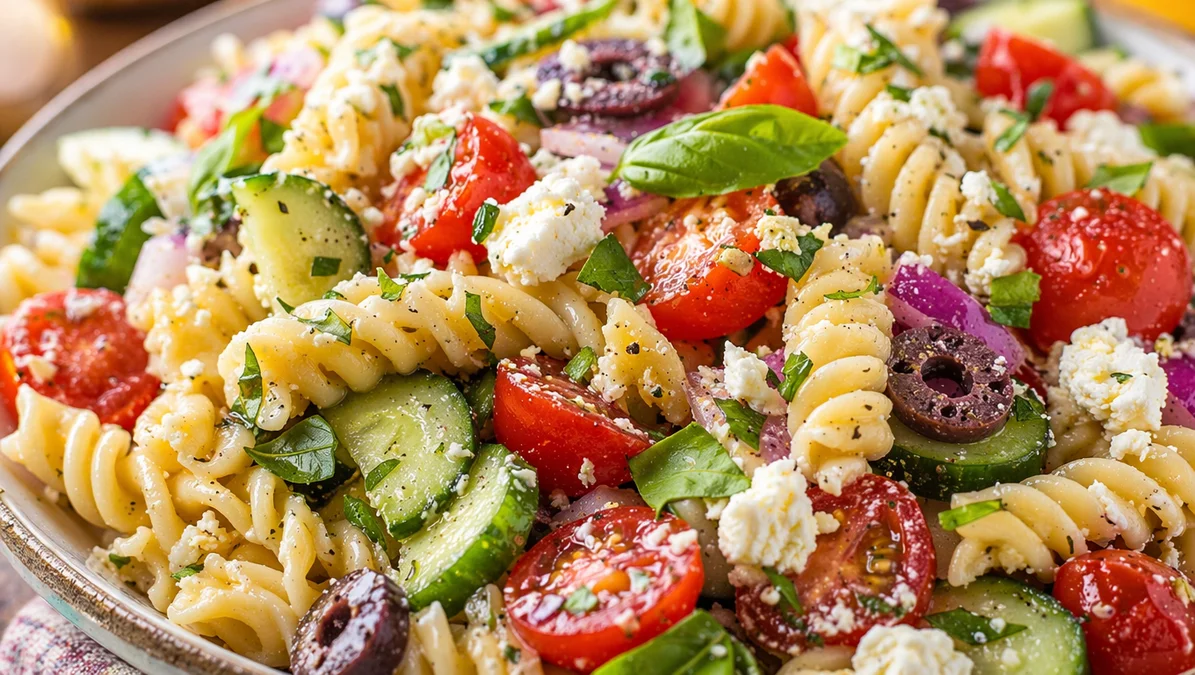
This make ahead summer salad is a healthy picnic food idea loaded with fresh veggies and a light dressing. Perfect for high-protein dinners and macro-friendly meal prep.
Ingredients
Instructions
Bring a large pot of generously salted water (about 1 tablespoon of salt per 4 quarts of water) to a rolling boil. Add the pasta and cook according to package directions until al dente, typically 8-10 minutes. Al dente pasta is crucial for a make-ahead salad because it will continue to absorb dressing as it sits; slightly undercooking ensures it stays firm and doesn’t become mushy. Stir occasionally to prevent sticking. Once done, reserve about 1/2 cup of pasta water before draining (this starchy water can help loosen the dressing later if needed). Drain the pasta in a colander and rinse under cold running water for about 30 seconds to stop the cooking process and cool it down quickly. Shake off excess water and transfer to a large mixing bowl. Drizzle with a tiny bit of olive oil and toss to prevent clumping. Set aside to cool completely while you prepare the vegetables.
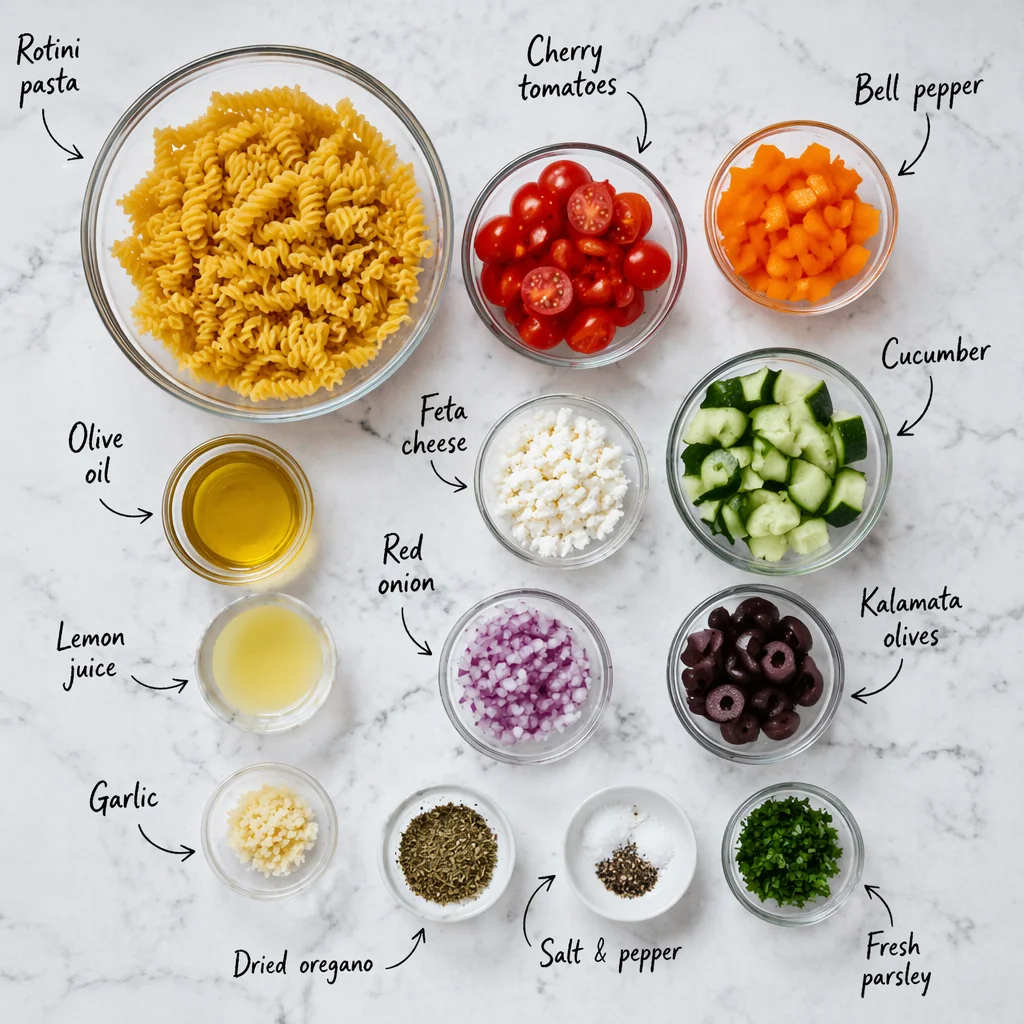
While the pasta cools, prepare the dressing. In a small bowl or jar with a tight-fitting lid, combine the extra virgin olive oil, red wine vinegar, Dijon mustard, minced garlic, dried oregano, and a pinch of salt and pepper. Whisk thoroughly or shake vigorously until the dressing is emulsified and slightly thickened. The Dijon mustard acts as an emulsifier, helping the oil and vinegar stay combined for a consistent flavor in every bite. Taste and adjust seasoning—you want the dressing to be well-seasoned because it will be diluted by the pasta and vegetables. Set aside.
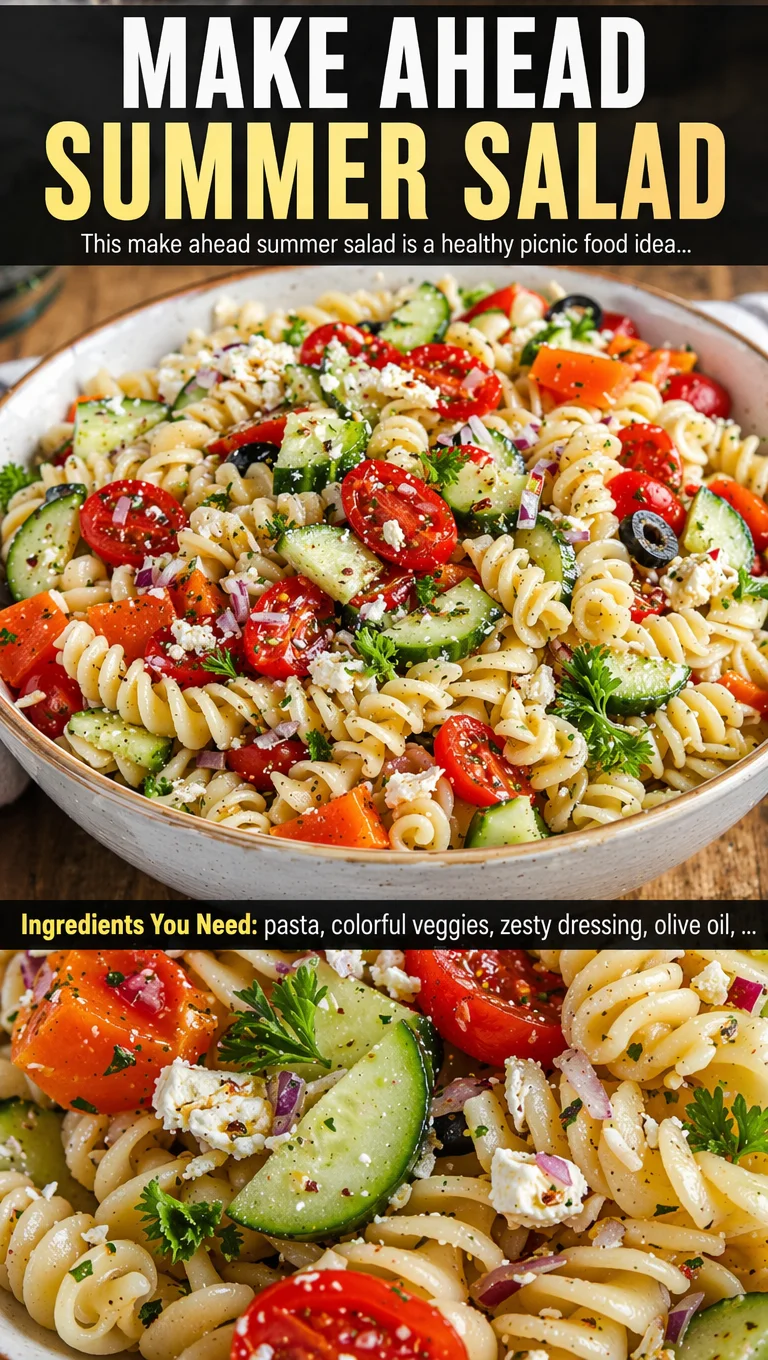
Now prepare the vegetables. Halve the cherry tomatoes; if they are large, quarter them. Dice the cucumber into bite-sized pieces (about 1/2-inch cubes). If the cucumber has a thick or waxy skin, peel it first for a more tender texture. Slice the red onion very thinly—a mandoline slicer works best for paper-thin slices that won’t overpower the salad. Halve the Kalamata olives; you can also use pitted olives for convenience. Chop the fresh basil into thin ribbons (chiffonade) by stacking the leaves, rolling them tightly, and slicing crosswise. This releases the aromatic oils without bruising the leaves. Crumble the feta cheese into small pieces; avoid crumbling it too finely so that you get distinct creamy, salty bites throughout the salad.
Add all the prepared vegetables, olives, and basil to the bowl with the cooled pasta. Pour the dressing over the top. Using two large spoons or spatulas, gently toss everything together until the pasta and vegetables are evenly coated with the dressing. Be careful not to overmix, especially with the feta—you want it to stay in small chunks rather than disintegrating. At this point, the salad may seem a bit dry; don’t worry—the pasta will absorb the dressing as it chills, and the vegetables will release some moisture. If you prefer a saucier salad, you can add an extra tablespoon of olive oil or a splash of reserved pasta water. Cover the bowl with plastic wrap or transfer to an airtight container. Refrigerate for at least 30 minutes, but ideally 2-4 hours or overnight. The flavors meld and deepen over time, making this the ultimate make-ahead dish.
Before serving, remove the salad from the refrigerator and let it sit at room temperature for about 10-15 minutes. Cold dressing can be congealed, so a brief rest allows the flavors to open up. Give the salad a good stir and taste for seasoning. You may need to add a pinch of salt, a crack of black pepper, or an extra drizzle of olive oil to revive it. Garnish with additional fresh basil leaves and a sprinkle of feta cheese for a beautiful presentation. Serve as a main dish for a light lunch or dinner, or as a side at picnics, barbecues, or potlucks. This salad stores well in the refrigerator for up to 5 days, making it perfect for weekly meal prep.
For best results
- Choosing the right pasta shape is key for a make-ahead salad. Short, sturdy shapes like rotini, farfalle, or penne hold up well to dressing and tossing without breaking apart. Avoid delicate shapes like angel hair or spaghetti that can clump and become mushy. Cook the pasta to al dente—firm to the bite—because it will continue to soften as it absorbs dressing in the fridge. If you cook it fully soft, it will turn into a mushy mess by day two. Rinsing the pasta with cold water not only stops cooking but also removes excess starch that can make the salad gummy. Toss with a little oil after rinsing to prevent sticking.
- The dressing is the soul of this salad, and balancing acidity and fat is crucial. The ratio of 3 parts oil to 2 parts vinegar is classic, but you can adjust to your taste. Red wine vinegar provides a bright, tangy flavor that complements the Mediterranean ingredients. If you want a milder acidity, substitute half the vinegar with lemon juice. Dijon mustard not only emulsifies but adds a subtle heat and depth. For extra flavor, let the minced garlic sit in the vinegar for 5 minutes before adding oil—this mellows its raw bite. Always season the dressing generously; underseasoned dressing leads to a bland salad. Remember that chilling dulls flavors, so the dressing should taste slightly stronger than you think necessary.
- Vegetable preparation matters for texture and longevity. Cherry tomatoes can release water over time, making the salad watery. To minimize this, you can salt the tomatoes lightly and let them drain for 10 minutes before adding to the salad. For cucumbers, remove the seeds if they are large and watery; English cucumbers have fewer seeds and a thinner skin, making them ideal. Red onion can be soaked in cold water for 10 minutes to reduce its pungency—this is especially helpful if you're sensitive to raw onion. Olives add briny depth; Kalamata olives are classic, but you can use Castelvetrano for a milder, buttery flavor. Fresh basil should be added just before serving if you want it vibrant green; otherwise, it will darken in the fridge. For a make-ahead salad, you can stir in half the basil initially and reserve the rest for garnish.
- Feta cheese is a star ingredient, but not all feta is created equal. For the best texture and flavor, buy a block of feta stored in brine (usually found in the refrigerated section of the deli). This feta is creamier and less dry than pre-crumbled varieties. Drain and pat it dry before crumbling. If you want a dairy-free option, use vegan feta made from tofu or almonds—just note that the texture will be firmer. To prevent the feta from dissolving into the dressing, toss it gently and add it last. Alternatively, you can serve the feta on the side so each person can add their own.
- This salad is incredibly versatile and can be customized to boost protein. For a high-protein version, add 1 cup of cooked chickpeas, grilled chicken breast, or canned tuna. The salad pairs beautifully with grilled shrimp or salmon as well. If you're meal prepping for the week, store the salad in individual containers for grab-and-go lunches. Just remember to keep any additional protein separate until serving to maintain best texture. The salad itself keeps well for 5 days, but if you add fresh herbs like basil, they may wilt after day 2. You can freshen the salad with a squeeze of lemon juice or a splash of vinegar before eating.
- Serving this salad at the right temperature is crucial for maximum flavor. Cold pasta salad can taste flat because cold temperatures mute flavors. Let the salad sit at room temperature for 15-20 minutes before serving. If you're taking it to a picnic, pack it in a cooler and take it out 20 minutes before eating. For a party, you can serve it in a large bowl on a bed of lettuce to elevate the presentation. Garnish with extra feta, olives, and a drizzle of olive oil right before serving to make it look fresh and inviting.
Variations
- Greek-Inspired Twist: Add 1/2 cup of diced bell peppers (any color) and 1/4 cup of chopped fresh dill. Replace the red wine vinegar with lemon juice for a brighter flavor. Top with a handful of toasted pine nuts or walnuts for crunch. This variation pairs wonderfully with grilled lamb or chicken souvlaki. For extra protein, toss in 1 cup of cooked or canned chickpeas.
- Caprese-Style Summer Salad: Swap the Kalamata olives for fresh mozzarella pearls (bocconcini) and replace the red onion with 1/4 cup of sun-dried tomatoes (oil-packed, drained and chopped). Use balsamic vinegar instead of red wine vinegar for a sweeter, more robust dressing. Add fresh basil generously. This version is perfect for a light lunch with a side of crusty bread.
- Southwest Black Bean & Corn Salad: Replace the olives and feta with 1 cup of canned black beans (rinsed and drained), 1 cup of corn kernels (fresh, frozen, or canned), and 1/4 cup of chopped cilantro. Use lime juice instead of red wine vinegar and add 1/2 teaspoon of cumin and chili powder to the dressing. Top with diced avocado just before serving. This high-fiber, plant-based version is packed with protein and perfect for vegan meal prep.
- Protein-Packed Chicken & Broccoli: Add 1 cup of shredded rotisserie chicken and 1 cup of steamed broccoli florets (cooled). Replace the red onion with sliced scallions. Use a creamy dressing: mix 1/4 cup Greek yogurt with 2 tablespoons olive oil, 1 tablespoon lemon juice, and a minced garlic clove. This turns the salad into a complete meal with over 30g of protein per serving.
- Low-Carb Zoodle Version: For a keto-friendly option, replace the pasta with spiralized zucchini (zoodles). Blot the zoodles with paper towels to remove excess moisture. Follow the same dressing and vegetable additions, but omit the olives if you want to reduce sodium. This version is best eaten within 24 hours as zoodles release water over time. Serve immediately after tossing for optimal crunch.
Nutrition
- Calories285 kcal
- Total Fat14g
- Saturated Fat4g
- Cholesterol15mg
- Sodium320mg
- Total Carbohydrates33g
- Dietary Fiber3g
- Sugars4g
- Protein8g