
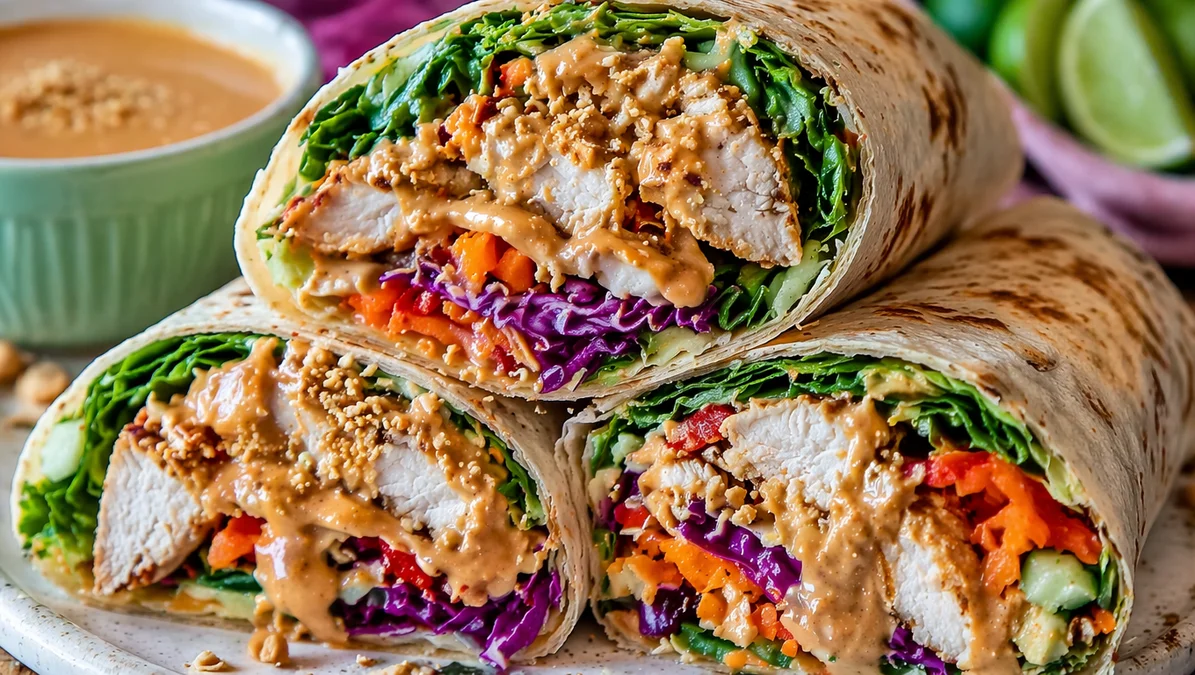
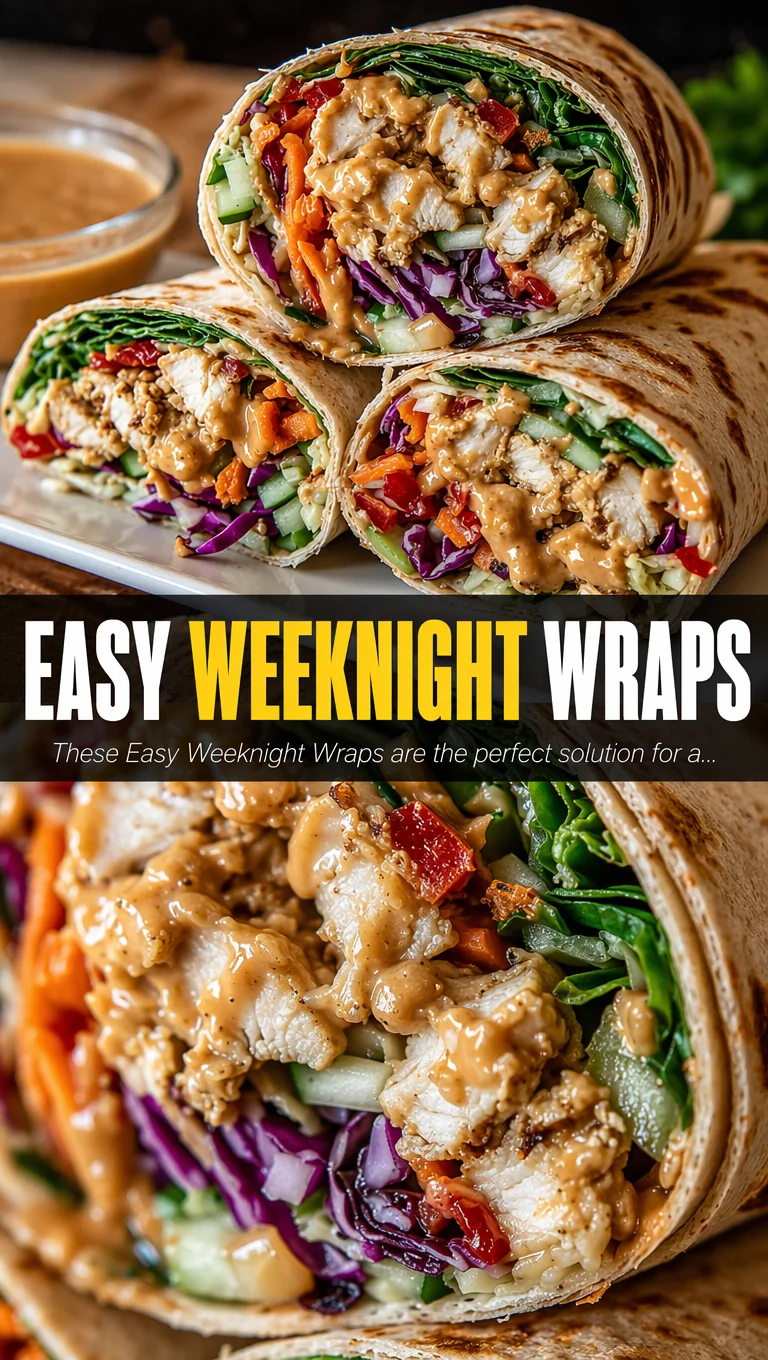
These Thai Peanut Chicken Wraps are the ultimate quick high-protein dinner. Loaded with tender chicken, crunchy veggies, and creamy peanut sauce, they're ready in 20 minutes for a macro-friendly meal.
Ingredients
Instructions
First, prepare the peanut sauce. In a medium bowl, whisk together 1/3 cup creamy peanut butter, 2 tablespoons low-sodium soy sauce, 1 tablespoon rice vinegar, 1 tablespoon honey, 1 teaspoon sriracha, and 1 minced garlic clove. Start whisking vigorously; the mixture will be very thick at first. This is because the peanut butter hasn’t been thinned yet. Add warm water one tablespoon at a time, whisking continuously, until the sauce reaches a smooth, pourable consistency. You want it thick enough to coat the back of a spoon but thin enough to drizzle easily. Taste and adjust: add more sriracha for heat, more honey for sweetness, or a squeeze of lime for acidity. The sauce should be balanced—creamy, salty, sweet, and tangy. Set aside. This sauce can be made up to 3 days ahead and stored in the refrigerator; just let it come to room temperature and whisk in a splash of water before using.
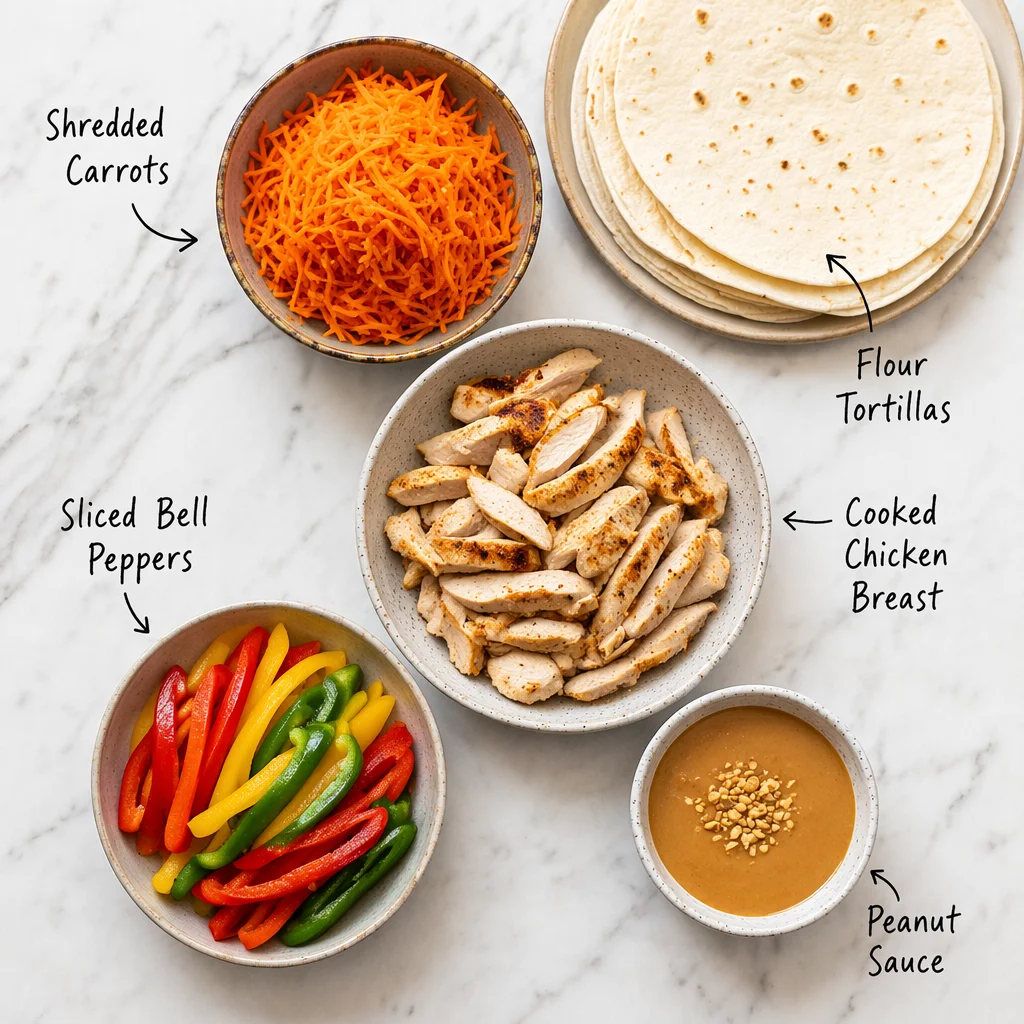
Now, prepare the chicken. If using a rotisserie chicken, simply remove the skin and shred the meat with two forks or your hands. For poached chicken: place 2 boneless, skinless chicken breasts (about 1 lb total) in a saucepan, cover with cold water, add a pinch of salt and a bay leaf if desired. Bring to a gentle simmer over medium heat, then reduce heat to low, cover, and cook for 10-12 minutes until the internal temperature reaches 165°F (74°C). Remove from water and let rest for 5 minutes before shredding. You should have about 2 cups of shredded chicken. If you’re meal prepping, you can cook the chicken in bulk earlier in the week. The chicken should be tender and moist, not dry. Shred into bite-sized pieces and place in a large bowl.
While the chicken is still warm (or if using cold, that’s fine too), add the shredded carrots, sliced bell peppers, and red cabbage to the bowl with the chicken. Pour about half of the peanut sauce over the mixture and toss gently but thoroughly until everything is evenly coated. The warmth of the chicken helps the sauce cling to the ingredients. Taste and add more sauce if desired—you want a generous coating but not a soggy mess. The vegetables should retain their crunch, which provides a wonderful textural contrast to the tender chicken and creamy sauce. Set the remaining sauce aside for drizzling on top of the assembled wraps.
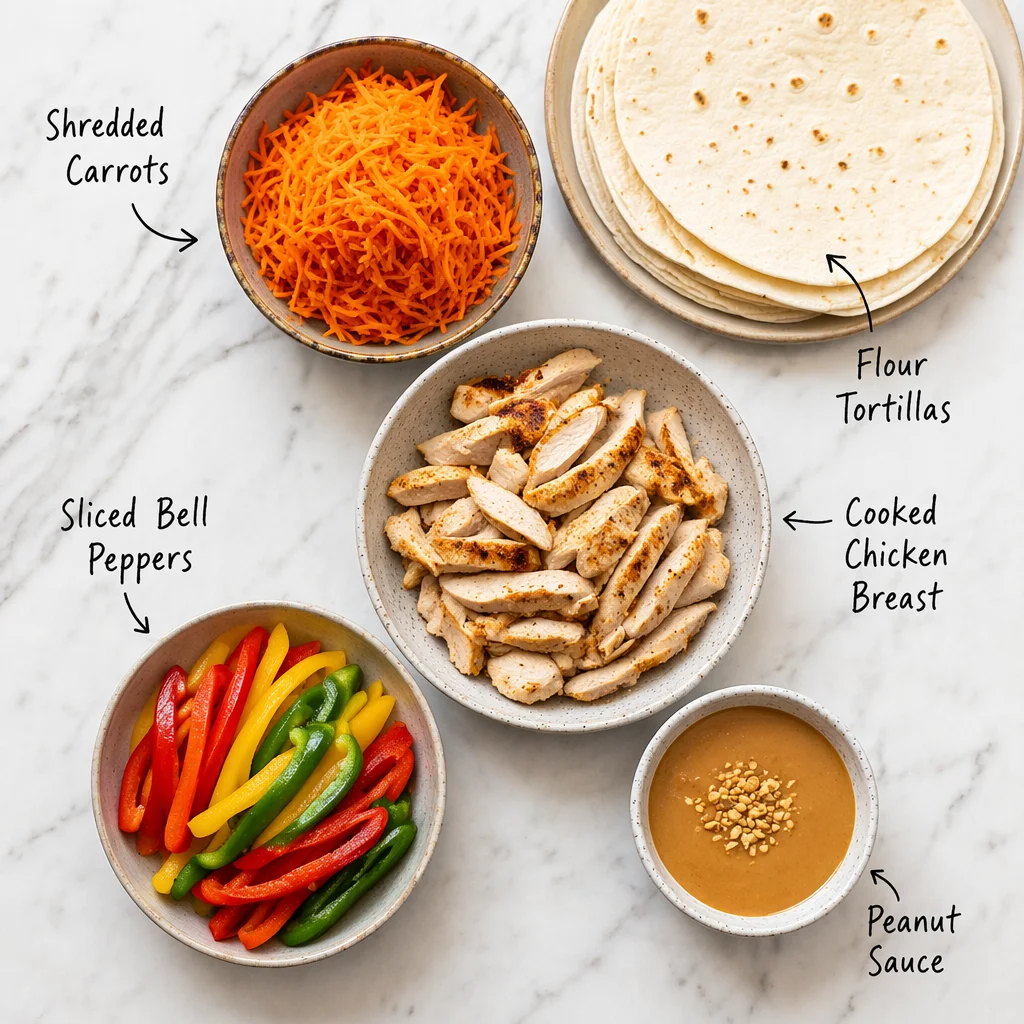
Warm the tortillas to make them pliable and easier to roll. You can do this by placing them one at a time in a dry skillet over medium heat for about 15-20 seconds per side, or wrap a stack in a damp paper towel and microwave for 30 seconds. The tortillas should be soft and flexible but not too hot to handle. If you skip this step, cold tortillas may crack when you fold them. Lay a warm tortilla on a clean work surface. Spoon about 3/4 cup of the chicken-vegetable mixture into the center of the tortilla, spreading it into a log shape, leaving about 2 inches of space on the sides and bottom. Don’t overfill, or the wrap will be difficult to close and may tear.
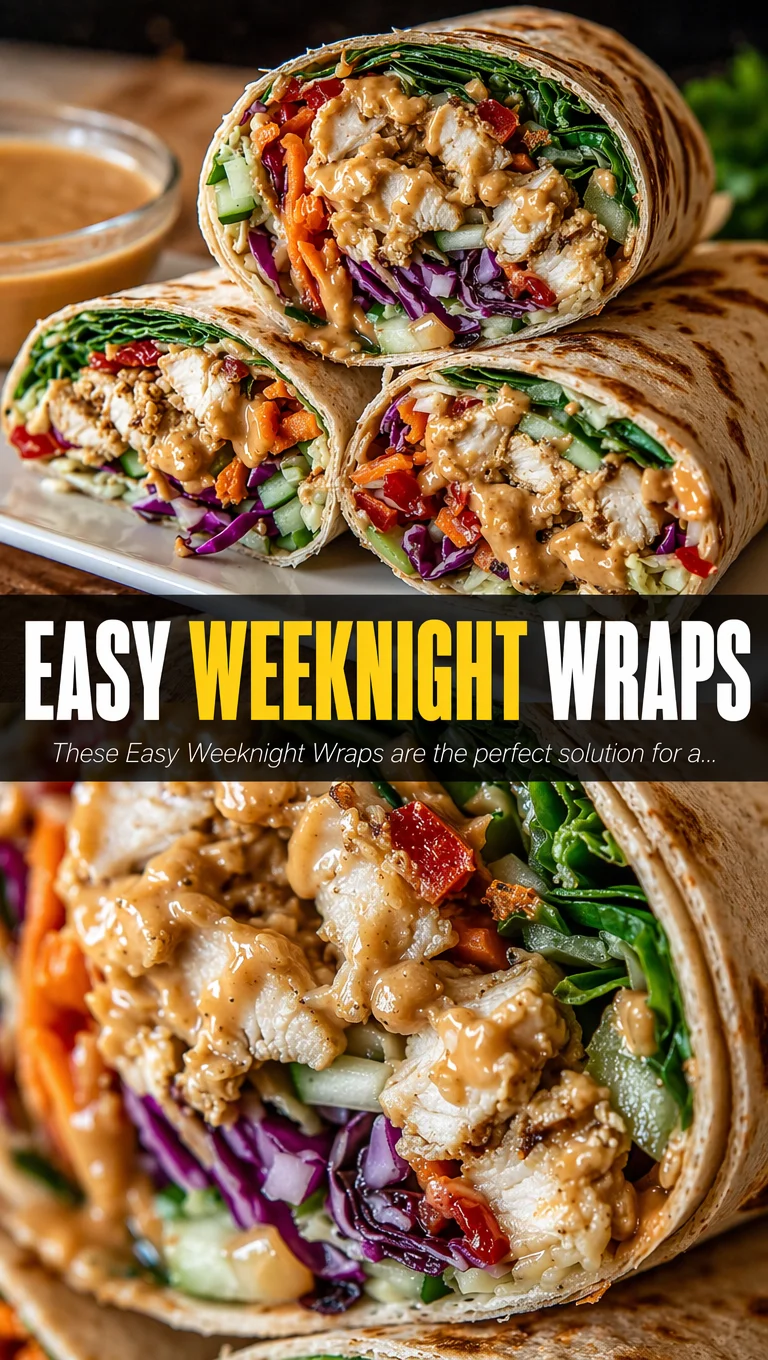
To assemble the wrap, fold the bottom edge of the tortilla up over the filling, then fold in the left and right sides tightly toward the center. While holding the sides in place, roll the wrap away from you, tucking the filling in as you go, until the seam is on the bottom. The wrap should be snug and secure. If it’s not tight enough, the filling will fall out when you cut it. Repeat with the remaining tortillas and filling. At this point, you can serve the wraps whole or slice them in half diagonally for a prettier presentation. If slicing, use a sharp serrated knife and a gentle sawing motion to avoid squishing the wrap.
Place the finished wraps on a serving plate, seam side down. Drizzle the reserved peanut sauce over the top in a zigzag pattern, then sprinkle with chopped roasted peanuts and fresh cilantro leaves. Serve immediately with lime wedges on the side for squeezing extra brightness. These wraps are best enjoyed fresh, but you can store assembled wraps in the refrigerator for up to 2 days if you keep the sauce separate until serving to prevent sogginess. To reheat, wrap in foil and warm in a 350°F oven for 10 minutes or microwave for 30-45 seconds. However, the texture of the vegetables and tortilla will be best when fresh.
For best results
- For the best peanut sauce, use natural peanut butter that contains only peanuts and salt. Avoid brands with added sugar and hydrogenated oils, as they can make the sauce grainy and overly sweet. If your peanut butter is very thick, you may need to add an extra tablespoon of warm water. The sauce should be smooth and glossy. For a nut-free version, use sunflower seed butter (sunbutter) and reduce the soy sauce slightly to balance the saltiness. Sunbutter can turn green when combined with acidic ingredients due to a natural reaction, but it's harmless and tastes fine.
- To save time on busy weeknights, prep the components ahead of time. Shred the chicken, slice the vegetables, and make the peanut sauce up to 3 days in advance. Store the chicken and vegetables separately in airtight containers in the refrigerator. When ready to serve, simply warm the chicken slightly (microwave for 30 seconds) and toss with the vegetables and sauce. This makes the wraps a true 5-minute assembly meal. The sauce can be stored in a jar; if it thickens in the fridge, let it sit at room temperature for 15 minutes and whisk in a splash of warm water.
- The key to a wrap that doesn't fall apart is not overfilling. A good rule of thumb is to use no more than 3/4 cup of filling per 10-inch tortilla. Also, make sure the tortilla is warm and pliable before rolling. If your tortillas are on the smaller side (8-inch), reduce the filling to 1/2 cup. For a low-carb option, use large lettuce leaves (like butter lettuce or romaine hearts) instead of tortillas. The filling is delicious as a salad too—just serve it over a bed of greens with extra peanut sauce as dressing.
- If you want extra crunch in your wraps, consider adding julienned cucumber, bean sprouts, or even crushed wonton strips. The cucumber adds a refreshing coolness that balances the richness of the peanut sauce. Bean sprouts provide a light, watery crunch. You can also add sliced avocado for creaminess and healthy fats. For a spicy kick, include thinly sliced jalapeño or a drizzle of sriracha inside the wrap. The beauty of this recipe is its versatility—feel free to customize based on what you have on hand.
- To make this recipe gluten-free, use tamari or coconut aminos instead of soy sauce, and choose gluten-free tortillas (many brands offer cassava or almond flour tortillas). Check that your peanut butter is certified gluten-free as well. For a dairy-free option, this recipe is naturally dairy-free. If you want to add cheese, a sprinkle of crumbled feta or cotija can be a nice salty contrast to the sweet peanut sauce, but it's entirely optional.
- For meal prep, store the filling and tortillas separately. Assemble only the wraps you plan to eat immediately. The filling keeps well in the refrigerator for up to 4 days. You can also freeze the filling (without the tortillas) for up to 3 months. Thaw overnight in the fridge and reheat gently in a skillet or microwave. The peanut sauce may separate slightly after freezing; just whisk it back together. This makes for an incredibly convenient grab-and-go lunch option.
- If you prefer a warm wrap, you can toast the assembled wrap in a dry skillet over medium heat for 1-2 minutes per side until golden brown and crispy. This adds a delightful crunch and warms the filling through. Alternatively, you can place the wraps in a panini press for a few minutes. Just be careful not to over-press or the filling may burst out. The contrast between the warm, crispy tortilla and the cool, crunchy vegetables is absolutely divine.
Variations
- Vegetarian/Vegan Version: Replace the chicken with 1 (14-ounce) block of extra-firm tofu, pressed and cubed, then baked or pan-fried until golden. Alternatively, use 2 cups of cooked edamame or chickpeas for a plant-based protein boost. For vegan, ensure the honey in the sauce is replaced with maple syrup or agave nectar. The tofu can be marinated in a bit of soy sauce and sesame oil before cooking to add flavor. The result is just as satisfying and packed with protein.
- Spicy Mango Twist: Add 1/2 cup diced fresh mango to the filling for a sweet and spicy contrast. The mango pairs beautifully with the peanut sauce and adds a tropical flair. You can also add a squeeze of lime juice to the filling to brighten the flavors. For extra heat, include a minced Thai bird's eye chili or a drizzle of sriracha. This variation is perfect for summer when mangoes are in season.
- Protein Swap: Instead of chicken, use cooked and shredded pork (from a tenderloin or leftover roast), grilled shrimp, or even canned tuna (drained and flaked). For a beef option, thinly sliced flank steak that has been quickly stir-fried works wonderfully. Each protein brings its own unique flavor profile. Shrimp cooks in just 2-3 minutes, making this an even faster option. Just season the shrimp with salt, pepper, and a pinch of garlic powder before cooking.
- Low-Carb Lettuce Wraps: Skip the tortillas and use large, sturdy lettuce leaves like butter lettuce, romaine hearts, or iceberg. Spoon the filling into the leaves and wrap like a burrito. This reduces the carb count significantly and adds extra crunch. The lettuce wraps are also gluten-free and grain-free. They're perfect for a light lunch or appetizer. Serve with extra peanut sauce on the side for dipping.
- Baked Wrap Rolls: For a fun twist, assemble the wraps as directed but place them seam side down on a baking sheet lined with parchment paper. Brush the tops with a little oil and bake at 375°F (190°C) for 10-12 minutes until golden and crispy. This transforms the wraps into a warm, crunchy meal similar to a chimichanga. Serve with a side of extra peanut sauce for dipping. The baking process melts the flavors together beautifully.
Nutrition
- Calories485 kcal
- Total Fat24g
- Saturated Fat5g
- Cholesterol65mg
- Sodium820mg
- Total Carbohydrates38g
- Dietary Fiber6g
- Sugars12g
- Protein32g