
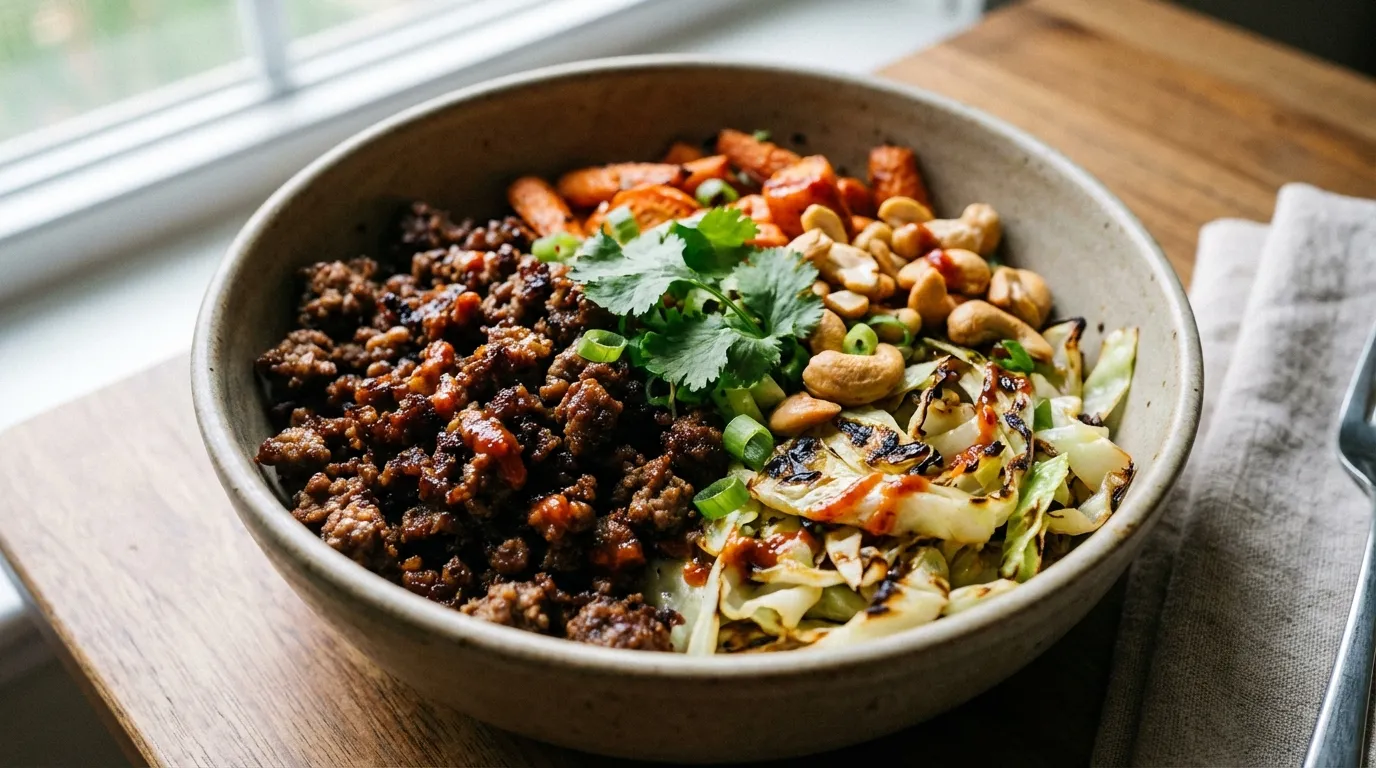
The Volume-to-Protein Satiety Index
The Volume-to-Protein Satiety Index is a metric that evaluates how effectively a meal triggers stomach distension receptors while delivering essential amino acids. By combining 1.2 grams of fiber per 10 grams of protein, this meal activates mechanoreceptors faster than carbohydrate-heavy alternatives, signaling fullness to the brain during a caloric deficit.
Effective meal preparation requires addressing physical hunger rather than relying on willpower alone. By using shredded cabbage as a high-volume base, you maximize the Satiety-per-Calorie (SPC) ratio. This combination of fiber and protein keeps the digestive system occupied, stabilizes blood sugar levels, and prevents energy crashes.
The 15-Minute Muscle Meal Breakdown
This high-protein ground beef and cabbage bowl delivers 42 grams of protein and 8 grams of fiber with 15 minutes of active cooking time. Utilizing 93/7 lean beef paired with shredded cabbage maximizes muscle protein synthesis while keeping the total caloric load under 450 calories per serving.
Efficiency in the kitchen is essential for aggressive fat loss phases, much like the workflow used for a one-pan turkey taco rice skillet. This recipe replaces complex carbohydrate preparation with the dense micronutrient profile of cruciferous vegetables. The cabbage provides Vitamin K1 and digestive fiber, while the lean beef delivers the bioavailable amino acids required for muscle tissue repair.
The 40g Protein Performance Formula and Macro Breakdown
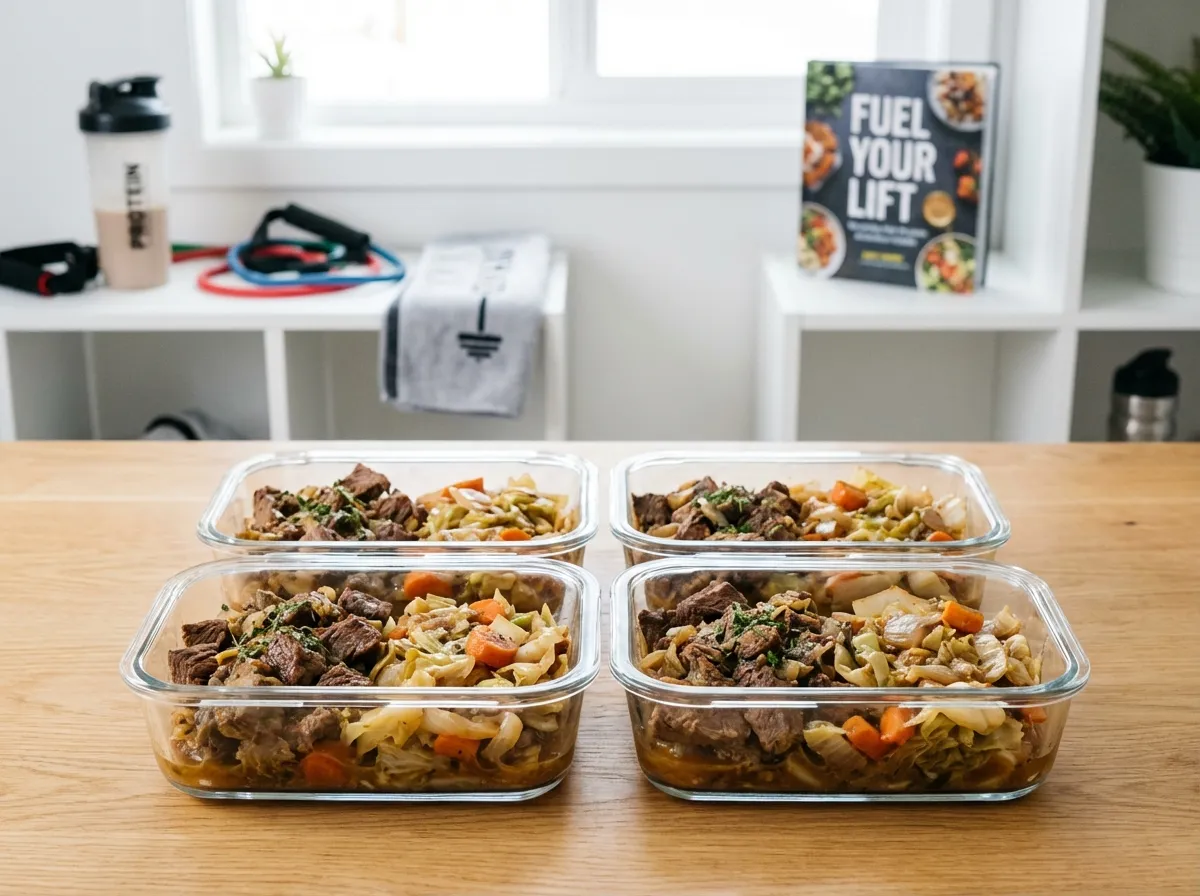
Efficiency in action: Four high-protein meals prepped and portioned in under 20 minutes.
The 40g Protein Performance Formula is a nutritional strategy rooted in the 40g Protein Rule for muscle hypertrophy, utilizing 6 ounces of 93/7 ground beef to provide 42 grams of bioavailable protein and 8 grams of fiber. This specific protein threshold is designed to maximize the anabolic response and maintain lean tissue mass during caloric restriction.
The Thermal Effect of Food (TEF) dictates that digesting high-protein and high-fiber meals increases metabolic expenditure by 20% to 30%. Your body burns more calories breaking down these dense structures compared to processed alternatives.
- Protein (42g): Derived from 6oz of 93/7 lean beef to ensure optimal leucine thresholds.
- Fiber (8g): Facilitates blood sugar stabilization and prolonged gastric emptying.
- TEF: High protein and fiber content increases metabolic activity during the digestive process.
| Beef Type | Protein (6oz) | Fat (g) | Caloric Impact | Suitability |
|---|---|---|---|---|
| 93/7 Lean | 42g | 12g | 310 | Elite (Fat Loss) |
| 80/20 Chuck | 38g | 34g | 480 | Poor (High Cal) |
| 96/4 Extra Lean | 44g | 6g | 260 | Peak (Contest) |
The Pro-Kitchen Setup and Tools for Efficiency
A professional kitchen workflow uses high-heat searing techniques to prevent moisture pooling and ensure optimal texture. Using a cast iron skillet, a digital food scale, and an infrared thermometer allows for the precise temperature control required to achieve the Maillard reaction—the chemical browning of proteins—at 400°F.
- Cast Iron Skillet: Provides superior heat retention for browning without excess oil.
- Digital Food Scale: Ensures accurate tracking of the 42g protein target.
- Glass Meal Prep Containers: Maintains ingredient integrity for up to 4 days.
- Infrared Thermometer: Validates that the pan surface reaches 400°F for proper moisture evaporation.
Cost-Per-Serving Analysis for Budget Prep
This ground beef and cabbage bowl costs between $2.40 and $3.15 per serving, providing an efficient source of bioavailable leucine. Strategic shopping and bulk purchasing of lean beef allow athletes to maintain high-protein standards without the cost associated with premium steak cuts.
- Estimated Cost: $2.40–$3.15 per serving based on regional pricing.
- Efficiency: Ground beef offers the highest protein-to-dollar ratio for bioavailable leucine.
- Bulk Strategy: Buying 3-pound family packs and portioning into 6-ounce increments reduces unit costs by approximately 20%.
My 15-Minute Power-Sauté Workflow
The Power-Sauté method is a high-heat, rapid-evaporation technique that browns meat and wilts cabbage to prevent the ingredients from steaming. This parallel workflow utilizes 15 minutes of active time to maximize flavor development and maintain vegetable texture.
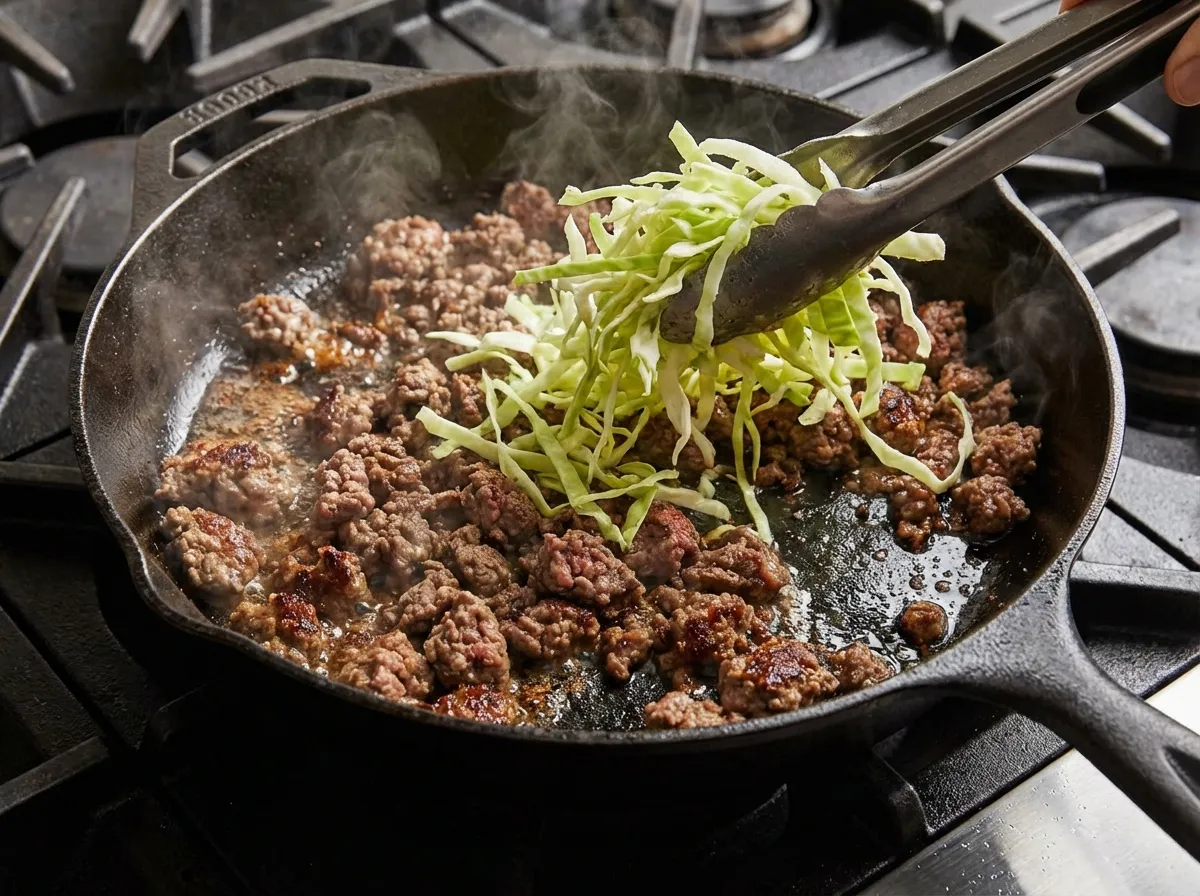
The Power-Sauté: Using high heat in cast iron to ensure browning without steaming the vegetables.
- Prep Time: 5 minutes
- Cook Time: 15 minutes
- Yield: 4 servings
Ingredients:
* 24 oz (1.5 lbs) 93/7 lean ground beef
* 1 large head green cabbage, finely shredded (8 cups)
* 1 tbsp avocado oil
* 3 cloves garlic, minced
* 1 tbsp fresh ginger, grated
* 2 tbsp low-sodium soy sauce
* 1 tsp toasted sesame oil
* 1/2 tsp kosher salt
* 1/2 tsp black pepper
Instructions:
1. Preheat: Heat a cast iron skillet to 400°F. Add avocado oil.
2. Sear: Add beef. Sear for 3 minutes undisturbed to initiate the Maillard reaction. Cook until no longer pink.
3. Fold: Add shredded cabbage in two batches. Toss with tongs to encourage evaporation.
4. Aromatics: Create a center well; add garlic and ginger for 60 seconds.
5. Season: Remove from heat. Stir in soy sauce, sesame oil, salt, and pepper. Portion into 4 containers immediately.
Texture Engineering to Avoid Soggy Cabbage Syndrome
Soggy Cabbage Syndrome is a condition where early salt application causes cellular moisture release, resulting in a mushy texture. By withholding salt until the final 2 minutes of cooking, you maintain the structural integrity of the cabbage, which increases satiety through a longer mastication (chewing) time.
- The Science: Salt triggers osmotic pressure, forcing water out of vegetable cells and into the pan.
- The Fix: Season only when the cabbage reaches an “al dente” state to preserve crunch and prevent moisture loss.
Macro-Optimization and Tracking Adjustments
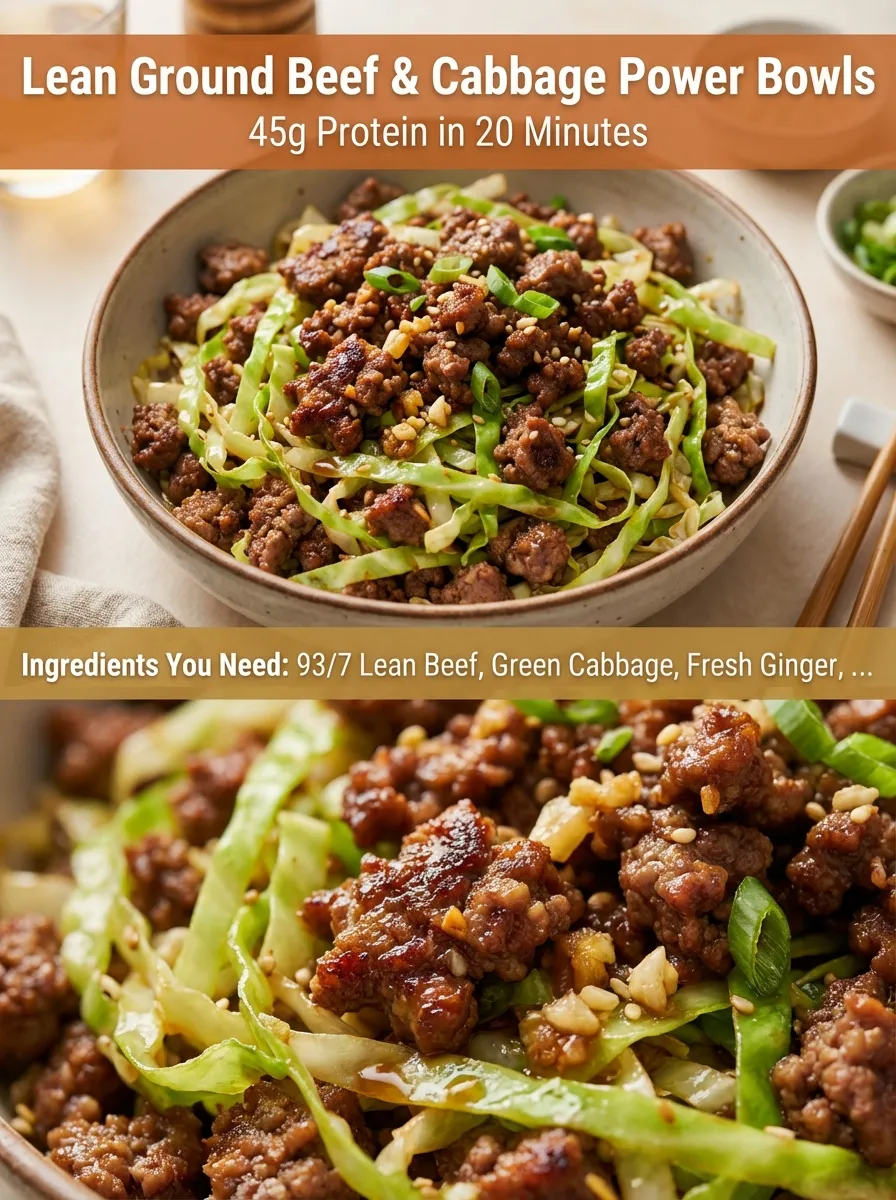
Save this 20-minute macro-hack to your High-Protein Meal Prep board.
Macro-optimization involves adjusting ingredient volumes to transition between fat loss and caloric surplus phases while maintaining a 42g protein core. This systematic approach prevents decision fatigue by keeping the fundamental meal structure consistent—similar to how you might rotate in high-protein Greek chicken pita bowls—regardless of your current training block.
- The Cut: Increase raw cabbage volume by 20% for added gastric distension. Replace sesame oil with a half-second spray of avocado oil to reduce liquid calories.
Quick Answer: These bowls provide 42g of protein and 8g of fiber in 15 minutes. Use a 400°F cast iron skillet to sear beef, add cabbage in batches to prevent steaming, and season only at the end to ensure a crisp texture and high satiety.