
The Mix-and-Match Roasting System Explained
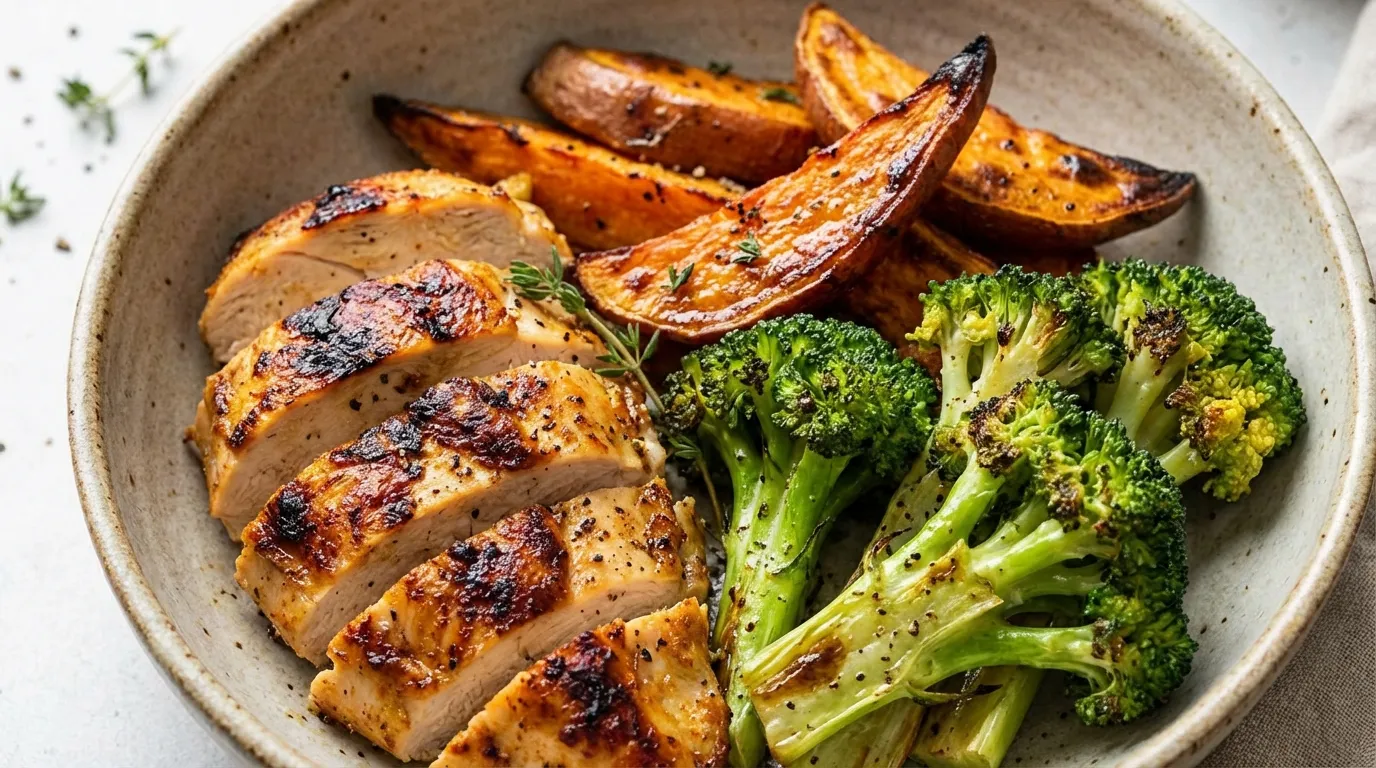
The mix-and-match roasting system is a modular meal preparation strategy and a core component of the 1-Hour Sunday Macro Prep System designed for high-performance athletes. This method involves roasting proteins, complex carbohydrates, and fibrous vegetables on separate, staggered-entry pan zones. This method ensures optimal texture for each food group, prevents cross-steaming, and provides a consistent inventory of macronutrients to support specific dietary goals throughout the week.
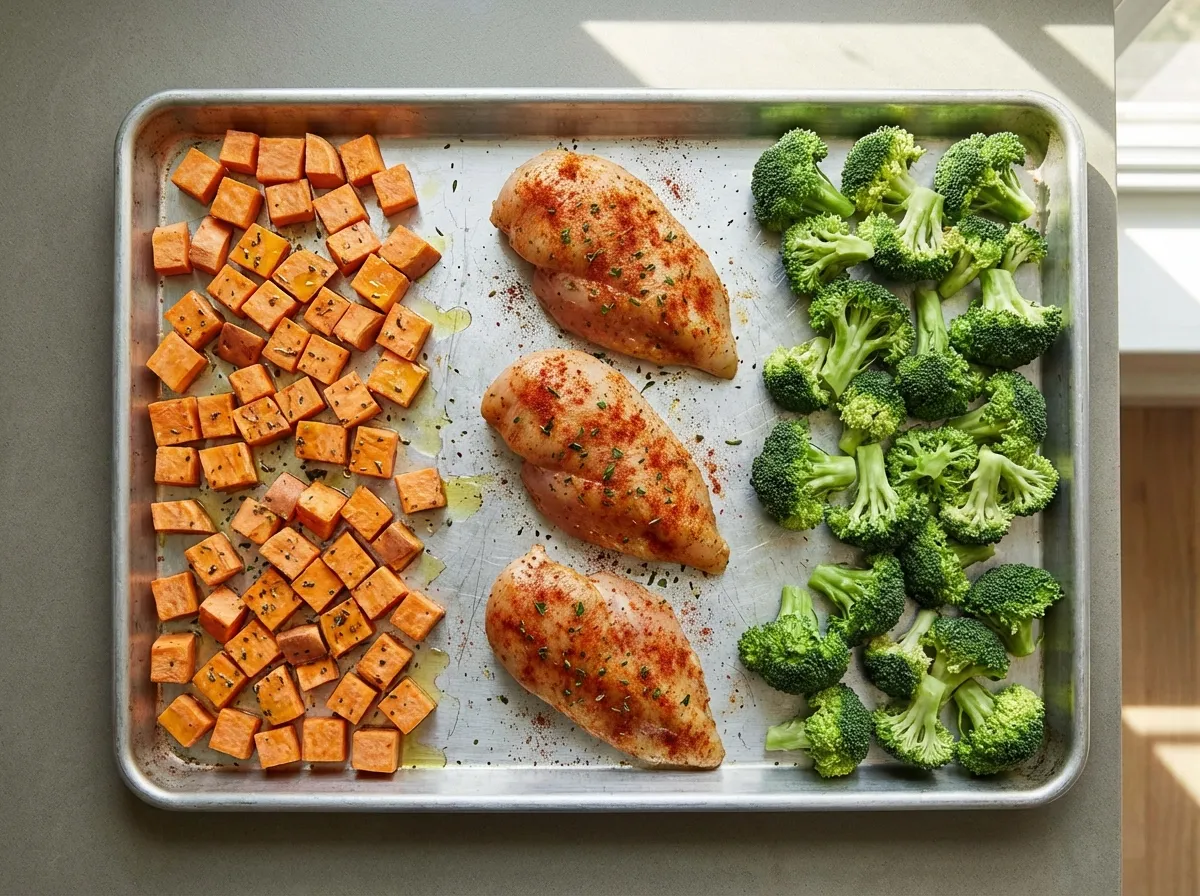
Using the ‘Two-Pan Rule’ ensures your vegetables stay crisp while your protein roasts perfectly.
Master the Roasting Workflow
Mastering the roasting workflow requires managing thermal density by separating high-moisture vegetables from lean proteins. Utilizing a staggered entry matrix ensures dense root vegetables reach full tenderness while delicate proteins avoid moisture loss. This systematic approach prevents soggy textures and guarantees a consistent Maillard reaction—the chemical browning process—across every batch.
Mixing ingredients in one bowl creates “macro-mush” due to excessive steam trapped in a crowded pan. To build a high-performance system, implement the “Two-Pan Rule”:
- Pan 1: Heavy-gauge aluminum sheet pan for proteins and dense carbohydrates.
- Pan 2: Separate sheet pan for high-water, fibrous vegetables.
Heavy-gauge aluminum is required to ensure even heat distribution and prevent the soggy bottom syndrome common with thin-gauge bakeware.
The Staggered Entry Matrix (At 400°F / 200°C)
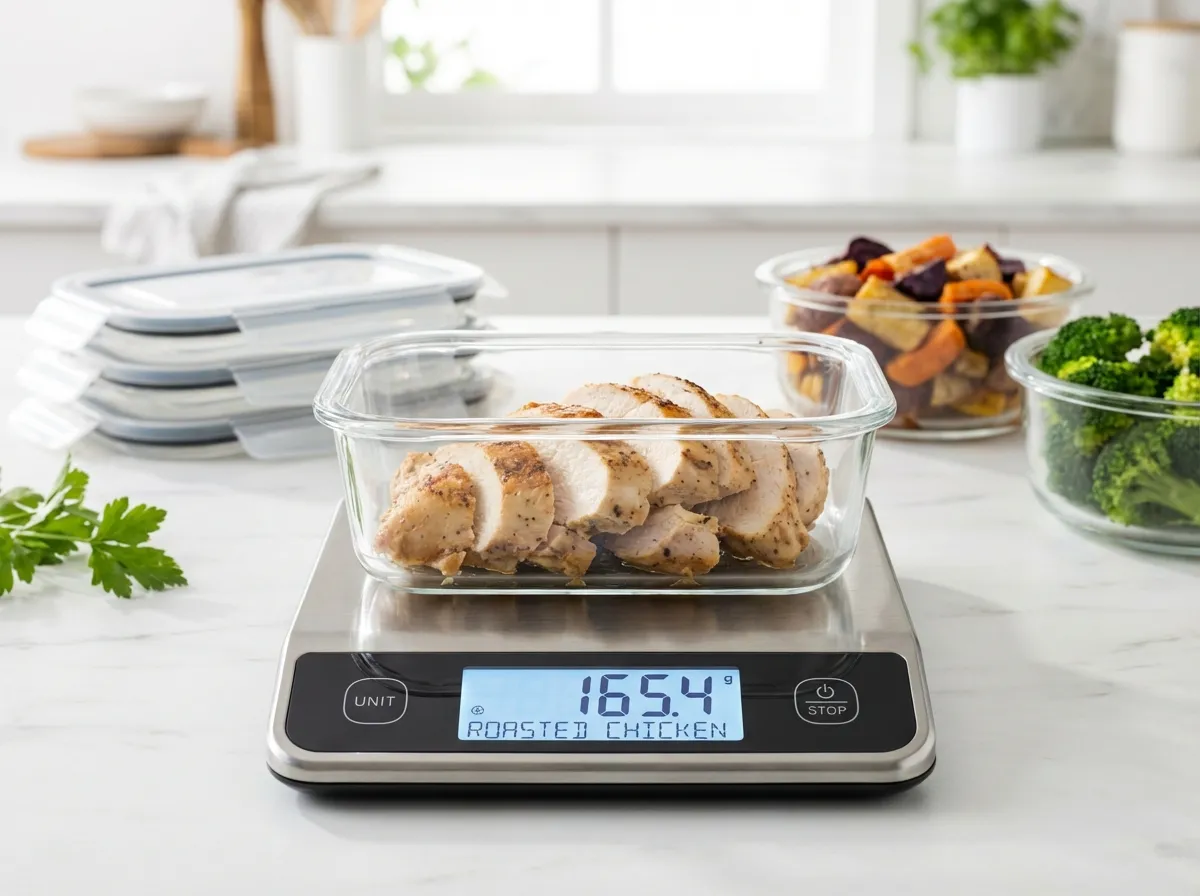
Precision is key: weigh your protein after roasting to account for moisture loss.
| Ingredient Category | Thermal Density | Oven Entry Time | Target Outcome |
|---|---|---|---|
| Complex Carbs | High | Minute 0 | Caramelization, fork-tender core |
| Lean Protein | Medium | Minute 10 | 165°F internal, golden crust |
| Fibrous Veg | Low | Minute 15-20 | Crisp-tender, color retention |
The 3-Tier Assembly: Protein, Carbs, and Fibrous Veg
The 3-tier assembly is a structured meal architecture consisting of a weighed protein foundation, a scalable carbohydrate base, and a high-volume fibrous vegetable fill. This configuration allows you to manipulate daily caloric intake while maintaining consistent, cost-effective nutrition.
Protein First: The Digital Scale Requirement
Cooking for muscle hypertrophy requires post-cook weighing. Lean poultry experiences a 20% to 25% moisture loss during roasting. To hit a 35g–40g protein threshold, use a digital food scale to weigh 5.5 to 6 ounces of cooked protein. This precision ensures you meet your macros while maintaining a cost-per-serving under $3.
The Carb Base: Macro-Partitioning
Your carbohydrate base should scale based on training intensity.
* Training Days: Increase intake of roasted complex carbohydrates (e.g., sweet potatoes) for glycogen replenishment.
* Rest Days: Reduce complex carbohydrates and increase the volume of low-calorie, roasted fibrous vegetables (e.g., zucchini) to maintain satiety.
The Fiber Fill
Fibrous vegetables function as a volume lever. Incorporating broccoli, asparagus, or green beans adds physical mass to containers, increasing satiety during caloric deficits without exceeding daily calorie targets.
Strategic Seasoning for Reheat Longevity
Strategic seasoning is the practice of using high-smoke-point fats and antioxidant-rich herbs to prevent lipid oxidation and warmed-over flavor (WOF). Applying a neutral base during roasting allows for the use of cold-prep sauces post-reheat to vary flavor profiles throughout the week.
Neutral Base Ingredients
* Kosher salt
* Coarse black pepper
* Garlic powder
* Avocado oil (smoke point: 520°F)
The Sauce Pivot
Apply these sauces only after reheating to avoid flavor fatigue. This modular approach mirrors our 5-day chicken burrito bowl prep, which utilizes similar cooling and sauce-layering protocols to maintain freshness:
* Greek Yogurt Ranch: 0% Greek yogurt, dill, garlic powder, and almond milk.
* Spicy Soy: Low-sodium soy sauce, sriracha, and rice vinegar.
* Lemon Tahini: Tahini, lemon juice, warm water, and cumin.
Storage Logic: Keeping Macros Fresh for 5 Days
Storage logic is the application of thermal management protocols to preserve food texture and safety during a five-day refrigerator cycle. Proper storage prevents condensation and bacterial growth while maintaining the integrity of your meal prep.
The Flash-Cool Method
1. Remove roasted components from the oven.
2. Spread items on a sheet pan at room temperature.
3. Rest for 20 minutes until the surface temperature drops below 90°F.
4. Seal in containers only after cooling to prevent condensation-induced sogginess.
Glass vs. Plastic
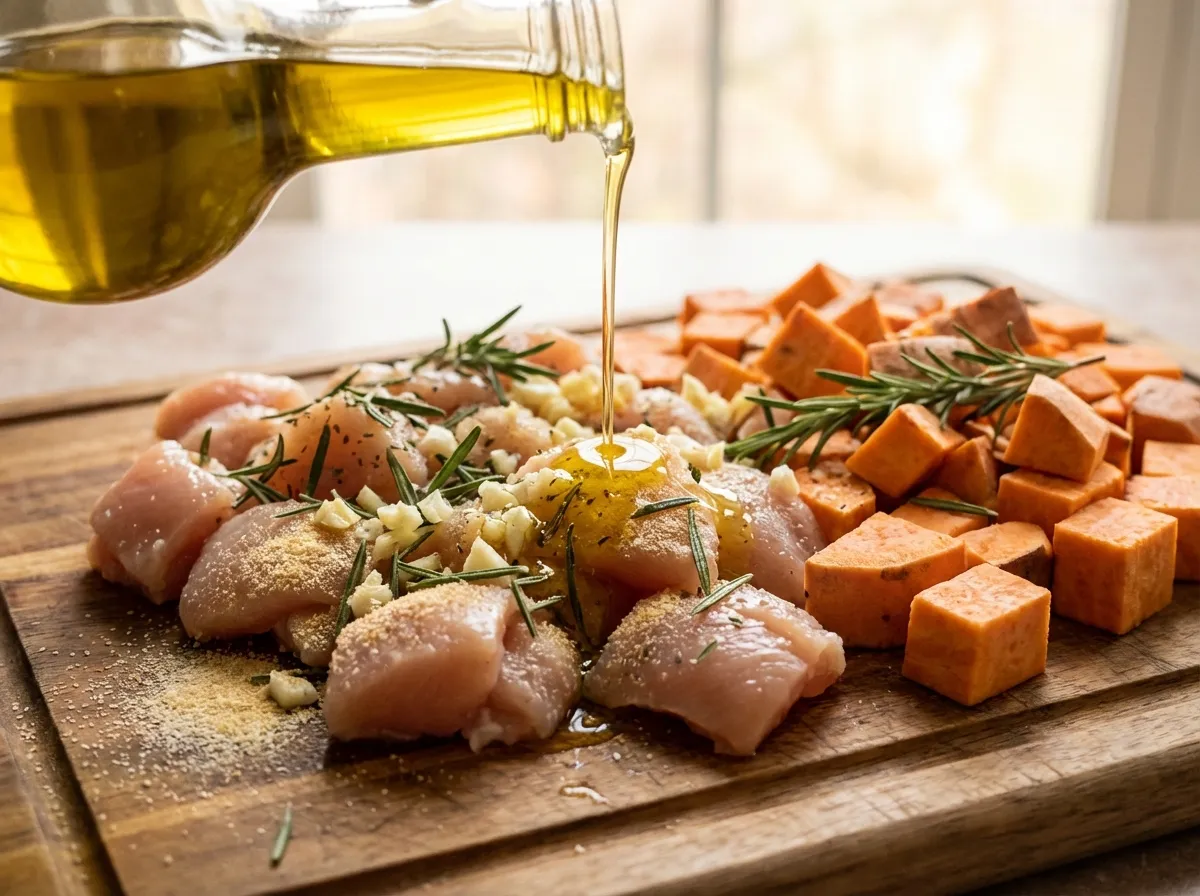
A neutral base of avocado oil and rosemary prevents flavor fatigue and preserves protein quality.
Professional meal-preppers use borosilicate glass. Unlike porous plastic, glass does not absorb odors, does not stain, and prevents chemical leaching during microwave reheating.
Reheating Physics: The Water Droplet Trick
To prevent lean protein from becoming dry during reheating, add 0.5 teaspoons of water to the container and leave the lid slightly askew. This creates a micro-steam environment that rehydrates the fibers.
Frequently Asked Questions
Can I roast frozen vegetables and fresh meat together?
No. The rapid moisture release from thawing frozen vegetables creates excess steam that boils the meat. Roast frozen vegetables on a separate, dedicated sheet pan and drain any accumulated water halfway through the cooking cycle to ensure proper browning.
How long does roasted chicken stay safe in the fridge?
Roasted chicken remains safe and maintains peak texture for four days when stored at a constant 40°F (4°C). For five-day prep cycles, freeze the final two portions immediately on Sunday and transfer them to the refrigerator on Wednesday night to thaw.
Which oils are best for high-protein roasting?
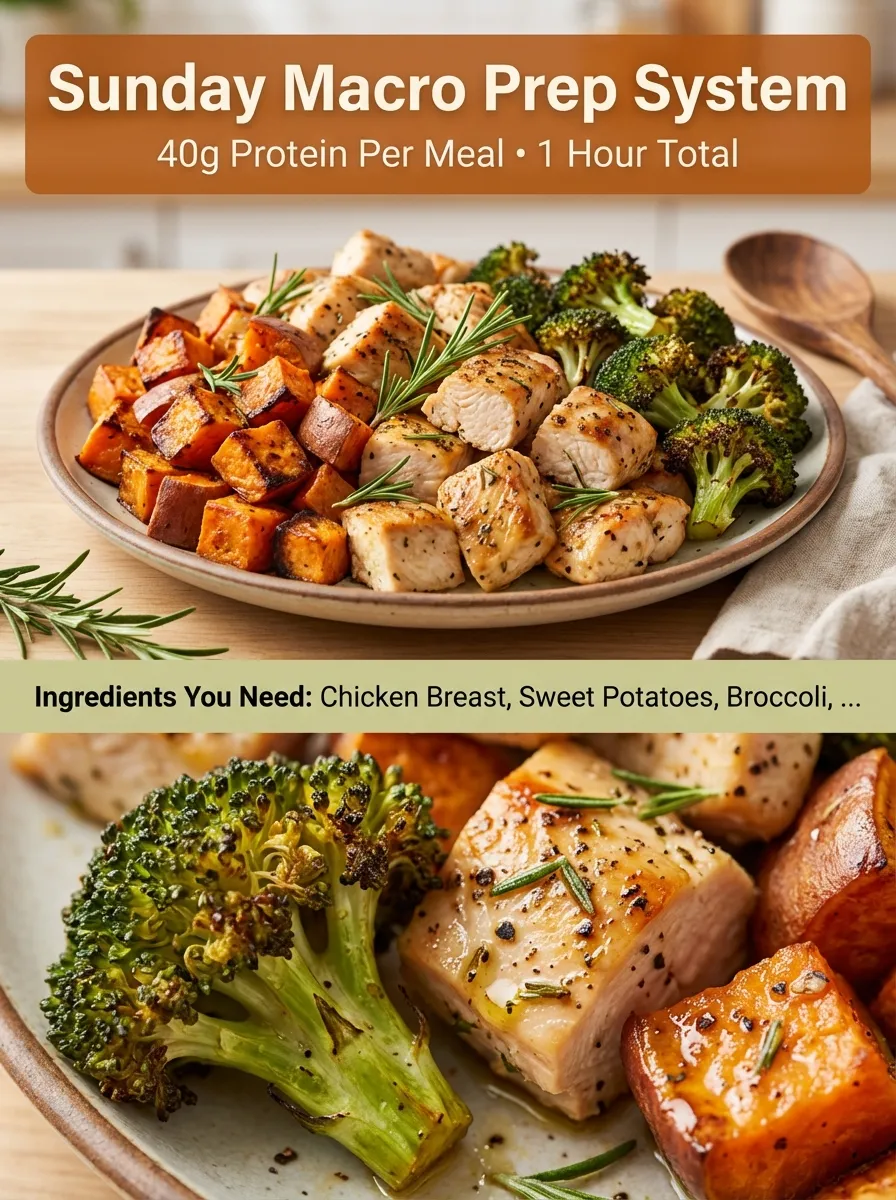
Pin this Sunday Macro System to your meal prep board!
Avocado oil and ghee are optimal for 400°F roasting due to their high smoke points. These fats prevent the formation of acrolein, a byproduct of burnt oil that causes bitter, acrid flavors. Do not use extra virgin olive oil, as it degrades at these temperatures. For those prioritizing speed over volume, air fryer sweet potato cubes offer a faster alternative for carbohydrate loading.