
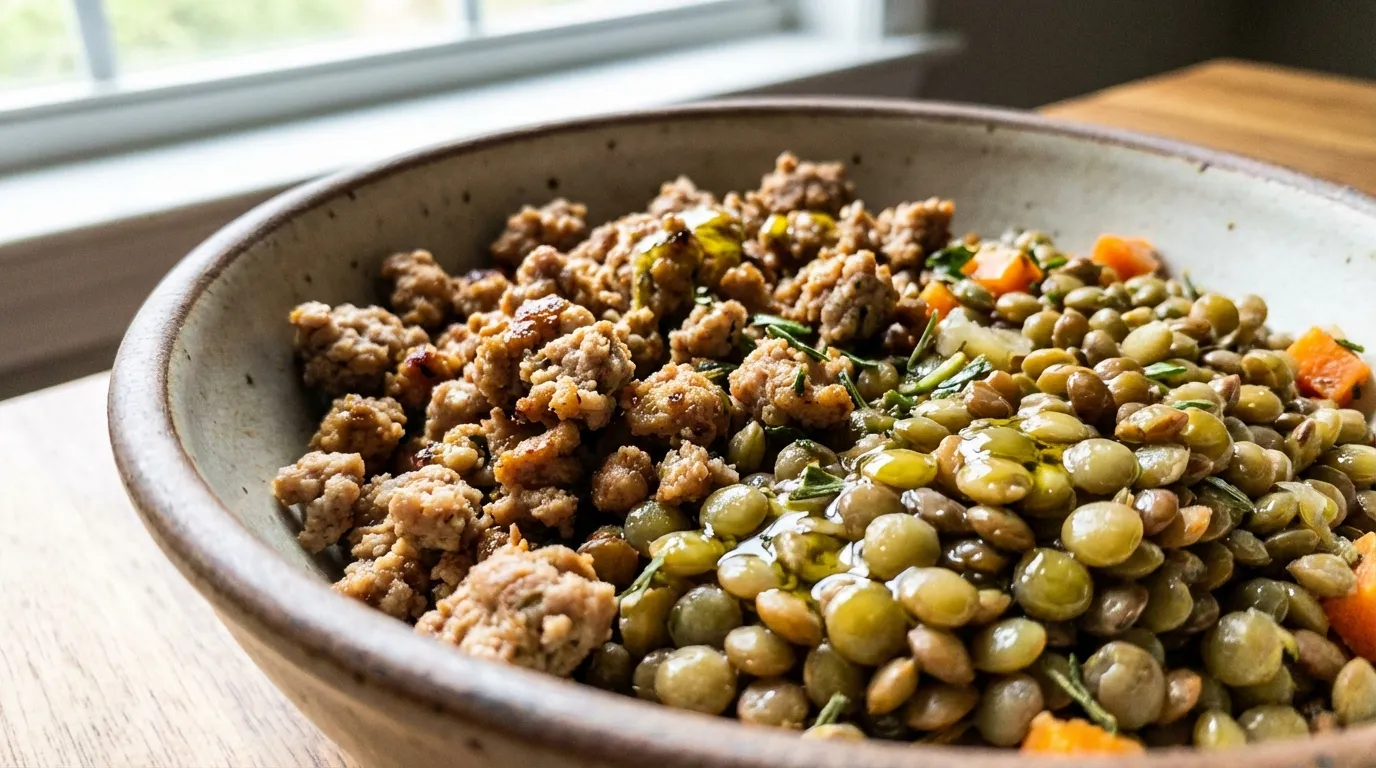
The Quick Answer: Building Your $40 High-Protein Pantry
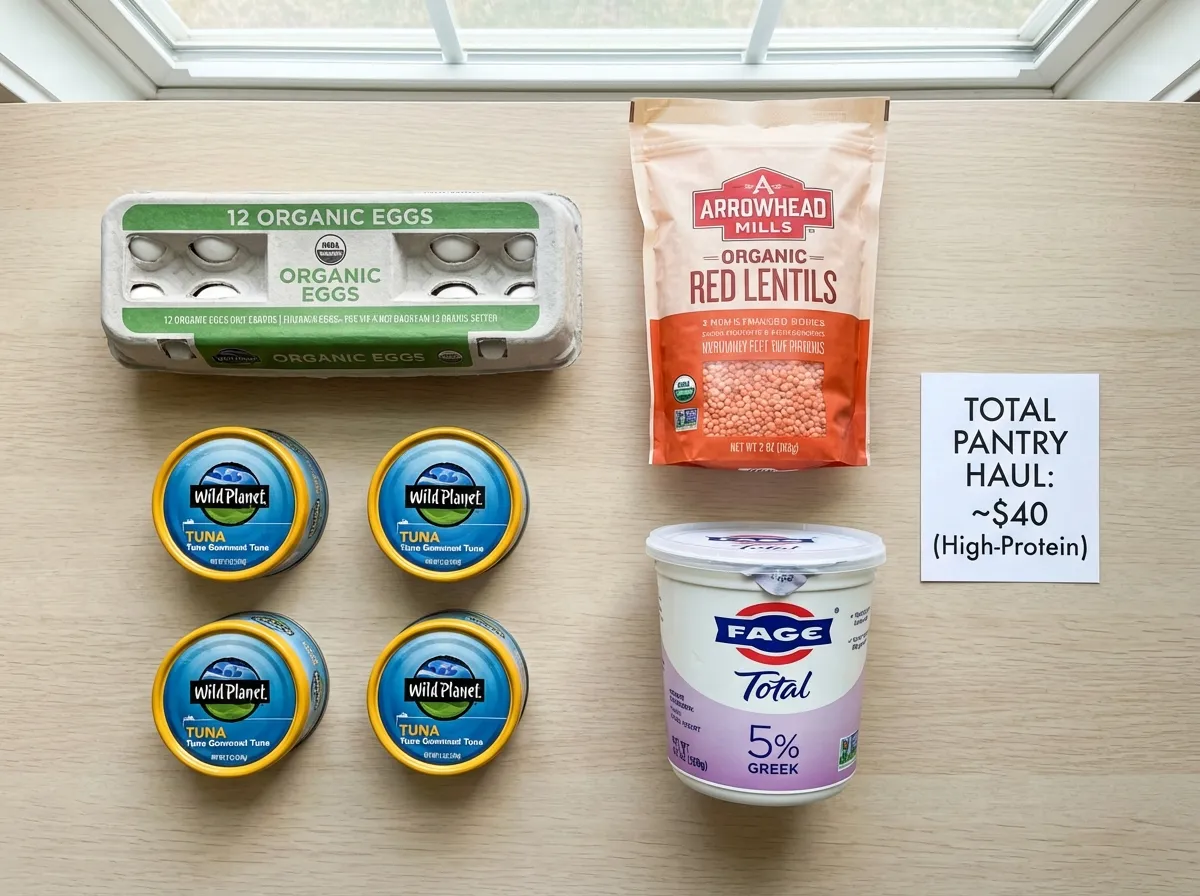
The foundation of a $40 pantry: prioritizing high-yield protein staples over expensive pre-packaged snacks.
Building a $40 high-protein pantry requires prioritizing protein-per-dollar staples like eggs, canned tuna, dry lentils, and bulk oats. By allocating 60% of your budget to high-yield proteins and 40% to shelf-stable complex carbohydrates, you create a foundation for macro-optimized meals that support muscle growth without financial strain.
I have observed that the “Cost-Per-Meal” trap derails most fitness journeys. People miss their protein goals because relying on pre-packaged snacks or premium meat cuts causes grocery bills to skyrocket. The solution is to engineer a pantry built around biological efficiency and mathematical precision. This guide outlines how to execute that strategy.
The $40 High-Protein Pantry Philosophy: Protein-First Budgeting
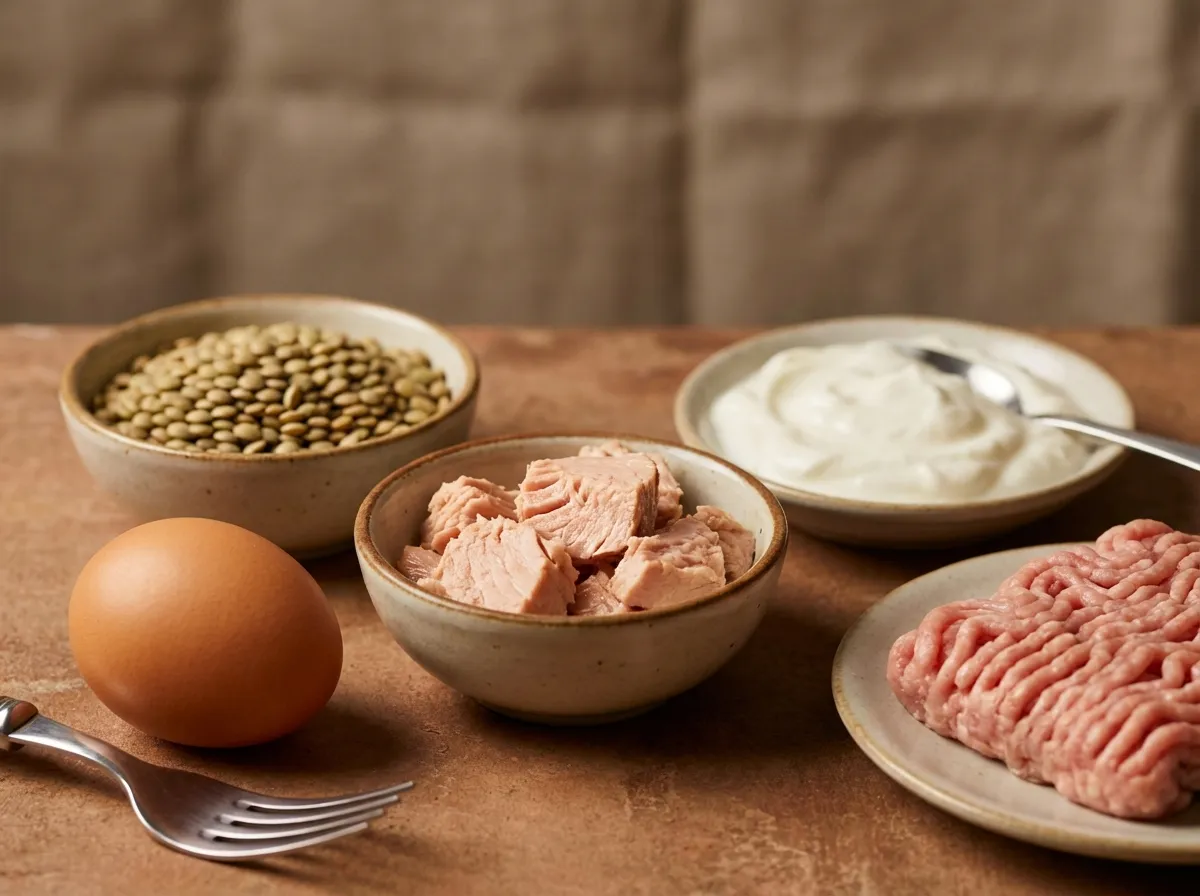
Mastering these five ingredients allows you to stay under budget while maximizing biological protein value.
Protein-first budgeting is a nutritional framework that evaluates groceries based on their exact protein yield rather than gross package weight. By shifting focus from generic low-cost foods to highly efficient protein sources, you ensure every dollar spent directly supports macro-optimization and muscle hypertrophy for consistent long-term physical progression.
I utilize a metric called the “Protein-per-Dollar” (PPD) Index to calculate the actual mathematical efficiency of your grocery spend. This index reveals exactly how many grams of protein you acquire for every $1 spent.
| Protein Source | Avg. Cost/lb | Protein/lb (g) | PPD Index (g/$1) |
|---|---|---|---|
| Dry Lentils | $1.80 | 115g | 63.8g |
| Large Eggs | $3.00 (doz) | 72g | 24.0g |
| Canned Tuna | $1.00 (can) | 22g | 22.0g |
| Ground Turkey | $5.00 | 88g | 17.6g |
| Greek Yogurt | $4.50 | 40g | 8.8g |
The PPD Index shows that dry legumes are 3.6 times more protein-efficient than ground turkey. If your budget is tight, pivot your capital toward dry lentils and eggs to maintain your macro targets while ensuring budget sustainability.
The “Big 5” Essential Proteins for Under $25
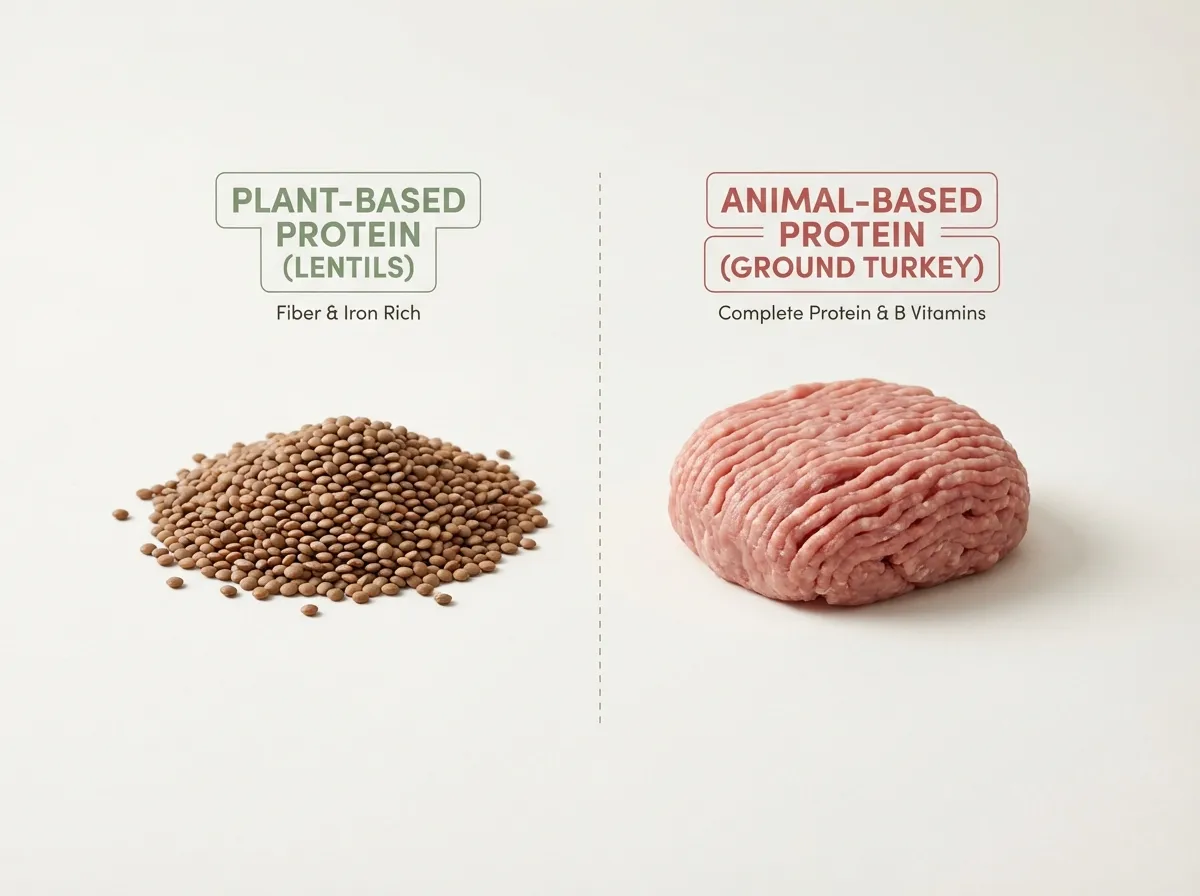
The PPD Index proves that lentils are nearly four times more cost-efficient than meat for hitting protein targets.
The foundation of a budget-friendly macro meal plan relies on five core ingredients: large eggs, canned tuna, dry lentils, Greek yogurt, and ground turkey. These staples deliver maximum bioavailability and complete amino acid profiles while keeping your total weekly protein expenditure strictly under $25.
- Large Eggs: These provide a near-perfect Protein Digestibility-Corrected Amino Acid Score (PDCAAS) and serve as a binding agent for recipes like high-protein cabbage dumplings. To avoid rubbery textures, cook eggs at a maximum of 300°F (150°C). High heat denatures proteins too quickly, causing water loss and a dry mouthfeel.
- Canned Tuna: This is a zero-cook protein. To maintain structural integrity, fold tuna into meals after removing them from heat; overheating causes texture degradation.
- Dry Lentils: As an incomplete protein, lentils must be paired with a methionine-rich grain like rice to create a complete amino acid profile, a concept perfected in a bulk bean and rice protein skillet. Always rinse canned or cooked lentils to remove up to 40% of excess sodium.
- Greek Yogurt: This provides slow-digesting casein protein, ideal for post-workout recovery. Use it as a budget-friendly sour cream substitute.
- Ground Turkey: This is a versatile lean meat that absorbs seasoning and cooks in approximately 15 minutes.
Complex Carb Foundations: Fueling Workouts on Pennies
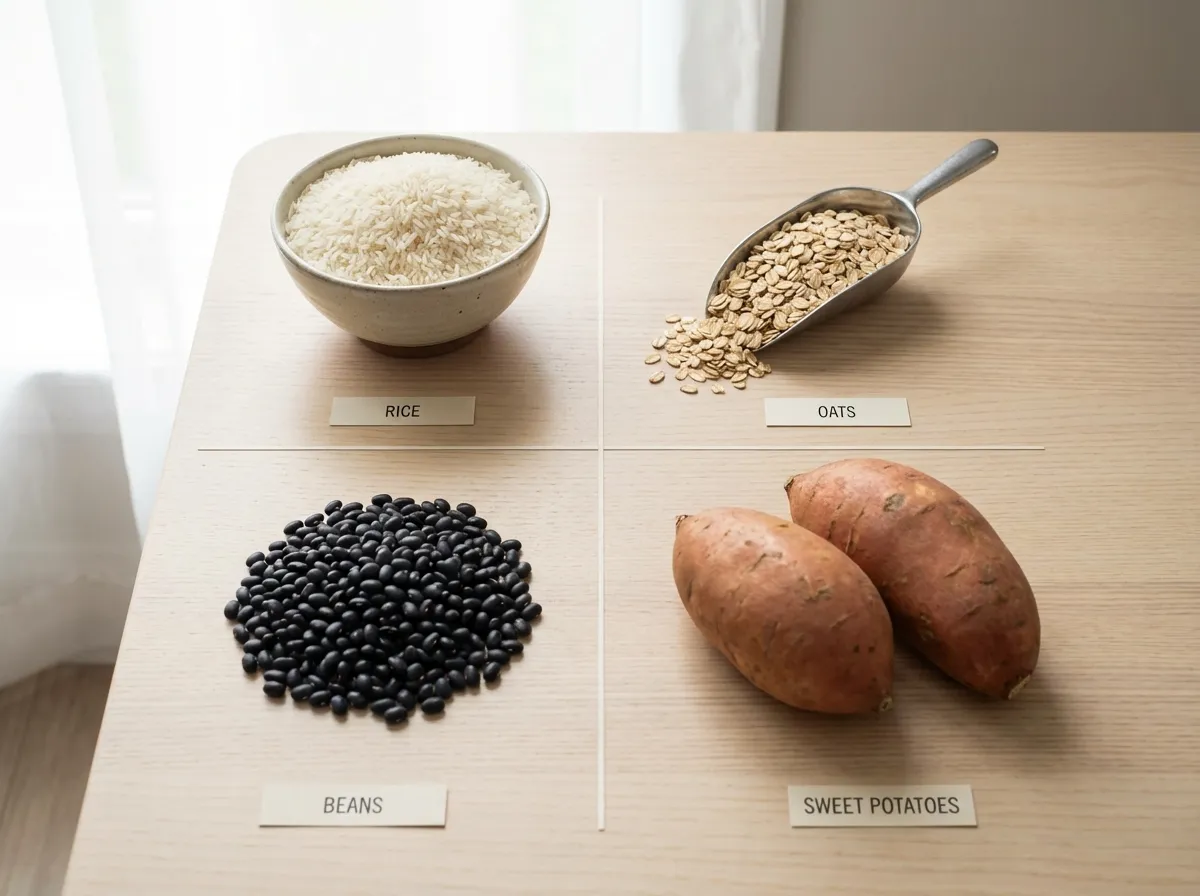
Complex carbs like oats and sweet potatoes provide the slow-burning fuel necessary for high-intensity bodybuilding sessions.
Complex carbohydrates are nutrient-dense fuel sources that replenish muscle glycogen and support high-intensity training. By stocking jasmine rice, oats, and staples for a 5-ingredient protein pasta, you secure shelf-stable, low-glycemic energy sources that optimize your satiety index and support fat oxidation for minimal cost per serving.
- Jasmine Rice: High-volume and easy to digest. To prevent starch breakdown and grittiness, cook in 3-day batches rather than 7-day batches.
- Old Fashioned Oats: High in dietary fiber, which regulates the glycemic index and prevents insulin spikes.
- Black Beans: These improve the satiety index, keeping you full during caloric deficits.
- Sweet Potatoes: A source of potassium and Vitamin A, which are critical for muscle contraction and metabolic function.
The $40 Weekly Shopping List: A Master Blueprint
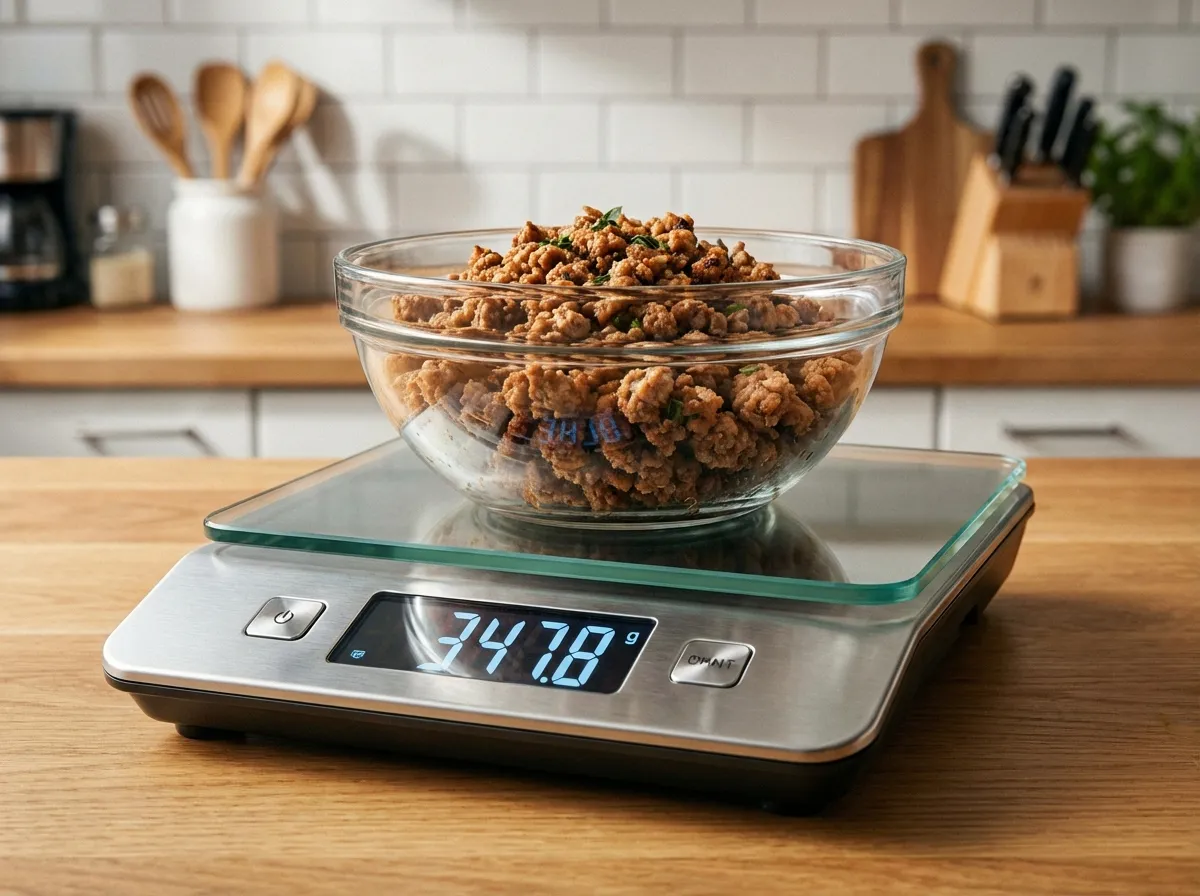
Precision is profit: using a food scale prevents portion creep and protects your weekly grocery budget.
This master blueprint outlines the exact quantities and estimated costs required to secure over 500 grams of high-quality protein for $40. By following this grocery list, you can guarantee sufficient intake for muscle maintenance without exceeding your weekly financial boundaries.
| Item | Quantity | Estimated Cost | Protein Total |
|---|---|---|---|
| Large Eggs | 2 Dozen | $6.00 | 144g |
| Canned Tuna | 5 Cans | $5.00 | 110g |
| Dry Lentils | 1 lb | $2.00 | 115g |
| Bulk Oats | 18 oz | $3.50 | 65g |
| Ground Turkey | 1 lb | $5.00 | 88g |
| Rice/Beans/Produce | Bulk | $18.50 | — |
| Total | — | $40.00 | 522g |
This list yields 522g of bioavailable protein and provides the base for meals like cheap sheet-pan sausage and veggies. If your goal is 150g of protein per day (1,050g per week), this $40 base covers exactly half of your weekly requirement. You can scale this list linearly to meet higher daily targets.
Performance Optimization: Recommended Tools for Efficiency
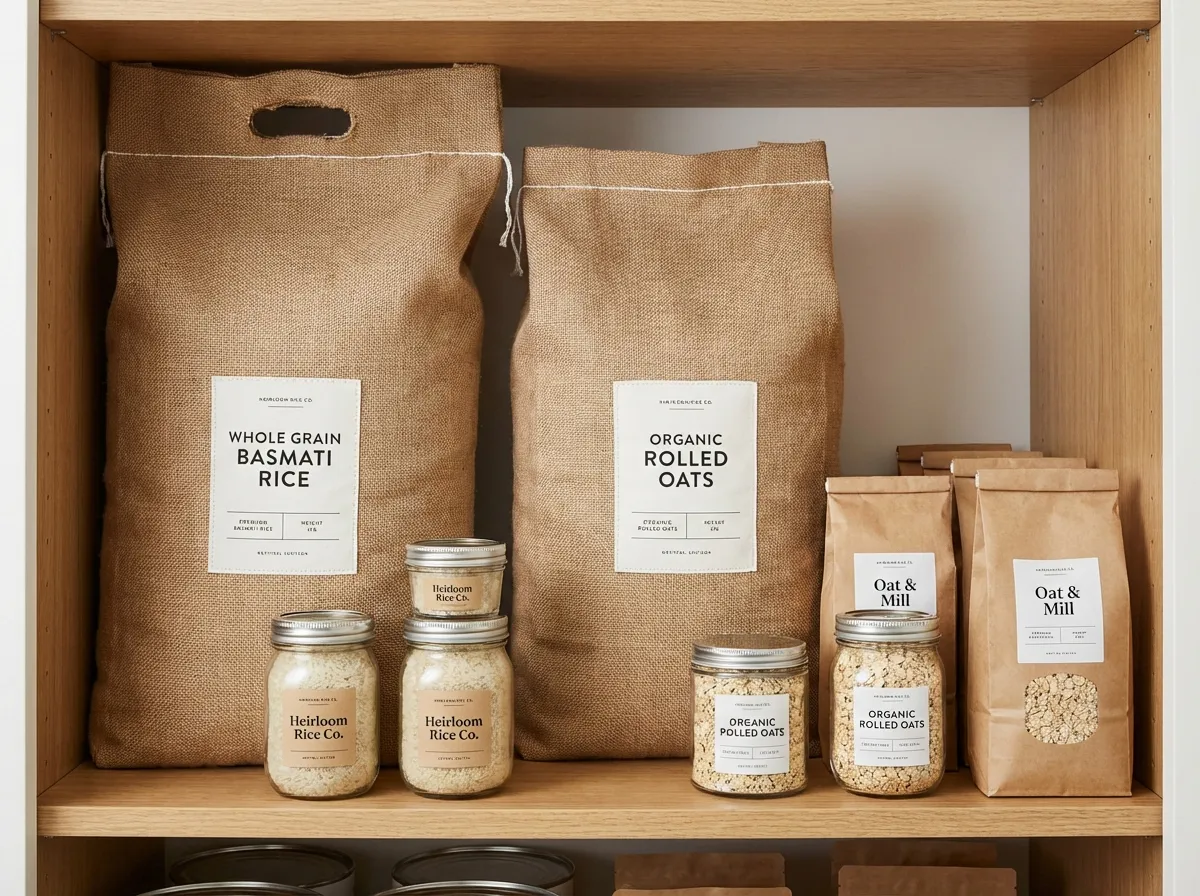
Buying staples in bulk reduces the unit price by up to 20%, a key tactic for long-term budget sustainability.
Precision kitchen appliances, specifically a digital food scale, an air fryer, and glass storage containers, are necessary for budget management. These tools prevent portion creep, accelerate cooking times by up to 30%, and extend the shelf life of prepped meals, which eliminates food waste.
- Digital Food Scale: Essential for tracking macros and preventing “portion creep,” where accidental over-serving leads to faster depletion of your protein supply.
- Glass Meal Prep Containers: Airtight glass seals extend the shelf-life of batch-prepped proteins by up to 48 hours compared to plastic, directly reducing food waste.
- Air Fryer: Reduces cooking time for lean meats by 30% and allows for fat-free cooking, keeping your macros aligned with fat loss goals.
Cost & Efficiency: The Weekly Savings Strategy
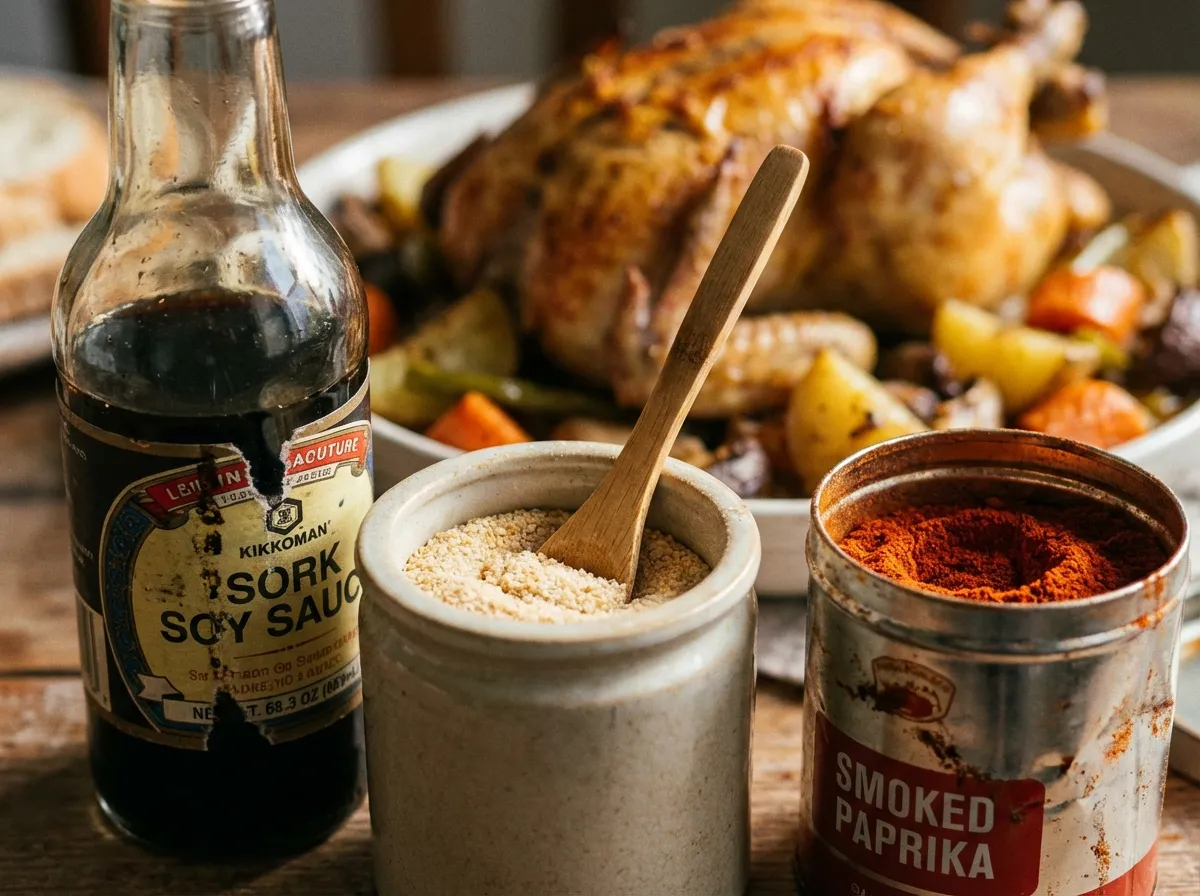
Soy sauce, garlic, and smoked paprika provide deep umami and charred flavors without adding calories or cost.
Implementing a weekly savings strategy hinges on bulk buying large-format staples and utilizing a strictly managed FIFO (First-In, First-Out) inventory system. Purchasing complex carbohydrates in 5lb increments lowers unit prices by approximately 20%, while rotating older stock forward ensures no money is lost to expired food.
- Bulk Buying: Focus on weight-based bulk (e.g., 5lb bags) rather than single-serving packets to avoid the 400% markup common in pre-packaged goods.
- FIFO Inventory: When unpacking groceries, move older items to the front of the pantry or fridge. This rolling inventory management prevents food waste.
Flavor Maximizers: High-Impact, Low-Cost Seasoning Strategy
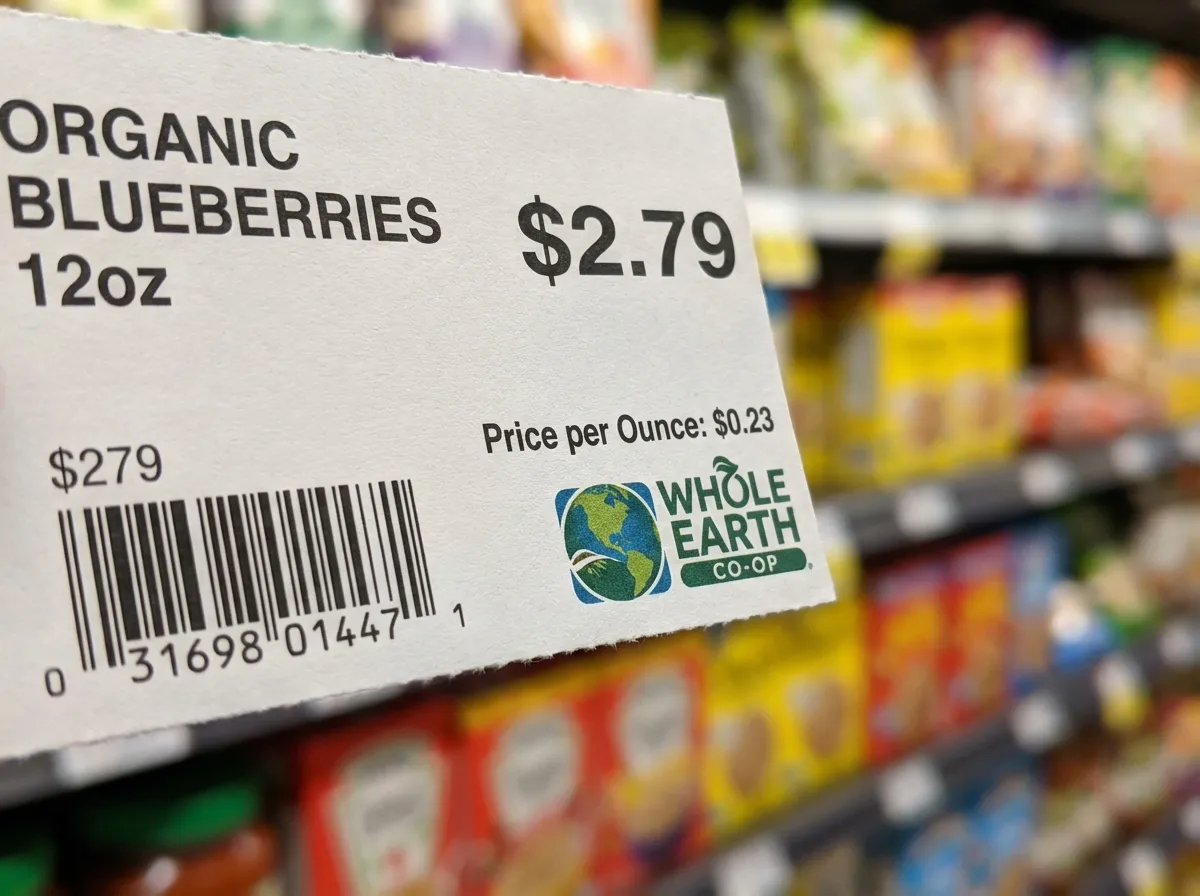
Ignore the big red sale numbers; the ‘Price per Ounce’ tag is the only metric that matters for your budget.
Preventing diet fatigue on a strict budget requires a targeted seasoning strategy using soy sauce, garlic powder, and smoked paprika. These three ingredients provide umami depth and charred flavor profiles to lean meats without the added calories or expense of artisan spice blends.
- Soy Sauce: Provides a savory umami base for stir-fries and marinades.
- Garlic Powder: Offers a consistent, robust flavor profile that, unlike fresh garlic, does not burn at high heat.
- Smoked Paprika: Adds a “charred” flavor profile to lean meats cooked indoors, mimicking the taste of higher-fat cuts.
Strategic Shopping: Where and How to Buy for Maximum ROI
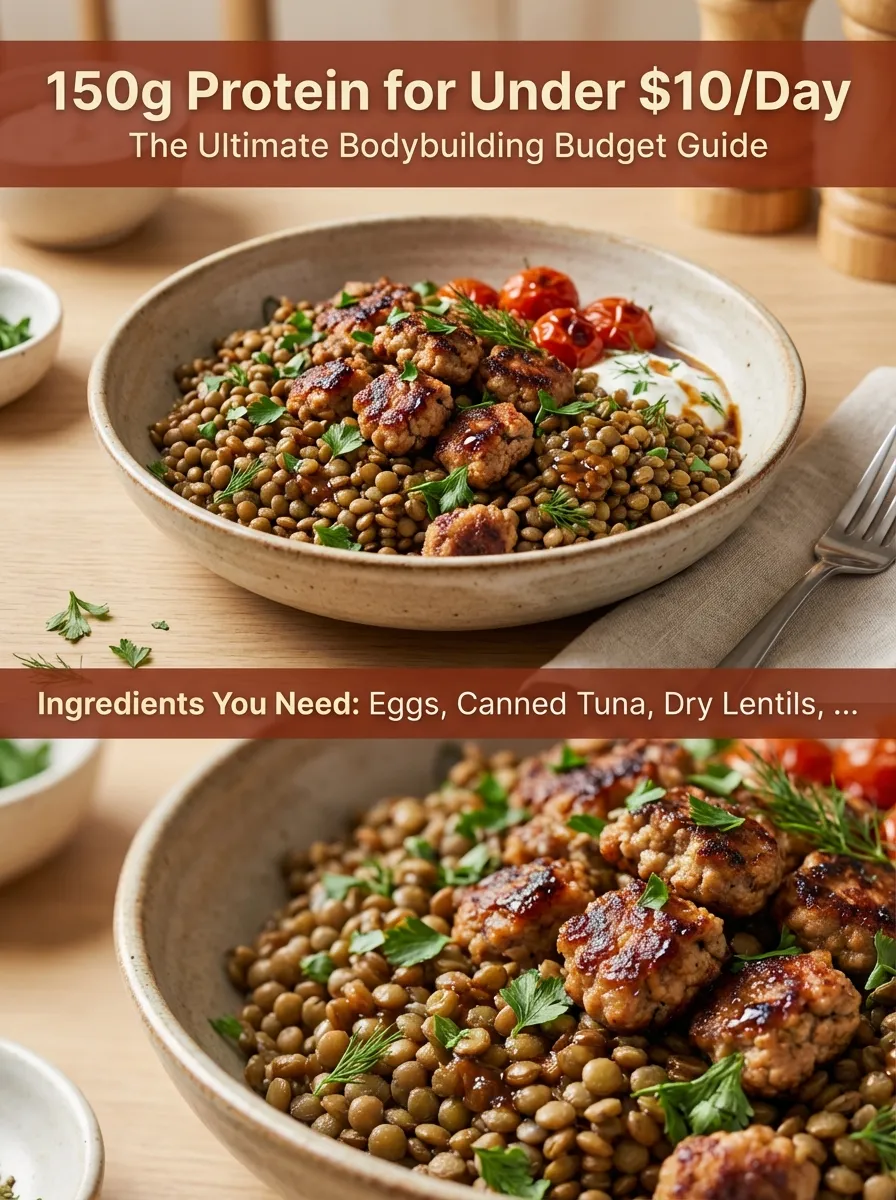
Save this guide to master high-protein eating on a $40 weekly budget.
Achieving a $40 weekly grocery budget requires shopping at discount grocers and targeting “loss leaders.” By calculating the price per ounce on shelf tags, you can efficiently source ingredients for a high-protein fried rice using leftovers, maintaining control over your budget sustainability and macro-efficiency.
- Discount Grocers: Focus on stores like Aldi. Identify their “loss leaders”—items sold at a loss to drive foot traffic—such as eggs, milk, or bulk meats.
- Unit Price Calculation: Ignore the total price and focus on the “Price per Ounce” on the shelf tag. A smaller box with a lower total price is often more expensive per serving than a larger bulk bag.