
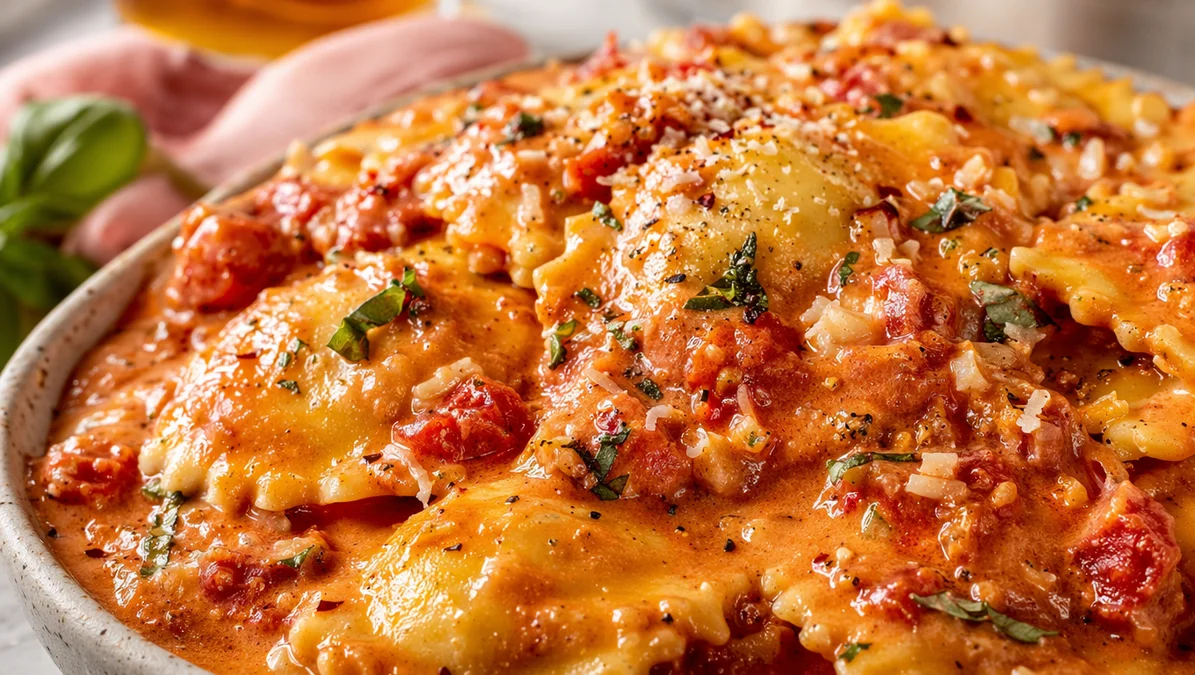
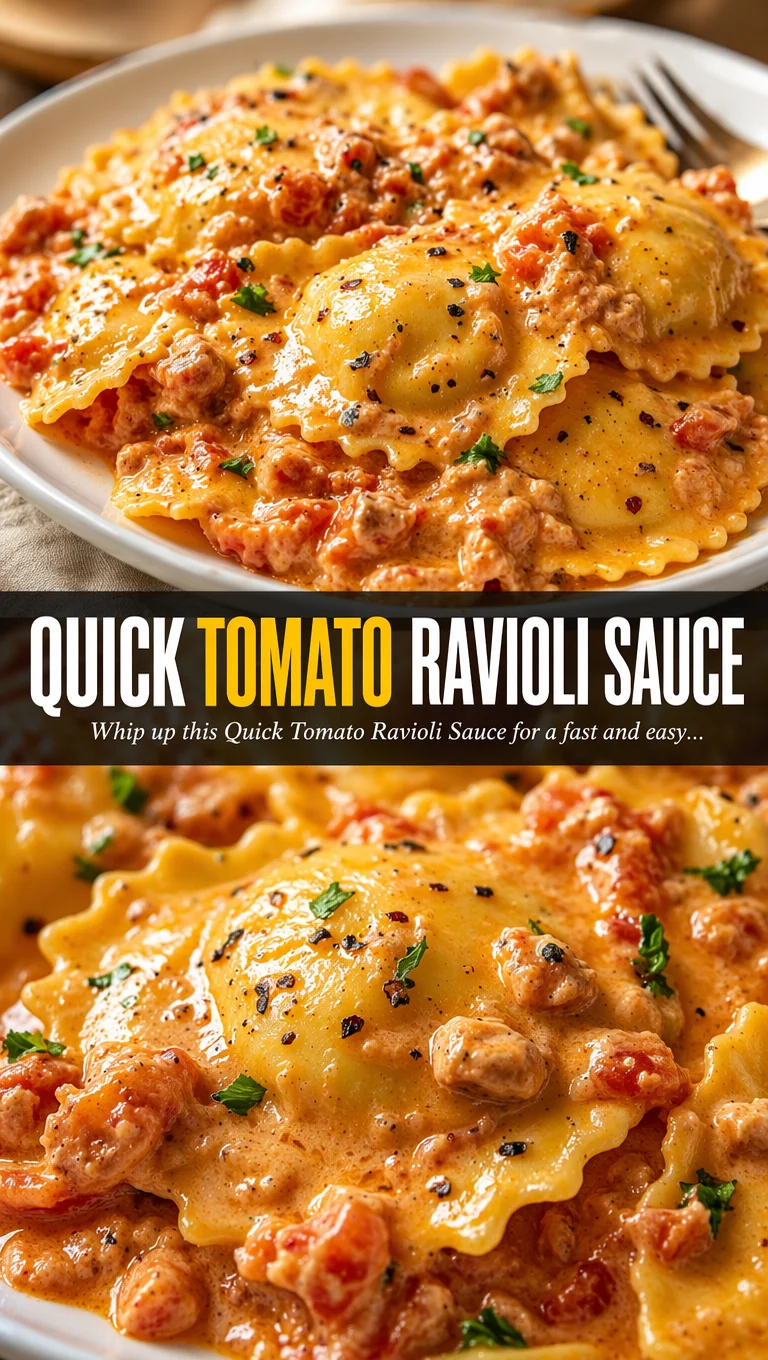
Whip up this Quick Tomato Ravioli Sauce for a fast and easy high-protein meal. Creamy, delicious, and ready in under 30 minutes—perfect for busy professionals.
Ingredients
Instructions
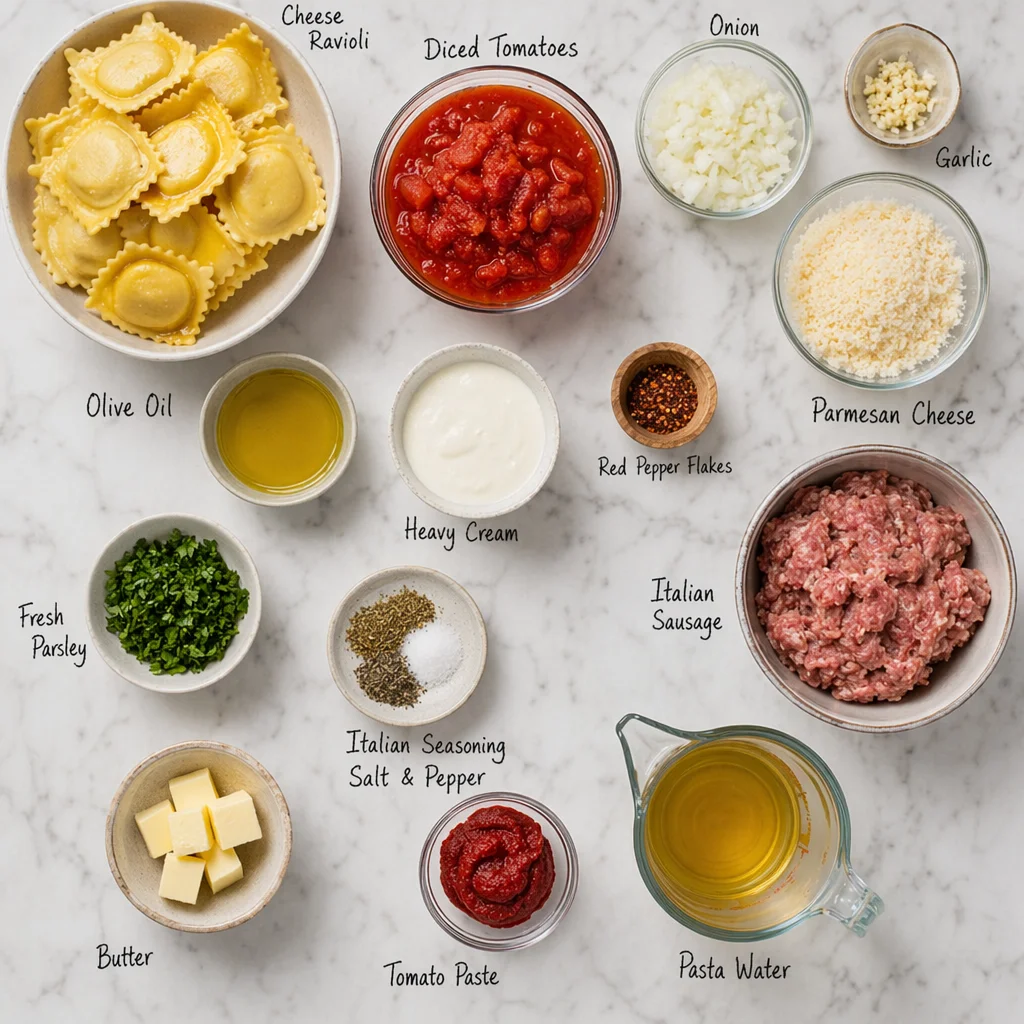
Begin by gathering all your ingredients. This step is crucial for a smooth cooking process, especially when you’re aiming for a 30-minute meal. Take the ravioli out of the freezer if using frozen; you can let it sit on the counter while you prepare the sauce. Mince the garlic cloves finely—this ensures they release their aromatic oils evenly. Grate the Parmesan cheese using a microplane or the fine side of a box grater; pre-grated cheese often contains anti-caking agents that prevent smooth melting, so grating fresh yields a silkier sauce. Measure out the olive oil, cream, herbs, and have your cans of tomatoes open and ready.
In a large skillet or saucepan, heat the olive oil over medium heat. Once the oil shimmers (but does not smoke), add the minced garlic. Sauté for about 30 seconds to 1 minute, stirring constantly. You want the garlic to become fragrant and just barely golden—if it browns too much, it will turn bitter. The aroma should fill your kitchen, signaling that the garlic’s essential oils have been released. Do not walk away at this stage; garlic can burn in seconds.
Pour in the crushed tomatoes and the undrained diced tomatoes. Stir well to combine with the garlic oil. Increase the heat to medium-high and bring the sauce to a gentle boil. Once boiling, reduce the heat to low and let it simmer. The simmering process allows the flavors to meld and the sauce to thicken slightly. Stir occasionally to prevent sticking. Simmer for about 10 minutes—the sauce should reduce a bit and become richer in color.
While the sauce simmers, bring a large pot of salted water to a boil for the ravioli. Use about 1 tablespoon of salt per 4 quarts of water; this seasons the pasta from within. Add the ravioli and cook according to package directions, usually 3-5 minutes for fresh or 5-7 minutes for frozen. Be careful not to overcook; ravioli should be tender but still hold their shape. Drain gently in a colander, reserving about 1/2 cup of pasta water. Do not rinse the ravioli, as the starch helps the sauce cling.
After the sauce has simmered, stir in the heavy cream. The cream transforms the tangy tomato base into a luscious, velvety sauce. Add the dried basil, oregano, and red pepper flakes if using. Season with salt and pepper to taste. Let the sauce cook for another 2-3 minutes on low heat, allowing the herbs to hydrate and the flavors to deepen. The sauce should be thick enough to coat the back of a spoon but still pourable.
Add the drained ravioli to the sauce. Gently fold the ravioli into the sauce using a rubber spatula or wooden spoon, being careful not to break the delicate pasta pockets. If the sauce seems too thick, add a splash of the reserved pasta water (or plain water) to loosen it. The starch in the water helps emulsify the sauce, making it cling beautifully to each ravioli. Simmer together for 1-2 minutes so the ravioli absorb some of the sauce.
Remove the pan from the heat. Sprinkle the grated Parmesan cheese over the ravioli and toss gently. The residual heat will melt the cheese into the sauce, adding a nutty, salty layer. Taste and adjust seasoning if needed. Serve immediately, garnished with fresh basil leaves and extra Parmesan on the side. The basil adds a fresh, peppery contrast to the creamy tomato sauce. This dish is best enjoyed right away, but leftovers can be stored in an airtight container in the refrigerator for up to 3 days.
For best results
- For the best texture, use high-quality canned tomatoes. San Marzano tomatoes are ideal because they are sweeter and less acidic. If you have time, you can use fresh Roma tomatoes—blanch them to remove the skins, then crush them by hand. This adds a fresher flavor, but canned tomatoes are a fantastic time-saver and still yield excellent results. Avoid using crushed tomatoes with added herbs or seasonings, as they can throw off the balance of your sauce.
- To make this dish even quicker, you can use refrigerated ravioli instead of frozen. Refrigerated ravioli cooks in about 3-4 minutes, shaving off a few minutes from the total time. If using frozen, do not thaw before cooking; add them directly to the boiling water. This prevents them from becoming mushy. Also, be sure to stir the ravioli gently when adding to the water to prevent sticking.
- The heavy cream can be substituted with half-and-half or a dairy-free alternative like full-fat coconut milk for a lighter version. However, keep in mind that the sauce will be less rich and may not thicken as much. If using coconut milk, choose the canned variety (not the carton) for a creamier consistency. You can also add a tablespoon of tomato paste along with the canned tomatoes for a deeper tomato flavor.
- Don't skip the step of reserving pasta water. The starch in the water is a secret weapon for achieving a restaurant-quality sauce that clings perfectly to the ravioli. If you forget, you can use a little bit of the sauce itself to thin, but pasta water is best. The water also helps to adjust the consistency without diluting flavor.
- For a protein boost, consider adding cooked ground turkey, Italian sausage, or shredded rotisserie chicken to the sauce. Brown the meat in the skillet before adding the garlic, then proceed with the recipe. This turns the dish into an even heartier meal. Alternatively, you can stir in a cup of cooked lentils or white beans for a plant-based protein option.
Variations
- Cheesy Spinach Ravioli Sauce: Add 2 cups of fresh spinach to the sauce during the last 2 minutes of simmering. Stir until wilted, then proceed with adding cream. The spinach adds color, nutrients, and a mild earthy flavor that pairs beautifully with the cheese ravioli. You can also use frozen chopped spinach—thaw and squeeze dry before adding.
- Spicy Arrabbiata Ravioli Sauce: Omit the cream for a lighter, fiery version. Increase the red pepper flakes to 1 teaspoon (or more to taste) and add a splash of red wine vinegar at the end for brightness. This variation is lower in calories and fat but still packed with flavor. Serve with a sprinkle of fresh parsley and Pecorino Romano cheese.
- Creamy Mushroom Ravioli Sauce: Sauté 8 ounces of sliced cremini or button mushrooms in the olive oil before adding the garlic. Cook until the mushrooms release their liquid and start to brown, about 5-7 minutes. Then proceed with the garlic and tomatoes. The mushrooms add an umami depth that complements the creamy tomato sauce. For extra richness, add a tablespoon of butter at the end.
- Vegan Ravioli Sauce: Use a plant-based ravioli (such as tofu or cashew-filled) and substitute the heavy cream with full-fat coconut cream or a thick cashew cream (soaked cashews blended with water). Omit the Parmesan or use a vegan alternative. The coconut cream adds a subtle sweetness that works well with the tomatoes. Garnish with fresh basil and a drizzle of extra-virgin olive oil.
Nutrition
- Calories450 kcal
- Total Fat22g
- Saturated Fat10g
- Cholesterol80mg
- Sodium820mg
- Total Carbohydrates48g
- Dietary Fiber6g
- Sugars12g
- Protein16g