
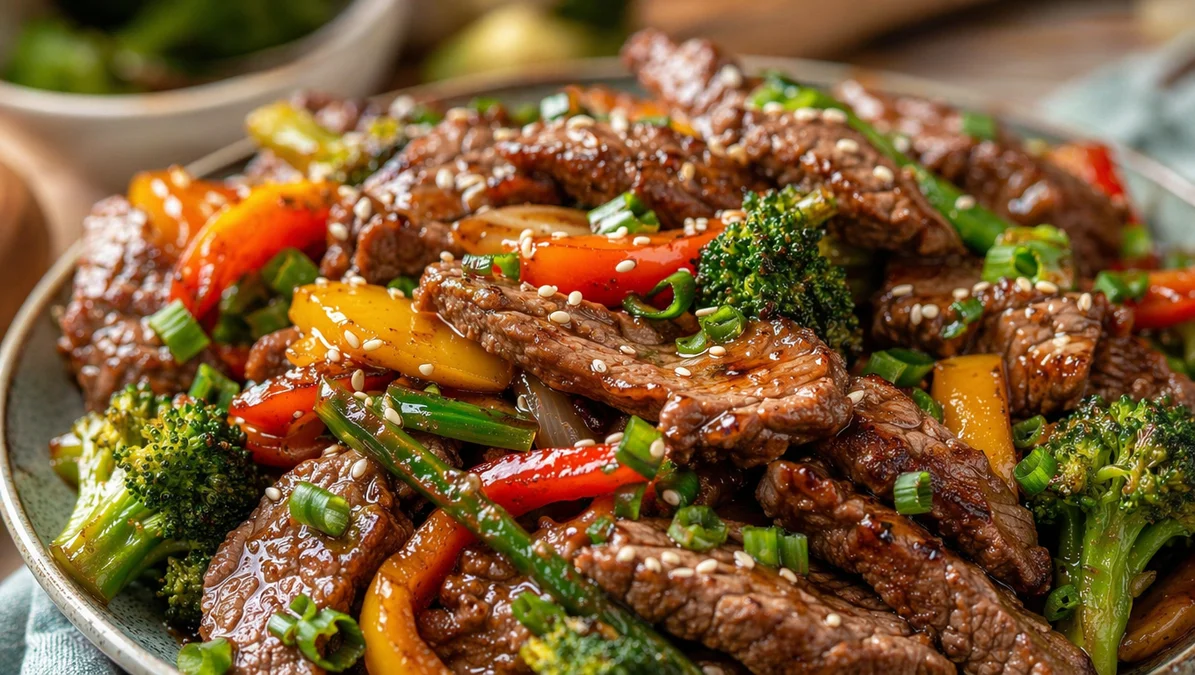
This high-protein beef dinner combines tender beef with fresh vegetables in a savory stir fry sauce for a macro-friendly meal ready in just 30 minutes. Perfect for busy professionals seeking…
Ingredients
Instructions
Begin by preparing the beef. Place the flank steak in the freezer for about 15 minutes to firm up slightly, which makes slicing thin strips against the grain much easier. Using a sharp knife, slice the beef across the grain into 1/4-inch thick strips. This step is crucial because cutting against the grain shortens the muscle fibers, ensuring the meat stays tender when cooked quickly over high heat. In a medium bowl, combine the sliced beef with 2 tablespoons of soy sauce and 1 tablespoon of cornstarch. Toss well to coat every piece evenly. The cornstarch not only helps tenderize the meat but also creates a light crust that will brown beautifully in the wok. Let the beef marinate at room temperature while you prepare the vegetables. This brief marination (10-15 minutes) is enough to infuse flavor and start the tenderizing process without breaking down the meat’s texture too much.
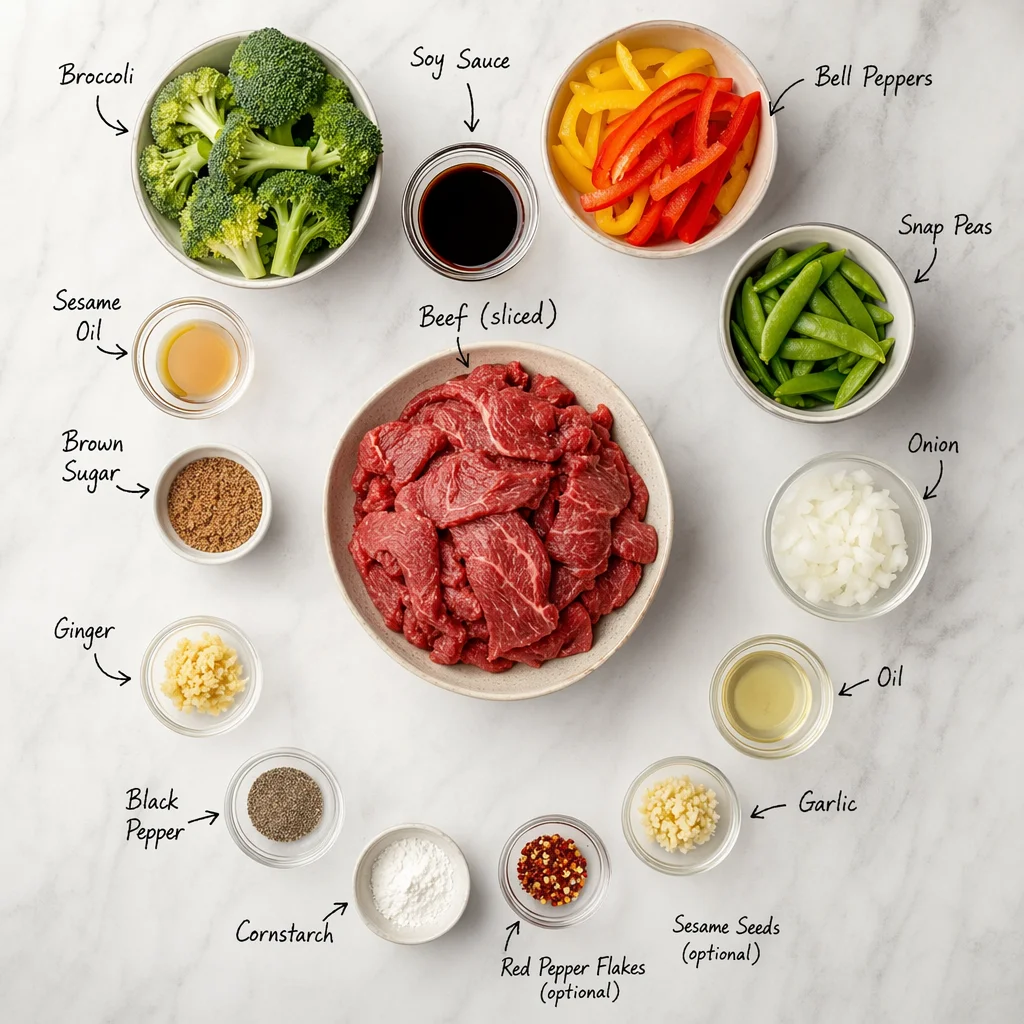
While the beef marinates, wash and prepare all the vegetables. For bell peppers, remove the stem, seeds, and white pith, then slice into thin strips about 2 inches long. The strips should be uniform to ensure even cooking. For the broccoli, cut the crown into small florets about 1 inch in size; you can peel and slice the stem into thin coins to reduce waste. Carrots should be julienned or sliced on the diagonal into thin rounds—this increases surface area for caramelization. Thinly slice the onion into half-moons. Mince the garlic cloves and grate the fresh ginger using a microplane or the fine side of a box grater. Having all ingredients prepped and within arm’s reach is essential for stir-frying, as the cooking process moves very quickly once the heat is on. This mise en place approach prevents burning and ensures each component is added at the right moment.
In a small bowl, whisk together all the sauce ingredients except the cornstarch slurry: 3 tablespoons soy sauce, 2 tablespoons oyster sauce, 1 tablespoon rice vinegar, 1 teaspoon sesame oil, 1 teaspoon brown sugar (or honey), and 1/2 cup low-sodium beef broth. Taste the sauce—it should be savory with a touch of sweetness and acidity. Adjust the sweetness or saltiness to your preference. In a separate tiny bowl, mix 1 tablespoon cornstarch with 2 tablespoons cold water to create a slurry. Stir until completely smooth; this will be added at the end to thicken the sauce to a glossy, clingy consistency. Set both bowls aside near the stove.
Heat a large wok or heavy-bottomed skillet over high heat until it begins to smoke lightly. Add 1/2 tablespoon of the neutral oil and swirl to coat the surface. Carefully add the marinated beef in a single layer—do not overcrowd the pan; work in batches if necessary. Let the beef sear undisturbed for about 1 minute to develop a deep brown crust. Then toss and stir-fry for another 1-2 minutes until the beef is just cooked through but still tender. The internal temperature should reach about 130°F (54°C) for medium-rare, but stir-fry beef is often cooked to medium for safety. Using a slotted spoon, transfer the beef to a clean plate, leaving the juices in the wok.
Add the remaining 1/2 tablespoon of oil to the wok. Immediately add the sliced onions and stir-fry for 30 seconds until they begin to soften and turn translucent. Add the garlic and ginger, and stir-fry for another 15 seconds until fragrant—be careful not to burn them. Next, add the bell peppers, broccoli florets, and carrots. Toss the vegetables constantly to ensure even cooking. The high heat will quickly sear the vegetables, preserving their vibrant colors and crisp-tender texture. Stir-fry for about 2-3 minutes until the broccoli turns bright green and the peppers are slightly charred at the edges but still retain a crunch. If the pan seems too dry, add a splash of water or beef broth to create steam and help the vegetables cook faster.
Return the cooked beef to the wok along with any accumulated juices. Pour the prepared sauce over the beef and vegetables. Toss everything together to coat evenly. Let the mixture come to a vigorous simmer, then give the cornstarch slurry a quick stir and drizzle it into the wok while stirring continuously. Within 30 seconds, the sauce will thicken and become glossy, clinging to each piece of beef and vegetable. Taste and adjust seasoning if needed—add a pinch of salt or a dash of soy sauce. Remove the wok from the heat immediately to prevent overcooking. The entire stir-fry process from adding the vegetables to finishing should take no more than 5-7 minutes, resulting in a harmonious dish where every component is perfectly cooked.
Transfer the stir-fry to a serving platter or divide among four plates. Garnish with toasted sesame seeds and sliced green onions for a pop of color and nutty flavor. Serve immediately over steamed jasmine rice, brown rice, or cauliflower rice for a low-carb option. The dish can also be enjoyed on its own as a high-protein bowl. For best texture and flavor, consume right away while the beef is still tender and the vegetables are crisp. Leftovers can be stored in an airtight container in the refrigerator for up to 3 days, but the vegetables will soften upon reheating.
For best results
- Slicing the beef against the grain is the single most important step for tenderness. The grain runs in long fibers; cutting perpendicular to those fibers shortens them, making the meat easier to chew. For flank steak, the grain is easy to see—it runs lengthwise. Slice at a 45-degree angle into thin strips. If you're using sirloin, the grain may be less distinct; look for the direction the muscle fibers run and cut accordingly. A sharp knife is essential to avoid tearing the meat. If you have time, partially freezing the steak for 15-20 minutes firms it up, allowing for precise, thin slices without squishing the meat.
- High heat is non-negotiable for a proper stir-fry. The wok or skillet must be smoking hot before adding oil. This ensures the beef sears rather than steams, creating a deep, savory crust through the Maillard reaction. If your pan is not hot enough, the meat will release its juices and braise, resulting in a gray, tough texture. Use an oil with a high smoke point like avocado, grapeseed, or peanut oil. Avoid olive oil or butter as they will burn. Work in small batches if needed to maintain heat; overcrowding drops the pan temperature and leads to steaming.
- Mise en place is your best friend for stir-fry. Because the cooking time is so short, you won't have a moment to chop an onion or mince garlic once you start. Prepare all ingredients, measure sauces, and have them arranged in the order they will be added: aromatics (garlic, ginger), hard vegetables (carrots, broccoli), soft vegetables (bell peppers, onions), then the sauce and slurry. This workflow prevents burning and ensures each component is cooked to perfection. A small bowl for the sauce and another for the slurry helps you add them quickly.
- The cornstarch slurry is the secret to a glossy, restaurant-quality sauce that clings to every bite. Always mix the cornstarch with cold water before adding to the hot pan; adding dry cornstarch directly will create lumps. Stir the slurry just before pouring as cornstarch settles quickly. Pour it in a steady stream while stirring the stir-fry vigorously. The sauce will thicken almost instantly. If it becomes too thick, add a splash of water or broth. If too thin, let it simmer a bit longer or add a little more slurry. The final consistency should coat the back of a spoon.
- Feel free to swap vegetables based on what's in season or your fridge. Snow peas, snap peas, baby corn, bok choy, or mushrooms all work beautifully. The key is to cut them into uniform sizes so they cook evenly. Harder vegetables like carrots or broccoli should be cut smaller or added earlier, while tender vegetables like spinach or bean sprouts should be added at the very end. You can also add a handful of cashews or peanuts for extra crunch and healthy fats. For a low-carb version, serve over cauliflower rice or zucchini noodles.
- To make this dish gluten-free, use tamari or coconut aminos instead of soy sauce, and ensure your oyster sauce is gluten-free (or substitute with hoisin sauce, which is typically gluten-free but check labels). For a dairy-free meal, this recipe is naturally free of dairy. However, if you're sensitive to sesame, omit the sesame oil and use extra avocado oil. The recipe is easily adaptable to various dietary needs without sacrificing flavor.
Variations
- Chicken or Pork Stir Fry: Replace beef with boneless, skinless chicken thighs or pork loin. Slice them thinly against the grain as you would beef. Chicken breast can be used but may dry out; cook just until done. Adjust cooking time slightly—chicken and pork cook faster than beef. The marinade and sauce remain the same, offering a versatile protein swap that keeps the dish high-protein and satisfying.
- Spicy Szechuan Twist: Add 1-2 teaspoons of Szechuan peppercorns and 1-2 dried red chilies (or 1 tablespoon chili bean paste) to the oil before stir-frying the aromatics. The Szechuan peppercorns provide a unique numbing sensation, while the chilies bring heat. Garnish with fresh cilantro and a drizzle of chili oil. This variation transforms the dish into a fiery, aromatic experience that pairs wonderfully with cold beer or a cucumber salad.
- Vegetarian/Vegan Version: Omit the beef and double the vegetables, adding firm tofu or tempeh for protein. Press extra-firm tofu for 30 minutes to remove excess moisture, then cube and pan-fry until golden before stir-frying. Use hoisin sauce or a vegan oyster sauce (made from mushrooms) in place of oyster sauce. Add edamame or chickpeas for extra protein. This version is just as quick and satisfying, perfect for plant-based eaters looking for a hearty meal.
- Teriyaki Beef Stir Fry: Substitute the stir-fry sauce with a homemade teriyaki sauce: mix 1/4 cup soy sauce, 2 tablespoons mirin, 2 tablespoons sake (or dry sherry), 1 tablespoon sugar, and 1 teaspoon grated ginger. Thicken with cornstarch slurry as directed. The teriyaki version is sweeter and pairs beautifully with pineapple chunks or bell peppers. Top with toasted sesame seeds and a drizzle of teriyaki glaze for extra shine.
- Low-Carb/Keto Friendly: Serve the stir-fry over cauliflower rice or zucchini noodles instead of regular rice. To make cauliflower rice, pulse cauliflower florets in a food processor until rice-sized, then sauté in a dry pan for 5 minutes. For zucchini noodles, spiralize 2 medium zucchinis and add them to the wok during the last minute of cooking—they will soften quickly. Reduce the brown sugar in the sauce to 1/2 teaspoon or use a sugar substitute like monk fruit. The dish remains satisfying and high in protein while keeping carbs low.
- Budget-Friendly Version: Use a less expensive cut of beef like top round or chuck eye, but be sure to slice very thin against the grain and marinate longer (up to 30 minutes) to tenderize. You can also use ground beef instead of sliced steak; brown it in the wok first, then remove and proceed with vegetables. This version is more economical and still delivers great flavor. Bulk up the dish with extra vegetables like cabbage or green beans to stretch the protein further.
Nutrition
- Calories385 kcal
- Total Fat14g
- Saturated Fat4g
- Cholesterol70mg
- Sodium920mg
- Total Carbohydrates22g
- Dietary Fiber5g
- Sugars9g
- Protein38g