
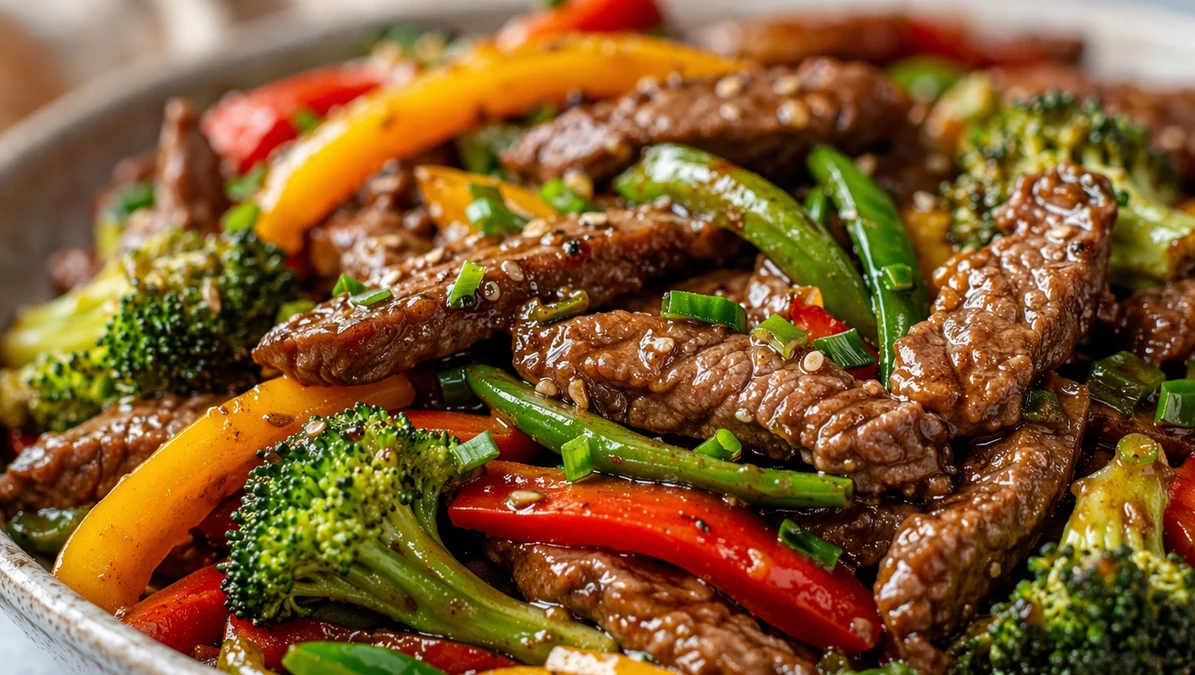
This 30-minute beef stir fry combines tender beef with crisp vegetables in a savory sauce for a quick and satisfying high-protein dinner. An easy weeknight meal perfect for busy professionals…
Ingredients
Instructions
Prepare the beef: Start by placing your flank steak or sirloin in the freezer for about 15 minutes. This partial freeze makes it much easier to slice the beef thinly against the grain. Once firm, use a sharp knife to cut the beef across the muscle fibers into thin strips, about 1/4-inch thick. Slicing against the grain is crucial for tenderness because it shortens the muscle fibers, preventing the meat from becoming chewy. In a medium bowl, combine the sliced beef with 2 tablespoons of soy sauce and 1 tablespoon of cornstarch. Toss well to coat every piece evenly. The cornstarch not only helps tenderize the meat but also creates a light coating that will help the sauce cling to the beef and promote browning during searing. Let the beef marinate at room temperature for 10 minutes while you prepare the vegetables and sauce.
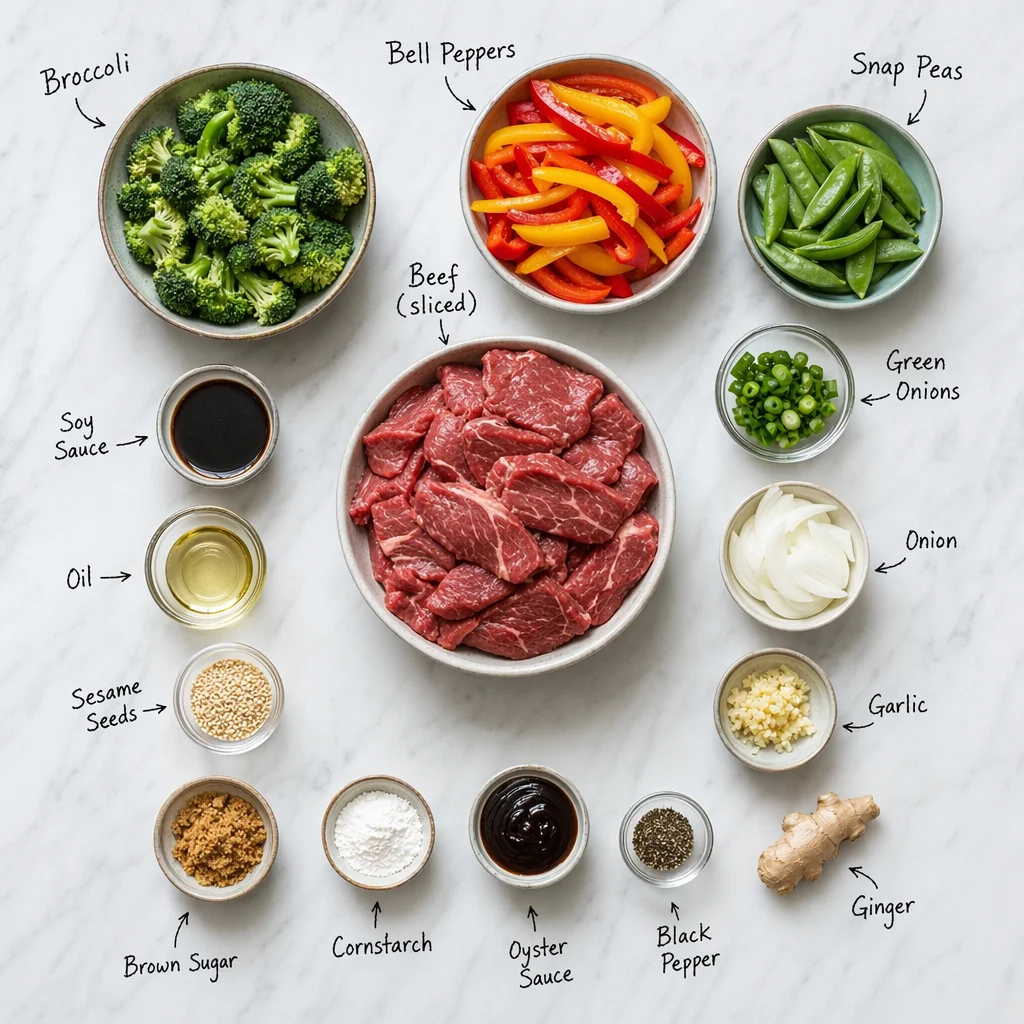
Prepare the sauce and vegetables: In a small bowl, whisk together the beef broth, oyster sauce, rice vinegar, sugar (or honey), and red pepper flakes if using. Set the sauce aside. Next, wash and prep all the vegetables. Slice the bell peppers into thin, uniform strips about 2 inches long. Cut the broccoli into small florets, ensuring they are similar in size for even cooking. Trim the snap peas by removing the stringy ends. Having all your ingredients prepped and within reach (mise en place) is essential for stir-frying because the cooking process moves very quickly.

Sear the beef: Heat a large wok or heavy-bottomed skillet over high heat until it is smoking hot. Add 1 tablespoon of vegetable oil and ½ tablespoon of sesame oil, swirling to coat the surface. Carefully add the marinated beef in a single layer—do not overcrowd the pan; work in batches if necessary. Let the beef sear undisturbed for 1-2 minutes until a deep brown crust forms. Then, stir-fry for another minute until the beef is just cooked through. Using a slotted spoon, transfer the beef to a clean plate and set aside. The high heat ensures a good sear without steaming the meat, locking in juices and flavor.
Stir-fry the aromatics and vegetables: Reduce the heat to medium-high and add the remaining 1 tablespoon of vegetable oil and ½ tablespoon of sesame oil. Add the minced garlic and grated ginger, stirring constantly for about 30 seconds until fragrant—be careful not to burn them. Add the bell peppers, broccoli florets, and snap peas. Stir-fry for 3-4 minutes, tossing frequently. The vegetables should remain crisp-tender with bright colors. If the pan becomes too dry, add a splash of beef broth or water to create steam and help cook the vegetables evenly. You’ll know they’re done when the broccoli turns bright green and the peppers are slightly softened but still have a crunch.
Combine and finish: Return the cooked beef to the wok along with any accumulated juices. Pour the prepared sauce over everything. Toss and stir-fry for 1-2 minutes until the sauce thickens and coats the beef and vegetables evenly. The cornstarch from the marinade will help the sauce cling beautifully. Taste and adjust seasoning with additional soy sauce or a pinch of salt if needed. The final dish should be glossy, aromatic, and piping hot.
Serve immediately: Transfer the stir fry to a serving platter or divide among plates. Garnish with a sprinkle of sesame seeds and sliced green onions for a pop of color and freshness. Serve over steamed jasmine rice, brown rice, or your favorite noodles. For a low-carb option, enjoy it on its own or over cauliflower rice. The dish is best enjoyed fresh, as the vegetables maintain their crisp texture and the sauce is at its peak flavor.
For best results
- Choosing the right cut of beef is critical for a tender stir fry. Flank steak, sirloin, or ribeye are excellent choices because they have good marbling and slice well. Always slice the beef against the grain—this means cutting perpendicular to the natural lines of the muscle fibers. A sharp knife makes this task easier and safer. If you're short on time, you can ask your butcher to slice the beef for you, or look for pre-sliced stir-fry beef at the grocery store. For an extra tender result, consider using a small amount of baking soda (about 1/4 teaspoon) in the marinade; this alkaline ingredient helps break down proteins, making the beef exceptionally tender. Just be sure to rinse the beef thoroughly after marinating if you use baking soda to avoid any off-flavors.
- Achieving the perfect wok hei (the smoky flavor from high-heat cooking) at home requires a few tricks. First, ensure your pan is screaming hot before adding any oil. A carbon steel wok is ideal, but a heavy-bottomed skillet or cast-iron pan works well too. Do not overcrowd the pan—cook in batches if necessary to maintain high heat. Use oils with high smoke points like vegetable, peanut, or avocado oil. Avoid olive oil as it burns easily. The key to that restaurant-quality char is letting the meat and vegetables sit undisturbed for a few seconds before tossing. This allows Maillard browning to occur, creating deep, savory flavors. Finally, work quickly and have all ingredients prepped and within arm's reach.
- For the best texture, do not overcook the vegetables. They should be vibrant in color and still have a slight crunch when you bite into them. This is often called 'crisp-tender.' The cooking time for vegetables varies: bell peppers and snap peas cook quickly (2-3 minutes), while broccoli and carrots may need an extra minute. To ensure even cooking, cut vegetables into uniform sizes. If you prefer softer vegetables, you can blanch the broccoli in boiling water for 1 minute before stir-frying, but for most stir-fries, direct high-heat cooking is preferred to retain nutrients and texture.
- The sauce can be customized to your taste preferences. For a thicker sauce, mix an additional teaspoon of cornstarch with two tablespoons of cold water to make a slurry and add it at the end. For a sweeter profile, increase the sugar or honey; for more heat, add extra red pepper flakes or a drizzle of sriracha. If you don't have oyster sauce, you can substitute with hoisin sauce or a mixture of soy sauce and a bit of molasses. Tamari or coconut aminos work well for a gluten-free or soy-free alternative. Always taste the sauce before adding it to the dish and adjust seasoning accordingly.
- Meal prep and storage: This beef stir fry is excellent for meal prep. Cook the beef and vegetables as directed, but undercook the vegetables slightly so they retain texture when reheated. Store in airtight containers in the refrigerator for up to 4 days. For reheating, use a hot skillet or wok over medium-high heat with a splash of water or broth to revive the sauce. Avoid microwaving as it can make the vegetables soggy and the beef tough. You can also freeze the stir fry for up to 2 months; thaw overnight in the refrigerator and reheat in a skillet. The sauce may thicken upon standing, so add a little water when reheating to restore the desired consistency.
Variations
- Chicken Stir Fry: Substitute the beef with boneless, skinless chicken thighs or breasts. Slice the chicken thinly and marinate similarly. Chicken thighs are more forgiving and stay juicy, while chicken breasts are leaner. Adjust cooking time: chicken typically takes 4-5 minutes to cook through. Ensure the internal temperature reaches 165°F (74°C). This variation is lower in fat and calories, making it a great option for those watching their intake.
- Vegetarian or Vegan Tofu Stir Fry: Replace beef with extra-firm tofu, pressed and cubed. For a crispy texture, toss the tofu in cornstarch and pan-fry until golden before stir-frying. Use tamari instead of soy sauce (gluten-free) and omit oyster sauce (use mushroom oyster sauce or hoisin). Add more vegetables like mushrooms, bok choy, or baby corn. This version is packed with plant-based protein and is perfect for Meatless Mondays.
- Spicy Szechuan Stir Fry: Add 1-2 tablespoons of Szechuan peppercorns and dried red chilies to the oil before adding aromatics. The Szechuan peppercorns provide a unique numbing sensation that pairs beautifully with the savory sauce. Increase the red pepper flakes to 1 teaspoon and add a tablespoon of chili bean paste (doubanjiang) for extra depth. Garnish with crushed peanuts and fresh cilantro.
- Low-Carb/Keto Option: Serve the stir fry over cauliflower rice or zucchini noodles instead of regular rice or noodles. To make cauliflower rice, pulse cauliflower florets in a food processor until rice-sized, then sauté in a dry skillet for 5-7 minutes. For zucchini noodles, spiralize 2-3 medium zucchinis and sauté for 2 minutes until just tender. This reduces the carbohydrate content significantly while keeping the dish satisfying.
- Add More Vegetables: Feel free to incorporate other vegetables such as sliced carrots, snow peas, baby corn, water chestnuts, or mushrooms. For carrots, slice them thinly on the diagonal to ensure quick cooking. Mushrooms (shiitake, cremini, or button) add an earthy umami flavor. If using water chestnuts, add them near the end to maintain their crunch. The beauty of stir fry is its versatility—use whatever vegetables you have on hand.
Nutrition
- Calories385 kcal
- Total Fat18g
- Saturated Fat5g
- Cholesterol70mg
- Sodium890mg
- Total Carbohydrates22g
- Dietary Fiber5g
- Sugars8g
- Protein32g