
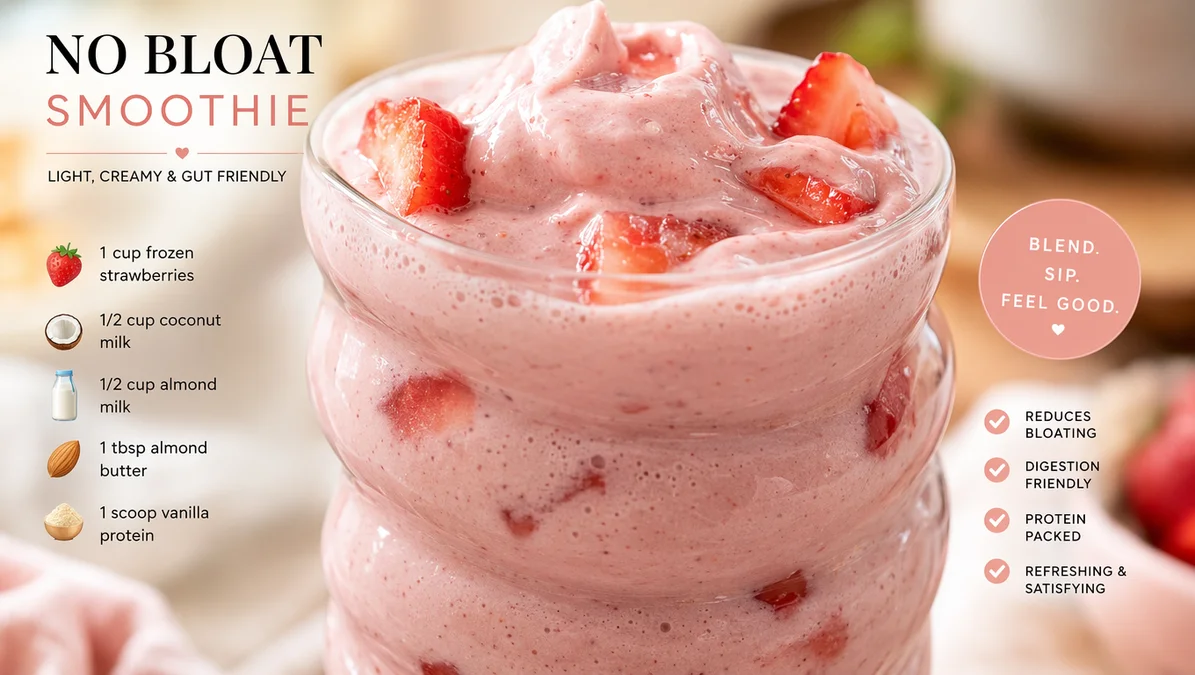
This no bloat smoothie recipe uses plant protein and fresh strawberries for a gentle 20-gram protein boost that supports sensitive stomachs. A quick high-protein meal or healthy picnic food idea.
Ingredients
Instructions
Gather all your ingredients: plant-based protein powder, fresh or frozen strawberries, almond milk (or water), ice cubes, and optional sweetener. Using ripe, in-season strawberries will give you the best natural sweetness and vibrant color. If using frozen strawberries, you can reduce the amount of ice to maintain a thick consistency without diluting flavor. Having everything prepped ensures a smooth blending process and prevents any last-minute scrambling. For the most bloat-friendly outcome, choose unsweetened almond milk or plain water—dairy milk can sometimes cause bloating in sensitive individuals due to lactose.
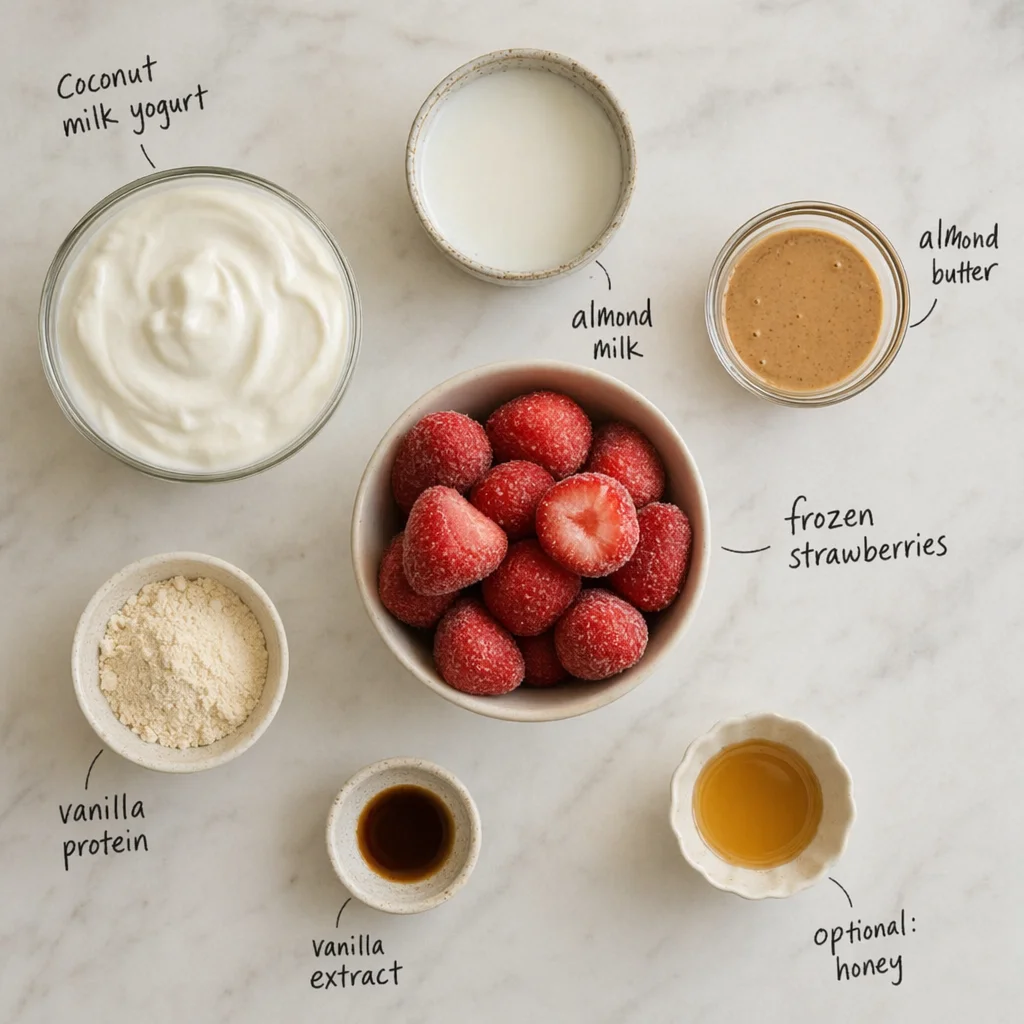
Add the liquid base first: pour 1 cup (240ml) of unsweetened almond milk or water into the blender. Adding liquid first helps the blades move freely and prevents the protein powder from sticking to the bottom. If you prefer a creamier texture, you can substitute with oat milk or coconut milk, but keep in mind that some plant milks contain added gums or carrageenan that may cause bloating for some people. For a truly gentle smoothie, stick with simple almond milk or filtered water.
Next, add 1 scoop (30g) of plant-based vanilla protein powder. Scoop the protein powder directly into the blender on top of the liquid. Using a vanilla-flavored plant protein adds a pleasant sweetness and masks any earthy notes from pea or brown rice protein. If your protein powder is unflavored, you may want to increase the sweetener slightly. Be sure to use a protein powder that is known for being easy on digestion—look for options that are free from artificial sweeteners like sucralose, which can cause gas and bloating in many people.
Add 1 cup (150g) of hulled strawberries. If using fresh strawberries, rinse them under cool water, remove the green tops, and quarter them if they are large. Frozen strawberries work just as well and can make the smoothie thicker without needing extra ice. The natural pectin in strawberries helps create a smooth, creamy consistency while providing a hefty dose of vitamin C and antioxidants. For a low-sugar option, you can reduce the amount of strawberries or sub in some frozen cauliflower rice, which adds creaminess without altering the flavor significantly.
Add 1/2 cup (120ml) of ice cubes (about 4-5 cubes) and the optional sweetener (1 teaspoon maple syrup or honey). If your strawberries are frozen, you can skip the ice or use just 2-3 cubes to adjust thickness. The ice helps create that refreshing, frosty texture that makes smoothies so satisfying. If you are watching your sugar intake, you may omit the sweetener entirely—the strawberries and vanilla protein powder provide enough sweetness for most palates. For an extra fiber boost, add 1 tablespoon of chia seeds or ground flaxseeds at this point; they will also help thicken the smoothie and keep you full longer.
Blend on high speed for 30-45 seconds, until the mixture is completely smooth and creamy. Start on low speed to incorporate the ingredients, then gradually increase to high. Listen for the sound: a high-pitched whirring means the blades are moving freely; if the blender sounds strained, add a splash more liquid. Stop and scrape down the sides with a spatula if needed. The smoothie should be thick enough to coat the back of a spoon but still pourable. If it’s too thick, add liquid 1 tablespoon at a time; if too thin, add a few more ice cubes or a tablespoon of chia seeds and blend again.
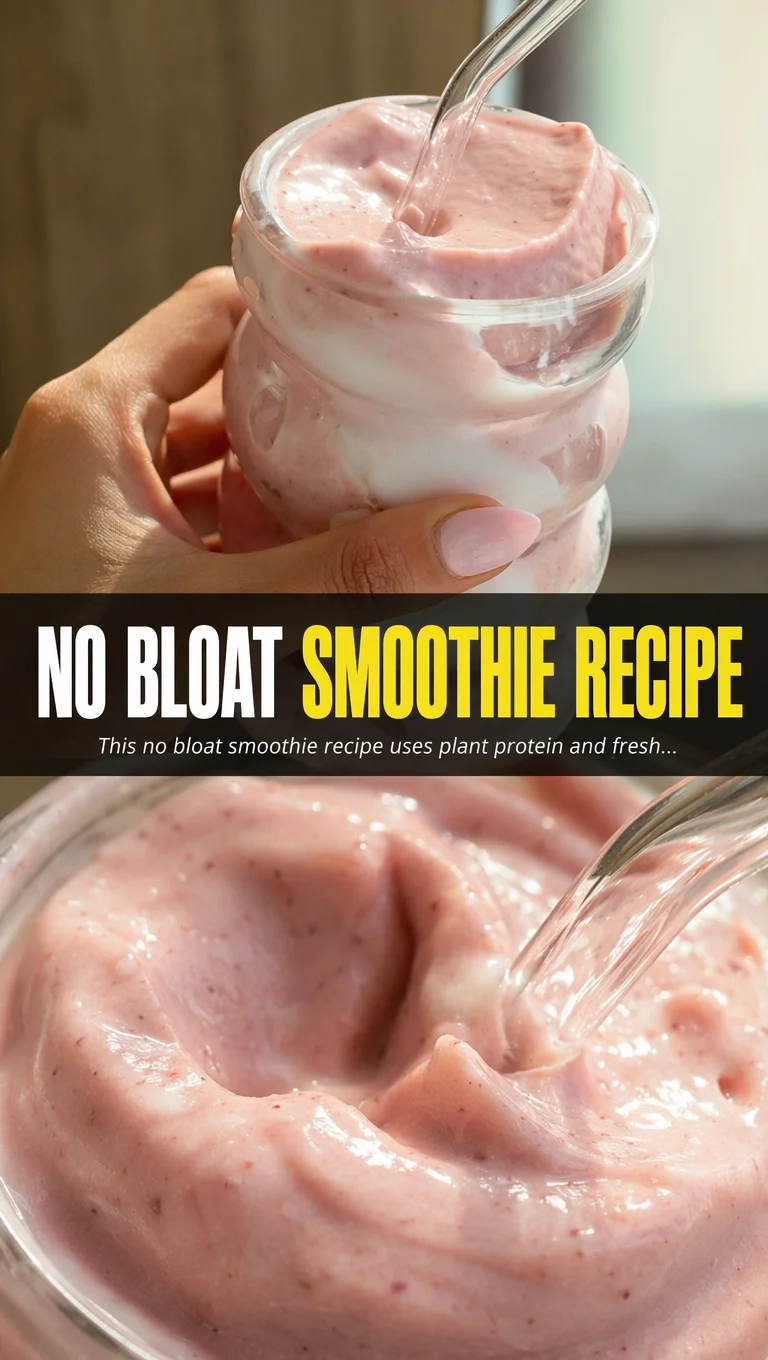
Pour the smoothie into a glass and enjoy immediately. For best texture and nutrient retention, consume within 15 minutes of blending. If you’re meal prepping, you can store the smoothie in an airtight jar in the refrigerator for up to 24 hours—just give it a good shake or stir before drinking, as separation is natural. This smoothie is perfect for a quick breakfast, a post-workout refuel, or a refreshing snack on a warm day. For a picnic, pour it into a thermos to keep it chilled. Garnish with a fresh strawberry on the rim or a sprinkle of chia seeds for a pretty presentation.
For best results
- Choose the right protein powder: Not all plant proteins are created equal when it comes to digestion. Look for a protein powder that is made from pea protein isolate or brown rice protein, as these are generally well-tolerated. Avoid blends that contain artificial sweeteners like sorbitol or xylitol, which can cause bloating and gas. Some brands also add digestive enzymes (like bromelain or papain) to aid breakdown, which can be a game-changer for sensitive stomachs. If you’re unsure, start with a small serving to test your tolerance.
- Balance your liquid-to-ice ratio: The key to a smooth, not watery, smoothie is the balance between liquid and ice. For a thick, spoonable consistency, use 1 cup liquid to 1/2 cup ice. If you prefer a thinner, sippable smoothie, increase the liquid to 1 1/4 cups and reduce ice to 1/4 cup. Remember that frozen strawberries also contribute water content, so adjust accordingly. A good rule of thumb is to start with less liquid and add more as needed—you can always thin it out, but you can’t thicken a watery smoothie without adding more solids.
- Prep ingredients in advance for meal prep: To make this smoothie even quicker, prepare smoothie packs in advance. Portion out the strawberries, protein powder, and optional chia seeds into individual freezer-safe bags or containers. In the morning, simply dump the contents of one pack into the blender, add your liquid and ice, and blend. This cuts prep time to under 2 minutes and ensures you always have a healthy breakfast ready. You can also freeze the liquid into ice cubes (e.g., almond milk ice cubes) for an even frostier result.
- Customize sweetness without sugar: If you want to reduce added sugars, rely on the natural sweetness of very ripe strawberries. You can also add half a frozen banana (which adds creaminess and potassium) or a soaked date for extra sweetness without refined sugar. Another trick is to use vanilla-flavored protein powder, which typically contains a small amount of natural sweetener like stevia or monk fruit. Taste your smoothie before adding any sweetener—you may find it’s perfectly sweet as is.
- Boost nutrition without compromising taste: To turn this smoothie into a more complete meal, add a handful of spinach or kale—the strawberry flavor will mask the greens completely. You can also add 1 tablespoon of almond butter or a quarter of an avocado for healthy fats and extra creaminess. For a probiotic boost, stir in a tablespoon of plain coconut yogurt after blending. Just be mindful that adding too many ingredients can increase the calorie count and may affect digestibility, so start with one addition at a time.
Variations
- Berry Blast Variation: Swap half of the strawberries for an equal amount of blueberries, raspberries, or a mixed berry blend. Blueberries are rich in antioxidants and add a deep purple hue, while raspberries provide a tart contrast. This variation is slightly lower in sugar than the all-strawberry version and offers a broader spectrum of phytonutrients. If you use frozen mixed berries, you may need to reduce the ice slightly to maintain the right consistency.
- Tropical No-Bloat Smoothie: Replace strawberries with 1 cup of frozen mango chunks and 1/2 cup of pineapple. Mango and pineapple contain digestive enzymes like amylase and bromelain, which can further aid digestion and reduce bloating. The tropical flavor pairs beautifully with vanilla protein powder. For a creamier texture, use coconut milk as the liquid base. This version is naturally sweeter, so you can omit the added sweetener entirely.
- Green Gut-Healing Smoothie: Add 1 cup of fresh spinach or kale to the original recipe. The strawberries and vanilla protein powder will mask the taste of greens, making this an excellent way to sneak in extra vitamins and minerals. For additional gut support, include 1 tablespoon of fresh ginger (grated) and a squeeze of lemon juice. Ginger has anti-inflammatory properties that can soothe the digestive tract, while lemon adds a bright note and vitamin C.
- Chocolate Strawberry Delight: Use chocolate-flavored plant protein powder instead of vanilla, and add 1 tablespoon of unsweetened cocoa powder. The combination of strawberries and chocolate is a classic, and the cocoa adds antioxidants and a rich flavor. You may need an extra teaspoon of sweetener to balance the bitterness of the cocoa. For a mocha twist, replace 1/4 cup of the liquid with cold brewed coffee.
- High-Protein Keto Variation: Replace the strawberries with 1/2 cup of raspberries (lower in net carbs) and use unsweetened coconut milk as the liquid. Add 1 tablespoon of MCT oil or coconut oil for healthy fats. Use a keto-friendly plant protein powder (low carb) and sweeten with a few drops of liquid stevia. This version keeps carbs under 10g while still delivering 20g of protein, making it suitable for a ketogenic diet.
- Creamy Avocado Smoothie: Add 1/4 of a ripe avocado to the original recipe. Avocado provides healthy monounsaturated fats, fiber, and a luxuriously creamy texture without any dairy. It also helps stabilize blood sugar and keeps you full for hours. The mild flavor of avocado blends seamlessly with strawberries and vanilla. This variation is especially good for those who need a more satiating meal replacement.
Nutrition
- Calories290 kcal
- Total Fat8g
- Saturated Fat1g
- Cholesterol0mg
- Sodium250mg
- Total Carbohydrates30g
- Dietary Fiber8g
- Sugars15g
- Protein20g