
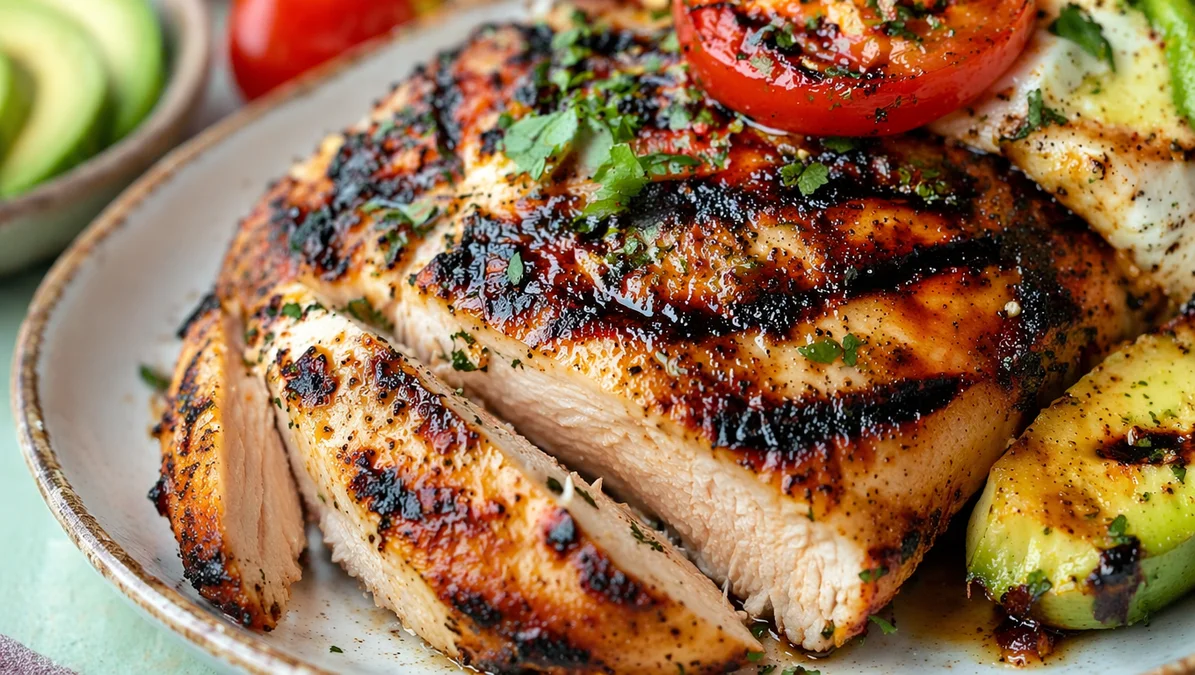
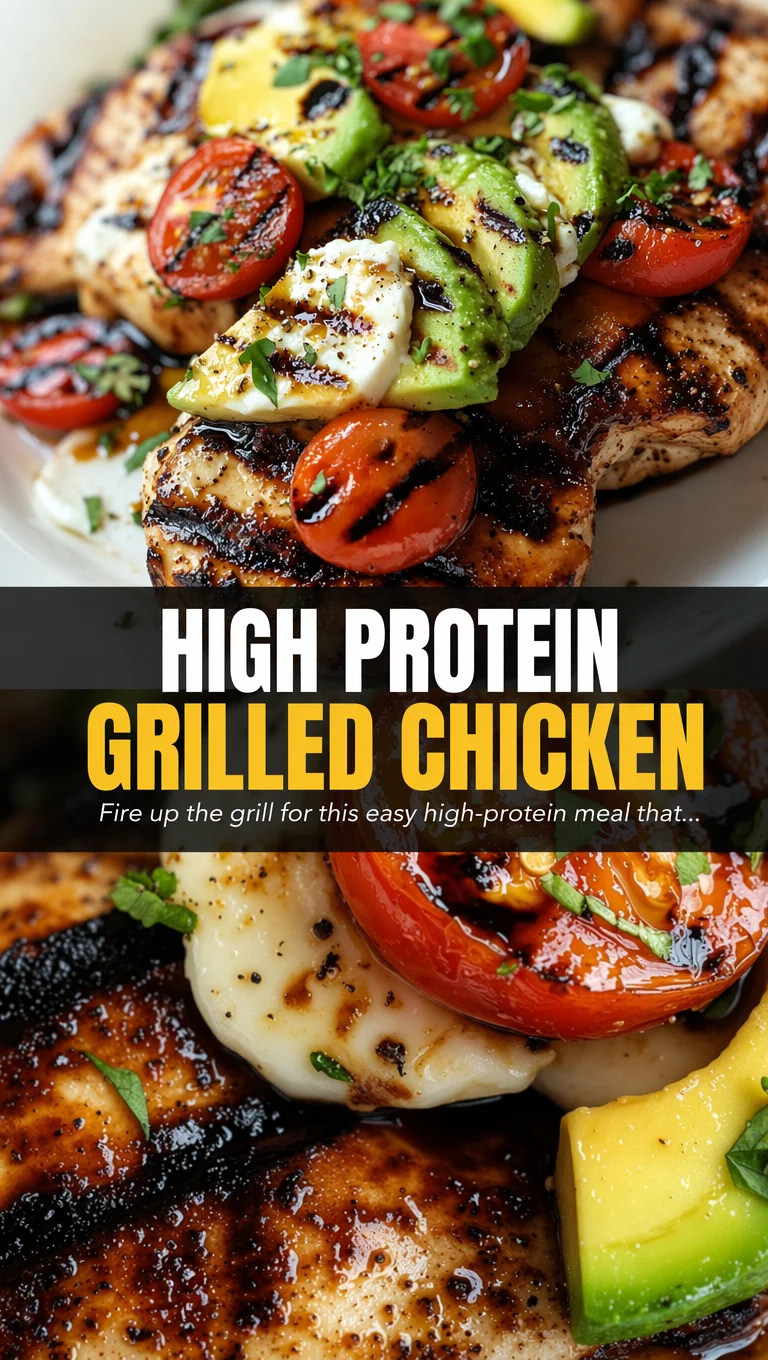
Fire up the grill for this easy high-protein meal that delivers juicy, tender chicken every time. Perfect for busy professionals, this quick high-protein dinner is packed with flavor and ready…
Ingredients
Instructions
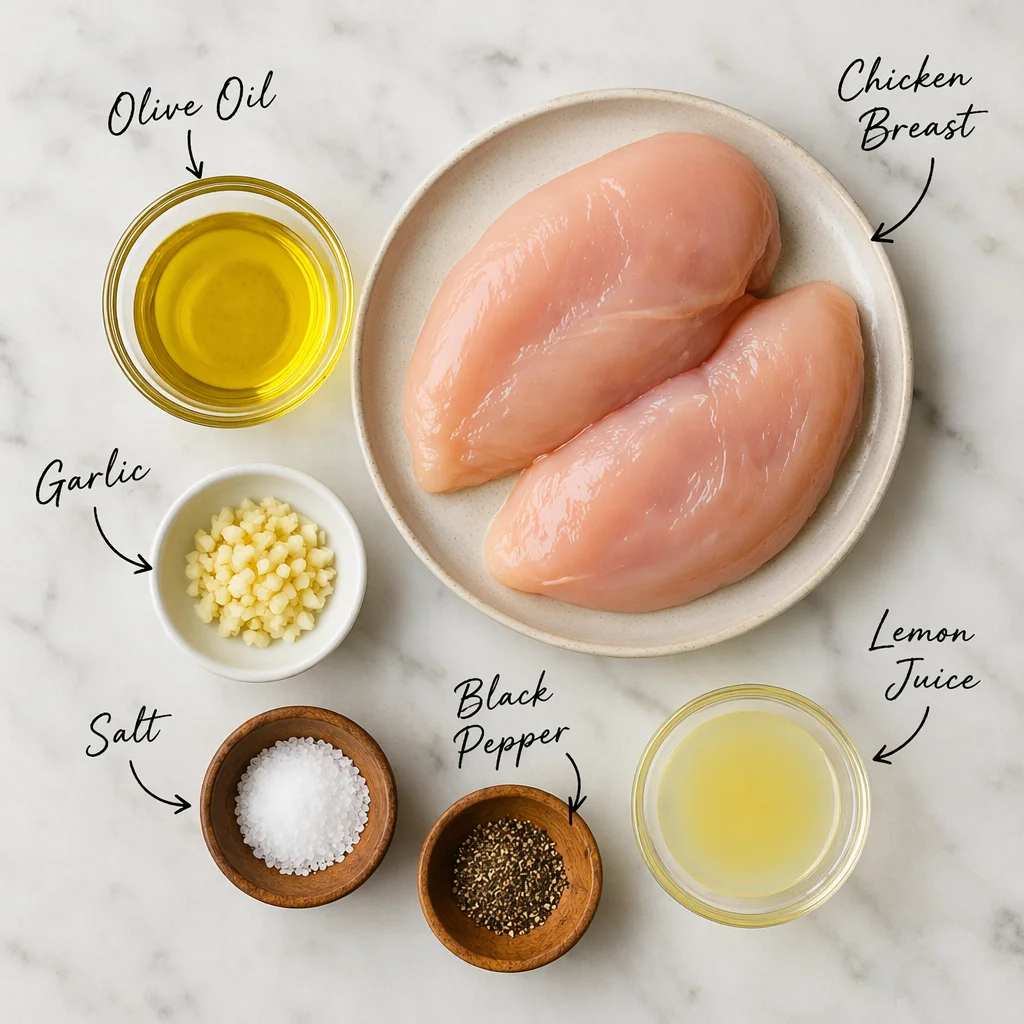
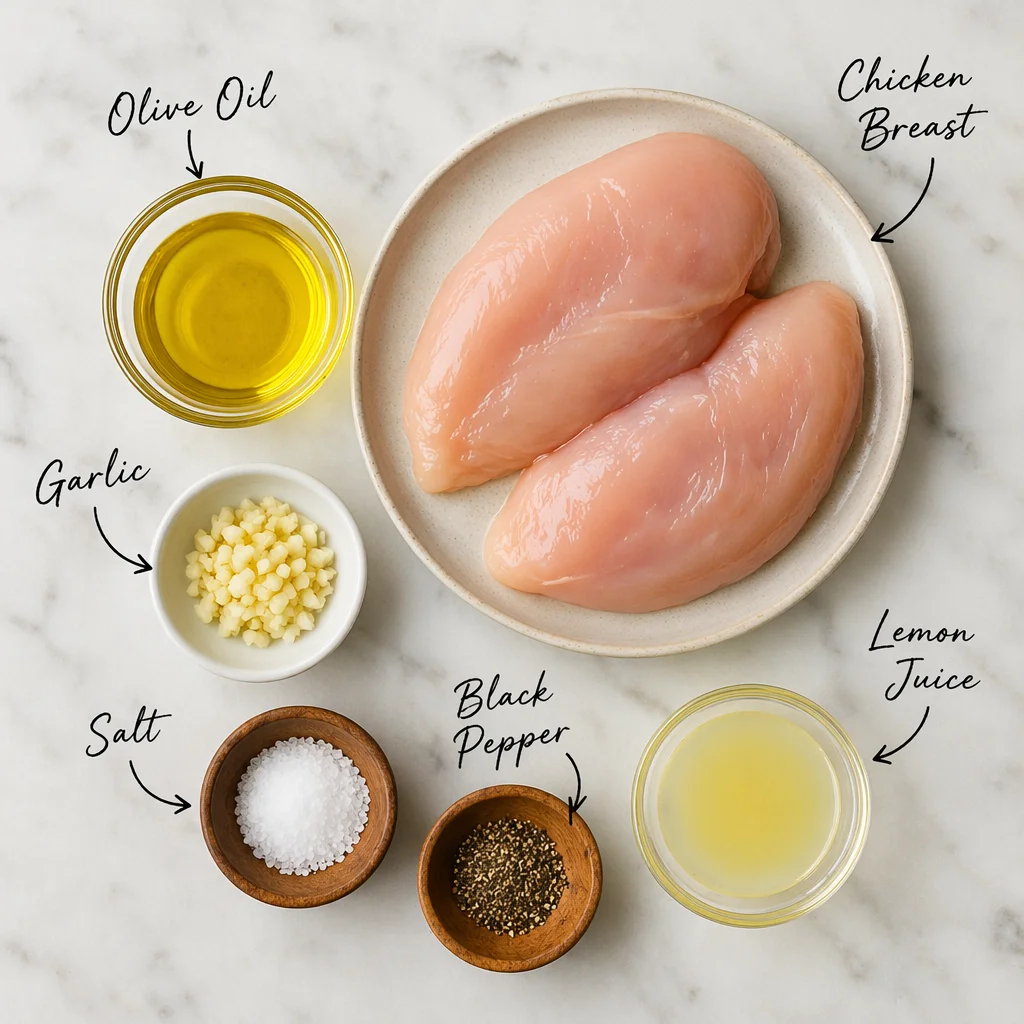
Start by preparing a simple yet powerful marinade that will infuse the chicken with flavor and help keep it moist during grilling. In a small bowl, combine 2 tablespoons of extra virgin olive oil, 4 minced garlic cloves, 1 teaspoon of fine sea salt, 1/2 teaspoon of freshly cracked black pepper, and 2 tablespoons of freshly squeezed lemon juice. Whisk until the salt is mostly dissolved. The olive oil acts as a carrier for the fat-soluble flavor compounds in garlic, while the lemon juice adds acidity that tenderizes the meat slightly and brightens the final taste. Place the chicken breasts in a shallow dish or a resealable plastic bag, pour the marinade over them, and turn to coat evenly. Let the chicken marinate at room temperature for 15 minutes while you preheat the grill; do not exceed 30 minutes at room temperature to avoid bacterial growth, or refrigerate if marinating longer. The salt in the marinade will begin to break down some of the muscle proteins, helping the chicken retain moisture during cooking.
Preheat your grill to medium-high heat, aiming for a surface temperature of about 400°F (200°C). If using a gas grill, turn all burners to high and close the lid for 10 minutes; for charcoal, light the coals and wait until they are covered with white ash. A properly preheated grill is crucial for achieving those beautiful sear marks and preventing the chicken from sticking. While the grill heats, remove the chicken from the marinade and let any excess drip off; do not wipe dry. Patting the chicken dry would remove the flavorful oil coating that promotes browning. For even cooking, if the chicken breasts are uneven in thickness, place them between two sheets of plastic wrap and gently pound with a rolling pin or meat mallet to an even 1/2-inch thickness. This step is optional but highly recommended as it ensures the chicken cooks uniformly and reduces the risk of dry edges.
Once the grill is hot, use a wire brush to clean the grates, then lightly oil them by dipping a folded paper towel in vegetable oil and, using long-handled tongs, rubbing it over the grates. This creates a non-stick surface and promotes even browning. Place the chicken breasts on the grill at a 45-degree angle to the grates; this angle gives you those classic crosshatch grill marks. Close the lid and cook for 5 to 6 minutes without moving the chicken. You will see the edges of the chicken begin to turn opaque and juices start to pool on the surface. Avoid the temptation to flip too early; the chicken needs time to develop a golden-brown crust that will release easily from the grates. If you try to flip and the chicken sticks, it needs another minute or two.
Using tongs, flip the chicken breasts over. You should see deep golden-brown grill marks on the cooked side. Cook for another 5 to 6 minutes with the lid closed. The total cooking time will depend on the thickness of your chicken; an instant-read thermometer is the most reliable way to check doneness. Insert the thermometer into the thickest part of the breast; it should read 165°F (74°C). If you don’t have a thermometer, make a small cut in the thickest part—the juices should run clear and the meat should be opaque all the way through. Remember that the chicken will continue to cook slightly after being removed from the grill (carryover cooking), so you can pull it off at 160°F (71°C) and let it rest to reach 165°F.
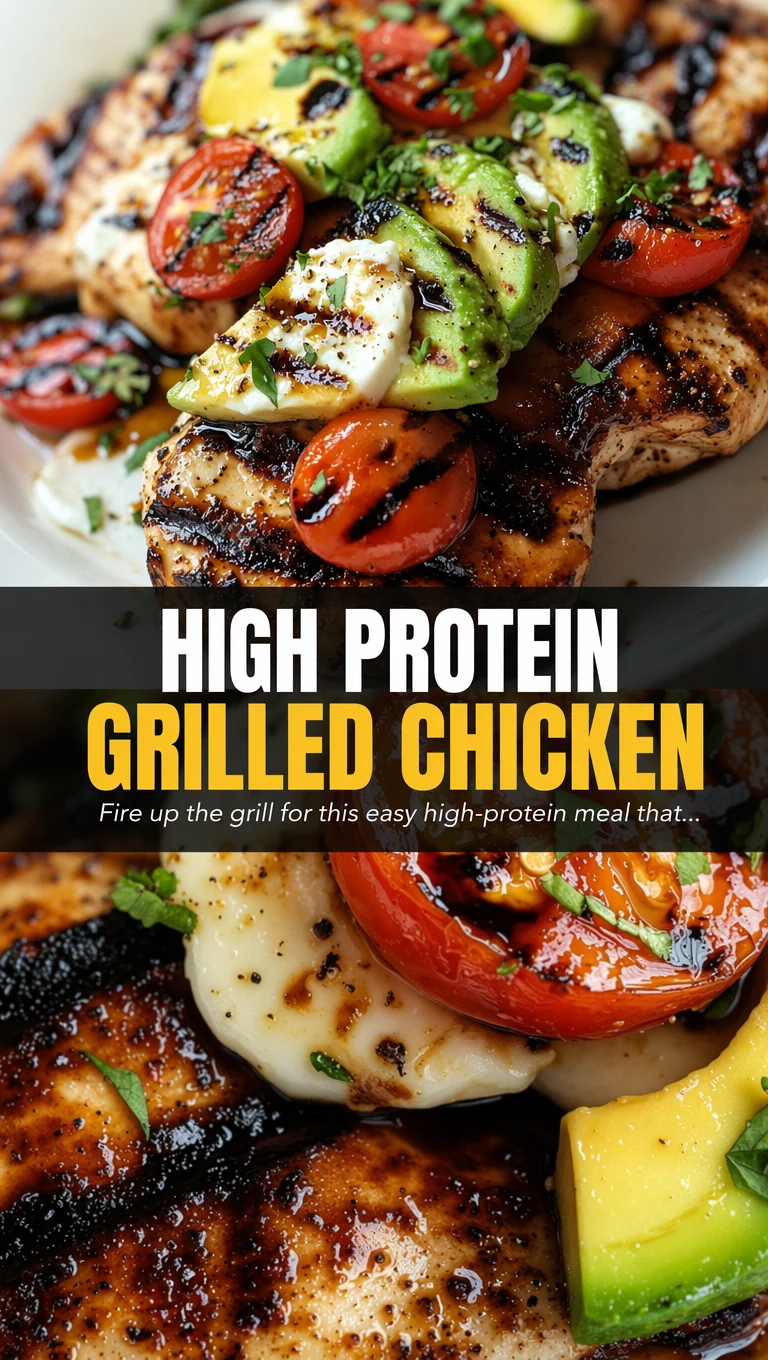
Transfer the grilled chicken to a clean cutting board and let it rest for 5 minutes. Resting is a critical step that allows the juices to redistribute throughout the meat; cutting too early will cause the juices to run out, leaving the chicken dry. Tent loosely with aluminum foil to keep warm. After resting, slice the chicken against the grain into 1/2-inch thick strips. Slicing against the grain shortens the muscle fibers, making each bite more tender. Serve immediately with your choice of sides such as a fresh green salad, roasted vegetables, or quinoa. Drizzle any accumulated juices from the cutting board over the slices for extra moisture and flavor.
For best results
- For the juiciest results, choose chicken breasts that are similar in size and thickness. If they vary, the thinner ones will overcook while the thicker ones reach doneness. Look for breasts that are about 6 ounces each and no more than 1 inch thick at the thickest point. If you can only find larger breasts, consider butterflying them or pounding them to an even thickness. This ensures uniform cooking and prevents dry edges.
- Don't skip the marinating step even if you're short on time. The acid in the lemon juice and the salt work together to season the chicken deeply and improve moisture retention. If you have only 5 minutes, that's still beneficial. For the best flavor, marinate in the refrigerator for 2 to 4 hours. However, avoid marinating longer than 12 hours as the acid can begin to break down the meat fibers too much, resulting in a mushy texture.
- Use a grill thermometer to monitor the cooking surface temperature. Many gas grills have built-in thermometers that measure the air temperature inside the lid, not the grate temperature. For precise results, use an infrared thermometer or a grill surface thermometer. The ideal grate temperature for chicken is 400-450°F. Too low and the chicken will steam rather than sear; too high and the outside will burn before the inside is cooked.
- Resist the urge to press down on the chicken with a spatula while grilling. This squeezes out the juices and dries out the meat. Instead, let the chicken cook undisturbed to develop a nice crust. The only time you should touch the chicken is when flipping it. Also, use tongs rather than a fork to flip, as piercing the meat allows juices to escape.
- If you're cooking for meal prep, let the chicken cool completely before storing in an airtight container in the refrigerator. It will keep for up to 4 days. To reheat, place slices in a skillet with a splash of chicken broth or water and cover, warming over medium-low heat until just heated through. This method helps restore moisture. Avoid microwaving, which can make the chicken rubbery.
- For extra flavor, try adding a dry rub before grilling. After marinating, pat the chicken dry and coat with a mixture of smoked paprika, garlic powder, onion powder, and a pinch of cayenne. This creates a flavorful crust that complements the lemon-garlic marinade. The sugars in the paprika will caramelize on the grill, adding depth and color.
Variations
- Lemon Herb Variation: Add 1 tablespoon of fresh chopped rosemary and 1 tablespoon of fresh thyme leaves to the marinade. The earthy notes of rosemary pair beautifully with lemon and garlic. You can also substitute the lemon juice with lime juice for a different citrus profile. This variation works well with grilled vegetables like zucchini and bell peppers.
- Spicy Chipotle Variation: Replace the black pepper with 1 teaspoon of chipotle powder and add 1/2 teaspoon of smoked paprika to the marinade. For extra heat, include a minced chipotle pepper in adobo sauce. The smoky spiciness of chipotle complements the char from the grill. Serve with a cooling avocado crema or sour cream to balance the heat.
- Mediterranean Variation: Add 1 teaspoon of dried oregano and 1 teaspoon of dried basil to the marinade. After grilling, top the chicken with crumbled feta cheese, sliced Kalamata olives, and chopped fresh tomatoes. Drizzle with a little extra olive oil and serve with warm pita bread and tzatziki sauce. This turns the dish into a complete Mediterranean-inspired meal.
- Honey Mustard Variation: Reduce the olive oil to 1 tablespoon and add 2 tablespoons of Dijon mustard and 1 tablespoon of honey to the marinade. The mustard acts as an emulsifier and helps the marinade cling to the chicken. The honey will caramelize on the grill, creating a sweet and tangy glaze. Be careful not to burn; cook over medium heat and watch closely during the last few minutes.
- Dairy-Free Creamy Variation: For a creamy texture without dairy, add 2 tablespoons of full-fat coconut milk to the marinade along with the lemon juice. The coconut milk adds richness and a subtle sweetness that balances the acidity. This variation pairs well with a mango salsa or a tropical fruit salad.
- Sheet Pan Alternative: If you don't have a grill, you can achieve similar results in the oven. Preheat the oven to 425°F (220°C) and line a sheet pan with foil. Place the marinated chicken on the pan and roast for 18-22 minutes, flipping halfway through, until the internal temperature reaches 165°F. For grill marks, you can sear the chicken in a cast-iron skillet for 2 minutes per side before transferring to the oven.
Nutrition
- Calories290 kcal
- Total Fat12g
- Saturated Fat2g
- Cholesterol110mg
- Sodium680mg
- Total Carbohydrates2g
- Dietary Fiber0g
- Sugars0g
- Protein42g